
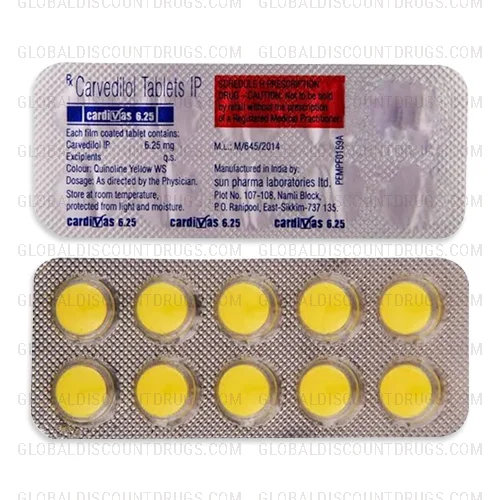
Carvedilol 6.25mg
In StockCarvedilol 6.25 mg Tablet is a prescription nonselective beta blocker with alpha-1-blocking activity used for heart failure, hypertension, and selected cardiovascular conditions. Dose increases should follow medical guidance.
| Active Ingredient: | Carvedilol |
|---|---|
| Indication: | Heart Failure |
| Strength: | 6.25 mg |
| Dosage Form: | Tablets |
| Manufacturer: | Sun Pharma |

Quick Overview
Carvedilol 6.25mg is a prescription beta-blocker tablet used to treat heart failure, high blood pressure (hypertension), and left ventricular dysfunction after a heart attack. It works by slowing the heart rate and relaxing blood vessels, which lowers the heart’s workload. It is available only with a prescription, and a clinician must supervise it because dose changes and abrupt stopping can be dangerous.
Medical Supervision and Regulatory Status
Carvedilol 6.25mg is a prescription-only medicine in the United States, and a licensed prescriber must oversee it because it affects heart rate, blood pressure, and blood sugar awareness. Generic carvedilol tablets are FDA-approved, with Coreg as the brand, and the drug is not a controlled substance. Pulse and blood pressure are checked as the dose is raised, and in heart failure, weight and fluid status are checked too.
Clinical Context
Carvedilol 6.25mg treats chronic heart failure, high blood pressure, and weakened heart function after a heart attack, three conditions in which the heart works under strain. In heart failure, the heart cannot pump enough blood for the body’s needs, which can cause breathlessness, tiredness, and swelling. After a heart attack, part of the heart muscle may pump weakly. Hypertension often causes no symptoms, yet years of elevated pressure can harm the brain, heart, kidneys, and eyes.
Treatment matters because long-term strain on the heart can worsen over time. In clinical trials, beta-blockers such as carvedilol lowered the risk of hospital stays and death in selected people with heart failure and after a heart attack, and they lower blood pressure. These are reductions in risk, not guarantees, and results depend on steady use and gradual dose increases.
In US heart failure guidelines, an evidence-based beta-blocker is a core part of treatment for heart failure with reduced ejection fraction, alongside other drug classes. For high blood pressure alone, beta-blockers are generally not the first choice unless another condition, such as heart failure or a prior heart attack, calls for one. Carvedilol is often used together with a diuretic or an ACE inhibitor.
How Carvedilol 6.25mg Works
Carvedilol 6.25mg blocks beta receptors, which slows the heart and reduces the force of each beat, and also blocks alpha-1 receptors, which relaxes blood vessels.
Adrenaline and noradrenaline, the body’s stress hormones, normally speed up the heart and tighten blood vessels. By blocking beta-1 receptors in the heart and beta-2 receptors elsewhere in the body, carvedilol dampens those signals. Its alpha-1 blocking action widens arteries, so blood pressure falls. The beta-2 blockade is also why carvedilol can narrow airways in people with asthma.
In heart failure, easing constant stress-hormone stimulation may let the heart muscle work more efficiently over time. Benefits build gradually, and early doses can make some people feel worse for a short period. The medicine controls these conditions only while it is taken. It does not cure them.
What Is Carvedilol 6.25mg?
Carvedilol 6.25mg is an alpha and beta-adrenergic blocker tablet that contains 6.25 milligrams of carvedilol and is sold in the US as a prescription medicine.
- Drug Class: Alpha and beta-adrenergic blocker (a nonselective beta-blocker with alpha-1 blocking activity)
- Active Ingredient: Carvedilol
- Mechanism: Blocks beta receptors to slow heart rate and alpha-1 receptors to relax blood vessels.
- Available Forms and Strengths: Film-coated tablets in 3.125 mg, 6.25 mg, 12.5 mg, and 25 mg strengths (this page covers the 6.25 mg tablet). Extended-release capsules (carvedilol phosphate) are a separate product.
- Dosing Frequency: Twice daily with food, as prescribed
- Regulatory Status: Prescription only (Rx). Not a controlled substance. Generic tablets and the brand Coreg are both marketed.
Approved Uses
The FDA has approved carvedilol for three uses: chronic heart failure, left ventricular dysfunction after a heart attack, and high blood pressure.
- Heart failure: Used for mild to severe chronic heart failure, usually alongside other heart failure medicines, to lower the risk of hospital stays and improve survival.
- Left ventricular dysfunction after a heart attack: Used in clinically stable people who have survived the acute phase of a heart attack and have an ejection fraction of 40% or lower, to lower the risk of cardiovascular death.
- High blood pressure (hypertension): Used alone or with other blood pressure medicines, especially thiazide-type diuretics, to lower pressure.
How to Use and Dosage
Take Carvedilol 6.25mg by mouth twice daily with food, because your prescriber sets the dose and raises it slowly based on your pulse, blood pressure, and symptoms.
Label ranges give context, not a personal target. In heart failure, treatment typically starts at 3.125 mg twice daily and the dose is doubled about every two weeks as tolerated. For high blood pressure or after a heart attack, treatment typically starts at 6.25 mg twice daily. The 6.25 mg tablet is therefore a common first or second step. Taking tablets with food slows absorption and lowers the chance of dizziness on standing.
For a missed dose, take it as soon as you remember. If your next dose is almost due, skip the missed one and return to your usual schedule. Never take two doses together.
Do not stop carvedilol suddenly. Abrupt withdrawal can worsen chest pain and has been followed by heart attacks and dangerous heart rhythms, so prescribers lower the dose gradually, usually over one to two weeks.
Side Effects
Side effects from Carvedilol 6.25mg vary from person to person; many are mild, but a few need prompt medical attention.
Important warning (carvedilol has no boxed warning): Stopping carvedilol suddenly can cause chest pain, a heart attack, or dangerous heart rhythms. Never run out of tablets or stop on your own.
Common effects: Dizziness, tiredness, a slow heartbeat, low blood pressure (lightheadedness on standing), diarrhea, weight gain, swelling of the ankles or feet, and headache are among the most frequently reported effects. Dizziness is more likely when you first start treatment or raise the dose. Carvedilol can also hide the shakiness and fast heartbeat that warn of low blood sugar, although sweating usually still appears.
Serious effects: Heart failure can worsen during dose increases, with fluid buildup and rapid weight gain. Other serious effects include a very slow heartbeat or heart block with fainting, narrowing of the airways (bronchospasm), severe low blood pressure, liver problems, severe allergic reactions, and severe skin reactions.
Emergency Warning Signs
- Trouble breathing or wheezing
- Fainting, or a very slow or irregular heartbeat
- Chest pain or pressure
- Swelling of the face, lips, tongue, or throat
- Rapid weight gain with worsening shortness of breath or leg swelling
- Yellow skin or eyes with dark urine
- Blistering or peeling skin rash
Call 911 for breathing trouble, chest pain, fainting, or swelling of the face or throat. For the other signs, seek urgent care or call your prescriber the same day. If you may have taken too much, call poison control at 1-800-222-1222.
Warnings and Precautions
Carvedilol 6.25mg is not for use in people with asthma, certain heart rhythm blocks, severe slow heartbeat, or severe liver disease, and it must never be stopped abruptly.
Important warning (no boxed warning): Severe worsening of angina, heart attacks, and dangerous ventricular heart rhythms have been reported after beta-blockers were stopped suddenly, mostly in people with coronary artery disease. Doses are lowered over one to two weeks, and anyone with heart disease should avoid missing doses or running out.
Contraindications include bronchial asthma or related airway-narrowing conditions, second- or third-degree heart block, sick sinus syndrome, a severe slow heartbeat unless a pacemaker is in place, cardiogenic shock or decompensated heart failure that needs intravenous heart-support drugs, severe liver impairment, and allergy to carvedilol or its ingredients.
Several drugs change how carvedilol behaves. Diltiazem, verapamil, and amiodarone can add to a slow heartbeat and heart block, so pulse, blood pressure, and sometimes an ECG are monitored. Clonidine also slows the heart, and when both are being stopped, carvedilol is stopped first, several days before clonidine, to limit rebound high blood pressure. CYP2D6 inhibitors, including fluoxetine, paroxetine, quinidine, and propafenone, raise carvedilol levels and can increase dizziness and low blood pressure. Rifampin lowers carvedilol levels, and cimetidine raises them. Digoxin and cyclosporine levels can rise, so they may be monitored. Insulin and oral diabetes drugs may have stronger effects, and reserpine and MAO inhibitors can cause a slow heartbeat and low blood pressure. Other blood pressure medicines and alcohol add to dizziness.
For pregnancy, carvedilol carries no boxed warning, but each situation needs individual review, because untreated heart failure and high blood pressure carry their own risks. Beta-blockers taken late in pregnancy can cause a slow heartbeat, low blood sugar, and breathing problems in the newborn, who should be watched after birth. It is not well established whether carvedilol passes into human breast milk, so a prescriber and pharmacist should weigh the benefit against possible effects on a nursing infant.
Older adults may be more sensitive to dizziness and a slow heartbeat, so dose increases tend to be cautious. Safety and effectiveness in children have not been established. Carvedilol is processed mainly by the liver, so it is avoided in severe liver impairment, and anyone with yellow skin or eyes should stop and seek medical help. The label does not call for a routine dose change in kidney impairment, though pressure may need closer checks.
Expect pulse and blood pressure checks at each dose increase, and in heart failure, daily home weights with a report of rapid gain or new swelling. People with diabetes should check blood sugar as directed, since carvedilol can hide some warning signs. It can worsen poor circulation in the legs, mask the signs of an overactive thyroid, and should be used cautiously with pheochromocytoma or variant (Prinzmetal) angina. Tell any surgeon or anesthesiologist you take it, and tell an eye surgeon before cataract surgery, because it has been linked to floppy iris syndrome. Allergic reactions may be more severe, and epinephrine may work less well. Rise slowly from sitting and avoid driving until you know how it affects you.
Who Should Not Use This Medication
You should not take Carvedilol 6.25mg if any of the following apply to you, based on the contraindications in the US label.
- You have asthma or another airway-narrowing lung condition
- You have second- or third-degree heart block, or sick sinus syndrome, without a pacemaker
- You have a severely slow heartbeat
- You have cardiogenic shock, or decompensated heart failure that needs intravenous heart-support drugs
- You have severe liver impairment
- You are allergic to carvedilol or any ingredient in the tablet
Storage Instructions
Store Carvedilol 6.25mg tablets below 86°F (30°C) in a tightly closed container, away from moisture and heat, and out of reach of children and pets.
Keep tablets in the original bottle, and avoid bathrooms, where steam adds moisture. Follow the storage temperature printed on your pharmacy label if it differs. For disposal, use a drug take-back site or program, many of which operate at pharmacies and police stations. If none is available, mix the tablets with used coffee grounds or cat litter, seal them in a bag, and put them in household trash. Scratch out personal details on the empty bottle label before discarding it.
Frequently Asked Questions
What is the cost of Carvedilol 6.25mg without insurance?
The cost without insurance depends on the seller, brand availability, and pack size. Location and available discounts can also change what you pay. Generic carvedilol tablets are generally more affordable than the brand Coreg, so ask your pharmacist whether a generic version is dispensed. Comparing a few licensed pharmacies before ordering can help.
How can I order Carvedilol 6.25mg online?
You can order Carvedilol 6.25mg online from a licensed US pharmacy once you have a valid prescription. Upload a copy or ask your prescriber to send it electronically, then the pharmacy verifies it and ships to your door. Before paying, confirm the pharmacy holds a state license and has a pharmacist available to answer medication questions.
Is Carvedilol 6.25mg available over the counter?
Carvedilol 6.25mg is not sold over the counter in the United States. Rules vary by country, but US regulations classify it as prescription-only. Because the medicine affects heart rate, blood pressure, and blood sugar awareness, medical supervision is required for as long as you take it. Pharmacists can answer questions, but they cannot dispense it without a prescription.
Does Carvedilol 6.25mg require a prescription?
Yes, a prescription is required for Carvedilol 6.25mg in the US. A clinician first checks your heart rate, blood pressure, and breathing history, then reviews your other medicines and any heart rhythm problems. After you start, follow-up visits allow your prescriber to raise the dose gradually and catch problems early on.
How long does Carvedilol 6.25mg take to work?
Carvedilol 6.25mg lowers blood pressure within about one to two weeks, but heart failure benefit builds more slowly, often over several months. Some people feel more tired or dizzy early on, and symptoms can worsen as the dose rises. Response differs for each person, so keep taking it as prescribed and attend scheduled checkups even if you feel well.
Is it safe to stop taking Carvedilol 6.25mg suddenly?
No, you should not stop Carvedilol 6.25mg suddenly, because abrupt withdrawal can cause chest pain, a heart attack, or dangerous heart rhythms. Prescribers usually lower the dose gradually over one to two weeks. If side effects trouble you, call your prescriber before skipping doses, and seek emergency care for chest pain.
Can Carvedilol 6.25mg interact with other medicines?
Several medicines can interact with Carvedilol 6.25mg, including diltiazem, verapamil, amiodarone, clonidine, digoxin, insulin, fluoxetine, paroxetine, and rifampin. Some slow the heartbeat or lower blood pressure further, others change carvedilol levels or hide low blood sugar. Alcohol can add to dizziness. Give your pharmacist a full list, including over-the-counter products and supplements.
What should I do if I miss a dose of Carvedilol 6.25mg?
Take the missed dose of Carvedilol 6.25mg as soon as you remember, unless it is almost time for your next dose. In that case, skip the missed tablet and resume your usual schedule with food. Never double up, because extra medicine can slow your heartbeat and drop blood pressure too far. If you miss several days, ask your prescriber how to restart.
References
- DailyMed (NIH): Carvedilol tablets prescribing information, covering indications, dosing, contraindications, interactions, and storage.
- MedlinePlus (NIH): Plain-language carvedilol drug information, covering use, precautions, side effects, and overdose guidance. https://medlineplus.gov/druginfo/meds/a697042.html
- FDA, Drugs@FDA: Carvedilol entry (Coreg and generics), covering approval history and current labeling.
Medical Disclaimer:
This content is for informational purposes only and does not constitute medical advice, diagnosis, or treatment. Consult a qualified specialist or physician before using Carvedilol 6.25mg.
Prescription Required (Rx) to Buy?
This medication is not available over the counter. A valid prescription from a licensed healthcare
professional is required. Always consult your doctor before use.
| Quantity | 180, 270, 360, 90 |
|---|---|
| Indication | Heart Failure |
| Active Ingredient | Carvedilol |
| Pharmaceutical Form | Tablets |
| Manufacturer | Sun Pharma |
| Indian Brand | Cardivas 6.25mg |
| US Brand Name | Carvedilol, Coreg |
| Generic Name | Carvedilol |
| Dosage | 6.25 mg |
| Drug Type | Tablets |
Carvedilol vs Metoprolol whats the difference?
What foods should be avoided when taking Carvedilol?
Is Carvedilol a beta-blocker?
What are the common side effects of Carvedilol in the elderly?
Why is Carvedilol dosed twice daily?
Does Carvedilol lower heart rate?
Is Carvedilol a blood thinner?
How much does Carvedilol lower blood pressure?