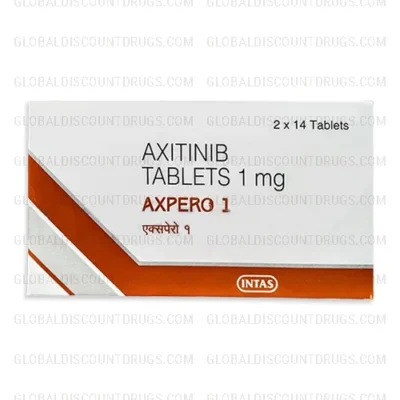
Axitinib 1mg
In StockAxitinib 1 mg Tablet is a prescription vascular endothelial growth factor receptor tyrosine kinase inhibitor used to treat selected advanced kidney cancers. Blood pressure, liver function, and treatment response require regular monitoring.
| Active Ingredient: | Axitinib |
|---|---|
| Indication: | Renal Cell Carcinoma |
| Strength: | 1mg |
| Dosage Form: | Tablets |
| Manufacturer: | Intas Pharma |

Quick Overview: What Is Axitinib 1mg Used For?
Axitinib 1mg is a prescription-only targeted therapy used to treat advanced renal cell carcinoma (kidney cancer) in adults after at least one prior systemic treatment has failed. It belongs to the tyrosine kinase inhibitor class and works by blocking blood vessel growth that feeds tumors. This medication must be used under close oncologist supervision due to its significant side effect profile.
Regulatory and Prescription Status
Axitinib (brand name Inlyta) is FDA-approved and classified as a prescription-only oncology medication. It is not available over the counter under any circumstances. Because of its complex dosing requirements and serious potential adverse effects, it must be prescribed and monitored by a licensed oncologist or qualified cancer specialist. Patients should never obtain or use axitinib without a valid prescription and regular clinical follow-up.
Clinical Background: Understanding the Condition It Treats
Renal cell carcinoma (RCC) is the most common type of kidney cancer in adults. When diagnosed at an advanced or metastatic stage, it cannot be treated with surgery alone and requires systemic therapy.
Many patients with advanced RCC receive first-line treatments such as immunotherapy combinations or sunitinib. When the disease progresses despite initial therapy, second-line options become necessary to slow tumor growth and extend survival.
Axitinib 1mg is used precisely in this setting. It targets the biological pathways that tumors rely on for blood supply, making it a clinically meaningful option for patients whose cancer has continued to advance after prior treatment.
How Axitinib 1mg Works
Axitinib is a selective inhibitor of vascular endothelial growth factor receptors, specifically VEGFR-1, VEGFR-2, and VEGFR-3. These receptors play a central role in angiogenesis, which is the process by which tumors create new blood vessels to sustain their growth.
By blocking these receptors, axitinib cuts off the blood supply that cancer cells depend on. Without adequate blood flow, tumor cells are deprived of oxygen and nutrients, which can slow or stop cancer progression.
For patients with advanced kidney cancer, this mechanism translates into a measurable clinical benefit, including delayed disease progression when standard first-line treatments are no longer effective.
Drug Profile: What Is Axitinib 1mg?
| Detail | Information |
|---|---|
| Drug Class | Tyrosine kinase inhibitor (TKI), VEGFR inhibitor |
| Active Ingredient | Axitinib |
| Mechanism | Selectively inhibits VEGFR-1, VEGFR-2, and VEGFR-3 to block tumor angiogenesis |
| Available Forms | Film-coated oral tablets (1mg and 5mg) |
| Dosing Frequency | Twice daily, approximately 12 hours apart |
| Regulatory Status | FDA-approved; prescription only |
| Brand Name | Inlyta (Pfizer) |
Approved Uses and Indications
Advanced Renal Cell Carcinoma (Second-Line) Axitinib is FDA-approved for the treatment of advanced renal cell carcinoma in adult patients who have received one prior systemic therapy. It is prescribed when earlier treatments such as sunitinib, temsirolimus, cytokines, or bevacizumab have not controlled the disease adequately.
The 1mg tablet strength is specifically used during dose adjustment. Oncologists may reduce the standard 5mg dose to lower levels such as 3mg or 2mg twice daily when managing side effects. The 1mg tablet allows precise dose tapering that would not be possible with higher-strength tablets alone.
Dosage and Administration
General Guidance
The standard starting dose of axitinib is 5mg taken orally twice daily, roughly 12 hours apart, with or without food. Your oncologist determines the appropriate dose based on your individual tolerability and treatment response.
Dose Adjustments
If you tolerate the 5mg twice daily dose well and meet specific criteria, your doctor may increase the dose to 7mg and then to 10mg twice daily. Conversely, if side effects are significant, the dose may be reduced to 3mg and then to 2mg twice daily. The 1mg tablets are used to achieve these lower dose levels accurately.
Missed Dose
If you miss a dose and your next scheduled dose is more than 6 hours away, take the missed dose as soon as you remember. If less than 6 hours remain before your next dose, skip the missed dose and resume your regular schedule. Do not take two doses at the same time.
Do Not Stop Suddenly
Do not discontinue axitinib without speaking to your oncologist first. Stopping cancer therapy without medical guidance can allow disease progression. Any decision to pause or stop treatment must be made with your doctor.
Side Effects
Most patients taking axitinib experience at least some side effects. This is expected with targeted cancer therapies, and your care team is experienced in managing them. Knowing what to watch for allows you to report issues early and adjust treatment when needed.
Common Side Effects
Diarrhea, high blood pressure (hypertension), fatigue, decreased appetite, nausea, weight loss, and hoarseness of voice are among the most frequently reported effects. Hand-foot syndrome (redness, pain, or blistering on palms and soles), constipation, and headache also occur in a notable proportion of patients. Most of these effects can be managed with supportive care or dose adjustments.
Serious Side Effects
Axitinib can cause clinically significant hypertension, which requires regular blood pressure monitoring throughout treatment. Thyroid dysfunction, including both hypothyroidism and hyperthyroidism, has been reported. Liver enzyme elevations, wound healing complications, and impaired kidney function may also occur. Serious arterial or venous blood clot events, including stroke and heart attack, have been reported in clinical trials.
Emergency Warning Signs
Seek immediate medical attention if you experience any of the following:
- Sudden severe headache, vision changes, or confusion (possible sign of posterior reversible encephalopathy syndrome)
- Chest pain, shortness of breath, or one-sided weakness (possible arterial thrombotic event)
- Severe abdominal pain with or without blood in stool (possible gastrointestinal perforation or fistula)
- Coughing up blood or unusual bleeding from any site
- Swelling, redness, and pain in one leg (possible deep vein thrombosis)
- Sudden vision loss or eye pain (possible retinal vein occlusion)
- Signs of a hypertensive crisis including severe headache and nose bleeds
Warnings and Precautions
Hypertension and Cardiovascular Risk
Axitinib causes blood pressure elevation in a high percentage of patients. Blood pressure must be monitored regularly before and during treatment. Patients with pre-existing poorly controlled hypertension should have blood pressure stabilized before starting axitinib. If blood pressure cannot be adequately managed, treatment may need to be interrupted or discontinued.
Arterial and Venous Thrombotic Events
Axitinib has been associated with arterial thrombotic events, including stroke and myocardial infarction, as well as venous thromboembolism. Patients with a history of recent arterial thrombosis within 12 months prior to starting therapy were excluded from clinical trials and should use this medication with extreme caution, if at all.
Drug Interactions
Axitinib is metabolized primarily through CYP3A4 and CYP3A5 enzymes. Strong CYP3A4 inhibitors such as ketoconazole, itraconazole, clarithromycin, and ritonavir can significantly increase axitinib plasma concentrations. Strong CYP3A4 inducers such as rifampin, carbamazepine, and phenytoin can reduce its effectiveness. The dose of axitinib must be adjusted when these medications are used together.
Pregnancy and Breastfeeding
Axitinib can cause fetal harm based on its mechanism of action and animal studies. Women of childbearing potential must use effective contraception during treatment and for at least one week after the final dose. Breastfeeding is not recommended during treatment and for two weeks following the last dose. Male patients with female partners of childbearing potential should use contraception during treatment and for one week after the last dose.
Thyroid Dysfunction
Thyroid function should be assessed before starting axitinib and monitored periodically during treatment. Both hypothyroidism and hyperthyroidism have been reported. Standard medical management for thyroid disorders should be applied as clinically indicated.
Hepatic Impairment
Axitinib has not been studied in patients with severe hepatic impairment. In patients with moderate hepatic impairment, the starting dose should be reduced. Liver function tests should be monitored during treatment.
Wound Healing
Axitinib may impair wound healing due to its anti-angiogenic effects. It should be stopped at least 24 hours before any scheduled surgical procedure and should not be restarted until adequate wound healing has occurred.
Who Should Not Use Axitinib 1mg
The following patients should not use axitinib or should only use it under very close specialist evaluation:
- Patients who are pregnant or actively breastfeeding
- Individuals with untreated or poorly controlled hypertension
- Patients with a recent history of arterial thromboembolic events within the past 12 months
- Those with active or clinically significant bleeding
- Patients with a known hypersensitivity to axitinib or any component of the formulation
- Individuals who have not received a prior systemic therapy for RCC (axitinib is indicated for second-line use)
- Patients currently taking strong CYP3A4 inhibitors who cannot safely discontinue or switch those medications
Storage Instructions
Store axitinib tablets at room temperature between 68 degrees F and 77 degrees F (20 degrees C to 25 degrees C). Brief exposure to temperatures between 59 degrees F and 86 degrees F is acceptable during transport.
Keep the medication in its original container, away from moisture and direct light. Do not store in a bathroom medicine cabinet. Keep all medications stored in a location that is completely out of reach of children. Do not use the medication after the expiration date printed on the label.
Frequently Asked Questions
Does axitinib require a prescription?
Yes, axitinib requires a valid prescription in all countries where it is approved, including the United States. This medication is used to treat advanced kidney cancer and requires oncologist evaluation, staging confirmation, and regular monitoring for blood pressure, thyroid function, and liver health before and during use.
How long does axitinib take to work?
There is no single timeline that applies to all patients. In clinical trials, radiological assessments were typically performed at 8-week intervals to evaluate tumor response. Your oncologist will monitor your individual response through imaging and laboratory tests and will determine whether treatment is achieving the intended effect.
Is it safe to stop taking axitinib suddenly?
No. You should never stop axitinib without speaking to your oncologist first. Unplanned discontinuation of cancer therapy can allow disease progression. If side effects are making treatment difficult to tolerate, your doctor can adjust the dose or provide supportive medications rather than stopping treatment outright.
What medications interact with axitinib?
Several medications significantly affect how axitinib is processed in the body. Strong CYP3A4 inhibitors such as ketoconazole, clarithromycin, and ritonavir increase axitinib levels and can intensify side effects. Strong CYP3A4 inducers such as rifampin and phenytoin reduce its effectiveness. Always provide your oncologist and pharmacist with a complete list of all medications you are taking.
What is the cost of axitinib without insurance?
The cost without insurance depends on the seller, brand availability, and pack size, and may also vary by location and applicable discounts. Axitinib (brand name Inlyta) is a branded specialty oncology medication and is generally not inexpensive at list price. Patients without insurance coverage should inquire about manufacturer patient assistance programs, hospital financial aid, and nonprofit copay support organizations.
How can I order axitinib online?
A valid prescription from a licensed oncologist is required to order axitinib online. The process typically involves uploading your prescription or having your prescriber send it directly to a licensed specialty pharmacy, completing an order, and receiving home delivery. Only use verified, state-licensed pharmacies. Avoid any online source offering axitinib without a prescription, as this poses serious safety risks.
Is axitinib available over the counter?
No, axitinib is not available over the counter in any country. It is a prescription-only oncology drug regulated as a specialty medication in the United States. Medical supervision is required throughout treatment due to serious potential cardiovascular, hepatic, and thyroid-related risks.
Resources
- FDA Inlyta Prescribing Information: https://www.accessdata.fda.gov/drugsatfda_docs/label/2022/202324s020lbl.pdf
- MedlinePlus – Axitinib: https://medlineplus.gov/druginfo/meds/a612017.html
- NCI Drug Information – Axitinib: https://www.cancer.gov/about-cancer/treatment/drugs/axitinib
Medical Disclaimer:
This content is for informational purposes only and does not constitute medical advice, diagnosis, or treatment. Consult a qualified specialist or physician before using Axitinib 1mg. Read the full medical disclaimer for additional information on the limitations of this content.
Prescription Required (Rx) to Buy?
This medication is not available over the counter. A valid prescription from a licensed healthcare
professional is required. Always consult your doctor before use.
| Quantity | 14, 28, 42, 56 |
|---|---|
| Indication | Renal Cell Carcinoma |
| Active Ingredient | Axitinib |
| Pharmaceutical Form | Tablets |
| Manufacturer | Intas Pharma |
| Indian Brand | Axpero 1mg |
| US Brand Name | Axitinib |
| Generic Name | Axitinib |
| Dosage | 1mg |
| Drug Type | Tablets |