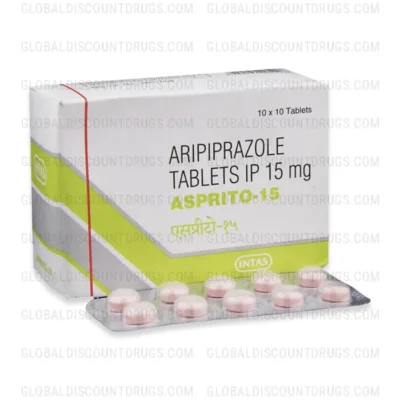

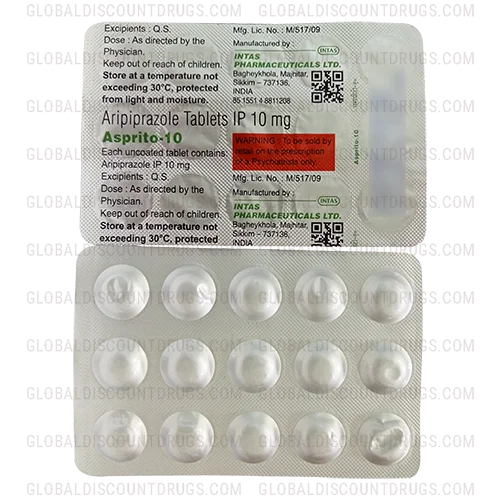
Aripiprazole 10mg
In StockAripiprazole 10 mg Tablet offers a lower-strength atypical antipsychotic option commonly used during treatment initiation or dose adjustment. Regular follow-up helps evaluate therapeutic benefit.
| Active Ingredient: | Aripiprazole |
|---|---|
| Indication: | Schizophrenia |
| Strength: | 10mg |
| Dosage Form: | Tablets |
| Manufacturer: | Intas Pharma |

Quick Overview: What Is Aripiprazole 10mg?
Aripiprazole 10mg is a prescription atypical antipsychotic tablet used to treat schizophrenia, bipolar I disorder, and major depressive disorder as an add-on therapy in adults. It works by partially activating and partially blocking specific dopamine and serotonin receptors in the brain. This medication requires a valid prescription and ongoing medical supervision for safe use.
Prescription Status and Regulatory Information
Aripiprazole 10mg is a Schedule IV controlled substance and a prescription-only medication regulated by the U.S. Food and Drug Administration (FDA). It is not available over the counter at any U.S. pharmacy. A licensed prescriber, such as a psychiatrist or primary care physician, must evaluate the patient before initiating this treatment. Regular follow-up appointments are typically required to monitor response and tolerability.
Clinical Context
Psychiatric conditions such as schizophrenia and bipolar disorder involve significant disruptions in brain chemistry, particularly within dopamine and serotonin signaling pathways. Left without appropriate treatment, these conditions can affect daily functioning, relationships, and long-term health outcomes. Early and consistent pharmacological management is a recognized part of standard psychiatric care.
Aripiprazole belongs to a generation of antipsychotics developed to provide therapeutic benefit while reducing certain risks associated with older medications, including metabolic changes and movement-related side effects. It has been FDA-approved since 2002 and has a substantial body of clinical evidence supporting its use.
Within psychiatric treatment plans, aripiprazole is commonly used when patients need long-term maintenance therapy or when other antipsychotics have not been well tolerated. As an adjunctive option for depression, it is typically added when antidepressant therapy alone has not produced a sufficient response.
How Aripiprazole 10mg Works
Aripiprazole belongs to a drug class called atypical antipsychotics, also referred to as second-generation antipsychotics. Unlike older agents that fully block dopamine receptors, aripiprazole acts as a partial agonist at D2 and D3 dopamine receptors and at 5-HT1A serotonin receptors. It also acts as an antagonist at 5-HT2A serotonin receptors. This combination of actions gives it a different pharmacological profile compared to first-generation antipsychotics.
In practical terms, this mechanism helps stabilize dopamine activity in brain regions associated with psychosis, mood, and reward. Rather than simply suppressing dopamine signaling, aripiprazole modulates it, which is thought to contribute to its lower likelihood of causing certain movement disorders or prolactin elevation. Patient outcomes vary, and the full therapeutic effect may take several weeks to become apparent.
What Is Aripiprazole 10mg?
Drug Class: Atypical antipsychotic (dopamine-serotonin system stabilizer)
Active Ingredient: Aripiprazole
Mechanism: Partial agonist at D2, D3, and 5-HT1A receptors; antagonist at 5-HT2A receptors. Modulates dopamine and serotonin activity in the central nervous system.
Available Forms: Oral tablet, orally disintegrating tablet, oral solution, injectable (extended-release)
Typical Dosing Frequency: Once daily, with or without food
Regulatory Status: FDA-approved; prescription-only in the United States
Approved Uses and Indications
Schizophrenia (Adults and Adolescents 13+) Aripiprazole is used to treat the symptoms of schizophrenia, including hallucinations, disorganized thinking, and withdrawal from daily activities. It is approved for both acute episodes and long-term maintenance.
Bipolar I Disorder It is used to treat manic and mixed episodes associated with bipolar I disorder. Aripiprazole may be prescribed alone or alongside a mood stabilizer such as lithium or valproate.
Major Depressive Disorder (Adjunctive Therapy) When antidepressant treatment alone has not been effective enough, aripiprazole may be added to the existing regimen in adults as an adjunctive treatment.
Irritability Associated with Autistic Disorder In pediatric patients between ages 6 and 17, aripiprazole is FDA-approved to treat irritability, aggression, and mood instability associated with autistic disorder.
Tourette’s Disorder Aripiprazole is also indicated for the treatment of Tourette’s disorder in patients aged 6 to 18 years.
How to Use Aripiprazole 10mg / Dosage Guidance
Aripiprazole 10mg is taken orally, once per day, at approximately the same time each day. It can be taken with or without food. Your prescribing physician will determine the appropriate dose based on your diagnosis, age, weight, kidney and liver function, and any other medications you are currently taking. Do not adjust your dose without speaking with your doctor first.
Missed Dose: If you miss a dose, take it as soon as you remember on the same day. If it is already close to the time of your next scheduled dose, skip the missed one and continue your regular schedule. Do not take two doses at once to make up for a missed one.
Do Not Stop Suddenly: Stopping aripiprazole abruptly, without medical guidance, may cause a return of symptoms or withdrawal-like effects. If you and your doctor decide to discontinue this medication, the dose is typically reduced gradually over time.
Side Effects
Most people taking aripiprazole tolerate it reasonably well, particularly when the dose is managed carefully by their physician. Side effects, if they occur, are often mild and tend to improve as the body adjusts over the first few weeks.
Common Side Effects Patients frequently report headache, nausea, dizziness, fatigue, and difficulty sleeping, particularly at the start of therapy. Some individuals experience restlessness or an urge to move (akathisia), which should be reported to the prescribing doctor as it can be managed with dose adjustment or additional treatment. Weight gain and changes in blood sugar have been observed with aripiprazole, though these are generally considered less pronounced than with some other atypical antipsychotics.
Serious Side Effects Aripiprazole carries an FDA black box warning regarding increased mortality in elderly patients with dementia-related psychosis. It is not approved for this population. Neuroleptic malignant syndrome (NMS), a rare but life-threatening condition, has been reported with antipsychotics including aripiprazole. Signs include high fever, muscle rigidity, confusion, and irregular heartbeat. Tardive dyskinesia, characterized by repetitive and involuntary movements of the face or body, may develop with long-term use and can be irreversible in some cases.
Seek Emergency Medical Attention If You Experience:
- High fever, stiff muscles, or mental status changes (possible NMS)
- Uncontrolled, repetitive facial or body movements
- Thoughts of suicide or self-harm, particularly in patients under 25
- Difficulty swallowing or breathing
- Significant changes in blood pressure or heart rhythm
- Prolonged or painful erection (priapism)
- Seizures
Warnings and Precautions
Suicidal Thinking in Young Patients Aripiprazole and other antidepressant or antipsychotic medications carry an FDA warning regarding increased risk of suicidal thoughts and behaviors in children, adolescents, and young adults under age 25, particularly in the early weeks of treatment. Families and caregivers should monitor for mood changes, worsening anxiety, agitation, or any unusual behavior and report these to the prescriber immediately.
Metabolic Effects Although the metabolic impact of aripiprazole is generally lower than that of other atypical antipsychotics, monitoring for weight gain, elevated blood glucose, and lipid changes is still recommended during therapy. Patients with pre-existing diabetes or metabolic syndrome should be monitored more frequently.
Drug Interactions Aripiprazole is metabolized primarily by the CYP2D6 and CYP3A4 liver enzymes. Medications that inhibit CYP2D6, such as fluoxetine and paroxetine, or those that inhibit CYP3A4, such as ketoconazole, can increase aripiprazole blood levels and may require dose reduction. Conversely, CYP3A4 inducers like carbamazepine can lower aripiprazole concentrations and may necessitate a dose increase. Alcohol and other central nervous system depressants should be used with caution in combination with aripiprazole.
Pregnancy and Breastfeeding Neonates born to mothers who took antipsychotics during the third trimester have experienced withdrawal symptoms and movement difficulties after birth. Aripiprazole should be used during pregnancy only when the benefits clearly outweigh the risks. It is detectable in breast milk, and a decision about breastfeeding versus continuing aripiprazole should be made in consultation with a physician.
Special Populations Elderly patients with dementia-related psychosis treated with atypical antipsychotics have a higher risk of death; this use is not approved. Pediatric dosing differs by indication and requires weight-based adjustments. Patients with hepatic impairment may require monitoring, though dose adjustment is not typically required for mild-to-moderate impairment.
Who Should Not Use Aripiprazole 10mg
- Patients with a known hypersensitivity or allergy to aripiprazole
- Elderly patients diagnosed with dementia-related psychosis
- Patients currently experiencing uncontrolled seizure disorders (use with caution, close monitoring required)
- Individuals with a history of neuroleptic malignant syndrome following antipsychotic use
- Patients taking strong CYP2D6 or CYP3A4 inhibitors without prior dose adjustment guidance from their physician
- Pregnant women in the third trimester, unless specifically directed by a physician after weighing risks
Storage Instructions
Store aripiprazole 10mg tablets at room temperature, between 59°F and 77°F (15°C and 25°C). Keep the tablets in their original container, away from direct light, heat, and moisture. Do not store in a bathroom medicine cabinet, where humidity can degrade the tablets. Keep this medication out of the reach of children at all times. Dispose of unused or expired tablets through an FDA-approved medication take-back program or follow local disposal guidelines.
Frequently Asked Questions
Does aripiprazole require a prescription in the United States?
Yes, aripiprazole is a prescription-only medication in the U.S. A licensed healthcare provider must evaluate your condition, confirm a diagnosis, and determine whether this medication is appropriate for you. Self-medicating with aripiprazole is not safe and is not legally permitted without a valid prescription.
How long does aripiprazole take to work?
The full therapeutic effect of aripiprazole typically takes two to four weeks, though some patients notice partial improvement within the first week. For conditions like schizophrenia, symptom stabilization may take several weeks of consistent use. Your doctor will assess your response at follow-up visits and adjust the dose if needed.
Is it safe to stop aripiprazole suddenly?
No. Stopping aripiprazole without tapering under medical supervision can cause a rapid return of psychiatric symptoms and potential withdrawal-like effects. If you need to discontinue this medication, your prescriber will recommend a gradual reduction in dose over a period of time appropriate for your individual situation.
Can aripiprazole be taken with other medications?
Aripiprazole interacts with several drugs, particularly those that affect CYP2D6 or CYP3A4 liver enzymes, including some antidepressants and antifungals. Always share a full list of your current medications, supplements, and over-the-counter drugs with your prescriber and pharmacist before starting aripiprazole.
What happens if I miss a dose?
Take the missed dose as soon as you remember on the same day. If your next scheduled dose is approaching, skip the missed one and resume your normal schedule. Never double up doses. If you are frequently missing doses, talk with your doctor about strategies to support consistent use.
What is the cost of aripiprazole 10mg without insurance?
The cost without insurance depends on the seller, brand availability, and pack size. Generic aripiprazole is widely available in the U.S. and is generally considered more affordable than brand-name Abilify. Prices may also vary by pharmacy location, discount programs, and manufacturer coupons. Asking your pharmacist about generic substitution or savings cards is a practical first step.
How can I order aripiprazole 10mg online?
A valid prescription is required to order aripiprazole from any U.S. online pharmacy. The process typically involves uploading your prescription or having your prescriber send it directly, selecting your medication and quantity, and arranging home delivery. Only use pharmacies verified by the National Association of Boards of Pharmacy (NABP) or those displaying the VIPPS seal to protect yourself from counterfeit medications.
Is aripiprazole available over the counter?
No. Aripiprazole is not available over the counter in the United States or in most other countries. Due to its psychiatric indications, potential for serious side effects, and the need for clinical monitoring, it requires a prescription and ongoing supervision by a qualified healthcare provider. Regulations vary internationally, but medical oversight remains the standard requirement.
Resources
- Aripiprazole Drug Information – DailyMed (NIH) https://dailymed.nlm.nih.gov/dailymed/search.cfm?query=aripiprazole
- Aripiprazole – MedlinePlus (National Library of Medicine) https://medlineplus.gov/druginfo/meds/a603012.html
- FDA Drug Label: Aripiprazole (Abilify) – U.S. Food and Drug Administration https://www.accessdata.fda.gov/drugsatfda_docs/label/2014/021436s038,021713s030,021729s022,021866s023lbl.pdf
Medical Disclaimer:
This content is for informational purposes only and does not constitute medical advice, diagnosis, or treatment. Consult a qualified specialist or physician before using Aripiprazole 10mg. Read our full medical disclaimer for more details.
Prescription Required (Rx) to Buy?
This medication is not available over the counter. A valid prescription from a licensed healthcare
professional is required. Always consult your doctor before use.
| Quantity | 120, 30, 60, 90 |
|---|---|
| Indication | Schizophrenia |
| Active Ingredient | Aripiprazole |
| Pharmaceutical Form | Tablets |
| Manufacturer | Intas Pharma |
| Indian Brand | Asprito 10mg |
| US Brand Name | Abilify, Arip MT, Aripiprazole, Arpizol, Asprito, Zamhexal |
| Generic Name | Aripiprazole |
| Dosage | 10mg |
| Drug Type | Tablets |