
Aceclofenac 100mg DT
Out of StockAceclofenac 100 mg Dispersible Tablet is a prescription NSAID used to reduce pain and inflammation in selected musculoskeletal conditions. Disperse the tablet according to the product instructions before administration.
| Active Ingredient: | Aceclofenac |
|---|---|
| Indication: | Pain and Inflammation |
| Strength: | 100mg |
| Dosage Form: | Tablets |
| Manufacturer: | FDC |

Aceclofenac 100mg DT – Quick Overview
Aceclofenac 100mg DT is a prescription nonsteroidal anti-inflammatory drug (NSAID) in dispersible tablet form, used to relieve pain and inflammation in osteoarthritis, rheumatoid arthritis, and ankylosing spondylitis. It works by blocking COX enzymes that produce inflammatory prostaglandins. It is not FDA-approved in the United States and should only be used as prescribed by a doctor.
Medical Supervision & Regulatory Status
Aceclofenac 100mg DT is a prescription-only medicine in the countries where it is marketed, and it is not approved by the US Food and Drug Administration (FDA).
In India, it is typically classified as a Schedule H prescription drug. In the United States, it is not an FDA-approved product, so it is not part of standard US pharmacy supply. Supervision is required because NSAIDs can affect the stomach, heart, kidneys, and blood pressure, and the right dose depends on your health history. US patients who need an NSAID should ask their doctor about FDA-approved options.
Clinical Context
Aceclofenac is used to treat pain, stiffness, and inflammation caused by long-term joint conditions, mainly osteoarthritis, rheumatoid arthritis, and ankylosing spondylitis (arthritis of the spine).
These conditions can make walking, sleeping, and daily tasks difficult. Ongoing inflammation causes swelling, morning stiffness, and pain, which is why doctors often prescribe an anti-inflammatory medicine to help people stay mobile and comfortable.
Aceclofenac is a symptom-relief medicine. It does not cure arthritis or stop the underlying disease from progressing. In rheumatoid arthritis and ankylosing spondylitis, it is usually used alongside other disease-specific treatments chosen by a specialist.
How Aceclofenac 100mg DT Works
Aceclofenac belongs to the NSAID class and works by reducing the body’s production of prostaglandins, chemicals that drive pain, swelling, and inflammation.
It blocks cyclooxygenase (COX) enzymes, both COX-1 and COX-2. COX-2 blocking lowers inflammation and pain at the joint. COX-1 also protects the stomach lining, which is why NSAIDs can irritate the stomach and require careful use.
Aceclofenac was developed as a chemical relative of diclofenac, with the aim of improving stomach tolerability. It is absorbed quickly from the gut and cleared mainly through the kidneys. Like all NSAIDs, it still carries stomach, heart, and kidney risks.
What Is Aceclofenac 100mg DT?
| Feature | Details |
|---|---|
| Drug Class | Nonsteroidal anti-inflammatory drug (NSAID), phenylacetic acid derivative |
| Active Ingredient | Aceclofenac 100 mg per tablet |
| Mechanism | Inhibits COX-1 and COX-2 enzymes, lowering prostaglandin production. This reduces pain and inflammation. |
| Form | Dispersible tablet (“DT”). Confirm the exact form on your product packaging. |
| Dosing Frequency | Commonly twice daily in adults, as directed by a doctor |
| Regulatory Status | Prescription-only where marketed. Not FDA-approved in the US. |
Uses / Indications
Aceclofenac is indicated for the relief of pain and inflammation in three long-term joint conditions. It does not treat infections or other types of pain unless a doctor decides it is appropriate.
- Osteoarthritis: Helps ease joint pain and stiffness caused by wear and tear of joint cartilage.
- Rheumatoid arthritis: Helps reduce pain, swelling, and stiffness from this autoimmune joint disease. It does not slow the disease itself.
- Ankylosing spondylitis: Helps relieve back pain and stiffness from inflammation of the spine.
How to Use / Dosage
Take Aceclofenac 100mg DT exactly as your doctor prescribes, because the correct dose depends on your condition, age, kidney and liver function, and other medicines.
- Dose: Your doctor determines your dose and duration. Doctors generally aim for the lowest effective dose for the shortest time needed.
- Timing: Dispersible tablets are usually dissolved in a little water and swallowed right away, as directed on the label. Taking it with or after food may reduce stomach upset. Space doses evenly through the day.
- Missed dose: Take it when you remember, unless your next dose is almost due. Never take a double dose.
- Do not stop suddenly without advice: Ask your doctor before stopping. Pain and inflammation may return, and your doctor may adjust your plan.
- Do not combine with other NSAIDs such as ibuprofen, naproxen, or aspirin for pain unless your doctor says so.
Side Effects
Most people tolerate Aceclofenac well, and many have no side effects, but it is important to know what to watch for.
Common effects include stomach pain, heartburn, nausea, indigestion, diarrhea, dizziness, headache, and mild increases in liver enzymes on blood tests. Taking it with food and using the lowest effective dose may help reduce stomach symptoms.
Serious effects are less common but can be life-threatening. They include bleeding, ulcers, or perforation in the stomach or intestines, heart attack or stroke, heart failure and fluid retention, kidney injury, liver injury, high blood pressure, severe skin reactions (such as Stevens-Johnson syndrome), and serious allergic reactions. The FDA warns that all non-aspirin NSAIDs can raise heart attack and stroke risk, and that this can occur as early as the first weeks of use.
Emergency Warning Signs
Stop the medicine and get urgent medical care if you notice:
- Black, tarry, or bloody stools, or vomiting blood or material that looks like coffee grounds
- Chest pain, shortness of breath, or a racing or irregular heartbeat
- Sudden weakness on one side, slurred speech, or sudden vision or balance problems
- Swelling of the face, lips, tongue, or throat, or trouble breathing
- Severe skin rash, blistering, or peeling skin
- Yellowing of the skin or eyes, or dark urine
- Very little urination or sudden swelling of the legs, feet, or ankles
Warnings & Precautions
Contraindications. Do not use Aceclofenac if you are allergic to aceclofenac or other NSAIDs such as aspirin, ibuprofen, or diclofenac, or if aspirin or NSAIDs have previously triggered asthma, hives, or severe allergic reactions. It is also not appropriate if you have an active or past stomach ulcer or gastrointestinal bleeding, severe heart failure, severe kidney or liver impairment, or if you are about to have or have recently had coronary artery bypass graft (CABG) surgery.
Drug interactions. Aceclofenac can interact with blood thinners such as warfarin (higher bleeding risk), other NSAIDs and aspirin (higher stomach and kidney risk), corticosteroids and SSRI antidepressants (higher stomach bleeding risk), ACE inhibitors, ARBs, and diuretics (reduced blood pressure control and higher kidney risk), lithium, methotrexate, digoxin, and cyclosporine or tacrolimus (higher drug levels or toxicity), and diabetes medicines. Share a full list of your medicines and supplements with your doctor and pharmacist.
Pregnancy and breastfeeding. NSAIDs are generally avoided in the third trimester of pregnancy and can cause fetal kidney and heart problems if used late in pregnancy. Use earlier in pregnancy only if your doctor decides the benefits outweigh the risks. Data on breastfeeding are limited, so ask your doctor before use.
Special populations. Older adults have a higher risk of stomach bleeding, kidney problems, and falls from dizziness. Use extra caution if you have high blood pressure, heart disease, diabetes, kidney or liver disease, asthma, or a history of stomach problems. Aceclofenac is generally not recommended for children unless a specialist advises it.
Monitoring. Your doctor may check blood pressure, kidney function, liver enzymes, and blood counts, especially with long-term use. Report any stomach pain, swelling, unusual bruising, or changes in urination promptly. Limit alcohol, as it increases stomach irritation and bleeding risk.
Who Should Not Use This Medication
Do not take Aceclofenac 100mg DT if any of the following apply to you:
- You are allergic to aceclofenac, diclofenac, aspirin, ibuprofen, or other NSAIDs
- You have had asthma, hives, or allergic reactions after taking aspirin or an NSAID
- You have an active stomach or intestinal ulcer or bleeding, or a history of NSAID-related bleeding or perforation
- You have severe heart failure, or are scheduled for or recovering from heart bypass (CABG) surgery
- You have severe kidney or liver impairment
- You are in the third trimester of pregnancy
- You are taking other NSAIDs or blood thinners without your doctor’s guidance
Storage Instructions
Store Aceclofenac 100mg DT in a cool, dry place so the tablets stay effective and safe to use.
- Temperature: Store below 25°C (77°F), unless the label says otherwise.
- Moisture and light: Keep tablets in the original blister pack, away from moisture, direct sunlight, and humid areas such as bathrooms. Dispersible tablets are especially sensitive to moisture.
- Child safety: Keep out of reach and sight of children. Do not use after the expiry date, and ask a pharmacist how to dispose of unused tablets safely.
Frequently Asked Questions
What is the cost of Aceclofenac 100mg DT without insurance?
The cost without insurance depends on the seller, brand availability, and pack size. Aceclofenac is generally affordable in countries where generics are marketed, though prices also vary by location and discounts. Because it is not FDA-approved, it is not sold through standard US pharmacies, so ask your doctor about approved alternatives.
How can I order Aceclofenac 100mg DT online?
A valid prescription is required, and Aceclofenac 100mg DT is not FDA-approved for US sale. Where it is legally marketed, patients usually upload a prescription or have their doctor send it, order from a licensed pharmacy, and receive home delivery. Always verify the pharmacy’s license; US patients should ask their doctor about FDA-approved NSAIDs.
Does Aceclofenac require a prescription, and is it available over the counter?
Yes, Aceclofenac requires a prescription and is not sold over the counter in most countries. Regulations vary by region, and it is not FDA-approved in the United States. A doctor must evaluate your health and monitor for serious stomach, heart, and kidney risks, so your treatment stays safe and appropriate.
How long does Aceclofenac take to work?
Many people notice pain relief within hours to a few days, but response varies. Aceclofenac is an NSAID that reduces pain and inflammation rather than curing arthritis. Joint stiffness and swelling may take longer to improve, and your doctor should reassess whether continued use is needed and the lowest effective dose is used.
Is it safe to stop Aceclofenac suddenly?
Ask your doctor before stopping, although Aceclofenac is not known for causing withdrawal effects. Your arthritis pain and inflammation may return once it wears off, so discuss a safe plan. However, if you notice black stools, chest pain, or an allergic reaction, stop taking it and seek urgent medical help.
Can Aceclofenac interact with other medicines?
Yes, Aceclofenac can interact with blood thinners such as warfarin, other NSAIDs including aspirin and ibuprofen, corticosteroids, lithium, methotrexate, and blood pressure medicines like ACE inhibitors and diuretics. These combinations can raise bleeding, kidney, or stomach risks. Tell your doctor and pharmacist about every medicine, herbal product, and supplement you take.
What should I do if I miss a dose of Aceclofenac?
Take the missed dose as soon as you remember, unless it is almost time for your next dose. In that case, skip it and continue your usual schedule. Never double up to catch up, because extra NSAID doses raise the risk of stomach bleeding and kidney problems. Follow your prescriber’s instructions.
Resources
- Aceclofenac – DrugBank Online (drug profile, mechanism, indications)
- FDA Drug Safety Communication: NSAIDs and heart attack or stroke risk
- Nonsteroidal Anti-Inflammatory Drugs (NSAIDs) – NCBI StatPearls (NIH)
References
- DrugBank Online. Aceclofenac (DB06736). https://go.drugbank.com/drugs/DB06736
- U.S. Food and Drug Administration. FDA Drug Safety Communication: FDA strengthens warning that non-aspirin NSAIDs can cause heart attacks or strokes. https://www.fda.gov/Drugs/Drugsafety/ucm451800.htm
- National Center for Biotechnology Information (NIH). Nonsteroidal Anti-Inflammatory Drugs (NSAIDs), StatPearls. https://www.ncbi.nlm.nih.gov/books/NBK547742/
Medical Disclaimer:
This content is for informational purposes only and does not constitute medical advice, diagnosis, or treatment. Consult a qualified specialist or physician before using Aceclofenac 100mg DT.
Prescription Required (Rx) to Buy?
This medication is not available over the counter. A valid prescription from a licensed healthcare
professional is required. Always consult your doctor before use.
| Quantity | 100, 200, 300, 400 |
|---|---|
| Indication | Pain and Inflammation |
| Active Ingredient | Aceclofenac |
| Pharmaceutical Form | Tablets |
| Manufacturer | FDC |
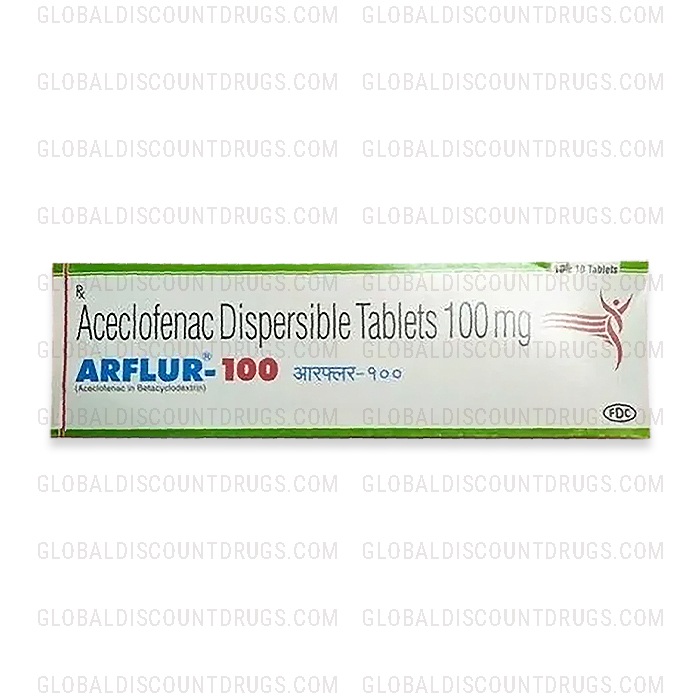
| Indian Brand | Arflur 100mg DT |
| US Brand Name | Aceclofenac DT |
| Generic Name | Aceclofenac |
| Dosage | 100mg |
| Drug Type | Tablets |