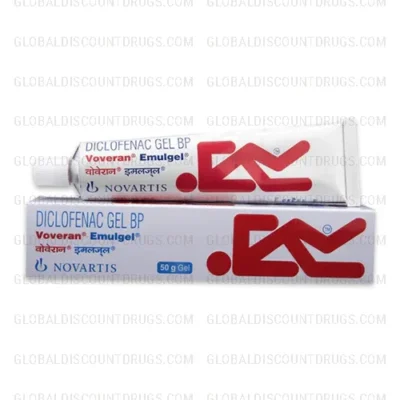

Diclofenac Gel 1%-30g
In StockDiclofenac 1% Gel is a topical NSAID used to relieve localized pain associated with selected joint and musculoskeletal conditions. Apply only to intact skin and use no more than the recommended amount.
| Active Ingredient: | Diclofenac |
|---|---|
| Indication: | Pain and Inflammation |
| Strength: | 1% 30g |
| Dosage Form: | Gel |
| Manufacturer: | Novartis |

Diclofenac Gel 1% 30g – Quick Overview
Diclofenac Gel 1% 30g is a topical nonsteroidal anti-inflammatory drug (NSAID) used to relieve arthritis pain in joints such as the knees, hands, wrists, elbows, ankles, and feet. It works by blocking prostaglandins that cause pain and inflammation. In the US, 1% diclofenac gel is sold over the counter for arthritis pain; ask a pharmacist or doctor before first use.
Medical Supervision & Regulatory Status
In the US, 1% diclofenac gel for arthritis pain is available over the counter (OTC), and some products are labeled prescription-only, so always follow the label on your pack.
Rules differ in other countries, where the same gel may be sold only by prescription or behind the pharmacy counter. Even when no prescription is needed, a pharmacist or doctor should confirm it is right for you, because diclofenac is an NSAID that carries a liver warning on the label and can affect the stomach, heart, and kidneys, especially with other medicines or long-term use.
Clinical Context
Diclofenac gel is used to treat pain from arthritis in specific joints, most often osteoarthritis of the knees and hands, where cartilage wear causes pain and stiffness.
Joint pain can limit walking, gripping, sleeping, and daily tasks. Treating pain and inflammation helps people stay active, which is an important part of managing arthritis over the long term.
Topical NSAIDs apply the medicine directly where it hurts, so less reaches the bloodstream than with tablets. This is why doctors and pharmacists often suggest a gel for pain in a few joints, particularly for people who cannot tolerate oral NSAIDs well. It relieves symptoms but does not cure arthritis.
How Diclofenac Gel 1% Works
Diclofenac belongs to the NSAID class and works by reducing the body’s production of prostaglandins, chemicals that cause pain, swelling, and inflammation in joints.
It blocks cyclooxygenase (COX) enzymes. When the gel is rubbed into the skin over a joint, diclofenac passes through the skin to nearby tissues, where it helps lower local inflammation and pain.
Only a small amount of the drug is absorbed into the blood compared with oral diclofenac. That lowers, but does not remove, the risk of whole-body NSAID side effects such as stomach, heart, kidney, and liver problems. Many people notice benefit gradually, and full effect can take up to 7 days.
What Is Diclofenac Gel 1% 30g?
| Feature | Details |
|---|---|
| Drug Class | Topical nonsteroidal anti-inflammatory drug (NSAID) |
| Active Ingredient | Diclofenac sodium 1% (10 mg per gram) |
| Mechanism | Blocks COX enzymes in treated tissue, lowering prostaglandin production. This reduces joint pain and inflammation. |
| Form | Gel for use on the skin only; 30 g (about 1 oz) tube |
| Dosing Frequency | Up to 4 times daily to the affected joint, measured with the dosing card |
| Regulatory Status | OTC in the US for arthritis pain; some products are prescription-only. Rules vary by country. |
Uses / Indications
Diclofenac gel 1% is used for the temporary relief of arthritis pain in specific joints. It is not meant for sprains, muscle strains, back pain, or any pain a doctor has not evaluated.
- Upper body joints: Hands, wrists, and elbows.
- Lower body joints: Knees, ankles, and feet.
- Not for: The spine, hips, or shoulders, where the gel was not studied.
How to Use / Dosage
Use diclofenac gel exactly as the label or your doctor directs, and measure every dose with the enclosed dosing card, because too much gel raises the risk of side effects.
- Dose: The label dose is generally 2 grams for each upper body joint and 4 grams for each lower body joint, up to 4 times a day. Do not exceed 32 grams a day across all joints, 8 grams a day to any one upper body joint, or 16 grams a day to any one lower body joint. Your doctor determines the right dose for you.
- Timing: Apply to clean, dry, unbroken skin at around the same times each day. Gently rub it in, then wash your hands unless the hands are the treated area. Avoid showering or bathing for at least an hour after application.
- Avoid: Do not use with heat pads, tight bandages, or airtight dressings, and avoid sun, tanning beds, and sunlamps on treated skin. Keep gel out of the eyes, nose, and mouth.
- Missed dose: Apply it when you remember, unless your next application is nearly due. Never apply extra gel to catch up.
- Stopping: You can usually stop without tapering. Talk to your doctor if pain returns, gets worse, or lasts more than 21 days.
- Pack size: A 30 g tube provides roughly 7 lower-joint doses or 15 upper-joint doses, so it may run out quickly at full dosing.
Side Effects
Because only a small amount is absorbed, most people use diclofenac gel without problems, but it is important to know what to watch for.
Common effects occur on the treated skin and include dryness, itching, redness, rash, peeling, or irritation. These are usually mild. Stop using the gel if the rash is severe or spreads.
Serious effects are uncommon but can occur because diclofenac is an NSAID. They include serious allergic reactions, severe skin reactions, stomach or intestinal bleeding, heart attack or stroke, high blood pressure, fluid retention, kidney problems, and liver injury. The FDA warns that NSAIDs as a class can raise heart attack and stroke risk, and the label of this gel carries a liver warning.
Emergency Warning Signs
Stop using the gel and get urgent medical care if you notice:
- Swelling of the face, lips, tongue, or throat, hives, or trouble breathing or wheezing
- Severe skin rash, blistering, or peeling skin
- Chest pain, shortness of breath, or weakness on one side of the body
- Slurred speech or sudden vision or balance problems
- Black, tarry, or bloody stools, or vomiting blood
- Yellowing of the skin or eyes, or dark urine
- Sudden swelling of the legs, feet, or ankles, or very little urination
Warnings & Precautions
Contraindications. Do not use diclofenac gel if you are allergic to diclofenac or any ingredient, or if aspirin or another NSAID has caused asthma, hives, or an allergic reaction. It is contraindicated around coronary artery bypass graft (CABG) heart surgery. Do not apply it to open wounds, cuts, infections, rashes, or damaged skin.
Drug interactions. Topical absorption is low, but interactions are still possible with blood thinners such as warfarin, aspirin and other NSAIDs, SSRI and SNRI antidepressants (higher bleeding risk), ACE inhibitors, ARBs, and diuretics (kidney and blood pressure effects), and digoxin (higher digoxin levels). Never use it together with other products that contain diclofenac, including tablets or other gels.
Pregnancy and breastfeeding. Avoid diclofenac gel in the third trimester of pregnancy, and the FDA advises caution with NSAIDs from about 20 weeks, when they may cause fetal kidney problems. Ask your doctor before using it at any stage of pregnancy or while breastfeeding. NSAIDs may also affect fertility in some women, so tell your doctor if you are trying to conceive.
Special populations. Use caution and ask a doctor first if you have heart disease, high blood pressure, heart failure, kidney or liver disease, stomach ulcers or bleeding, or asthma. Older adults face higher NSAID risks. Do not use it in children unless a doctor directs it.
Monitoring. If you use it regularly or for a long time, your doctor may check blood pressure, kidney function, and liver enzymes. Stop use and ask a doctor if pain worsens, lasts more than 21 days, or new symptoms appear.
Who Should Not Use This Medication
Do not use Diclofenac Gel 1% if any of the following apply to you:
- You are allergic to diclofenac, aspirin, or other NSAIDs
- Aspirin or NSAIDs have previously triggered asthma, hives, or a severe allergic reaction
- You are scheduled for or have recently had heart bypass (CABG) surgery
- You are in the third trimester of pregnancy
- The skin is broken, infected, burned, or has an open wound or rash
- You are already using another diclofenac product
- You want to treat the spine, hips, or shoulders, or pain from a sprain or strain, without a doctor’s advice
Storage Instructions
Store diclofenac gel in a cool, dry place with the cap tightly closed so it stays effective and safe.
- Temperature: Store at room temperature, about 68–77°F (20–25°C), unless your label says otherwise.
- Moisture and light: Keep away from heat, direct sunlight, and damp areas such as bathrooms, and replace the cap after each use.
- Child safety: Keep the tube and dosing card out of reach of children. If anyone swallows the gel, call Poison Control at 1-800-222-1222 or seek emergency care. Do not use after the expiry date.
Frequently Asked Questions
What is the cost of Diclofenac Gel 1% 30g without insurance?
The cost without insurance depends on the seller, brand availability, and pack size. Diclofenac gel is generally affordable, especially as a store-brand or generic product, though prices also vary by location and discounts. A 30 g tube is a small pack, so comparing the price per gram can help. Ask a pharmacist which option suits you.
How can I order Diclofenac Gel 1% online?
Over-the-counter 1% diclofenac gel does not need a prescription in the US, but prescription-labeled versions do. Choose a licensed, verified pharmacy, add the product to your cart, and have it delivered. If a prescription is required, upload it or have your doctor send it. Avoid sites selling prescription products without asking for one.
Do I need a prescription for Diclofenac Gel 1%, or is it available over the counter?
Not always. In the US, 1% diclofenac gel is sold over the counter for arthritis pain, though some products are labeled prescription-only, and rules vary by country. Even without a prescription, talk to a pharmacist or doctor first if you have stomach, heart, kidney, or liver problems, or take blood thinners or other NSAIDs.
How long does Diclofenac Gel take to work?
It can take up to 7 days to feel the full benefit, so it is not for immediate relief. Apply it as directed, up to four times daily to the affected joint. If pain gets worse or lasts more than 21 days, stop using it and ask a doctor about other treatment options.
Is it safe to stop using Diclofenac Gel suddenly?
Yes, you can usually stop using diclofenac gel without tapering, because it is applied to the skin and is not known to cause withdrawal effects. Your arthritis pain may return. Stop right away and seek care if you develop a rash, hives, swelling, wheezing, or chest pain, and ask your doctor about alternatives.
Can Diclofenac Gel interact with other medicines?
Yes, diclofenac gel can interact with blood thinners such as warfarin, aspirin, other NSAIDs, SSRIs and SNRIs, digoxin, and blood pressure medicines such as ACE inhibitors and diuretics. Absorption through skin is low, but bleeding, stomach, and kidney risks can still rise. Do not use it with other diclofenac products, and tell your pharmacist about everything you take.
What should I do if I miss a dose of Diclofenac Gel?
Apply the missed dose as soon as you remember, unless it is nearly time for your next application. Skip it in that case and continue your usual schedule. Never apply extra gel or exceed the dosing card amounts to catch up, because this raises the chance of side effects. Use the enclosed dosing card to measure each dose.
References
- MedlinePlus, U.S. National Library of Medicine. Diclofenac Topical (arthritis pain). https://medlineplus.gov/druginfo/meds/a611002.html
- Drugs.com (FDA label text). Voltaren Arthritis Pain (diclofenac sodium) gel: package insert / prescribing information. https://drugs.com/pro/voltaren-arthritis-pain.html
- U.S. Food and Drug Administration. FDA Drug Safety Communication: FDA strengthens warning that non-aspirin NSAIDs can cause heart attacks or strokes. https://www.fda.gov/Drugs/Drugsafety/ucm451800.htm
Medical Disclaimer:
This content is for informational purposes only and does not constitute medical advice, diagnosis, or treatment. Consult a qualified specialist or physician before using Diclofenac Gel 1% 30g.
| Quantity | 12, 3, 6, 9 |
|---|---|
| Indication | Pain and Inflammation |
| Active Ingredient | Diclofenac |
| Pharmaceutical Form | Gel |
| Manufacturer | Novartis |
| Indian Brand | Voveran Emulgel 1%-30g |
| US Brand Name | Cataflam, Diclofenac, Dicloflex, Diclohexal, Diclomax, Dinac, Fenac, Fenactol, Imflac, Motifene, Voltaren, Voltarol |
| Generic Name | Diclofenac |
| Dosage | 1% 30g |
| Drug Type | Tubes |