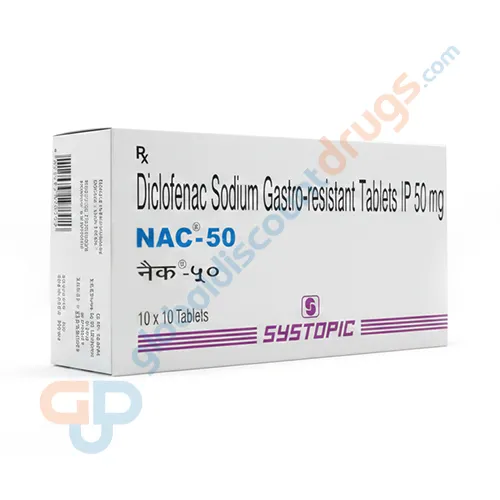
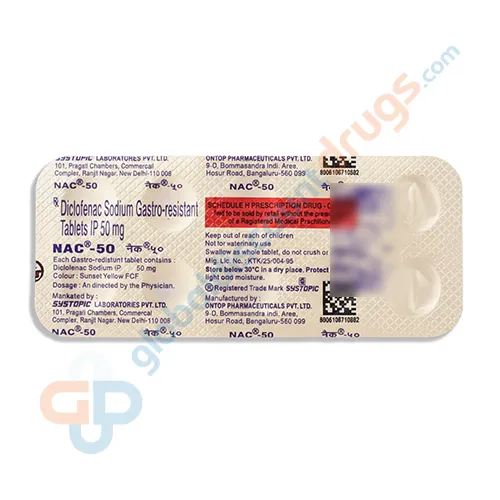
Diclofenac 50mg
In StockDiclofenac 50 mg Tablet is a prescription NSAID used to reduce pain and inflammation in selected musculoskeletal conditions. Use the lowest effective dose for the shortest appropriate duration.
| Active Ingredient: | Diclofenac |
|---|---|
| Indication: | Pain and Inflammation |
| Strength: | 50mg |
| Dosage Form: | Tablets |
| Manufacturer: | Systopic Laboratories |

Diclofenac 50mg – Quick Overview
Diclofenac 50mg is an FDA-approved nonsteroidal anti-inflammatory drug (NSAID) used to relieve pain, swelling, and stiffness from arthritis and other inflammatory conditions. It works by blocking enzymes that produce pain- and inflammation-causing chemicals in the body. Diclofenac 50mg is available by prescription only and carries boxed warnings for cardiovascular and gastrointestinal risks, so it should be used exactly as your doctor directs.
Medical Supervision & Regulatory Status
Diclofenac 50mg is a prescription-only medication in the United States, regulated by the FDA. It carries an FDA boxed warning — the agency’s strongest safety alert — for increased risk of heart attack, stroke, and serious gastrointestinal bleeding. Because of these risks, ongoing medical supervision is required to determine the right dose, duration, and monitoring plan for each patient.
Clinical Context
Chronic joint conditions such as osteoarthritis and rheumatoid arthritis cause ongoing pain, swelling, and reduced mobility that can significantly affect daily function. Inflammatory flare-ups in these conditions often require more than simple pain relief — they need a medication that also targets the underlying inflammation.
Diclofenac addresses this by reducing both pain and inflammation at the source, rather than just masking discomfort. This makes it useful not only for arthritis but also for acute pain conditions like primary dysmenorrhea, where inflammation contributes directly to symptom severity.
Within treatment plans, diclofenac generally serves as a short- to medium-term option for symptom control, used at the lowest effective dose for the shortest duration needed, alongside other disease-specific therapies for chronic conditions like rheumatoid arthritis.
How Diclofenac 50mg Works
Diclofenac belongs to the NSAID drug class, specifically the arylacetic acid group. It works by inhibiting cyclooxygenase (COX-1 and COX-2) enzymes, which are responsible for producing prostaglandins — the chemical compounds that trigger pain, swelling, and inflammation in the body.
By lowering prostaglandin production, diclofenac reduces inflammation at the site of injury or joint damage and decreases the pain signals sent to the brain. This dual action on both inflammation and pain perception is what distinguishes NSAIDs like diclofenac from simple analgesics such as acetaminophen.
For patients with arthritis or acute inflammatory pain, this translates into reduced joint swelling, improved mobility, and meaningful pain relief when taken as prescribed.
What is Diclofenac 50mg?
- Drug Class: Nonsteroidal anti-inflammatory drug (NSAID)
- Active Ingredient: Diclofenac potassium or diclofenac sodium 50 mg
- Mechanism: Inhibits COX-1/COX-2 enzymes, reducing prostaglandin production and inflammation.
- Form: Oral tablet (immediate-release or delayed-release, depending on formulation)
- Dosing Frequency: Typically 2–3 times daily, as prescribed
- Regulatory Status: FDA-approved; prescription-only in the U.S.
Uses / Indications
Osteoarthritis: Relieves joint pain, stiffness, and inflammation from cartilage wear.
Rheumatoid arthritis: Reduces pain and swelling from autoimmune joint inflammation.
Ankylosing spondylitis: Eases chronic inflammatory back and joint pain.
Primary dysmenorrhea: Relieves menstrual cramping linked to inflammation.
Acute pain: Used short-term for pain management as directed by a physician.
How to Use / Dosage
Your doctor will determine the exact dose and schedule based on your condition, other health factors, and response to treatment — do not adjust the dose yourself. Diclofenac is generally taken 2–3 times daily, often with food or milk to reduce stomach irritation, and tablets should be swallowed whole rather than crushed or chewed. If you miss a dose, take it as soon as you remember unless it’s close to your next scheduled dose, in which case skip it rather than doubling up. Do not stop diclofenac suddenly if you’ve been on it long-term for a chronic condition without talking to your doctor, since abrupt discontinuation can allow inflammation and pain to return.
Side Effects
Most people tolerate diclofenac well at the prescribed dose, and side effects are often manageable.
Common side effects include stomach pain, heartburn, nausea, diarrhea, headache, dizziness, and fluid retention. These are usually mild and may lessen as your body adjusts.
Serious side effects are less common but reflect the medication’s boxed warnings, including gastrointestinal ulcers or bleeding, cardiovascular events like heart attack or stroke, liver enzyme abnormalities, and kidney impairment — risks that increase with long-term or high-dose use.
Emergency Warning Signs — seek immediate medical care if you experience:
- Chest pain, shortness of breath, or sudden weakness on one side of the body
- Slurred speech or difficulty speaking
- Black, tarry, or bloody stools
- Vomiting blood or material resembling coffee grounds
- Severe stomach pain that doesn’t go away
- Swelling of the face, lips, throat, or difficulty breathing
- Significant swelling of the ankles, feet, or sudden weight gain
Warnings & Precautions
Diclofenac carries an FDA boxed warning for cardiovascular thrombotic events, including heart attack and stroke, which can occur early in treatment and risk increases with duration of use and higher doses; it should be avoided in patients who have recently had a heart attack or who are undergoing coronary artery bypass graft (CABG) surgery. It also carries a boxed warning for serious gastrointestinal bleeding, ulceration, and perforation, which can occur without warning symptoms and is more likely in older adults or those with a history of ulcers.
Diclofenac should not be combined with other NSAIDs or aspirin, as this increases bleeding risk without added benefit; it can also interact with anticoagulants such as warfarin (increased bleeding risk), lithium and methotrexate (increased drug levels and toxicity), diuretics and blood pressure medications like ACE inhibitors or ARBs (reduced effectiveness and kidney strain), and corticosteroids (increased GI bleeding risk). Use in the third trimester of pregnancy is not recommended due to risks to fetal heart circulation, and use during breastfeeding should be discussed with a doctor. Older adults, patients with reduced kidney or liver function, and those with a history of heart disease or high blood pressure require closer monitoring, and periodic blood pressure, kidney, and liver function checks are recommended with ongoing use.
Who Should Not Use This Medication
- Patients with active gastrointestinal bleeding or a history of NSAID-related ulcers
- Anyone undergoing or recently recovered from CABG heart surgery
- Individuals with a known hypersensitivity to diclofenac, aspirin, or other NSAIDs
- Patients with severe, uncontrolled heart failure
- People with severe kidney or liver impairment
- Women in the third trimester of pregnancy
Storage Instructions
Store diclofenac tablets at room temperature, away from excess heat and moisture (avoid storing in bathrooms). Keep the medication in its original, tightly closed container away from direct light. Store out of reach and sight of children, and dispose of unused tablets through an FDA-recommended drug take-back program rather than throwing them in household trash.
Frequently Asked Questions
What is Diclofenac 50mg used for?
Diclofenac 50mg is used to relieve pain, swelling, and stiffness from osteoarthritis, rheumatoid arthritis, ankylosing spondylitis, and menstrual cramps. It works by reducing inflammation-causing chemicals in the body.
Does Diclofenac 50mg require a prescription?
Yes, diclofenac 50mg is prescription-only in the United States. A doctor’s evaluation is needed to confirm it’s appropriate for your condition and to check for heart, kidney, or GI risk factors before starting.
How long does it take to work?
Diclofenac typically begins relieving pain within an hour, with fuller anti-inflammatory effects building over several days of consistent use. Consult your doctor if symptoms don’t improve as expected.
Is it safe to stop taking Diclofenac suddenly?
For short-term use, stopping once pain resolves is generally fine. If you’re on it long-term for a chronic condition, talk to your doctor before stopping, since inflammation and pain may return without a transition plan.
What if I miss a dose?
Take the missed dose as soon as you remember, unless it’s almost time for your next dose — in that case, skip it and continue your regular schedule. Never double up to make up for a missed dose.
Can Diclofenac interact with other medications?
Yes, it can interact significantly with blood thinners, other NSAIDs or aspirin, lithium, methotrexate, and certain blood pressure medications. Always share your complete medication list with your doctor or pharmacist.
What is the cost of Diclofenac 50mg without insurance?
The cost without insurance depends on the seller, brand availability, and pack size, and may also vary by location and available pharmacy discounts. Generic diclofenac is generally more affordable than brand-name versions.
Resources
DailyMed (NIH) – Diclofenac Sodium Delayed-Release Tablets, FDA Label: https://dailymed.nlm.nih.gov/dailymed/fda/fdaDrugXsl.cfm?setid=b3dbd981-453c-645f-e053-2a95a90aec3c
DailyMed (NIH) – Diclofenac Potassium Tablets USP, 50 mg, FDA Label: https://www.dailymed.nlm.nih.gov/dailymed/fda/fdaDrugXsl.cfm?setid=29235691-2395-4ea1-892a-379c59e7d3c4&type=display
Medical Disclaimer
This content is for informational purposes only and does not constitute medical advice, diagnosis, or treatment. Consult a qualified specialist or physician before using Diclofenac 50mg.
Prescription Required (Rx) to Buy?
This medication is not available over the counter. A valid prescription from a licensed healthcare
professional is required. Always consult your doctor before use.
| Quantity | 180, 270, 360, 90 |
|---|---|
| Indication | Pain and Inflammation |
| Active Ingredient | Diclofenac |
| Pharmaceutical Form | Tablets |
| Manufacturer | Systopic Laboratories |
| Indian Brand | NAC 50mg |
| US Brand Name | Cataflam, Diclofenac, Dicloflex, Diclohexal, Diclomax, Dinac, Fenac, Fenactol, Imflac, Motifene, Voltaren, Voltarol |
| Generic Name | Diclofenac |
| Dosage | 50mg |
| Drug Type | Tablets |
What is Diclofenac 50mg used for?
What is the price of Diclofenac 50mg?
What is the cost of Diclofenac 50mg without insurance?
Is Diclofenac 50mg available over the counter?
Is it safe to order Diclofenac 50mg online?
Does Diclofenac 50mg require a prescription?