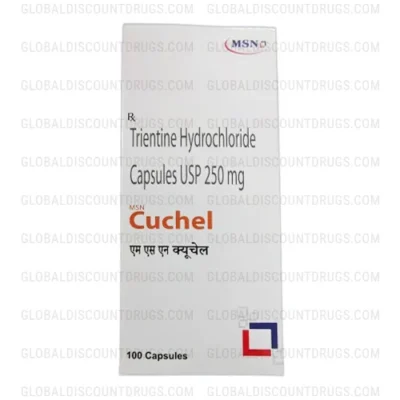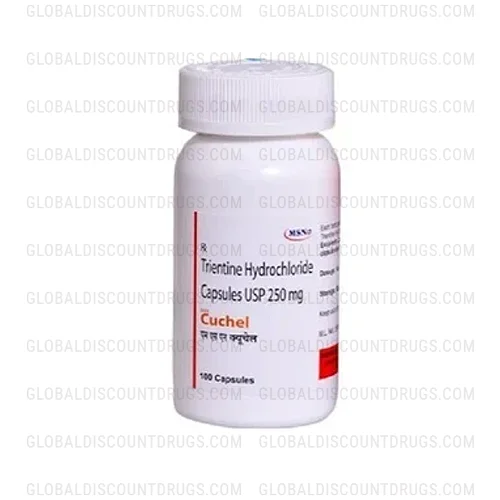
Trientine Hydrochloride 250mg
In StockTrientine Hydrochloride 250 mg Capsule is a prescription copper-chelating medicine used for the long-term management of Wilson’s disease. Regular monitoring of copper levels and liver function may be required during treatment.
| Active Ingredient: | Trientine Hydrochloride |
|---|---|
| Indication: | Wilson's Disease |
| Strength: | 250mg |
| Dosage Form: | Capsules |
| Manufacturer: | MSN Laboratories Pvt Ltd |

Trientine Hydrochloride 250mg Quick Overview
Trientine Hydrochloride 250mg is a prescription chelating agent used to treat Wilson’s disease, a rare inherited condition that causes copper to build up in the body, particularly in patients who cannot tolerate penicillamine. It works by binding to excess copper so the body can remove it through urine. This medication requires a prescription and lifelong monitoring, and must be taken on an empty stomach exactly as directed.
Medical Supervision & Regulatory Status
Trientine Hydrochloride is an FDA-approved prescription medication in the United States and is not available over the counter. Because Wilson’s disease requires ongoing management and this medication demands precise dosing and consistent monitoring of copper levels, blood counts, and kidney function, treatment must be closely supervised by a physician experienced in managing this condition.
Clinical Context
Wilson’s disease is a genetic disorder that prevents the body from properly eliminating excess copper, allowing it to accumulate in the liver, brain, and other organs over time. If untreated, this buildup can lead to serious liver damage, neurological symptoms, and other organ complications.
Chelating agents are central to Wilson’s disease treatment because they actively remove excess copper from the body rather than simply managing symptoms. Trientine is typically used as an alternative for patients who cannot tolerate penicillamine, the other major chelating agent used for this condition, due to side effects or intolerance.
Trientine fits into long-term Wilson’s disease management as a maintenance therapy, often continued for life alongside regular monitoring to keep copper levels within a safe range.
How Trientine Works
Trientine Hydrochloride belongs to a class of medications known as copper chelating agents. It works by binding tightly to copper circulating in the body, forming a stable compound that the kidneys can then filter out and eliminate through urine.
By actively removing excess copper rather than just limiting dietary intake, trientine helps lower the toxic copper burden that builds up in organs like the liver and brain in Wilson’s disease. Over time, this reduction in copper levels helps prevent further organ damage and can improve symptoms related to copper accumulation.
This mechanism makes trientine a key long-term tool for keeping copper levels controlled in patients managing this lifelong condition.
What Is Trientine?
- Drug Class: Copper chelating agent
- Active Ingredient: Trientine Hydrochloride
- Mechanism: Binds to excess copper, allowing it to be eliminated through the kidneys
- Form: Oral capsule
- Strength: 250mg
- Dosing Frequency: Typically two to four times daily on an empty stomach
- Regulatory Status: FDA-approved, prescription only
Uses / Indications
- Wilson’s disease: Used to treat copper accumulation in patients who cannot tolerate penicillamine, the other primary chelating treatment for this condition.
How to Use / Dosage
Take trientine exactly as prescribed, on an empty stomach, at least one hour before or two hours after meals and separated from other medications, milk, or mineral supplements, since food and certain substances can interfere with absorption. Your doctor determines your specific dose and schedule based on regular blood and urine copper testing. If you miss a dose, take it as soon as you remember if it still fits the empty-stomach timing; if not, skip it and take your next dose at the regular time rather than doubling up. Do not stop this medication without your doctor’s guidance, even if you feel well, since interrupting treatment can allow copper to reaccumulate and cause serious, potentially rapid, complications.
Side Effects
Most people tolerate trientine reasonably well when taken correctly, though side effects can occur.
Common effects may include nausea, stomach discomfort, and mild skin irritation.
Serious effects are less common but can include iron deficiency anemia with long-term use, and rarely, worsening of neurological symptoms that can occur when starting treatment as copper is mobilized from tissue.
Emergency Warning Signs — seek medical attention if you notice:
- New or worsening tremors, difficulty speaking, or coordination problems
- Unusual fatigue, pale skin, or shortness of breath (possible signs of anemia)
- Signs of an allergic reaction (rash, swelling, difficulty breathing)
- Fever, sore throat, or unusual bruising or bleeding
- Severe or persistent stomach pain
- Any sudden, unexplained worsening of Wilson’s disease symptoms
Warnings & Precautions
Trientine should not be used by individuals with a known hypersensitivity to trientine hydrochloride. Because copper deficiency can occur with excessive or improperly monitored use, regular laboratory monitoring of copper levels, complete blood counts, and urinalysis is required throughout treatment to keep dosing appropriately balanced.
This medication should be taken separately from iron supplements and other mineral products, since trientine can bind to these minerals and reduce their absorption, and iron in particular can also reduce trientine’s effectiveness if taken too close together. Some patients starting trientine, particularly those switching from another chelating agent, may experience a temporary worsening of neurological symptoms as copper shifts within the body; this should be monitored closely by a physician.
Pregnant individuals should discuss the risks and benefits of continuing treatment with their doctor, since untreated Wilson’s disease itself poses serious risks, and treatment decisions during pregnancy require specialist input. Breastfeeding individuals should also consult their doctor before use. Because Wilson’s disease requires lifelong management, patients should not discontinue trientine without medical supervision, even during pregnancy, without a carefully considered plan.
Who Should Not Use This Medication
- Anyone with a known allergy to trientine hydrochloride
- Patients who abruptly stop treatment without medical supervision, given the risk of rapid copper reaccumulation
- Individuals taking iron supplements at the same time without spacing doses appropriately
- Anyone without confirmed Wilson’s disease or another condition specifically directed by their physician
Storage Instructions
Store in the refrigerator or at room temperature, following the specific storage instructions provided with your prescription, as requirements can vary by manufacturer. Keep the container tightly closed and protected from moisture. Keep out of reach of children.
Frequently Asked Questions
What is the cost of Trientine Hydrochloride 250mg without insurance?
The cost without insurance depends on the seller, brand availability, and pack size, and may also vary by location and available discounts. As a specialty medication for a rare condition, cost can vary significantly, so checking with a pharmacy directly is recommended.
How can I order Trientine Hydrochloride 250mg online?
A valid prescription is required to order trientine. Typically, you or your doctor submit the prescription to a licensed specialty pharmacy, which then processes and ships the order. Always use a verified, licensed pharmacy to ensure the medication is safe and authentic.
Is Trientine Hydrochloride 250mg available over the counter?
No, trientine is not available over the counter in the United States. It requires a prescription and close physician supervision due to the complexity of managing Wilson’s disease.
Does Trientine Hydrochloride 250mg require a prescription?
Yes, a prescription is required. Regular monitoring of copper levels and blood counts is also necessary throughout treatment to ensure safe and effective dosing.
How long does it take to work?
Copper levels typically begin to improve within the first few weeks to months of treatment, though full clinical benefit for Wilson’s disease symptoms can take longer and is tracked through ongoing lab monitoring. Your doctor will assess progress at follow-up visits.
Is it safe to stop taking it suddenly?
No, stopping trientine suddenly is not recommended without medical guidance, since copper can reaccumulate quickly in patients with Wilson’s disease, potentially leading to serious complications. Always talk to your doctor before making any changes to treatment.
What happens if I miss a dose?
If it’s still within the appropriate empty-stomach window, take it as soon as you remember; otherwise, skip it and resume your regular dosing schedule. Don’t double up on doses to make up for a missed one.
References
- MedlinePlus – Trientine: https://medlineplus.gov/druginfo/meds/a685033.html
- FDA – Trientine Hydrochloride Prescribing Information: https://www.accessdata.fda.gov/scripts/cder/daf/
- DailyMed (NIH) – Trientine Hydrochloride Capsule Labeling: https://dailymed.nlm.nih.gov/dailymed/
Medical Disclaimer
This content is for informational purposes only and does not constitute medical advice, diagnosis, or treatment. Consult a qualified specialist or physician before using Trientine Hydrochloride 250mg.
Prescription Required (Rx) to Buy?
This medication is not available over the counter. A valid prescription from a licensed healthcare
professional is required. Always consult your doctor before use.
| Quantity | 120, 30, 60, 90 |
|---|---|
| Indication | Wilson's Disease |
| Active Ingredient | Trientine Hydrochloride |
| Pharmaceutical Form | Capsules |
| Manufacturer | MSN Laboratories Pvt Ltd |
| Indian Brand | Cuchel 250mg |
| US Brand Name | Syprine, Trientine Hydrochloride |
| Generic Name | Trientine Hydrochloride |
| Dosage | 250mg |
| Drug Type | Capsules |