
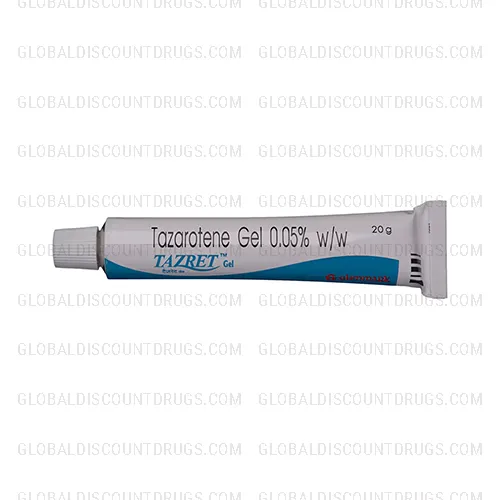
Tazarotene 0.05% Gel 20gm
Out of StockTazarotene 0.05% Gel is a topical retinoid that promotes healthy skin cell turnover for acne vulgaris and plaque psoriasis. Because skin sensitivity may increase during therapy, regular sun protection is recommended.
| Active Ingredient: | Tazarotene |
|---|---|
| Indication: | Acne Vulgaris |
| Strength: | 0.05%-20gm |
| Dosage Form: | Gel |
| Manufacturer: | Glenmark |

Tazarotene 0.05% Gel 20gm Quick Overview
Tazarotene 0.05% Gel is a prescription topical retinoid used to treat plaque psoriasis and, at times, acne, by normalizing skin cell turnover in affected areas. It works by binding to retinoid receptors in the skin to reduce abnormal cell growth and inflammation. This medication is contraindicated during pregnancy due to a risk of fetal harm, and it should only be used exactly as prescribed by a doctor.
Medical Supervision & Regulatory Status
Tazarotene 0.05% Gel is a prescription-only (Rx) medication in the US, regulated by the FDA as a topical retinoid. Medical supervision is required both to confirm the diagnosis and to screen for pregnancy risk, since retinoids as a class carry a well-established risk of birth defects when systemic exposure occurs.
Clinical Context
Tazarotene gel is indicated for the topical treatment of plaque psoriasis involving up to 20% of body surface area. Plaque psoriasis causes thickened, scaly, inflamed patches of skin that can be itchy, uncomfortable, and visually distressing, often requiring ongoing management rather than a one-time cure.
People typically seek treatment for psoriasis when patches are persistent, spreading, or affecting quality of life, and after milder over-the-counter options have proven insufficient. Higher-strength tazarotene formulations are also used for facial acne in some patients.
Topical tazarotene fits into psoriasis therapy as a targeted, localized treatment option, often used alongside other psoriasis management strategies under a dermatologist’s guidance, particularly for limited or localized plaques rather than widespread disease.
How Tazarotene 0.05% Gel Works
Tazarotene belongs to the retinoid class of medications, chemically related to vitamin A. Once applied, it is converted in the skin to its active form, tazarotenic acid, which binds to specific retinoid receptors in skin cells.
This receptor binding helps normalize the abnormal, rapid skin cell turnover characteristic of psoriasis, reducing scaling, thickness, and inflammation of affected plaques over time. Systemic absorption of the medication is generally low, measured at less than 1% of the applied dose in psoriasis patients without occlusion.
For patients, this means tazarotene primarily acts locally on treated skin, but because retinoids as a class can still affect fetal development if any systemic absorption occurs, pregnancy precautions remain essential regardless of the low absorption rate.
What is Tazarotene 0.05% Gel?
| Attribute | Details |
|---|---|
| Drug Class | Topical retinoid |
| Active Ingredient | Tazarotene 0.05% w/w, equivalent to 0.5 mg per gram |
| Mechanism of Action | Activates retinoid receptors to regulate skin-cell growth and differentiation, normalize cell turnover, and reduce inflammation |
| Dosage Form | Translucent, water-based topical gel |
| Pack Size | 20 g tube |
| Typical Dosing Frequency | Applied once daily, usually in the evening, as prescribed |
| Regulatory Status | Prescription-only medicine (Rx) |
Uses / Indications
| Indication | Details |
|---|---|
| Plaque Psoriasis | Used to treat stable plaque psoriasis involving up to 20% of the body surface area, as prescribed. |
| Facial Acne Vulgaris | Tazarotene gel, commonly the 0.1% strength, may be prescribed for mild to moderate facial acne. |
How to Use / Dosage
Apply a thin film of tazarotene gel once per day in the evening, covering only the affected psoriatic lesions — not more than 20% of body surface area. If you’ve recently bathed or showered, make sure skin is fully dry before applying, and if using a moisturizer, apply it at least an hour before the gel. This product is not for use in the eyes, mouth, or vaginally; if accidental contact with the eyes occurs, rinse thoroughly with water.
Only your doctor should determine the treatment duration and any dose adjustments, such as moving to the 0.1% strength if needed and tolerated. If a dose is missed, simply apply it at the next scheduled time rather than doubling up. There is no withdrawal risk with stopping tazarotene, but psoriasis symptoms may return if treatment is discontinued without your doctor’s guidance on an appropriate maintenance plan.
Side Effects
Local skin reactions are the most commonly reported effects with topical tazarotene use. Some individuals may experience excessive itching (pruritus), burning, skin redness, or peeling at the application site. If these effects occur, your doctor may advise discontinuing use until the skin heals, reducing how often you apply it, or switching to a lower concentration.
Serious effects are uncommon with proper topical use limited to the recommended body surface area, but the most significant risk associated with this medication class is harm to a developing fetus if used during pregnancy.
Emergency Warning Signs — seek medical attention if you experience:
- Signs of a pregnancy while using this medication
- Severe skin blistering, swelling, or widespread irritation
- Signs of an allergic reaction (hives, facial swelling, difficulty breathing)
- Severe burning or pain that doesn’t improve
- Skin breakdown or open sores at the application site
- Unusual sensitivity to sunlight with severe sunburn
Warnings & Precautions
Retinoids may cause fetal harm, and based on animal reproduction studies and the potential for systemic absorption, tazarotene gel is contraindicated during pregnancy. Females of child-bearing potential should have a negative pregnancy test within 2 weeks prior to starting treatment and must use an effective method of contraception throughout treatment. Patients should be advised to inform their healthcare provider immediately of a known or suspected pregnancy.
This gel is also contraindicated in anyone with a known hypersensitivity to tazarotene or any component of the formulation. Patients should avoid excessive sun exposure during treatment, since photosensitivity and increased risk of sunburn can occur; use of sunscreen and protective clothing is advised. Because unaffected skin can be more sensitive to irritation, application should be carefully limited to psoriatic lesions only, avoiding healthy surrounding skin. There is no established significant drug interaction data requiring special monitoring, but using other potentially irritating topical products (such as other retinoids, exfoliants, or medicated soaps) at the same time may increase skin irritation and should be discussed with a dermatologist. Breastfeeding individuals should consult their doctor, as safety data on nursing infants exposed via topical use is limited.
Who Should Not Use This Medication
- Pregnant individuals, or those planning pregnancy without effective contraception
- Anyone with a known hypersensitivity to tazarotene or gel components
- Use on eczema-affected, sunburned, or broken/irritated skin without doctor guidance
- Use covering more than the doctor-recommended body surface area
- Use in the eyes, mouth, or vaginally
Storage Instructions
Store at 20°C to 25°C (68°F to 77°F), with excursions permitted between 15°C and 30°C (59°F to 86°F). Keep the tube tightly closed and away from direct sunlight. Keep out of reach of children.
Frequently Asked Questions
Is a prescription needed for Tazarotene 0.05% Gel?
Yes, this is a prescription-only medication in the US and requires a doctor’s evaluation for psoriasis or acne before it can be dispensed.
How long does it take to work?
Visible improvement in psoriasis plaques is typically seen over several weeks of consistent nightly use, though individual response varies. Your doctor will assess progress at follow-up visits.
Is it safe to stop using it early?
Yes, there is no withdrawal concern with stopping tazarotene, but psoriasis symptoms may return without treatment. Discuss any changes to your treatment plan with your doctor first.
Can it interact with other medicines?
There’s no major systemic drug interaction concern, but combining it with other irritating topical products can increase skin irritation. Tell your dermatologist about all other skincare treatments you’re using.
What if I miss an application?
Simply apply it at your next scheduled evening dose — do not apply extra to make up for a missed application, as this can increase irritation.
What is the cost without insurance?
The cost without insurance depends on the seller, brand availability, and pack size, and may also vary by location and available discounts. Generic tazarotene is generally more affordable than brand-name versions.
Is Tazarotene 0.05% Gel available over the counter?
No, it is not available over the counter in most countries and requires a prescription and medical evaluation, particularly due to pregnancy-related risks that need to be screened for before use.
References
DailyMed (NIH) – Tazarotene Gel, 0.05% and 0.1% Full Prescribing Information: https://dailymed.nlm.nih.gov/dailymed/lookup.cfm?setid=ffd11dee-4266-4201-9573-1e82c2d30a63&version=3
DailyMed (NIH) – Tazarotene Gel Dosage and Administration Details: https://dailymed.nlm.nih.gov/dailymed/lookup.cfm?setid=94749b8e-0d00-4257-a660-6d0fc8815fcf
DailyMed (NIH) – TAZORAC (Tazarotene) Gel Labeling: https://dailymed.nlm.nih.gov/dailymed/drugInfo.cfm?setid=4e4e4b81-420e-4492-8a74-80b692a80057
Medical Disclaimer:
This content is for informational purposes only and does not constitute medical advice, diagnosis, or treatment. Consult a qualified specialist or physician before using Tazarotene 0.05% Gel.
Prescription Required (Rx) to Buy?
This medication is not available over the counter. A valid prescription from a licensed healthcare
professional is required. Always consult your doctor before use.
| Quantity | 12, 3, 6, 9 |
|---|---|
| Indication | Acne Vulgaris |
| Active Ingredient | Tazarotene |
| Pharmaceutical Form | Gel |
| Manufacturer | Glenmark |
| Indian Brand | Tazret gel 20gm |
| US Brand Name | Tazarotene 0.05% Gel 20gm |
| Generic Name | Tazarotene |
| Dosage | 0.05%-20gm |
| Drug Type | Tubes |