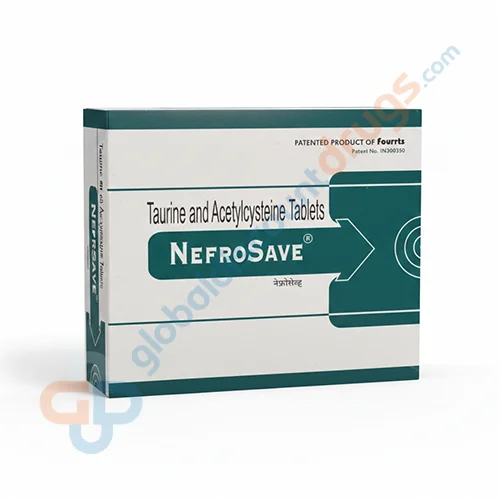
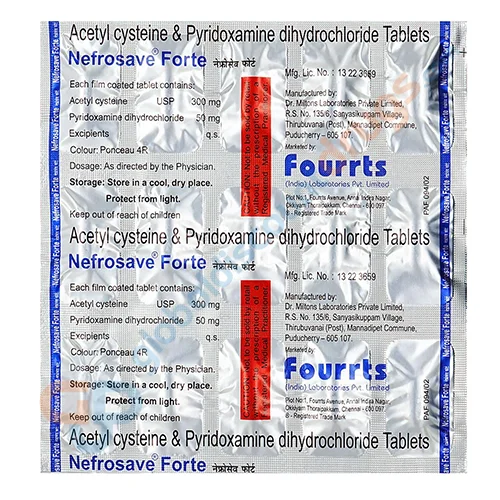
Taurine-Acetylcysteine 500mg-150mg
In Stock| Active Ingredient: | Taurine-Acetylcysteine |
|---|---|
| Indication: | Nutritional Supplementation |
| Strength: | 500mg-150mg |
| Dosage Form: | Tablets |
| Manufacturer: | Fourrts India Laboratories |

Taurine-Acetylcysteine 500mg-150mg – Quick Overview
Taurine-Acetylcysteine 500mg-150mg is a combination supplement-based medication containing two well-studied compounds — taurine, an amino acid with cytoprotective properties, and acetylcysteine (NAC), a potent antioxidant and glutathione precursor. It is primarily used to support liver health, reduce oxidative stress, and assist in the management of hepatic and metabolic conditions. This medicine works by replenishing cellular antioxidants and protecting tissues from oxidative damage. Use only under medical supervision as prescribed.
Medical Supervision & Regulatory Status
Taurine-Acetylcysteine 500mg-150mg may be classified as a prescription medicine or a regulated nutraceutical depending on your country. In India, combination formulations containing acetylcysteine at therapeutic doses are categorized under Schedule H or dispensed under physician guidance. In other regions, regulatory status may differ. Because acetylcysteine carries specific dosing thresholds and potential interactions, medical supervision is strongly recommended before use.
Clinical Context
Oxidative stress — an imbalance between free radicals and the body’s antioxidant defenses — plays a central role in liver disease, metabolic syndrome, chronic kidney conditions, and several inflammatory disorders. When the liver is burdened by alcohol, toxins, medications, or fatty deposits, its natural glutathione reserves are depleted, making cells vulnerable to damage.
Taurine and N-Acetylcysteine (NAC) are two of the most clinically studied compounds for countering this oxidative burden. Taurine helps stabilize cell membranes and modulate bile acid metabolism, while NAC directly restores glutathione levels — the liver’s primary antioxidant defense molecule.
This combination is particularly relevant in patients with non-alcoholic fatty liver disease (NAFLD), drug-induced liver injury, acetaminophen toxicity management, and as adjunctive therapy in chronic hepatic conditions. Physicians may also prescribe it alongside other hepatoprotective agents as part of a broader treatment plan.
How Taurine-Acetylcysteine 500mg-150mg Works
Drug Class: Amino acid antioxidant combination / Hepatoprotective agent
Acetylcysteine (NAC) works by acting as a direct precursor to L-cysteine, which the body uses to synthesize glutathione — the most abundant intracellular antioxidant. By restoring glutathione stores, NAC enables cells to neutralize reactive oxygen species (ROS) that would otherwise cause mitochondrial damage, inflammation, and cell death. This mechanism is especially vital in the liver, which processes most exogenous toxins.
Taurine (500mg) complements this action through multiple pathways. It stabilizes cell membranes, reduces intracellular calcium overload, supports bile conjugation, and exerts anti-inflammatory effects by modulating taurine chloramine pathways. Together, the dual action of these two compounds offers both direct antioxidant replenishment and cellular structural protection — a synergy that neither compound achieves as effectively alone.
The combined result is reduced hepatocellular damage, improved liver enzyme profiles, and systemic antioxidant support — benefits that translate to better patient outcomes in hepatic and metabolic disease management when used as directed.
What is Taurine-Acetylcysteine 500mg-150mg?
| Feature | Detail |
|---|---|
| Drug Class | Amino acid antioxidant / Hepatoprotective combination |
| Active Ingredients | Taurine 500mg + Acetylcysteine (NAC) 150mg |
| Mechanism | Restores glutathione; stabilizes cell membranes and reduces oxidative stress |
| Dosage Form | Oral tablet or capsule (varies by manufacturer) |
| Dosing Frequency | As prescribed — typically once or twice daily with meals |
| Regulatory Status | Prescription or physician-supervised use recommended |
Uses / Indications
Liver Protection and Hepatotoxicity Support Used to protect liver cells from damage caused by toxins, medications (particularly acetaminophen), alcohol, and metabolic overload. NAC is an established agent in acetaminophen overdose management.
Non-Alcoholic Fatty Liver Disease (NAFLD) May be prescribed as adjunctive therapy to reduce hepatic oxidative stress and inflammation in patients diagnosed with NAFLD or NASH (non-alcoholic steatohepatitis).
Oxidative Stress–Related Conditions Used to support antioxidant defense in metabolic syndrome, chronic kidney disease, and inflammatory conditions where glutathione depletion is a contributing factor.
Mucolytic Support (NAC component) Acetylcysteine has established mucolytic properties, and this combination may be considered in some respiratory conditions where concurrent hepatic or antioxidant support is needed.
Drug-Induced Liver Injury (DILI) Used adjunctively in managing liver enzyme elevation associated with long-term medication use, such as antitubercular therapy or statins, under physician guidance.
How to Use / Dosage
General Guidance Only — Your Doctor Determines Your Dose
The appropriate dose of Taurine-Acetylcysteine 500mg-150mg depends on your specific condition, body weight, kidney function, and the severity of oxidative or hepatic burden. Always follow your prescribing physician’s instructions precisely.
Timing: Take with food or immediately after meals to reduce gastric discomfort. If prescribed twice daily, space doses approximately 8–12 hours apart for consistent blood levels.
Missed Dose: If you miss a dose, take it as soon as you remember — unless it is nearly time for your next scheduled dose. In that case, skip the missed dose entirely. Do not double up to compensate.
Do Not Stop Suddenly: Do not discontinue this medication without consulting your doctor, especially if it has been prescribed as part of a liver-protective regimen during ongoing medication therapy. Abrupt discontinuation may reduce the protective effect during a critical treatment window.
Side Effects
Most patients tolerate Taurine-Acetylcysteine 500mg-150mg well when taken at prescribed doses. Side effects, when they occur, are generally mild and tend to resolve as the body adjusts.
Common Side Effects: Nausea, mild gastric discomfort, bloating, or a sulfur-like odor (associated with NAC) are the most frequently reported effects. These are typically transient and can be minimized by taking the medication with food. Mild headache or loose stools may occasionally occur at the start of therapy.
Serious Side Effects: Although uncommon at standard therapeutic doses, high-dose acetylcysteine may cause bronchoconstriction in susceptible individuals — particularly those with reactive airway disease. Rarely, hypersensitivity reactions including skin rash or urticaria may develop. NAC administered intravenously has a well-documented anaphylactoid risk, though oral forms carry a significantly lower risk profile.
Emergency Warning Signs — Seek Immediate Medical Attention If You Experience:
- Sudden difficulty breathing or wheezing
- Severe skin rash, hives, or facial swelling
- Chest tightness or palpitations
- Vomiting that does not stop
- Yellowing of the skin or eyes (jaundice)
- Confusion or unusual drowsiness
Warnings & Precautions
Contraindications: Taurine-Acetylcysteine should not be used by individuals with a known hypersensitivity to taurine, acetylcysteine, or any excipients in the formulation. Patients with active peptic ulcers should exercise caution, as NAC may irritate the gastric mucosa.
Drug Interactions: Acetylcysteine may interact with nitroglycerin (causing severe hypotension and headache) and activated charcoal (reducing NAC absorption when taken simultaneously). It may also potentiate the effects of vasodilators. Patients on anticoagulant therapy should be monitored, as high-dose NAC may influence platelet aggregation. Always inform your doctor of all medications, including herbal supplements, before starting this combination.
Pregnancy and Breastfeeding: The safety of this combination in pregnant or breastfeeding individuals has not been definitively established through large-scale clinical trials. While NAC has been explored in specific obstetric contexts under medical supervision, self-initiation during pregnancy is not recommended. Consult your obstetrician before use.
Special Populations: Patients with asthma or reactive airway disease should use acetylcysteine-containing products with caution, as bronchospasm has been reported. Elderly patients and those with compromised renal function may require dose adjustments. Children should only receive this combination under strict pediatric supervision with age-appropriate dosing.
Monitoring: Your physician may periodically monitor liver enzyme levels (ALT, AST), kidney function, and general biochemical parameters during therapy to ensure the medication is working appropriately and is well-tolerated.
Who Should Not Use This Medication
- Individuals with a confirmed allergy to acetylcysteine or taurine
- Patients with severe active asthma without medical supervision
- Those with active peptic ulcer disease (unless cleared by a physician)
- Patients currently using nitroglycerin or other nitrate medications without medical review
- Pregnant or breastfeeding individuals without explicit physician approval
- Children under the age specified by the prescribing physician
- Patients with end-stage renal disease unless dose-adjusted under nephrology care
Storage Instructions
Temperature: Store at room temperature, between 15°C and 30°C (59°F–86°F). Avoid exposure to heat above 40°C or freezing temperatures.
Moisture and Light: Keep in a dry place away from direct sunlight. Do not store in bathrooms or near kitchen sinks where humidity is high, as moisture may degrade the active ingredients.
Child Safety: Store in the original child-resistant container and keep out of reach of children and pets at all times. In case of accidental ingestion by a child, contact a poison control center or emergency services immediately.
Frequently Asked Questions
What is Taurine-Acetylcysteine 500mg-150mg used for?
Taurine-Acetylcysteine 500mg-150mg is used to support liver health, reduce oxidative stress, and protect cells from damage. It is commonly prescribed in conditions like NAFLD, drug-induced liver injury, and metabolic stress. The combination works by restoring glutathione and stabilizing cell membranes. Always use as directed by your physician for the specific condition being treated.
Does Taurine-Acetylcysteine require a prescription?
Yes, in most countries, formulations containing therapeutic doses of acetylcysteine require a valid prescription. A physician needs to evaluate your condition and determine whether this combination is appropriate, as acetylcysteine carries specific dosing considerations and potential drug interactions that require professional oversight and, in some cases, ongoing monitoring.
Is Taurine-Acetylcysteine available over the counter?
In most countries, this combination at therapeutic doses is not available over the counter. Regulatory status may vary by region — in some markets it may be accessible as a nutraceutical, while others require a prescription. Medical supervision is recommended regardless, as appropriate dosing and monitoring are essential for safe and effective use.
How long does it take for Taurine-Acetylcysteine to work?
The onset of benefit depends on your condition and baseline health status. Some patients notice improvements in energy and reduced symptoms within 2–4 weeks, while measurable changes in liver enzymes may take 6–12 weeks of consistent use. Your doctor will guide you on monitoring timelines and assess treatment progress through periodic investigations as appropriate.
Can I stop taking Taurine-Acetylcysteine suddenly?
Do not stop this medication abruptly without consulting your doctor, especially if it is part of a liver-protective regimen during concurrent drug therapy. While this combination is not associated with physical dependence, stopping mid-course may withdraw its protective benefits during a period when your body still requires antioxidant support.
What is the cost of Taurine-Acetylcysteine 500mg-150mg without insurance?
The cost without insurance depends on the seller, brand availability, and pack size. Generic versions of this combination are generally more affordable than branded formulations. Prices may also vary by location, pharmacy, and available discounts or patient assistance programs. Speak with your pharmacist to explore the most cost-effective option available in your area.
How can I order Taurine-Acetylcysteine 500mg-150mg online?
A valid prescription is required to order this medication from a licensed online pharmacy. The process typically involves uploading your prescription or having your doctor send it directly, selecting your order, and receiving home delivery. Always use a verified, government-licensed pharmacy platform to ensure product authenticity and patient safety. Avoid unauthorized sellers.
References
- DailyMed – National Institutes of Health (NIH) Acetylcysteine Drug Label Information — dailymed.nlm.nih.gov
- MedlinePlus – NIH Acetylcysteine — medlineplus.gov
- PubChem – NIH Taurine Compound Summary — pubchem.ncbi.nlm.nih.gov
- U.S. Food and Drug Administration (FDA) Drug Safety and Availability — fda.gov
- European Medicines Agency (EMA) Acetylcysteine Overview — ema.europa.eu
- World Journal of Gastroenterology Oxidative Stress and Liver Disease — Clinical Review (PubMed indexed) — ncbi.nlm.nih.gov/pubmed
- Lieber CS. S-adenosyl-L-methionine and Antioxidants in Liver Disease — American Journal of Clinical Nutrition, NIH Archive
- Kerksick C, Willoughby D. The Antioxidant Role of Glutathione and N-Acetyl-Cysteine Supplements — Journal of the International Society of Sports Nutrition, 2005. jissn.biomedcentral.com
- Stipanuk MH. Taurine: Overview of its importance in the body — Annual Review of Nutrition (PubMed)
Resources
- Understanding Liver Health – MedlinePlus
- Acetylcysteine – DailyMed Full Prescribing Information
- NAFLD Patient Guide – American Liver Foundation
- Oxidative Stress and Antioxidants – NIH
- Safe Online Pharmacy Verification – NABP
- Drug Interaction Checker – Drugs.com
Disclaimer: This content is for informational purposes only and does not constitute medical advice, diagnosis, or treatment. Consult a qualified specialist or physician before using Taurine-Acetylcysteine 500mg-150mg. Read full medical Desclaimer policy for further details.
Prescription Required (Rx) to Buy?
This medication is not available over the counter. A valid prescription from a licensed healthcare
professional is required. Always consult your doctor before use.
| Quantity | 120, 180, 240, 60 |
|---|---|
| Indication | Nutritional Supplementation |
| Active Ingredient | Taurine-Acetylcysteine |
| Pharmaceutical Form | Tablets |
| Manufacturer | Fourrts India Laboratories |
| Indian Brand | Nefrosave |
| US Brand Name | Taurine-Acetylcysteine |
| Generic Name | Taurine-Acetylcysteine |
| Dosage | 500mg-150mg |
| Drug Type | Tablets |