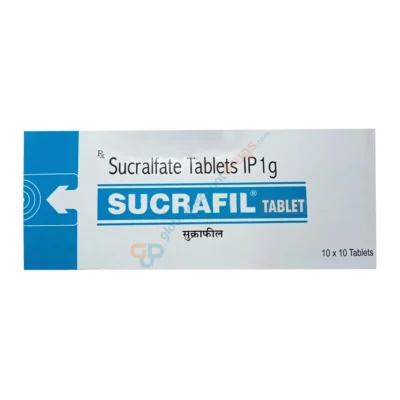
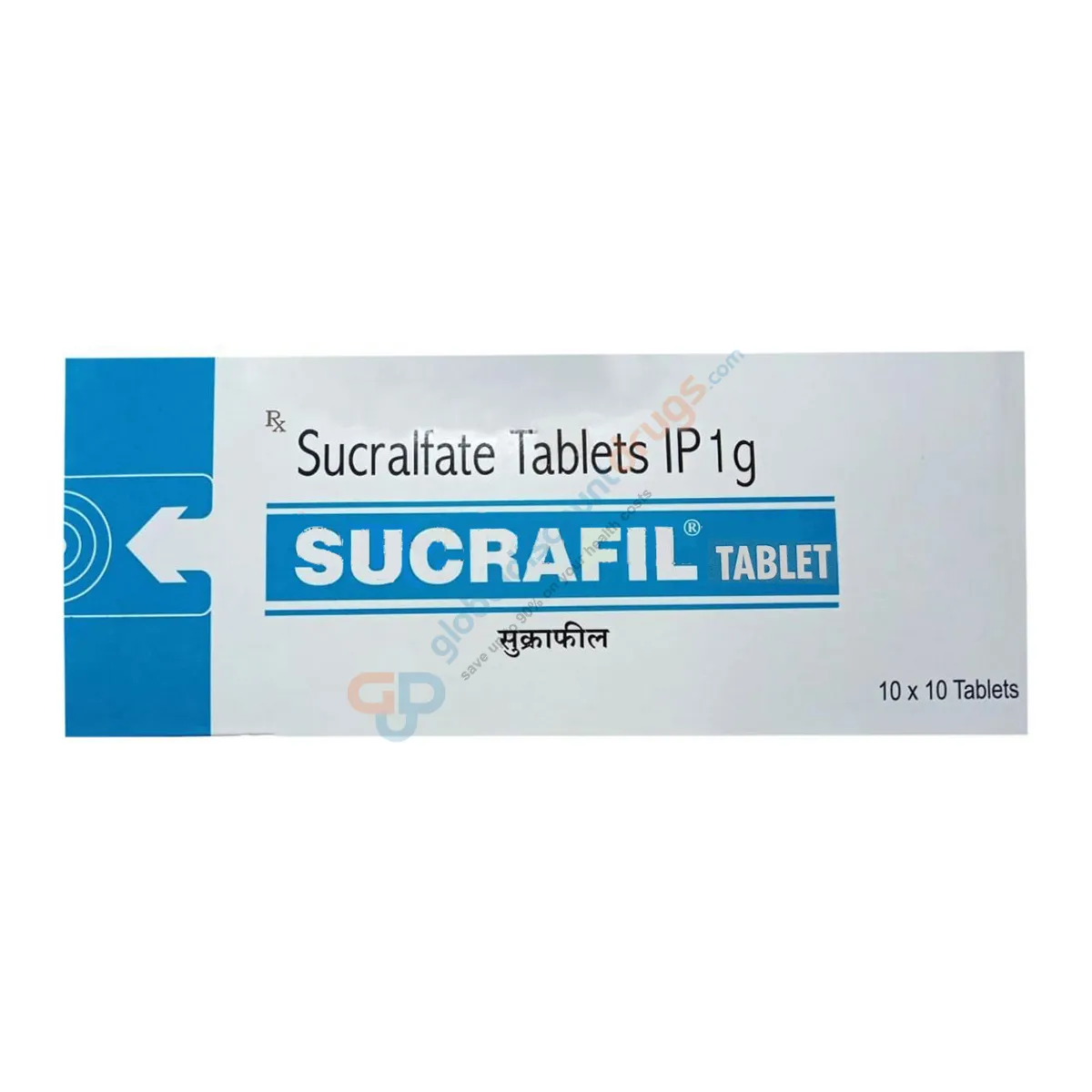
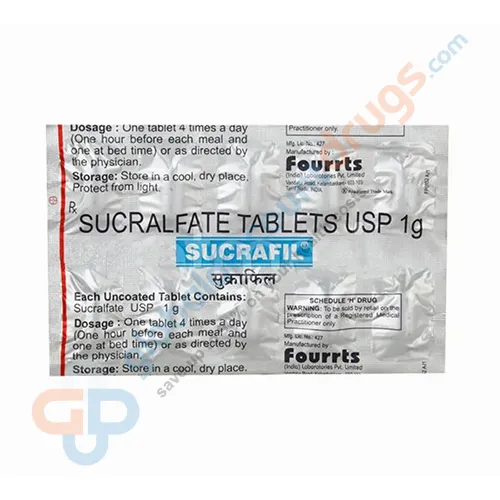
Sucralfate 1gm
Out of StockSucralfate 1 g Tablet forms a protective barrier over ulcers in the stomach and upper intestine to support healing. Taking it on an empty stomach helps maximize its protective effect.
| Active Ingredient: | Sucralfate |
|---|---|
| Indication: | Peptic Ulcer Disease |
| Strength: | 1gm |
| Dosage Form: | Tablets |
| Manufacturer: | Fourrts |

Sucralfate 1gm – Quick Overview
Sucralfate 1gm is a prescription medicine used for the short-term treatment of active duodenal ulcers. It works by forming a protective coating over the ulcer site, shielding it from stomach acid and digestive enzymes while it heals. This medicine works best when taken on an empty stomach, exactly as prescribed by a doctor.
Medical Supervision & Regulatory Status
Sucralfate is available in the United States by prescription only and is FDA approved for treating active duodenal ulcers. It is approved for short-term use, up to 8 weeks, since long-term treatment beyond this period has not been established. A doctor confirms the diagnosis and monitors healing progress throughout treatment.
Clinical Context
Duodenal ulcers form when the lining of the upper small intestine becomes damaged, often from excess stomach acid or bacterial infection, causing pain, discomfort, and a risk of bleeding if left untreated. Duodenal ulcer disease tends to be chronic and recurrent, meaning symptoms can return even after healing.
Unlike medicines that reduce stomach acid production, sucralfate works locally at the ulcer site itself, forming a barrier that protects the damaged tissue while the body’s natural healing processes take effect.
Because of this localized action, sucralfate is often used both to treat active ulcers and to help prevent recurrence once healing has occurred, forming part of a longer-term management plan for ulcer disease.
How Sucralfate Works
Although the exact mechanism by which sucralfate accelerates duodenal ulcer healing isn’t fully defined, it is known to work through a local action rather than a systemic one.
Sucralfate forms a protective, ulcer-adherent complex with proteins at the ulcer site, creating a barrier that limits the diffusion of stomach acid into the damaged tissue. It also reduces pepsin activity in gastric juice and binds to bile salts, both of which can otherwise irritate the ulcer.
By shielding the ulcer from these irritants, sucralfate creates a more favorable environment for the tissue to heal on its own.
What is Sucralfate 1gm?
| Attribute | Detail |
|---|---|
| Drug Class | Gastrointestinal protectant (ulcer-adherent complex agent) |
| Active Ingredient | Sucralfate, 1 gram |
| Mechanism | Forms a protective barrier over the ulcer site |
| Form | Oral tablet |
| Dosing Frequency | Four times daily for active ulcers or twice daily for maintenance therapy, as prescribed |
| Regulatory Status | Prescription-only in the United States |
Uses / Indications
- Active Duodenal Ulcer: Provides short-term treatment, up to 8 weeks, of an active duodenal ulcer
- Maintenance Therapy: Used at a reduced dosage to help maintain healing after an acute duodenal ulcer has resolved
How to Use / Dosage
Take sucralfate on an empty stomach, exactly as your doctor prescribes, typically one hour before meals and at bedtime. If you use antacids for pain relief, avoid taking them within half an hour before or after your sucralfate dose, since this can reduce its effectiveness. Continue treatment for the full course your doctor recommends, generally 4 to 8 weeks, even if pain improves earlier, unless healing has been confirmed through imaging or endoscopy. If you miss a dose, take it as soon as you remember unless your next dose is due soon. Do not stop taking sucralfate early without talking to your doctor.
Side Effects
Most patients tolerate sucralfate well, since it works locally and is only minimally absorbed into the body. Common effects include constipation, which is the most frequently reported side effect, along with mild stomach discomfort or dry mouth. Some patients experience nausea or indigestion during treatment.
Serious effects are uncommon but require prompt medical evaluation. These include signs of a bezoar, a hardened mass that can form in the stomach in certain patients.
Emergency Warning Signs — seek medical help right away if you notice:
- Severe stomach pain or bloating
- Persistent vomiting
- Signs of a severe allergic reaction, including rash or swelling
- Difficulty breathing
- Black or tarry stools
- Vomiting blood or material resembling coffee grounds
- Inability to pass gas or have a bowel movement
Warnings & Precautions
Sucralfate is contraindicated in patients with a known hypersensitivity to sucralfate or any of its inactive ingredients. Bezoars have been reported in patients taking sucralfate, particularly those with underlying conditions that slow stomach emptying or who are receiving concurrent tube feedings, so patients with these risk factors should be monitored closely. Patients with severe kidney impairment should use sucralfate cautiously, since it contains aluminum, which can accumulate in the body when kidney function is significantly reduced. Dose selection in elderly patients should generally start conservatively, reflecting the greater likelihood of reduced liver, kidney, or heart function, along with other coexisting conditions or medications. Sucralfate can interfere with the absorption of certain other medicines when taken at the same time, so it’s generally recommended to separate dosing by a couple of hours from other oral medications. Rare, serious complications, including pulmonary and cerebral emboli, have occurred with inappropriate use, underlining the importance of following your doctor’s directions closely.
Who Should Not Use This Medication
- Anyone with a known hypersensitivity to sucralfate or its inactive ingredients
- Patients with severe kidney impairment, without dose adjustment from a doctor
- Patients with conditions that slow stomach emptying, without close monitoring
- Patients receiving concurrent enteral tube feedings, without doctor guidance
- Use for undiagnosed stomach pain without prior medical evaluation
Storage Instructions
Store sucralfate tablets at room temperature, away from excess heat and moisture. Keep the container tightly closed between uses. Store it out of reach of children and pets, in a location they cannot access, since accidental ingestion can be harmful.
Frequently Asked Questions
What is the cost of Sucralfate 1gm without insurance?
Sucralfate is generally affordable, especially as a generic. The cost without insurance depends on the seller, brand availability, and pack size, and may also vary by location and available discounts.
How can I order Sucralfate 1gm online?
A valid prescription is required to order sucralfate online. You can upload your prescription or have your doctor send it directly to a licensed pharmacy, which then ships the medicine to your home. Always use verified, licensed pharmacies for safety.
Is Sucralfate 1gm available over the counter?
No, sucralfate is not available over the counter in the United States. It requires a prescription so a doctor can confirm the diagnosis and appropriate treatment duration.
Does Sucralfate 1gm require a prescription?
Yes, sucralfate requires a prescription in the United States. A doctor evaluates your condition and monitors healing progress throughout treatment.
How long does it take for Sucralfate to work?
Healing may begin within the first week or two of treatment, though a full course of 4 to 8 weeks is typically needed to confirm complete ulcer healing.
Is it safe to stop taking Sucralfate once symptoms improve?
Stopping early is not recommended, even if pain improves. Treatment should continue for the full recommended course unless healing has been confirmed by your doctor through imaging or endoscopy.
What happens if I miss a dose of Sucralfate?
Take the missed dose as soon as you remember it. If it’s almost time for your next dose, skip the missed one and continue your regular schedule.
References
- DailyMed – Sucralfate Tablets, Full Prescribing Information (NIH)
- FDA – Carafate (Sucralfate) Suspension Label
- NCBI StatPearls – Sucralfate Uses and Mechanism
Medical Disclaimer:
This content is for informational purposes only and does not constitute medical advice, diagnosis, or treatment. Consult a qualified specialist or physician before using Sucralfate.
Prescription Required (Rx) to Buy?
This medication is not available over the counter. A valid prescription from a licensed healthcare
professional is required. Always consult your doctor before use.
| Quantity | 100, 150, 200, 50 |
|---|---|
| Indication | Peptic Ulcer Disease |
| Active Ingredient | Sucralfate |
| Pharmaceutical Form | Tablets |
| Manufacturer | Fourrts |
| Indian Brand | Sucrafil 1gm |
| US Brand Name | Sucralfate |
| Generic Name | Sucralfate |
| Dosage | 1gm |
| Drug Type | Tablets |