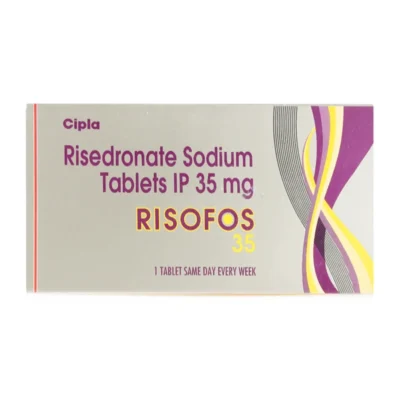


Risedronate 150mg
In StockRisedronate 150 mg Tablet is a prescription bisphosphonate used as a once-monthly regimen for selected adults with osteoporosis. Correct administration improves absorption and helps reduce esophageal irritation.
| Active Ingredient: | Risedronate |
|---|---|
| Indication: | Osteoporosis |
| Strength: | 150mg |
| Dosage Form: | Tablets |
| Manufacturer: | Cipla Limited |

Quick Overview
Risedronate 150mg is a once-monthly prescription tablet used to treat osteoporosis (weak, brittle bones) in postmenopausal women. It is a bisphosphonate that slows the cells that break down bone, helping preserve bone strength. It needs a prescription and medical supervision because it can injure the esophagus and requires normal calcium levels.
Medical Supervision and Regulatory Status
Risedronate 150mg is a prescription-only medicine in the United States and is not a controlled substance under federal law. The FDA first approved risedronate in 1998 (brand name Actonel), and the 150 mg monthly tablet is also sold as a generic. Supervision is needed because the label warns of esophagus injury, low calcium, jaw and thigh bone problems, and it is not recommended when kidney function is severely reduced (creatinine clearance below 30 mL/min).
Clinical Context
Osteoporosis is a condition in which bones lose density and strength, so a minor fall can cause a fracture of the hip, spine, or wrist.
Bone loss speeds up after menopause as estrogen levels fall. Osteoporosis causes no symptoms until a bone breaks, which is why treatment aims to lower fracture risk before that happens. Hip and spine fractures can lead to lasting pain, lost height, reduced mobility, and loss of independence.
For most postmenopausal women, current US guidance (Endocrine Society, AACE, and the Bone Health and Osteoporosis Foundation) treats oral bisphosphonates such as risedronate and alendronate as a first-line option. Alternatives include zoledronic acid, denosumab, and anabolic medicines for very high fracture risk. A monthly tablet may suit people who find a daily or weekly routine hard to keep, and the prescriber also weighs fracture risk and kidney function.
How Risedronate 150mg Works
Risedronate belongs to the bisphosphonate class, and it slows bone loss by attaching to bone and reducing the activity of osteoclasts, the cells that dissolve bone.
Bone is renewed all the time. Osteoclasts remove old bone while other cells build new bone. In osteoporosis, removal outpaces rebuilding. By settling into bone and slowing removal, risedronate can help bone density hold steady or rise, and in clinical trials it lowered the rate of fractures. It does not guarantee that a fracture will not happen.
Only a very small fraction of each tablet is absorbed from the gut, and food, drinks other than plain water, and minerals reduce that further. This is why the label sets a strict routine: an empty stomach, plain water, and an upright position afterward. With a monthly tablet, there are fewer dosing days, so getting each one right matters.
What Is Risedronate 150mg?
Risedronate 150mg is a once-monthly immediate-release bisphosphonate tablet taken on an empty stomach to treat osteoporosis in postmenopausal women.
- Drug Class: Bisphosphonate
- Active Ingredient: Risedronate sodium
- Mechanism: Binds to bone and slows osteoclasts, so less bone is broken down
- Available Forms and Strengths: Film-coated oral tablet, 150 mg, once a month (the brand also comes as 35 mg weekly and 75 mg two-consecutive-day monthly tablets). Delayed-release risedronate is a different product and is not interchangeable.
- Dosing Frequency: Once a month, on the same date each month
- Regulatory Status: US prescription-only; FDA-approved 1998; not a controlled substance; generics available; no boxed warning
Approved Uses
The FDA has approved the 150 mg monthly tablet for one use: the treatment of osteoporosis in postmenopausal women, with the aim of lowering fracture risk.
- Treatment of postmenopausal osteoporosis: For women after menopause who already have osteoporosis. Prevention of postmenopausal osteoporosis and osteoporosis in men are labeled for other risedronate strengths, not this one.
How to Use and Dosage
The prescriber sets the plan, and the labeled regimen is one 150 mg tablet once a month, taken at least 30 minutes before the first food or drink.
Choose one calendar date and keep it every month. Take the tablet in the morning after getting up, with a full glass (6 to 8 ounces) of plain water, not mineral water, coffee, tea, or juice. Swallow it whole without chewing or sucking it. Stay upright, sitting or standing, for at least 30 minutes afterward and do not lie down. If your diet is low in calcium and vitamin D, the prescriber may add supplements, taken at a different time of day than risedronate.
For a missed dose, the label depends on timing. If the next month’s dose is more than 7 days away, take the missed tablet the morning after you remember and return to the usual date. If the next dose is within 7 days, wait and take it as scheduled. Never take more than one 150 mg tablet within 7 days.
Stopping risedronate is not known to cause withdrawal, and its effect lingers because the drug stays in bone. Even so, how long to continue is the prescriber’s decision, and the best length of treatment has not been settled.
Side Effects
Side effects from risedronate vary from person to person, and the most commonly reported ones involve the digestive tract, joints, and muscles.
Boxed warning: Risedronate has no boxed warning. The label’s major warnings (esophagus injury, low calcium, jaw problems, and unusual fractures) are explained under Warnings and Precautions.
Common effects: These include stomach pain, indigestion, nausea, diarrhea or constipation, back and joint pain, headache, and rash. Most are mild, and they are less likely when the dosing routine is followed exactly.
Serious effects: Irritation or ulcers of the esophagus and stomach, osteonecrosis of the jaw, unusual thigh bone (femur) fractures, severe bone, joint, or muscle pain, low blood calcium, serious allergic reactions, and eye inflammation have been reported.
Emergency Warning Signs
- Chest pain, new or worsening heartburn, pain or trouble swallowing, vomiting blood, or black stools
- Swelling of the face, lips, tongue, or throat, or trouble breathing
- Muscle cramps or spasms, or numbness and tingling around the mouth or in the fingers
- New pain in the thigh, hip, or groin
- Jaw pain, swelling, numbness, loose teeth, or a mouth sore that does not heal
- Severe skin rash with blisters or peeling
- Eye pain, redness, or changes in vision
Call 911 for chest pain, vomiting blood, swelling of the throat, or trouble breathing. For the other signs, contact the prescriber the same day or go to urgent care.
Warnings and Precautions
The main warnings for risedronate involve the esophagus, calcium levels, the jaw, and the thigh bone, and each one has a specific action to take.
The label lists these contraindications: abnormalities of the esophagus that delay emptying, such as a narrowing or achalasia; inability to sit or stand upright for at least 30 minutes; low blood calcium (hypocalcemia); and known allergy to any ingredient. Throat and stomach irritation can occur even without these conditions, so skip the next dose and call the prescriber if painful swallowing, chest pain, or new heartburn appears. Low calcium and vitamin D problems should be corrected before starting.
Osteonecrosis of the jaw is rare but serious, and a dental exam before starting is usually advised, with good oral hygiene and a heads-up to the dentist before any tooth extraction or implant. Atypical fractures, including fractures of the thigh bone, can occur with long-term bisphosphonate use, and new thigh or groin pain should be checked before it becomes a break.
Calcium, antacids containing aluminum, magnesium, or calcium, iron, and magnesium products bind risedronate and block absorption, so they belong at a different time of day. Aspirin and NSAIDs such as ibuprofen can irritate the stomach lining, and the prescriber weighs that when they are used often. Risedronate should not be taken together with another risedronate product or with another bisphosphonate such as alendronate unless the prescriber directs it. No direct alcohol interaction is listed, but alcohol can irritate the stomach and raise the chance of a fall.
The label states that treatment should be discontinued if pregnancy is recognized, and breastfeeding data are limited, so this is a prescriber decision. Risedronate is not indicated for children. Older adults need no dose change based on age alone. It is not recommended when creatinine clearance is below 30 mL/min, and liver impairment has not been well studied. Monitoring typically includes serum calcium, vitamin D, kidney function, and periodic bone density scans.
Who Should Not Use This Medication
Risedronate 150mg is not suitable for everyone, and the label names specific situations where it should not be started.
- People with esophagus abnormalities that delay emptying, such as stricture or achalasia
- Anyone who cannot sit or stand upright for at least 30 minutes
- People with low blood calcium (hypocalcemia)
- Anyone with a known allergy to risedronate or any ingredient in the tablet
- People with severe kidney impairment (creatinine clearance below 30 mL/min), for whom the label does not recommend it
- Anyone already taking another risedronate product
- Children, since the medicine is not indicated for them
Storage Instructions
Store risedronate tablets at room temperature, between 68 and 77 degrees Fahrenheit, in the original package, away from moisture and heat.
Keep the package closed and out of sight and reach of children, ideally in a locked cabinet, and avoid storing it in a bathroom. Leftover tablets are best returned through a drug take-back site or a pharmacy mail-back program. If none is available, FDA guidance is to mix them with used coffee grounds or cat litter in a sealed bag, place it in household trash, and scratch out personal details on the label.
Frequently Asked Questions
What is the cost of Risedronate 150mg without insurance?
The cost without insurance depends on the seller, brand availability, and pack size. Location and discount programs can also change what a patient pays. Generic risedronate is generally more affordable than brand-name Actonel, so ask the pharmacy whether a generic is dispensed. Comparing quotes from licensed pharmacies helps a patient see the real total before ordering.
How can I order Risedronate 150mg online?
A valid prescription is required, so ordering starts with a prescriber. The patient uploads the prescription or the prescriber sends it to a licensed US pharmacy, which dispenses the medicine and delivers it home. Before ordering, confirm the pharmacy holds a state license and has a pharmacist available to answer questions, since unlicensed sellers may ship counterfeit tablets.
Is Risedronate 150mg available over the counter?
No, Risedronate 150mg is not sold over the counter in the United States. It is a prescription-only medicine because it needs checks of swallowing problems, calcium levels, and kidney function first. Rules vary by country, but medical supervision is still required. Websites offering it without a prescription are not following US law, and products may be counterfeit.
Does Risedronate 150mg require a prescription?
Yes, Risedronate 150mg requires a prescription from a licensed US prescriber. A medical evaluation confirms osteoporosis, checks calcium and vitamin D status, kidney function, and any swallowing or esophagus problems, and decides whether a monthly bisphosphonate fits. Periodic follow-up then reviews how long treatment should continue, which is why a pharmacy cannot supply it without an order.
How long does Risedronate 150mg take to work?
Nothing is felt when Risedronate 150mg starts working, because osteoporosis is usually painless and the benefit is measured by bone density scans and fewer fractures. Repeat scans are commonly done after one to two years. Because the tablet is taken monthly, a calendar reminder helps keep the date. Response varies, and the prescriber sets the follow-up schedule.
Is it safe to stop taking Risedronate 150mg suddenly?
Stopping Risedronate 150mg is not known to cause withdrawal, because the drug stays in bone and keeps acting for some time. Even so, the prescriber decides how long treatment lasts, and the best duration is not settled, with a break sometimes considered after 3 to 5 years in lower-risk patients. Stopping early can leave bones unprotected.
Can Risedronate 150mg interact with other medicines?
Yes, Risedronate 150mg interacts with calcium, antacids, iron, and magnesium products, because these minerals bind the drug in the gut and lower absorption. On the monthly dosing day, take them later in the day. Aspirin and NSAIDs can irritate the stomach lining as well, so the pharmacist should review every medicine and supplement.
What should I do if I miss a dose of Risedronate 150mg?
If the next monthly dose is more than 7 days away, take the missed Risedronate 150mg tablet on the morning after you remember, and return to the usual schedule. If the next dose is within 7 days, wait for it. Never take more than one 150 mg tablet within 7 days. For an overdose, call poison control at 1-800-222-1222.
References
- DailyMed (NIH), Risedronate sodium tablets label: Current FDA-approved prescribing information, including indications, dosing, contraindications, warnings, and storage.
- MedlinePlus, Risedronate: Plain-language patient information on use, precautions, side effects, and missed doses.
- FDA, Actonel (risedronate sodium) prescribing information, Drugs@FDA: The FDA-approved label for the reference brand, which covers the 150 mg monthly tablet, revised 2026. https://www.accessdata.fda.gov/drugsatfda_docs/label/2026/020835s054lbl.pdf
Medical Disclaimer:
This content is for informational purposes only and does not constitute medical advice, diagnosis, or treatment. Consult a qualified specialist or physician before using Risedronate 150mg.
Prescription Required (Rx) to Buy?
This medication is not available over the counter. A valid prescription from a licensed healthcare
professional is required. Always consult your doctor before use.
| Quantity | 12, 3, 6, 9 |
|---|---|
| Indication | Osteoporosis |
| Active Ingredient | Risedronate |
| Pharmaceutical Form | Tablets |
| Manufacturer | Cipla Limited |
| Indian Brand | Risofos 150 |
| US Brand Name | Actonel, Risedronate |
| Generic Name | Risedronate |
| Dosage | 150mg |
| Drug Type | Tablets |