
Rabeprazole-Domperidone 20mg-30mg
In StockRabeprazole 20 mg–Domperidone 30 mg Capsule combines a proton pump inhibitor with a dopamine antagonist to manage selected acid-related digestive conditions with associated nausea or delayed gastric emptying. Use only under medical supervision.
| Active Ingredient: | Rabeprazole-Domperidone |
|---|---|
| Indication: | Gastroesophageal Reflux Disease |
| Strength: | 20mg-30mg |
| Dosage Form: | Capsules |
| Manufacturer: | Systopic Laboratories Pvt Ltd |

What is Rabeprazole-Domperidone?
Rabeprazole-domperidone is a prescription combination medicine that contains two active ingredients:
- Rabeprazole 20 mg: reduces the amount of acid made by the stomach.
- Domperidone 30 mg: helps the stomach and upper gut move food along and eases nausea and bloating.
Drug class: Proton pump inhibitor (PPI) combined with a prokinetic and anti-nausea medicine (dopamine antagonist).
Approved and common uses: This combination is commonly prescribed for:
- Gastroesophageal reflux disease (GERD, or acid reflux) with symptoms such as heartburn, regurgitation, bloating, and nausea
- Acid-related stomach discomfort with delayed stomach emptying
- Short-term relief of symptoms such as fullness, nausea, and early feeling of being full after meals
Formulations and strengths: The combination is usually sold as a capsule containing rabeprazole 20 mg (in a gastro-resistant form) and domperidone 30 mg (in a sustained-release form). Check your pack for the exact formulation.
A note on availability: Domperidone is not approved or is restricted in some countries, and many regions limit its use because of heart rhythm concerns. Use this combination only where it is legally available and only as prescribed.
What is the Recommended Dosage of Rabeprazole-Domperidone?
The right plan depends on:
- The condition being treated: Reflux, nausea, and delayed stomach emptying may need different approaches.
- Age: This fixed-dose combination is generally intended for adults. Use in children should only be directed by a specialist.
- Heart health: Domperidone can affect heart rhythm, so heart history is important.
- Liver function: People with moderate or severe liver disease may not be able to use it.
- Other medicines: Some drugs interact with either ingredient.
- How long symptoms have lasted: Treatment is usually kept as short as possible.
Available dosage form: Oral capsule (rabeprazole 20 mg and domperidone 30 mg). Strength is listed on the pack.
This medicine is usually taken by mouth once a day, about 30 minutes before a meal, but your doctor’s instructions and the label come first. Domperidone is generally recommended at the lowest effective dose for the shortest time. Dosing and the length of treatment must follow your licensed medical specialist’s instructions. Do not change the dose or take it longer than prescribed.
General use tips:
- Swallow the capsule whole with water. Do not crush, chew, or open it.
- Take it before food unless your label says otherwise.
- Take it at about the same time each day.
How Rabeprazole-Domperidone Works
The two ingredients work in different ways:
- Rabeprazole blocks the “acid pumps” in the stomach lining. This lowers stomach acid, which helps ease heartburn and allows irritated tissue in the food pipe (esophagus) to heal.
- Domperidone blocks dopamine receptors in the gut and in the brain’s nausea center. This helps the stomach empty faster and helps reduce nausea and bloating.
Together, they help manage symptoms of acid reflux and slow stomach movement. They do not cure the underlying cause. If symptoms return after treatment, speak with your doctor.
Is a Prescription Required to Buy Rabeprazole-Domperidone Online?
Yes. In most countries where it is sold, this is a prescription-only medicine. It combines a long-term acid-suppressing drug with domperidone, which needs careful medical review because of heart rhythm risks.
Who to consult:
- A gastroenterologist (digestive system specialist) is the best choice for ongoing reflux or stomach problems.
- A primary care physician or general practitioner may start care and refer you if needed.
- A cardiologist may be involved if you have a heart condition.
Buying safely:
- Buy only from licensed pharmacies and only with a valid prescription.
- Beware of counterfeit or tampered products sold by unverified online sellers.
- Check that the packaging is sealed, the printing is clear, and the batch number and expiry date are shown.
- Do not use medicine prescribed for someone else.
Side Effects of Rabeprazole-Domperidone
Most people tolerate this medicine well when it is taken as prescribed.
Common Side Effects
- Headache
- Dizziness
- Dry mouth
- Stomach pain or cramps
- Diarrhea or constipation
- Gas or bloating
- Nausea
- Tiredness or sleepiness
Less Common Effects Related to Domperidone
- Breast tenderness or swelling
- Milk discharge from the breast (in women or men)
- Changes in the menstrual cycle
- Restlessness or muscle movements that are unusual (more likely in children)
Most of these effects are mild. Tell your doctor if they continue or bother you.
Serious Side Effects
These are uncommon, but they need prompt care:
- Heart rhythm problems: a fast, pounding, or irregular heartbeat, chest pain, shortness of breath, dizziness, or fainting
- Severe allergic reaction: hives, rash, swelling of the face, lips, or throat, or trouble breathing
- Severe or lasting diarrhea, which may be a sign of a gut infection (C. difficile) with watery stools, belly pain, or fever
- Severe skin reactions: blistering, peeling, or a painful rash
- Low magnesium levels (with long-term use): muscle spasms, tremors, seizures, or abnormal heartbeat
- Kidney problems: less urine, swelling, or blood in the urine
- Signs of liver problems: yellowing of the skin or eyes, dark urine, or severe tiredness
Seek immediate medical attention if you have a fast or irregular heartbeat, fainting, or signs of an allergic reaction. Contact your healthcare provider if side effects continue or get worse.
Drug Interactions
Both ingredients can interact with other medicines. Major categories include:
- Medicines that affect heart rhythm (QT-prolonging drugs): Some antiarrhythmics, certain antipsychotics, some antidepressants, and some antibiotics. Combining them with domperidone raises the risk of heart rhythm problems.
- Strong CYP3A4 inhibitors: Such as ketoconazole, itraconazole, erythromycin, clarithromycin, and some HIV or hepatitis C medicines. These can raise domperidone levels in the blood.
- Antifungal medicines (ketoconazole, itraconazole): Rabeprazole can lower their absorption.
- HIV medicines such as atazanavir, nelfinavir, and rilpivirine: Acid-reducing drugs can reduce how well they work. Some combinations are not allowed.
- Methotrexate: PPIs can raise its levels, especially at high doses.
- Warfarin and other blood thinners: Your doctor may need to check your blood clotting more often.
- Digoxin: Acid-reducing drugs can raise its levels.
- Parkinson’s medicines such as levodopa and dopamine agonists: Domperidone may work against them.
- Anticholinergic medicines: These can reduce the effect of domperidone.
- Antacids and other acid reducers: These can change how well domperidone is absorbed. Ask your doctor how to time them.
- Medicines that lower potassium or magnesium (such as some water pills): These raise heart rhythm risk.
Over-the-counter medicines: Tell your provider about any antacids, heartburn products, pain relievers, and anti-nausea medicines.
Supplements and herbal products: Tell your provider about any iron, calcium, magnesium, vitamin B12, or herbal products you use, such as St. John’s wort.
Give your licensed medical specialist a full list of your medicines, including prescription drugs, OTC products, vitamins, supplements, and herbal remedies.
Safety & Important Considerations
- Heart safety (domperidone): It has been linked to serious heart rhythm problems and, rarely, sudden cardiac death. Risk is higher at higher doses, in people over 60, and in people with heart disease. Doctors usually recommend the lowest effective dose for the shortest time.
- Heart tests: Your doctor may check your heart rhythm (ECG) before or during treatment if you have risk factors.
- Electrolytes: Low potassium or magnesium raises heart risk. Tell your doctor if you have vomiting, diarrhea, or take water pills.
- Long-term PPI use (rabeprazole): Long-term use has been linked to low vitamin B12 and magnesium, bone fractures, kidney problems, gut infections, and stomach polyps. Your doctor will review whether you still need it.
- Rule out serious conditions: Tell your doctor right away if you have trouble swallowing, unexplained weight loss, repeated vomiting, vomiting blood, black or bloody stools, or chest pain. These need testing before long-term acid treatment.
- Liver disease: Moderate or severe liver disease may make domperidone unsafe. Mild liver problems need dose review.
- Kidney disease: Speak with your doctor before use.
- Pregnancy: There is limited information on safe use. Talk to your doctor to weigh benefits and risks.
- Breastfeeding: Small amounts of domperidone can pass into breast milk. Talk to your doctor before use.
- Children: This fixed-dose product is not usually intended for children. Do not give it unless a specialist recommends it.
- Older adults: They may be at higher risk of heart and bone effects.
- Skin and sun: Rarely, PPIs have been linked to skin reactions that worsen in the sun. Report new rashes.
- Monitoring: Your provider may check magnesium, vitamin B12, or heart tests with longer-term use.
Who This Medication Is For
This combination is generally prescribed for:
- Adults with acid reflux or GERD who also have nausea, bloating, or slow stomach emptying
- Patients whose doctor has confirmed that both acid reduction and improved stomach movement are needed
- People who need short-term symptom relief under medical supervision
It is not meant for general indigestion without a diagnosis, for use in infants or young children, or for long-term use without regular medical review.
Who Should Not Take Rabeprazole-Domperidone
Do not take this medicine, or speak to your doctor first, if:
- You are allergic to rabeprazole, other PPIs, domperidone, or any ingredient in the capsule
- You have a heart rhythm problem, a prolonged QT interval, heart failure, or serious heart disease
- You have low potassium or low magnesium that has not been corrected
- You have moderate or severe liver disease
- You have bleeding, blockage, or a hole (perforation) in the stomach or intestines
- You have a prolactin-releasing pituitary tumor (prolactinoma)
- You take strong CYP3A4 inhibitors or medicines that prolong the QT interval
- You take rilpivirine or atazanavir
- You are pregnant, breastfeeding, or planning pregnancy, unless your doctor has approved it
Always read the leaflet for the full list of warnings.
What to Do If You Miss a Dose
- Take the missed capsule as soon as you remember, ideally before food.
- If it is almost time for your next dose, skip the missed one and go back to your regular schedule.
- Do not take two doses at the same time to make up for a missed one.
- If you are unsure what to do, contact your licensed medical specialist or pharmacist.
Related medications to Rabeprazole-Domperidone
Other options in the same general treatment area include:
- Other PPI and prokinetic combinations: Such as esomeprazole-domperidone, pantoprazole-domperidone, or rabeprazole combined with levosulpiride, where available
- PPIs alone: Such as rabeprazole, omeprazole, esomeprazole, lansoprazole, or pantoprazole
- H2 blockers: Such as famotidine
- Antacids and alginate products: For short-term symptom relief
- Other prokinetic medicines: Such as itopride, mosapride, or metoclopramide, where available
- Lifestyle measures: Smaller meals, avoiding late-night eating, limiting trigger foods, weight management, and raising the head of the bed
These options differ in how they work, their risks, and who they suit. Switching treatments or stopping early should only be done after speaking with a licensed medical specialist.
Storage Instructions
- Store at room temperature, usually below 25°C to 30°C, unless your label says otherwise.
- Keep in a cool, dry place. Avoid bathrooms and other damp areas.
- Keep the capsules in their original blister pack until use, to protect them from moisture and light.
- Do not use if the capsules are damaged, sticky, discolored, or past the expiry date.
- Keep out of the reach and sight of children.
Disclaimer
- This page is for educational purposes only.
- It is not a substitute for professional medical advice, diagnosis, or treatment.
- Patients must consult a licensed medical specialist (such as a gastroenterologist or physician, depending on the reason for use) before starting, changing, or stopping treatment.
- Treatment decisions must be based on a full clinical evaluation by a qualified specialist.
Prescription Required (Rx) to Buy?
This medication is not available over the counter. A valid prescription from a licensed healthcare
professional is required. Always consult your doctor before use.
| Quantity | 100, 150, 200, 50 |
|---|---|
| Indication | Gastroesophageal Reflux Disease |
| Active Ingredient | Rabeprazole-Domperidone |
| Pharmaceutical Form | Capsules |
| Manufacturer | Systopic Laboratories Pvt Ltd |
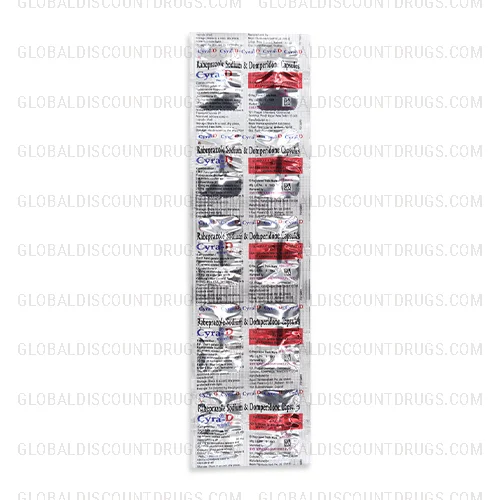
| Indian Brand | Cyra-D |
| US Brand Name | Rabeprazole-Domperidone |
| Generic Name | Rabeprazole-Domperidone |
| Dosage | 20mg-30mg |
| Drug Type | Capsules |