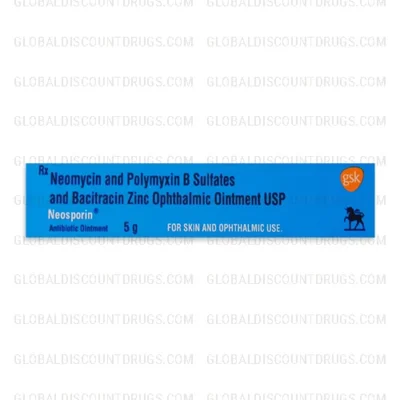


Polymyxin B Sulfate-Bacitracin Zinc-Neomycin Sulfate
In StockPolymyxin B Sulfate-Bacitracin Zinc-Neomycin Sulfate is a widely known topical triple-antibiotic ointment used to prevent infection in minor cuts, scrapes, and burns. The three antibiotics work together to provide a broad spectrum of antibacterial activity against common skin pathogens. Polymyxin B and Bacitracin are primarily effective against Gram-negative and Gram-positive bacteria, respectively, while Neomycin extends the coverage, offering superior protection against a wider range of skin infections.

What is Polymyxin B Sulfate–Bacitracin Zinc–Neomycin Sulfate?
Polymyxin B sulfate–bacitracin zinc–neomycin sulfate is a topical combination medication that belongs to the triple-antibiotic class. It combines three different antibiotics, each working through a different mechanism, to provide broad coverage against common bacteria found in minor skin wounds:
- Polymyxin B sulfate – targets certain gram-negative bacteria
- Bacitracin zinc – targets certain gram-positive bacteria
- Neomycin sulfate – an aminoglycoside antibiotic that broadens coverage against additional bacteria
This combination is commonly used for:
- Prevention of infection in minor cuts, scrapes, and burns
- Topical care of minor skin wounds where a healthcare provider or product labeling indicates antibiotic coverage may help reduce infection risk
Available formulations include:
- Topical ointment
- Some products are also available as ophthalmic ointment or solution (with adjusted ingredient ratios) for eye infections, under a different product name and specific labeling
Product strength, exact formulation, and availability (prescription vs. over-the-counter) vary by manufacturer and region. Patients should confirm the specific product and formulation with their pharmacist or prescribing specialist.
What is the Recommended Dosage of Polymyxin B Sulfate–Bacitracin Zinc–Neomycin Sulfate?
Application amount and frequency depend on several factors, including:
- The size and location of the wound being treated
- The patient’s age
- Duration of use (short-term minor wound care vs. any extended use directed by a specialist)
- Kidney function, particularly if used over large areas or for extended periods, due to the neomycin component
- Any known sensitivities to the ingredients
General principles:
- Typically applied as a thin layer to the affected area, often one to three times daily, depending on product labeling or specialist instruction.
- Intended for short-term use on minor wounds; extended or widespread use should only occur under specialist guidance.
- This guide does not provide individualized dosing instructions. Always follow the product labeling or the specific instructions provided by your treating specialist.
How Polymyxin B Sulfate–Bacitracin Zinc–Neomycin Sulfate Works
This combination works by attacking bacteria through three different mechanisms simultaneously:
- Polymyxin B disrupts the outer membrane of certain gram-negative bacteria, causing leakage of essential cellular contents.
- Bacitracin interferes with the formation of the bacterial cell wall, which certain gram-positive bacteria need to survive.
- Neomycin interferes with bacterial protein synthesis, disrupting the ability of a broader range of bacteria to grow and multiply.
Together, these three antibiotics provide broad-spectrum coverage that helps reduce the risk of infection in minor wounds. This medication does not heal the wound itself and does not treat infections that are already established and significant, viral infections, or fungal infections.
Is a Prescription Required to Buy Polymyxin B Sulfate–Bacitracin Zinc–Neomycin Sulfate Online?
This varies by product and region. Some triple-antibiotic ointment formulations are available over the counter for minor wound care, while others — particularly ophthalmic formulations or higher-strength products — are available by prescription only.
Regardless of over-the-counter availability, patients should consult a licensed medical specialist if:
- The wound is large, deep, or shows signs of significant infection
- Symptoms do not improve within a few days
- The product is intended for use in or around the eyes
Relevant specialists may include:
- A dermatologist (for skin wound care)
- An ophthalmologist (for eye-related formulations)
- A primary care physician for general wound assessment
Important safety notes:
- Never purchase prescription-strength or ophthalmic formulations from unverified or unlicensed online sources.
- Only obtain prescription products from a licensed pharmacy.
- Do not use veterinary-labeled products intended for animals.
Side Effects of Polymyxin B Sulfate–Bacitracin Zinc–Neomycin Sulfate
Common Side Effects
- Mild burning, stinging, or itching at the application site
- Redness or mild irritation of the treated skin
- Contact dermatitis (skin reaction to the product itself), which is relatively common, particularly with neomycin-containing products
Serious Side Effects
Seek immediate medical attention if any of the following occur:
- Signs of a severe allergic reaction (difficulty breathing, swelling of the face or throat, widespread hives)
- Severe or worsening skin rash, blistering, or peeling
- Signs of hearing changes (ringing in the ears, hearing loss), which have rarely been reported with extensive neomycin absorption
- Signs of kidney problems, particularly with prolonged use over large areas
- Wound that appears to be worsening or shows signs of spreading infection (increasing redness, swelling, warmth, pus, or fever)
This is not a complete list. Patients and caregivers should report any new or worsening symptoms to a healthcare provider promptly.
Drug Interactions
Before using this medication, patients should inform their licensed medical specialist or pharmacist about all medications and products they are using, including:
- Other topical antibiotics or antiseptics
- Other neomycin-containing products, to avoid cumulative exposure
- Over-the-counter (OTC) skin care or wound products
- Herbal supplements or alternative wound care remedies
Always provide a complete and updated medication list to your treating specialist to help reduce the risk of interactions or additive effects.
Safety & Important Considerations
- Contact allergy risk: Neomycin is a well-recognized cause of allergic contact dermatitis. Patients with a history of skin allergies should be alert to new redness, itching, or rash with use and should stop use and contact a provider if this occurs.
- Kidney function: Because neomycin can be absorbed through broken skin, especially with use over large or extensive wounds, patients with kidney impairment should use this product only under specialist guidance.
- Hearing considerations: Extensive absorption of neomycin has rarely been associated with hearing changes; this is more relevant with large-area or prolonged use rather than typical minor wound care.
- Pregnancy and breastfeeding: Use during pregnancy or breastfeeding should be discussed with a healthcare provider, particularly for extended or large-area use.
- Children: Generally used with caution in young children; consult a pediatric provider for guidance on appropriate use.
- Duration of use: Not intended for long-term use. If a wound does not improve within a few days, or worsens, stop use and seek medical evaluation.
- Eye contact: Standard topical (non-ophthalmic) formulations should not be used in or near the eyes unless the product is specifically labeled for ophthalmic use.
This section is not exhaustive. A full medical history review by a licensed specialist is recommended, particularly for use beyond minor, limited wounds.
Who This Medication Is For
Polymyxin B sulfate–bacitracin zinc–neomycin sulfate is typically used for individuals who:
- Have minor cuts, scrapes, or burns and want to help reduce the risk of infection
- Have been advised by a healthcare provider that topical triple-antibiotic coverage is appropriate for their wound
- Do not have known allergies to any of the three antibiotic components
Use should be limited to minor, superficial wounds unless a specialist has directed otherwise for a specific clinical reason.
Who Should Not Take Polymyxin B Sulfate–Bacitracin Zinc–Neomycin Sulfate
This medication may not be appropriate for individuals who:
- Have a known hypersensitivity to polymyxin B, bacitracin, neomycin, or any component of the formulation
- Have a history of allergic contact dermatitis to neomycin or related antibiotics
- Have large, deep, or significantly infected wounds that require prescription-strength or systemic treatment
- Are considering use in or around the eyes with a non-ophthalmic formulation
A licensed specialist should be consulted if there is any uncertainty about suitability, especially for wounds beyond minor, superficial injuries.
What to Do If You Miss a Dose
- Apply the missed application as soon as you remember, following product labeling or specialist instructions.
- If it is close to the time of the next scheduled application, skip the missed one and resume the regular schedule.
- Do not apply extra product to make up for a missed application.
- If you are uncertain about how to proceed, or if the wound is not improving, contact a healthcare provider or pharmacist.
Related medications to Polymyxin B Sulfate–Bacitracin Zinc–Neomycin Sulfate
This product contains several antibacterial ingredients. Related informational pages include Mupirocin and Fusidic Acid, although these products have different compositions, indications, allergy risks, and prescribing considerations.
Storage Instructions
- Store at room temperature, generally between 68°F and 77°F (20°C to 25°C), unless otherwise directed on the product label.
- Protect from excessive heat, moisture, and direct light.
- Keep the container or tube tightly closed when not in use.
- Store out of reach of children and pets.
- Do not use the product beyond its labeled expiration date.
- Follow any specific storage instructions provided by your pharmacist, as formulations may vary.
Disclaimer:
This page is for educational purposes only. It is not a substitute for professional medical advice, diagnosis, or treatment. Patients and caregivers must consult a licensed dermatologist or other relevant medical specialist before starting, changing, or stopping treatment with polymyxin B sulfate–bacitracin zinc–neomycin sulfate, particularly for wounds beyond minor, superficial injuries. Treatment decisions must be based on a full clinical evaluation by a qualified specialist, taking into account the patient’s complete medical history and current condition.
Prescription Required (Rx) to Buy?
This medication is not available over the counter. A valid prescription from a licensed healthcare
professional is required. Always consult your doctor before use.