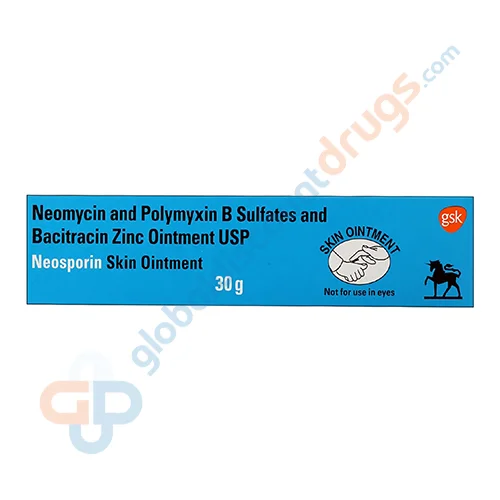
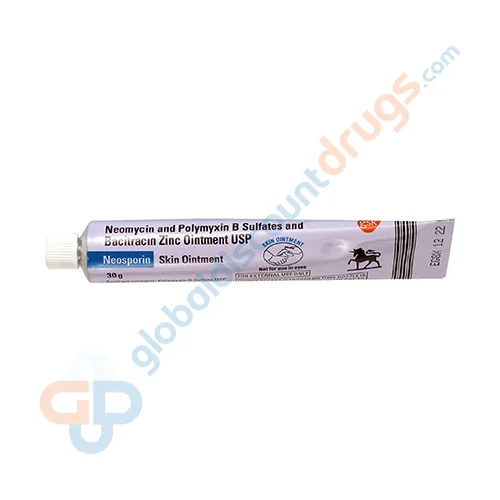
Polymyxin B Sulfate-Bacitracin Zinc-Neomycin Sulfate 30g
In StockPolymyxin B Sulfate–Bacitracin Zinc–Neomycin Sulfate Ointment combines three antibacterial agents to help control minor bacterial skin infections. Use only on affected skin and avoid unnecessary prolonged application.
| Active Ingredient: | Polymyxin B Sulfate-Bacitracin Zinc-Neomycin Sulfate |
|---|---|
| Indication: | Bacterial Skin Infection |
| Strength: | 30gm |
| Dosage Form: | Ointment |
| Manufacturer: | Glaxo Smithkline |

Quick Overview
Polymyxin B Sulfate – Bacitracin Zinc – Neomycin Sulfate 30g is a triple antibiotic topical ointment used to prevent and treat minor bacterial skin infections, cuts, scrapes, and burns. It works by combining three antibiotics that target and kill a broad range of bacteria. This product should be used as directed and under appropriate medical guidance.
Medical Supervision & Regulatory Status
Polymyxin B Sulfate – Bacitracin Zinc – Neomycin Sulfate ointment is available over the counter (OTC) in many countries, including the United States, for minor topical use. However, in several regions — including India (Schedule H provisions for neomycin-containing formulations) — a prescription may be required. Extended use, deep wound application, or use on large surface areas should always involve physician guidance due to risks of systemic absorption and sensitization.
Clinical Context
Minor skin wounds — including cuts, abrasions, minor burns, and surgical incisions — are vulnerable to bacterial infection that can delay healing and lead to serious complications if left untreated. Bacteria such as Staphylococcus aureus and Streptococcus pyogenes are common culprits in superficial skin infections, capable of causing localized pain, swelling, and pus formation.
Topical antibiotic therapy is a first-line preventive approach for minor wounds. Rather than exposing the whole body to systemic antibiotics, topical application delivers active agents directly to the site of infection with minimal systemic side effects.
Polymyxin B – Bacitracin – Neomycin combination ointment occupies an important place in wound care because it provides broad-spectrum antibacterial coverage targeting both Gram-positive and Gram-negative organisms simultaneously — a key advantage over single-agent products.
How Polymyxin B Sulfate – Bacitracin Zinc – Neomycin Sulfate Works
This ointment is a fixed-dose combination of three distinct antibiotic agents, each acting through a different mechanism. Together, they provide complementary, broad-spectrum antibacterial action that is more effective than any single component alone.
Polymyxin B Sulfate disrupts the bacterial cell membrane by binding to lipopolysaccharides in Gram-negative bacteria, causing leakage of intracellular contents and rapid cell death. Bacitracin Zinc inhibits bacterial cell wall synthesis by blocking the recycling of a lipid carrier essential for peptidoglycan production, particularly in Gram-positive organisms. Neomycin Sulfate is an aminoglycoside antibiotic that irreversibly binds to the 30S ribosomal subunit, inhibiting bacterial protein synthesis across a wide spectrum of both Gram-positive and Gram-negative bacteria.
Together, this triple-action formula helps prevent bacterial colonization of wounds, reduces the risk of secondary infections, and supports the body’s natural healing process — giving patients reassurance that their minor wound is being actively protected.
What Is Polymyxin B Sulfate – Bacitracin Zinc – Neomycin Sulfate?
Drug Class: Triple-combination topical antibiotic
Active Ingredients:
- Polymyxin B Sulfate (Polypeptide antibiotic)
- Bacitracin Zinc (Polypeptide antibiotic)
- Neomycin Sulfate (Aminoglycoside antibiotic)
Mechanism: Disrupts bacterial cell membranes, inhibits cell wall synthesis, and blocks protein synthesis simultaneously.
Dosage Form: Topical ointment, 30g tube
Dosing Frequency: Applied 1–3 times daily or as directed by a physician
Regulatory Status: OTC in the United States and many markets; prescription-regulated in certain countries including parts of Asia and South Asia
Uses / Indications
Prevention and Treatment of Minor Skin Infections This ointment is primarily used to prevent bacterial infection in minor cuts, scrapes, abrasions, and superficial wounds. It is also used to treat early-stage superficial bacterial skin infections such as impetigo.
Minor Burn Care It is commonly applied to minor first-degree burns to protect exposed skin from bacterial contamination during healing.
Post-Procedural Wound Care Physicians may recommend this ointment following minor dermatological procedures, suturing, or skin biopsies to reduce infection risk.
Skin Abrasion Management Used in everyday wound care for abrasions caused by falls, sport injuries, or minor accidents to keep the wound moist and bacteria-free.
How to Use / Dosage
General Application Guidance Clean the affected area gently with mild soap and water before applying the ointment. Your doctor or pharmacist will advise the appropriate amount and frequency — typically a thin layer applied 1 to 3 times daily. The treated area may be covered with a sterile bandage if necessary.
Timing Apply at regular intervals as directed. Consistent application maintains adequate antibiotic concentration at the wound site. Do not apply more frequently or in larger amounts than recommended.
Missed Dose If you miss an application, apply it as soon as you remember. If it is close to the time of your next scheduled application, skip the missed dose and resume your usual schedule. Do not double-apply to compensate for a missed dose.
Do Not Stop Suddenly Without Reason While topical use is generally short-term, complete the recommended course as advised by your doctor even if the wound appears healed. Stopping too early may allow residual bacteria to persist and cause recurrence. Do not use this product for more than 7–10 days without medical reassessment.
Side Effects
Most patients tolerate Polymyxin B – Bacitracin – Neomycin ointment well when used as directed for short periods on intact, limited skin areas.
Common Side Effects Mild local reactions such as temporary stinging, burning sensation, or redness at the application site may occur in some individuals. These are usually mild and resolve quickly. Skin dryness or minor irritation has also been reported, particularly with repeated daily use.
Serious Side Effects Neomycin is a known contact sensitizer. With prolonged use, some individuals may develop allergic contact dermatitis — a localized skin reaction characterized by worsening redness, itching, blistering, or a rash spreading beyond the wound site. If this occurs, discontinue use and consult a doctor. In rare cases, especially when applied over large areas, damaged skin, or under occlusive dressings, systemic absorption of neomycin may occur, potentially affecting kidney function or causing ototoxicity (hearing damage).
Emergency Warning Signs — Seek Immediate Medical Attention If You Experience:
- Sudden swelling of the face, lips, tongue, or throat (angioedema)
- Difficulty breathing or severe shortness of breath
- Hives or widespread rash beyond the application site
- Ringing in the ears or sudden hearing changes
- Dizziness or loss of balance
- Significant worsening of the wound despite treatment
- Signs of systemic allergic reaction (anaphylaxis)
Warnings & Precautions
Allergy to Aminoglycosides Patients with a known allergy to neomycin, kanamycin, gentamicin, or any other aminoglycoside antibiotic should not use this product. Cross-sensitization among aminoglycosides is well-documented and may result in a serious hypersensitivity reaction.
Drug Interactions Although systemic absorption from topical use is generally limited, caution is advised when this ointment is applied to large, open, or severely damaged skin surfaces. Concomitant systemic use of other nephrotoxic agents — such as systemic aminoglycosides, vancomycin, or loop diuretics like furosemide — may increase the risk of kidney toxicity and ototoxicity if significant absorption occurs. Discuss all current medications with your doctor before use.
Pregnancy and Breastfeeding This medication should only be used during pregnancy or while breastfeeding when clearly indicated and under physician supervision. Systemic aminoglycoside antibiotics are known to carry risks in pregnancy; although topical exposure is limited, caution is warranted, especially over large areas or broken skin.
Special Populations Elderly patients and individuals with pre-existing kidney impairment should use this product with caution and only on small, localized skin areas. Infants and young children should only receive this product under medical supervision, as their skin surface-area-to-body-weight ratio increases the risk of systemic absorption.
Resistance and Prolonged Use Do not use this antibiotic ointment for prolonged periods without physician guidance. Extended use may contribute to the development of antibiotic-resistant organisms and can mask signs of a worsening or spreading infection that requires systemic treatment.
Ophthalmic and Mucosal Use This specific formulation (30g topical skin ointment) is not intended for use in the eyes, ears, or on mucosal surfaces unless a physician specifically advises and prescribes an appropriate ophthalmic or otic preparation. Separate formulations exist for those uses.
Who Should Not Use This Medication
- Individuals with a confirmed allergy to neomycin, bacitracin, polymyxin B, or any aminoglycoside antibiotic
- Patients with known hypersensitivity to any excipient in the ointment base
- Individuals with deep puncture wounds, animal bites, or serious burns (require medical evaluation and systemic treatment)
- Patients with pre-existing kidney disease using the product on large areas without medical supervision
- Neonates and premature infants without explicit physician direction
- Anyone with a history of drug-induced hearing loss or ear damage from aminoglycoside use
- Patients using systemic aminoglycoside antibiotics simultaneously without physician oversight
Storage Instructions
Temperature: Store at controlled room temperature, between 20°C and 25°C (68°F and 77°F). Brief excursions between 15°C and 30°C are permissible. Do not freeze.
Moisture and Light: Store in a dry place away from direct sunlight and humidity. Avoid storing in bathrooms where moisture and heat levels fluctuate.
Child Safety: Keep this product out of the reach and sight of children. The tube cap should be securely closed after each use.
Expiry: Do not use after the expiry date printed on the tube or carton. Discard any remaining ointment once the treatment course is complete.
Frequently Asked Questions
Does Polymyxin B – Bacitracin – Neomycin require a prescription?
In the United States and several other countries, this ointment is available over the counter for minor wound care. However, in many countries including India, neomycin-containing formulations may require a prescription. Always check local regulations and consult a pharmacist or physician if uncertain about its availability in your region.
How long does it take for this ointment to work?
Most minor wounds and superficial infections show visible improvement within 2 to 5 days of regular application. If the wound does not improve, worsens, or shows signs of spreading infection after 7 days of use, discontinue the product and seek medical evaluation promptly, as systemic antibiotic treatment may be required.
Is it safe to stop using this ointment suddenly?
Yes, this topical ointment can generally be stopped once the wound has healed or the prescribed course is complete. Unlike oral antibiotics, there is no clinical requirement to taper topical antibiotic ointments. However, follow your doctor’s specific instructions and do not discontinue use mid-course if an active infection is still present.
Can this ointment interact with other medicines?
Topical drug interactions are uncommon when used on small skin areas as directed. However, if applied to large or broken skin surfaces, neomycin absorption may interact with systemic nephrotoxic drugs such as other aminoglycosides, loop diuretics, or cisplatin. Inform your doctor about all medications you are currently using before applying to large areas.
What should I do if I miss a dose?
Apply the ointment as soon as you remember the missed application. If it is almost time for your next scheduled dose, skip the missed one and continue as usual. Do not apply a double amount to make up for a missed application, as this does not improve outcomes and may increase the risk of local side effects.
What is the cost of Polymyxin B – Bacitracin – Neomycin ointment without insurance?
This ointment is generally affordable, particularly in its generic form. The cost without insurance depends on the seller, brand availability, and pack size, and may also vary by location and applicable discounts. Contact your local pharmacy or a licensed online pharmacy for accurate current pricing in your region.
How can I order Polymyxin B – Bacitracin – Neomycin ointment online?
Where a prescription is required, you will need to upload a valid prescription or have your doctor send it directly to a licensed online pharmacy. Choose only verified, government-registered pharmacies to ensure product authenticity and patient safety. Avoid purchasing from unverified sources, as counterfeit topical products do exist in online marketplaces.
Is Polymyxin B – Bacitracin – Neomycin available over the counter?
In the United States, this combination is widely available over the counter at pharmacies. In most other countries, including parts of Asia, it may be a prescription-only medicine due to neomycin regulations. Medical supervision is recommended regardless of OTC availability, especially for prolonged use or application on large skin areas.
Medical Disclaimer: This content is for informational purposes only and does not constitute medical advice, diagnosis, or treatment. Consult a qualified specialist or physician before using Polymyxin B Sulfate – Bacitracin Zinc – Neomycin Sulfate 30g ointment. Read our medical desclaimer for more details
References
- U.S. National Library of Medicine – DailyMed Official prescribing information for Neomycin/Polymyxin B/Bacitracin topical ointment. https://dailymed.nlm.nih.gov
- MedlinePlus (NIH) Patient-friendly information on neomycin, polymyxin B, and bacitracin combination topical use. https://medlineplus.gov
- U.S. Food and Drug Administration (FDA) OTC monograph and safety communications on topical antibiotic products. https://www.fda.gov
- World Health Organization (WHO) – Essential Medicines WHO Model List of Essential Medicines – Neomycin Sulfate inclusion and guidance. https://www.who.int/medicines/publications/essentialmedicines/en/
- National Center for Biotechnology Information (NCBI) – PubMed Peer-reviewed clinical literature on triple antibiotic ointment efficacy and contact sensitization. https://pubmed.ncbi.nlm.nih.gov
- American Academy of Dermatology (AAD) Clinical guidance on wound care and topical antibiotic use in dermatology practice. https://www.aad.org
Prescription Required (Rx) to Buy?
This medication is not available over the counter. A valid prescription from a licensed healthcare
professional is required. Always consult your doctor before use.
| Quantity | 12, 3, 6, 9 |
|---|---|
| Indication | Bacterial Skin Infection |
| Active Ingredient | Polymyxin B Sulfate-Bacitracin Zinc-Neomycin Sulfate |
| Pharmaceutical Form | Ointment |
| Manufacturer | Glaxo Smithkline |
| Indian Brand | Neosporin Skin Oint 30gm |
| US Brand Name | Neosporin |
| Generic Name | Polymyxin B Sulfate-Bacitracin Zinc-Neomycin Sulfate |
| Dosage | 30gm |
| Drug Type | Tubes |