

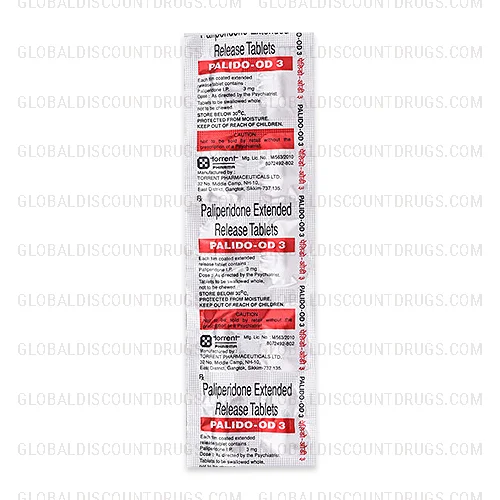
Paliperidone OD 3mg
In StockPaliperidone OD 3 mg Extended-Release Tablet is a prescription atypical antipsychotic used to treat schizophrenia and selected schizoaffective disorders. The lower strength may be appropriate during treatment initiation or dose adjustment.
| Active Ingredient: | Paliperidone |
|---|---|
| Indication: | Schizophrenia |
| Strength: | 3mg |
| Dosage Form: | Tablets |
| Manufacturer: | Torrent Pharmaceuticals Ltd |

Quick Overview
Paliperidone 3mg is a prescription extended-release tablet, taken once daily (OD), from a group of medicines called atypical antipsychotics. It is used to treat schizophrenia and schizoaffective disorder. It works by blocking certain dopamine and serotonin receptors in the brain. It requires a prescription and regular medical follow-up, and it carries a boxed warning about older adults with dementia-related psychosis.
Medical Supervision and Regulatory Status
Paliperidone 3mg extended-release tablets are prescription-only in the United States, and the FDA first approved paliperidone in 2006 under the brand name Invega. It is not a controlled substance, and generic tablets are available. Supervision matters because treatment calls for checks of weight, blood sugar, cholesterol, blood counts, heart rhythm, and movement side effects, and because the dose depends on kidney function.
Clinical Context
Paliperidone 3mg is prescribed for schizophrenia, a long-term brain condition that affects thinking, emotions, and perception, and for schizoaffective disorder, which combines those symptoms with mood episodes.
Untreated psychosis, with symptoms such as hearing voices, fixed false beliefs, and disorganized thinking, can disrupt work, relationships, and personal safety, and it raises the chance of hospital stays. Ongoing treatment is aimed at reducing symptoms and lowering the chance of relapse, which is why the medicine is usually taken daily even when a person feels well.
Current US guidance combines an antipsychotic with psychosocial care such as therapy, family support, and coordinated specialty care. Paliperidone is one of several second-generation antipsychotics, and no single one is first-line for everyone. Your prescriber chooses based on past response, side effect risks, and other conditions. Long-acting injectable forms of paliperidone exist for people who have trouble taking daily tablets.
How Paliperidone 3mg Works
Paliperidone is an atypical (second-generation) antipsychotic that is thought to work by blocking dopamine D2 and serotonin 5-HT2A receptors, two types of docking points for brain chemical messengers.
Overactive dopamine signaling is linked to hallucinations and delusions. By dampening that signal while also acting on serotonin pathways, the medicine can reduce those symptoms. Paliperidone is the active breakdown product of risperidone, so the two drugs are closely related.
The tablet uses an osmotic release system. It sits inside a nonabsorbable shell that releases the drug slowly over the day, which is why one dose works for 24 hours. The empty shell passes in stool and may be visible, which is expected. The medicine does not cure the condition, and benefit builds over weeks.
What Is Paliperidone 3mg?
This quick reference lists the drug class, active ingredient, forms, and regulatory facts for Paliperidone 3mg extended-release tablets as marketed in the United States.
- Drug Class: Atypical (second-generation) antipsychotic
- Active Ingredient: Paliperidone (9-hydroxyrisperidone)
- Mechanism: Blocks dopamine D2 and serotonin 5-HT2A receptors in the brain, which reduces psychotic symptoms.
- Available Forms and Strengths: Extended-release tablets, 3mg, 6 mg, and 9 mg. Long-acting injectable forms (paliperidone palmitate) are separate products.
- Dosing Frequency: Once daily, usually in the morning. Set by your prescriber.
- Regulatory Status: Prescription (Rx) only. Not a controlled substance. Generic available. Brand name Invega. Boxed warning for older adults with dementia-related psychosis.
Approved Uses
The US label for paliperidone extended-release tablets lists approved uses for schizophrenia in adults and adolescents and for schizoaffective disorder in adults, both alone and with other medicines.
- Schizophrenia in adults: Used for acute treatment and for maintaining stability, based on short-term and long-term relapse-prevention studies.
- Schizophrenia in adolescents (ages 12 to 17): Used for acute treatment, starting at a lower dose.
- Schizoaffective disorder in adults: Used alone or added to a mood stabilizer or antidepressant.
Paliperidone is not approved for dementia-related psychosis.
How to Use and Dosage
Your prescriber sets the dose of Paliperidone 3mg based on diagnosis, age, and kidney function, and 3mg may be a starting dose or a ceiling.
For adults, the labeled starting dose is usually 6 mg once daily, with a recommended range of 3mg to 12 mg, so 3mg sits at the lower end of that range. For adolescents, the starting dose is 3mg once daily, with a maximum of 6 mg for those under 51 kg (112 lb) and up to 12 mg for those weighing 51 kg or more. For mild kidney impairment, the label caps the dose at 6 mg per day, and for moderate to severe impairment (creatinine clearance 10 to under 50 mL/min), at 3mg once daily. Dose changes are made in 3mg steps, generally more than 5 days apart.
Take it once daily in the morning, with or without food, and swallow it whole with liquid. Do not chew, split, or crush it, since that disrupts the slow-release design. Do not add risperidone unless your prescriber directs it.
If you miss a dose, take it when you remember unless the next dose is close, then skip it. Never double up.
Do not stop suddenly. Symptoms can return, and your prescriber can guide a gradual change.
Side Effects
Side effects of Paliperidone 3mg vary by dose, age, and individual response, and the most important safety information is the boxed warning about older adults with dementia-related psychosis.
Boxed warning: Older adults with dementia-related psychosis treated with antipsychotic drugs have an increased risk of death. Paliperidone is not approved for dementia-related psychosis.
Common effects: Restlessness or an urge to move (akathisia), muscle stiffness, tremor, drowsiness, headache, and a faster heartbeat are the most commonly reported. Weight gain, constipation, and indigestion also occur. Frequency figures vary by population and dose, so the label should be consulted for exact rates.
Serious effects: Neuroleptic malignant syndrome (a rare, dangerous reaction with fever and rigid muscles), tardive dyskinesia (involuntary movements that may be long-lasting), QT prolongation and abnormal heart rhythms, very low white blood cell counts, high blood sugar and diabetes, high cholesterol, and orthostatic hypotension (dizziness or fainting on standing) have been reported. Raised prolactin can cause missed periods, breast milk production, breast enlargement in men, and sexual problems. Seizures, painful prolonged erections (priapism), and stroke-related events in older adults with dementia are also described.
Emergency Warning Signs
Call 911 or go to the nearest emergency department for any of the following. For thoughts of suicide, call or text 988.
- Fever with severe muscle stiffness, confusion, heavy sweating, or a fast heartbeat
- Fainting, or a fast, pounding, or irregular heartbeat
- Swelling of the face, lips, tongue, or throat, or trouble breathing
- A seizure
- Sudden weakness on one side, trouble speaking, or sudden confusion
- A painful erection lasting 4 hours or longer
- Thoughts of suicide or of harming yourself or others
Less urgent concerns, such as fever with a sore throat or mouth sores, uncontrolled movements, or unusual thirst and frequent urination, should go to your prescriber the same day.
Warnings and Precautions
Paliperidone 3mg must not be used by anyone with a known allergy to paliperidone, risperidone, or any tablet ingredient, because paliperidone is the active breakdown product of risperidone.
Several medicines need attention. Carbamazepine lowers paliperidone levels and may require a higher dose, and other strong enzyme inducers such as rifampin or St. John’s wort may act similarly. Valproate can raise paliperidone levels, and a lower dose may be needed. Drugs that prolong the QT interval, including amiodarone, sotalol, quinidine, procainamide, chlorpromazine, thioridazine, and moxifloxacin, add heart rhythm risk. Levodopa and dopamine agonists such as pramipexole and ropinirole work against paliperidone, and the reverse is also true. Blood pressure medicines can lower pressure further. Alcohol, benzodiazepines, opioids, and other sedatives add to drowsiness and should be avoided or limited. Tell your prescriber and pharmacist about every supplement and nonprescription product you use.
Monitoring is a regular part of treatment. Weight, waist size, blood pressure, fasting blood sugar or A1c, and cholesterol are checked at the start and periodically. A blood count is checked in people with a history of low white cells, and potassium and magnesium may be checked when heart rhythm is a concern. The label advises caution in people with severe narrowing of the digestive tract, because the nonabsorbable shell can cause blockage. Take care when driving or operating machinery until you know how it affects you.
Late-pregnancy use can lead to movement problems or withdrawal-type symptoms in newborns, such as agitation, abnormal muscle tone, tremor, sleepiness, breathing trouble, and feeding difficulty, so your prescriber weighs benefit against risk and may suggest a pregnancy registry. Do not stop it on your own during pregnancy, since untreated psychosis carries its own risks. Paliperidone passes into breast milk, so a baby should be watched for sleepiness, feeding problems, and restlessness. Older adults are more prone to dizziness and falls. Safety below age 12 has not been established. People with severe liver impairment have not been studied.
Who Should Not Use This Medication
Paliperidone 3mg is not suitable for people with a known allergy to paliperidone or risperidone, and many others need prescriber review because of heart, blood, kidney, or movement-related risks.
Should not use:
- Anyone with a known hypersensitivity to paliperidone, risperidone, or any ingredient in the tablet
Not approved for:
- Older adults with dementia-related psychosis, because of an increased risk of death
Needs prescriber review before starting:
- People with heart rhythm problems, a long QT interval, recent heart attack, or heart failure
- People with low potassium or magnesium, or those taking QT-prolonging medicines
- People with a history of low white blood cell counts
- People with diabetes, high cholesterol, or weight concerns
- People with seizures, Parkinson’s disease, or Lewy body dementia
- People with kidney impairment (maximum 3mg daily when creatinine clearance is below 50 mL/min)
- People with severe narrowing of the stomach or intestines
- People with breast cancer or other prolactin-dependent tumors
- People taking carbamazepine, rifampin, valproate, levodopa, or risperidone
- Women who are pregnant, planning pregnancy, or breastfeeding
- Children under 12
Storage Instructions
Store Paliperidone 3mg tablets at room temperature, keep them in the original tightly closed container, and place them where children and pets cannot reach them.
Room temperature means about 68 to 77 degrees F (20 to 25 degrees C). Protect the tablets from moisture and keep the bottle away from bathrooms and damp areas. If the bottle contains a small drying packet, leave it in place and do not swallow it. Do not move tablets into an unlabeled container.
Unused or expired tablets should go to a drug take-back site or a pharmacy collection kiosk, following FDA guidance. If none is available, mix the tablets with used coffee grounds or cat litter in a sealed bag and place it in household trash. Scratch out personal details on the empty bottle label.
Frequently Asked Questions
What is the cost of Paliperidone 3mg without insurance?
The cost without insurance depends on the seller, brand availability, and pack size. Location and available discount programs can also change what you pay. Paliperidone 3mg is sold as a generic, and generics are generally more affordable than brand-name Invega. A pharmacist can compare options and explain what a 30-day or 90-day supply would involve before you order.
How can I order Paliperidone 3mg online?
A valid prescription is needed to order Paliperidone 3mg online from a licensed US pharmacy. Upload it, or have your prescriber send it electronically, then place the order and wait for home delivery. Check that the pharmacy holds a state license and offers access to a pharmacist who can answer medication questions before you pay.
Is Paliperidone 3mg available over the counter?
Paliperidone 3mg is not sold over the counter in the US, and no nonprescription antipsychotic is approved here. Rules differ by country. Because schizophrenia and schizoaffective disorder need a formal diagnosis, and the medicine requires monitoring of weight, blood sugar, heart rhythm, and blood counts, treatment must stay under a prescriber’s supervision.
Does Paliperidone 3mg require a prescription?
Yes, Paliperidone 3mg requires a prescription in the United States. A prescriber makes the diagnosis, checks kidney function and your other medicines, and chooses the starting dose. Regular visits track symptoms, weight, blood sugar, cholesterol, movement side effects, and heart health, and they allow dose changes before problems can grow larger.
How long does Paliperidone 3mg take to work?
Paliperidone 3mg may ease some symptoms within the first week or two, but a full effect usually takes several weeks. The main approval studies lasted 6 weeks, and a separate maintenance study showed relapses were delayed with continued treatment. It does not cure the condition. Response varies from person to person, so your prescriber reviews progress.
Is it safe to stop taking Paliperidone 3mg suddenly?
Stopping Paliperidone 3mg suddenly is not advised, because symptoms of psychosis can return and relapse can follow. Some people also notice nausea, restlessness, or trouble sleeping after stopping an antipsychotic. Do not change or stop the dose on your own. Your prescriber can lower it gradually and arrange follow-up, particularly if side effects are the reason.
Can Paliperidone 3mg interact with other medicines?
Yes, Paliperidone 3mg interacts with several medicines. Carbamazepine and rifampin can lower its levels, valproate can raise them, and risperidone adds duplicate exposure. Drugs that prolong heart rhythm (QT), such as amiodarone, sotalol, and moxifloxacin, add risk. Alcohol, sedatives, blood pressure medicines, and levodopa also interact. Give your pharmacist a full list.
What should I do if I miss a dose of Paliperidone 3mg?
Take the missed dose of Paliperidone 3mg when you remember that same morning or day, unless it is nearly time for the next one. Never take two doses together to catch up, since that can raise drowsiness, dizziness, and heart rate. Missing several days in a row is different, so call your prescriber for advice on restarting.
References
- DailyMed (NIH), Paliperidone extended-release tablets drug label: Full FDA-approved prescribing information, including indications, dosing, warnings, and interactions.
- MedlinePlus (NIH), Paliperidone: Plain-language patient information on uses, precautions, side effects, and overdose. https://medlineplus.gov/druginfo/meds/a607005.html
- FDA, Invega (paliperidone) extended-release tablets drug label (revised 1/2025): Approved prescribing information from the FDA, including the boxed warning, dosing, and use in specific populations. https://www.accessdata.fda.gov/drugsatfda_docs/label/2025/021999s040s041lbl.pdf
Medical Disclaimer:
This content is for informational purposes only and does not constitute medical advice, diagnosis, or treatment. Consult a qualified specialist or physician before using Paliperidone 3mg.
Prescription Required (Rx) to Buy?
This medication is not available over the counter. A valid prescription from a licensed healthcare
professional is required. Always consult your doctor before use.
| Quantity | 10, 20, 30, 40 |
|---|---|
| Indication | Schizophrenia |
| Active Ingredient | Paliperidone |
| Pharmaceutical Form | Tablets |
| Manufacturer | Torrent Pharmaceuticals Ltd |
| Indian Brand | Palido OD 3mg |
| US Brand Name | Paliperidone OD |
| Generic Name | Paliperidone OD |
| Dosage | 3mg |
| Drug Type | Tablets |


