

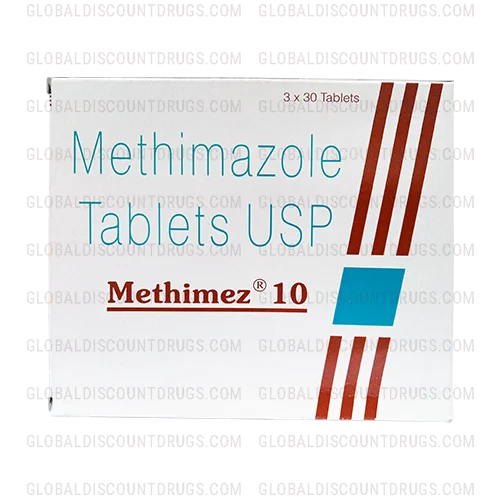
Methimazole
In StockMethimazole is a prescription medicine used to treat hyperthyroidism, a condition where the thyroid gland produces excessive thyroid hormones. It belongs to the antithyroid drug class and works by inhibiting thyroid hormone synthesis in the thyroid gland. This action helps lower hormone levels and control symptoms related to an overactive thyroid. Use only as directed on the product label or by a healthcare professional.

What is Methimazole?
Methimazole is a prescription medicine used to treat conditions caused by an overactive thyroid gland. It belongs to a class of medicines called antithyroid drugs, which reduce the production of thyroid hormones.
Healthcare providers commonly prescribe this to manage Hyperthyroidism, including cases caused by Graves’ disease.
Common Uses of Methimazole
It may be used to:
- Treat hyperthyroidism by reducing thyroid hormone production
- Control symptoms associated with an overactive thyroid
- Prepare patients for thyroid surgery or radioactive iodine therapy
- Maintain stable thyroid hormone levels during treatment
Available Formulations and Strengths
It is typically available as oral tablets taken by mouth.
Common strengths may include:
Availability may vary depending on manufacturer and country.
What is the Recommended Dosage of Methimazole?
The correct dosage of this tablet varies depending on the patient’s thyroid hormone levels and overall health condition.
Factors influencing dosage
Healthcare providers may consider:
- Severity of hyperthyroidism
- Results of thyroid function tests
- Patient age
- Liver function
- Response to treatment
Dosage Form
Methimazole is available as oral tablets.
Important dosing guidance
- Tablets are taken as directed by a healthcare professional.
- Dose adjustments may occur based on laboratory monitoring of thyroid hormone levels.
- Treatment should follow instructions from a licensed endocrinologist or physician.
- Patients should not change their dosage or discontinue therapy without medical advice.
How Methimazole Works
Methimazole works by blocking the thyroid gland’s ability to produce thyroid hormones.
The thyroid gland normally produces hormones that regulate:
- Metabolism
- Energy levels
- Heart rate
- Body temperature
In hyperthyroidism, the thyroid gland produces excessive amounts of these hormones, leading to symptoms such as rapid heartbeat, weight loss, and nervousness.
Methimazole helps reduce hormone production by interfering with enzymes involved in thyroid hormone synthesis.
This action helps:
- Lower excessive thyroid hormone levels
- Reduce symptoms of hyperthyroidism
- Restore hormonal balance
The medication controls thyroid hormone production but does not permanently cure the underlying condition in all cases.
Is a Prescription Required to Buy Methimazole Online?
Yes. Methimazole is a prescription-only medication.
Patients must obtain a prescription from a licensed healthcare professional such as a:
- Endocrinology specialist
- Primary care physician managing thyroid disorders
- Safe purchasing practices
Patients should:
- Purchase medications only from licensed pharmacies
- Avoid websites offering prescription drugs without proper medical verification
- Be cautious of counterfeit or unregulated medicines
- Proper diagnosis and monitoring are required when treating thyroid disorders.
Side Effects of Methimazole
Like many medications, methimazole may cause side effects.
Common Side Effects
Patients may experience:
- Skin rash or itching
- Nausea
- Headache
- Joint pain
- Mild stomach upset
These symptoms are often mild and may improve during treatment.
Serious Side Effects
Rare but serious side effects may include:
- Severe allergic reactions
- Fever or sore throat related to Agranulocytosis
- Liver problems such as yellowing of the skin or eyes
- Severe fatigue or weakness
- Patients should seek immediate medical attention if serious symptoms occur.
Drug Interactions
Methimazole may interact with medications that affect thyroid function or blood clotting.
- Possible interaction categories
- Thyroid medications
- Blood-thinning medications
- Certain heart medications
- Over-the-counter medicines and supplements
Patients should inform their healthcare provider about:
- OTC medications
- Herbal supplements
- Vitamins
- Nutritional products
Providing a complete medication list helps healthcare providers identify potential interactions.
Safety & Important Considerations
Several medical factors should be considered before starting methimazole.
Liver Health
Methimazole may affect liver function in rare cases. Patients with liver disease should inform their healthcare provider.
Blood Cell Monitoring
Rarely, methimazole can affect white blood cell levels. Patients should report symptoms such as fever or sore throat promptly.
Pregnancy
Treatment of thyroid disorders during pregnancy requires careful evaluation. A healthcare provider will determine appropriate therapy.
Breastfeeding
Methimazole may pass into breast milk, so patients should consult their healthcare provider before use during breastfeeding.
Monitoring Requirements
Healthcare providers may monitor:
- Thyroid hormone levels
- Blood cell counts
- Liver function tests
Regular monitoring ensures safe and effective treatment.
Who This Medication Is For
Methimazole is typically prescribed for individuals diagnosed with hyperthyroidism, particularly those with:
- Graves’ disease
- Toxic multinodular goiter
- Other forms of thyroid overactivity
It may also be used before thyroid surgery or radioactive iodine therapy to stabilize hormone levels.
Treatment decisions depend on clinical evaluation and laboratory testing.
Who Should Not Take Methimazole
Certain individuals should avoid methimazole unless advised otherwise by a healthcare provider.
Contraindications
Patients should generally not take methimazole if they have:
Known allergy to methimazole
History of severe reaction to antithyroid medications
Precautions
Patients with the following conditions should discuss risks with their healthcare provider:
- Liver disease
- Blood disorders
- Pregnancy-related thyroid conditions
A healthcare professional should evaluate these risks before starting treatment.
What to Do If You Miss a Dose
If a dose of methimazole is missed:
- Take the missed dose as soon as remembered.
- If it is nearly time for the next dose, skip the missed dose.
- Do not take two doses at the same time.
Patients unsure about dosing should contact their healthcare provider.
Related medications to Methimazole
Methimazole is an antithyroid medicine used to reduce thyroid hormone production in hyperthyroidism. A closely related medicine page is Carbimazole. Although these medicines are pharmacologically related, their availability, dosing, safety information, and regulatory use can differ between markets.
Storage Instructions
To maintain medication safety:
- Store tablets at room temperature.
- Keep away from heat, moisture, and direct sunlight.
- Store medication in the original packaging.
- Keep out of reach of children and pets.
Follow pharmacy guidance for proper disposal of unused medication.
Disclaimer:
This page is provided for educational purposes only and does not replace professional medical advice, diagnosis, or treatment. Patients should consult a licensed endocrinologist or qualified healthcare professional before starting, changing, or stopping Methimazole therapy. All treatment decisions must be based on a complete clinical evaluation and individualized medical assessment performed by a qualified specialist.
Prescription Required (Rx) to Buy?
This medication is not available over the counter. A valid prescription from a licensed healthcare
professional is required. Always consult your doctor before use.