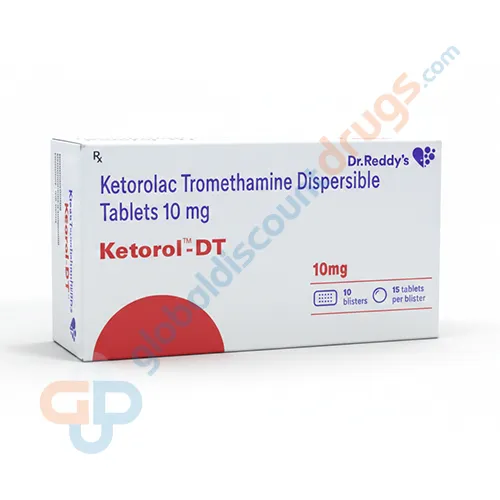
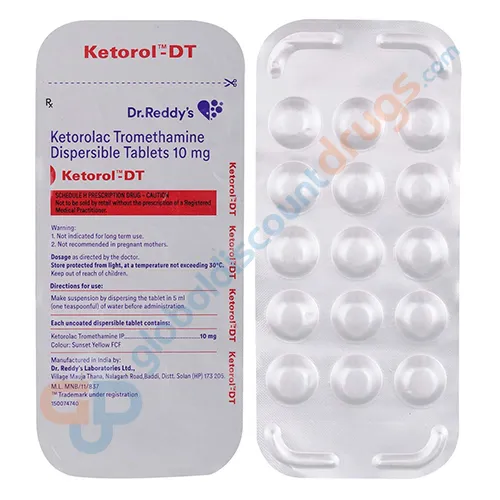
Ketorolac-Tromethamine DT 10mg
In StockKetorolac Tromethamine DT 10 mg Dispersible Tablet is a prescription NSAID intended for short-term relief of moderate acute pain. Because prolonged use increases the risk of serious adverse effects, treatment duration should remain limited.
| Active Ingredient: | Ketorolac-Tromethamine |
|---|---|
| Indication: | Acute Pain |
| Strength: | DT 10mg |
| Dosage Form: | Tablets |
| Manufacturer: | Dr. Reddy's |

Ketorolac Tromethamine DT 10mg – Quick Overview
Ketorolac Tromethamine DT 10mg is a prescription non-steroidal anti-inflammatory drug (NSAID) used for short-term management of moderate to moderately severe acute pain in adults. It works by blocking prostaglandin synthesis to reduce pain and inflammation. This dispersible tablet formulation is intended for short-term use only — typically no more than 5 days — and must be taken strictly under medical supervision.
Medical Supervision & Regulatory Status
Ketorolac Tromethamine DT 10mg is a Schedule H prescription medication, and is classified as a prescription-only medicine (POM) in most countries, including the United States (FDA-approved) and European Union (EMA-regulated). It cannot be purchased without a valid doctor’s prescription. Medical supervision is essential because ketorolac carries significant risks related to gastrointestinal bleeding, renal function, and cardiovascular effects, particularly with improper use or extended duration.
Clinical Context
Understanding Acute Pain: Acute pain is a short-term, often intense pain signal that follows surgery, injury, or certain medical conditions. Unlike chronic pain, acute pain typically has an identifiable cause and responds well to targeted short-term pharmacotherapy when managed appropriately.
Why Treatment Matters: Uncontrolled acute pain can delay recovery, impair mobility, disrupt sleep, and negatively affect overall healing outcomes. Effective, time-limited pain management supports faster rehabilitation and improves patient quality of life during recovery.
Where Ketorolac Fits in Therapy: Ketorolac is positioned as a potent short-term analgesic in cases where non-opioid pain relief is preferred or required — particularly post-operative pain, musculoskeletal injuries, or renal colic. It is often used as an opioid-sparing agent, reducing the need for narcotic analgesics in clinical and outpatient settings.
How Ketorolac Tromethamine DT 10mg Works
Ketorolac Tromethamine belongs to the pyrrolo-pyrrole group of NSAIDs and exerts its analgesic, anti-inflammatory, and mild antipyretic effects through selective inhibition of cyclooxygenase enzymes — specifically COX-1 and COX-2. By blocking these enzymes, ketorolac reduces the synthesis of prostaglandins, the chemical mediators responsible for pain sensitization and inflammation at the site of tissue injury.
The dispersible tablet (DT) formulation allows the medication to dissolve rapidly in water before ingestion, enabling quicker absorption through the gastrointestinal tract. This may be particularly beneficial for patients who have difficulty swallowing standard tablets or require faster onset of pain relief. Peak plasma concentrations are typically achieved within 30 to 60 minutes after oral administration.
For patients, this translates to meaningful relief from moderate to moderately severe pain — without the sedation or dependency risks associated with opioid analgesics — when used correctly, for the shortest duration necessary, as directed by a prescribing physician.
What is Ketorolac Tromethamine DT 10mg?
| Attribute | Details |
|---|---|
| Drug Class | Non-steroidal anti-inflammatory drug (NSAID) – Pyrrolo-pyrrole derivative |
| Active Ingredient | Ketorolac Tromethamine 10mg |
| Mechanism | Inhibits COX-1 and COX-2 enzymes, reducing prostaglandin production to relieve pain and inflammation |
| Dosage Form | Dispersible Tablet (DT) |
| Dosing Frequency | As prescribed — typically every 4 to 6 hours, not exceeding prescribed daily limits |
| Maximum Duration | Up to 5 days (oral use) — strictly as directed by physician |
Uses / Approved Indications
Ketorolac Tromethamine DT 10mg is approved and clinically indicated for the following uses:
Short-Term Management of Acute Pain (Moderate to Moderately Severe) Ketorolac is used to manage acute pain that requires prescription-strength analgesic support for a limited duration. It is not intended for mild pain or long-term pain management.
Post-Operative Pain Relief Ketorolac is commonly used in the post-surgical setting as part of a multimodal pain management plan. It may help reduce opioid requirements following procedures, supporting faster recovery with fewer opioid-related adverse effects.
Musculoskeletal Pain Ketorolac may be used to treat pain arising from acute musculoskeletal conditions such as strains, sprains, and injuries where short-term anti-inflammatory analgesic therapy is deemed appropriate by a physician.
Renal Colic Ketorolac has demonstrated clinical utility in the management of acute renal colic, providing pain relief by reducing ureteral spasm and associated inflammation, often used in combination with other therapies.
Note: Ketorolac is not indicated for mild or chronic pain, and its use must not exceed 5 days cumulatively across all routes (oral, injectable).
How to Use / Dosage
General Dosage Guidance (For Reference Only – Physician Determines Your Dose):
The typical adult oral dose of Ketorolac Tromethamine is 10mg every 4 to 6 hours, not exceeding the total daily dose prescribed by your doctor. For elderly patients (65 years and older) and those with renal impairment, doses are usually lower. Your physician will determine the most appropriate dose based on your age, weight, kidney function, and the nature of your pain.
How to Take the Dispersible Tablet:
Dissolve the tablet in a small amount of water (as directed on the label or by your pharmacist) before consuming. Take it with food or milk to help reduce the risk of stomach upset. Do not crush or swallow the DT whole without dissolving it first.
Timing: Take ketorolac at regular intervals as prescribed. Do not take it more frequently or in larger amounts than directed. The analgesic effect usually begins within 30 to 60 minutes of oral administration.
Missed Dose: If you miss a dose, take it as soon as you remember — unless it is nearly time for your next scheduled dose. In that case, skip the missed dose and resume your regular schedule. Never double up doses to compensate for a missed one.
Do Not Stop Abruptly Without Consultation:
While ketorolac is not associated with physical dependence, you should always complete or discontinue the course as directed by your physician. Stopping earlier than recommended without medical guidance may not adequately address your underlying pain condition.
Side Effects
Most patients who take Ketorolac Tromethamine DT 10mg as prescribed for the short recommended duration tolerate it reasonably well. However, as with all NSAIDs, some side effects are possible and should be monitored.
Common Side Effects:
Some patients may experience nausea, stomach pain, indigestion, diarrhea, dizziness, headache, or drowsiness. These effects are generally mild and tend to resolve as your body adjusts to the medication. Taking the tablet with food or milk may help reduce gastrointestinal discomfort.
Serious Side Effects:
Ketorolac carries an increased risk of serious gastrointestinal events, including peptic ulcers, gastric bleeding, and perforation, particularly with prolonged use or in high-risk patients. Kidney function may be affected, especially in elderly patients, those with pre-existing renal impairment, or those who are dehydrated. Cardiovascular risks, including elevated blood pressure and fluid retention have also been reported. Liver enzyme elevations are rare but possible with extended use.
Emergency Warning Signs, Seek Immediate Medical Attention If You Experience:
- Black, tarry, or bloody stools
- Vomiting blood or material that resembles coffee grounds
- Sudden sharp decrease in urine output or swelling of the feet/ankles
- Chest pain, shortness of breath, or sudden weakness (possible cardiovascular event)
- Severe skin rash, blistering, or peeling (possible Stevens-Johnson syndrome)
- Yellowing of the skin or eyes (jaundice — possible liver involvement)
- Severe allergic reaction: hives, facial swelling, difficulty breathing
Warnings & Precautions
Gastrointestinal Risk:
Ketorolac Tromethamine carries a Black Box Warning (FDA) regarding the risk of serious gastrointestinal adverse events, including bleeding, ulceration, and perforation of the stomach or intestines, which can occur without warning symptoms. Patients with a prior history of peptic ulcer disease, gastrointestinal bleeding, or chronic use of alcohol are at significantly higher risk and should discuss this with their doctor before use.
Renal Precaution:
NSAIDs, including ketorolac, may cause acute renal insufficiency, particularly in patients who are volume-depleted, elderly, or have pre-existing kidney disease, heart failure, or liver cirrhosis. Ketorolac is contraindicated in patients with advanced renal impairment. Adequate hydration should be maintained during therapy, and renal function monitoring is advisable in susceptible individuals.
Cardiovascular Considerations:
Like all NSAIDs, ketorolac may increase the risk of serious cardiovascular thrombotic events, myocardial infarction, and stroke, especially with prolonged use or in patients with established cardiovascular disease or multiple cardiovascular risk factors. Ketorolac is not recommended in patients with recent coronary artery bypass graft (CABG) surgery.
Drug Interactions Specific:
Ketorolac should be used with extreme caution or avoided in combination with: anticoagulants (e.g., warfarin, heparin) due to increased bleeding risk; aspirin, as concurrent use increases GI adverse effects; lithium, as NSAIDs may increase lithium plasma levels; methotrexate, due to potential for toxicity; ACE inhibitors and ARBs, which may have reduced efficacy and increased renal risk; SSRIs and SNRIs, which combined with NSAIDs raise GI bleeding risk; and diuretics, which may have reduced efficacy.
Pregnancy and Breastfeeding:
Ketorolac is contraindicated during the third trimester of pregnancy due to risk of premature closure of the ductus arteriosus. Use during the first and second trimesters should only occur if clearly necessary and under strict medical supervision. Ketorolac passes into breast milk in small amounts; consult your physician before using this medication while breastfeeding.
Elderly Patients:
Patients aged 65 years and older are at higher risk for NSAID-related gastrointestinal bleeding, renal impairment, and cardiovascular events. Lower doses are typically recommended, and the treatment course should be as short as possible.
Hepatic Impairment:
Patients with significant hepatic impairment should use ketorolac with caution. The drug is metabolized by the liver, and impaired hepatic function may alter drug clearance and increase risk of adverse effects.
Who Should Not Use This Medication
The following individuals should not use Ketorolac Tromethamine DT 10mg without explicit physician guidance, and in many cases, it is contraindicated:
- Patients with a known hypersensitivity or allergy to ketorolac, aspirin, or any other NSAID
- Patients who have experienced bronchospasm, urticaria, or allergic-type reactions to aspirin or NSAIDs
- Patients with active peptic ulcer disease or a history of gastrointestinal bleeding or perforation
- Patients with severe renal impairment or at risk of renal failure (including those who are dehydrated)
- Patients with severe heart failure or established ischemic heart disease
- Women in the third trimester of pregnancy
- Patients scheduled for or who have recently undergone coronary artery bypass graft (CABG) surgery
- Patients currently receiving anticoagulant therapy without physician evaluation
- Children and adolescents under 16 years of age (unless specifically prescribed by a specialist)
- Patients using ketorolac for more than 5 consecutive days in any route of administration
Storage Instructions
Temperature:
Store Ketorolac Tromethamine DT 10mg at room temperature, ideally between 15°C and 30°C (59°F to 86°F). Avoid exposing the medicine to extreme heat or freezing temperatures.
Moisture and Light:
Keep the tablets in their original packaging, away from direct sunlight, humidity, and moisture. Do not store in the bathroom medicine cabinet, as heat and moisture can degrade the medication. A cool, dry location such as a bedroom drawer or a dedicated medicine cabinet is suitable.
Child Safety:
Store out of reach and sight of children at all times. Accidental ingestion by a child requires immediate medical attention. Keep the medicine in a child-resistant container as dispensed.
Expiry:
Do not use the medication after the expiry date printed on the packaging. Dispose of unused or expired ketorolac responsibly — consult your pharmacist about safe medicine disposal options in your area.
Frequently Asked Questions (FAQs)
Does Ketorolac Tromethamine require a prescription?
Yes, Ketorolac Tromethamine DT 10mg is a prescription-only medicine, and most countries worldwide. A valid doctor’s prescription is required for purchase. Medical supervision ensures the medication is appropriate for your specific condition, that your dose is correctly determined, and that you are monitored for potential serious adverse effects during the treatment course.
How long does Ketorolac Tromethamine take to work?
Ketorolac typically begins providing pain relief within 30 to 60 minutes of an oral dose. Most patients notice a meaningful reduction in moderate to moderately severe pain within the first hour of administration. The duration of analgesic effect generally lasts 4 to 6 hours per dose, as prescribed by your physician.
Can I stop taking Ketorolac Tromethamine suddenly?
You should not alter or stop your ketorolac regimen without consulting your doctor. While ketorolac is not habit-forming, stopping it prematurely may leave your acute pain inadequately managed. Your physician will determine the appropriate duration — which should not exceed 5 consecutive days, and guide you on how to conclude therapy safely.
Can Ketorolac Tromethamine be taken with other pain medicines?
Ketorolac should not be combined with other NSAIDs, including over-the-counter aspirin or ibuprofen, as this significantly increases the risk of gastrointestinal bleeding and kidney harm. Specific interactions exist with anticoagulants, SSRIs, methotrexate, lithium, and ACE inhibitors. Always disclose all medicines, supplements, and herbal products you are taking to your prescribing physician before starting ketorolac.
What should I do if I miss a dose of Ketorolac Tromethamine?
If you miss a dose, take it as soon as you remember — provided your next scheduled dose is not imminent. If it is almost time for your next dose, skip the missed one and continue with your regular schedule. Do not take two doses at once to make up for a missed dose, as this increases the risk of side effects.
What is the cost of Ketorolac Tromethamine DT 10mg without insurance?
Ketorolac Tromethamine DT 10mg is generally considered an affordable prescription pain medicine, particularly in generic formulations. The cost without insurance depends on the seller, brand availability, and pack size, and may also vary by location and applicable discounts. Consult your local licensed pharmacy for current pricing, and ask your physician or pharmacist whether a generic version is available.
How can I order Ketorolac Tromethamine DT 10mg online?
A valid prescription is required to order Ketorolac Tromethamine DT 10mg online. The process typically involves uploading your prescription to a licensed online pharmacy or having your doctor send it directly, placing your order, and receiving home delivery. For your safety, only purchase from verified, government-licensed pharmacies. Avoid unverified online sellers, as counterfeit or improperly stored medications pose serious health risks.
Is Ketorolac Tromethamine available over the counter?
No, Ketorolac Tromethamine is not available over the counter in most countries, the United States, and the United Kingdom. It is classified as a prescription-only medicine due to its significant risk profile, including gastrointestinal, renal, and cardiovascular effects. Regulations may vary by region, and medical supervision is always required to use this medication safely.
Medical Disclaimer:
This content is for informational purposes only and does not constitute medical advice, diagnosis, or treatment. Consult a qualified specialist or physician before using Ketorolac Tromethamine DT 10mg. Read our medical disclaimer for more infomation
References
- U.S. Food and Drug Administration (FDA) – Ketorolac Tromethamine Prescribing Information https://www.accessdata.fda.gov
- DailyMed – National Library of Medicine (NIH) – Ketorolac Tromethamine Drug Label https://dailymed.nlm.nih.gov
- MedlinePlus – U.S. National Library of Medicine – Ketorolac https://medlineplus.gov/druginfo/meds/a693001.html
- European Medicines Agency (EMA) – NSAID Safety Review https://www.ema.europa.eu
- National Institute of Arthritis and Musculoskeletal and Skin Diseases (NIAMS) – NIH https://www.niams.nih.gov
- World Health Organization (WHO) – Essential Medicines – Analgesics https://www.who.int/medicines/publications/essentialmedicines
- PubMed / NCBI – Clinical Literature on Ketorolac Tromethamine https://pubmed.ncbi.nlm.nih.gov/?term=ketorolac+tromethamine
- American Society of Health-System Pharmacists (ASHP) – AHFS Drug Information https://www.ahfsdruginformation.com
- Drugs.com – Ketorolac Professional Monograph https://www.drugs.com/monograph/ketorolac-tromethamine.html
Prescription Required (Rx) to Buy?
This medication is not available over the counter. A valid prescription from a licensed healthcare
professional is required. Always consult your doctor before use.
| Quantity | 120, 240, 360, 480 |
|---|---|
| Indication | Acute Pain |
| Active Ingredient | Ketorolac-Tromethamine |
| Pharmaceutical Form | Tablets |
| Manufacturer | Dr. Reddy's |
| Indian Brand | Ketorol DT 10mg |
| US Brand Name | Ketorolac Tromethamine |
| Generic Name | Ketorolac-Tromethamine |
| Dosage | DT 10mg |
| Drug Type | Tablets |