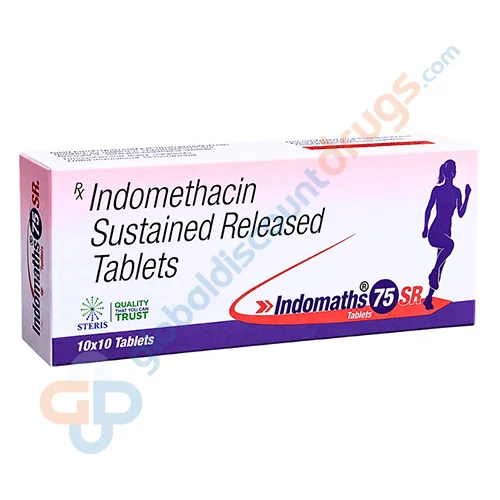
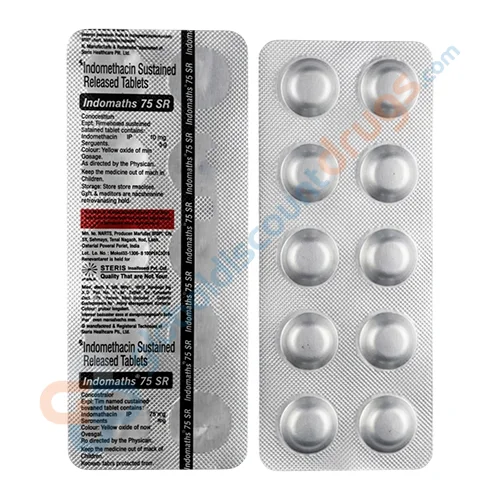
Indomethacin 75mg SR Tablets
In StockIndomethacin SR 75 mg Tablet is a prescription extended-release NSAID used to relieve pain, inflammation, and stiffness associated with arthritis and other inflammatory conditions. Use the lowest effective dose for the recommended duration.
| Active Ingredient: | Indomethacin |
|---|---|
| Indication: | Pain and Inflammation |
| Strength: | SR 75mg |
| Dosage Form: | Tablets |
| Manufacturer: | Steris Health Care |

Indomethacin 75mg SR — Quick Overview
Indomethacin 75mg SR (sustained-release) is a prescription nonsteroidal anti-inflammatory drug (NSAID) used to relieve pain, swelling, and stiffness from certain types of arthritis and other inflammatory conditions. It works by reducing chemicals in the body that cause inflammation and pain. This medication should be used only as prescribed by a doctor, at the lowest effective dose.
Medical Supervision & Regulatory Status
Indomethacin SR is prescription-only in the United States. Supervision is required because NSAIDs carry dose-dependent risks to the stomach, kidneys, and cardiovascular system, and the sustained-release formulation must be dosed carefully to avoid drug accumulation.
Clinical Context
Chronic inflammatory joint conditions — such as osteoarthritis, rheumatoid arthritis, and ankylosing spondylitis — cause ongoing pain, swelling, and reduced mobility that can significantly affect daily function. Left unmanaged, this inflammation can worsen joint damage over time and limit a person’s ability to work or perform routine activities.
Treatment aims to reduce pain and inflammation so patients can maintain mobility and quality of life while underlying conditions are managed. Indomethacin SR is one option among several NSAIDs used for this purpose, and is sometimes chosen for its extended duration of action, allowing less frequent dosing than immediate-release forms.
It’s typically used when other conservative measures — such as rest, physical therapy, or milder pain relievers — haven’t provided adequate relief, and is generally considered alongside other NSAIDs based on a patient’s individual risk factors.
How Indomethacin SR Works
Indomethacin belongs to the NSAID drug class and works primarily by inhibiting cyclooxygenase (COX-1 and COX-2) enzymes. These enzymes are involved in producing prostaglandins — substances in the body that trigger inflammation, pain, and fever.
By reducing prostaglandin production, indomethacin decreases swelling and pain at the site of inflammation, such as in an affected joint. The sustained-release formulation is designed to release the medication gradually, providing more consistent symptom control over a longer period compared to immediate-release tablets.
This mechanism helps patients experience reduced joint pain and stiffness, which can improve mobility and daily functioning, though it does not reverse underlying joint damage or cure the inflammatory condition itself.
What is Indomethacin SR?
| Drug Information | Details |
|---|---|
| Drug Class | Nonsteroidal Anti-Inflammatory Drug (NSAID) |
| Active Ingredient | Indomethacin |
| Mechanism | Inhibits COX-1 and COX-2 enzymes to reduce prostaglandin-driven inflammation and pain |
| Form | Sustained-release (SR) oral capsule/tablet |
| Dosing Frequency | Typically once or twice daily, as prescribed |
| Regulatory Status | Prescription only |
Uses / Indications
| Uses / Indications | Details |
|---|---|
| Osteoarthritis | Helps reduce joint pain and inflammation associated with cartilage wear. |
| Rheumatoid Arthritis | Helps manage pain and inflammation caused by chronic autoimmune joint disease. |
| Ankylosing Spondylitis | Helps relieve pain and stiffness associated with spinal inflammation. |
| Acute Gouty Arthritis Flares | Helps reduce severe, short-term joint pain and inflammation during gout attacks. |
| Bursitis / Tendinitis | May be prescribed for short-term relief of pain and inflammation in certain cases. |
How to Use / Dosage
Your doctor will determine your exact dose based on your condition, response, and other health factors. General guidance includes:
- Timing: Usually taken with food or milk to reduce stomach upset; swallow whole without crushing or chewing the sustained-release formulation
- Missed dose: Take it as soon as you remember, but skip it if it’s almost time for your next dose — do not double up
- Do not stop suddenly without talking to your doctor if you’ve been on it long-term, and never exceed the prescribed dose or duration without medical guidance
Side Effects
Most people can tolerate indomethacin when taken at the lowest effective dose for the shortest necessary time, though side effects can occur.
Common effects include stomach upset, heartburn, nausea, headache, dizziness, or drowsiness. Taking the medication with food may help reduce digestive discomfort.
Serious effects are less common but can include gastrointestinal bleeding or ulcers, kidney problems, elevated blood pressure, fluid retention, and increased risk of heart attack or stroke with long-term use.
Emergency Warning Signs — seek medical attention immediately if you experience:
- Black, tarry, or bloody stools, or vomiting blood
- Sudden chest pain, shortness of breath, or weakness on one side of the body
- Severe stomach pain that doesn’t improve
- Significant swelling of the legs, ankles, or face
- Yellowing of the skin or eyes (signs of liver problems)
- Sudden decrease in urination
- Signs of a severe allergic reaction, such as facial swelling or difficulty breathing
Warnings & Precautions
Indomethacin carries an increased risk of serious cardiovascular events, including heart attack and stroke, which may occur early in treatment and can increase with longer use or higher doses; patients with existing heart disease should discuss this risk carefully with their doctor. It also carries a risk of gastrointestinal bleeding, ulceration, and perforation, which can occur without warning symptoms, particularly in older adults or those with a prior history of ulcers.
Specific drug interactions matter: indomethacin should be used cautiously with other NSAIDs, aspirin, blood thinners such as warfarin, corticosteroids, SSRIs, lithium, methotrexate, and certain blood pressure medications such as ACE inhibitors or diuretics, as combinations can raise bleeding risk, reduce kidney function, or alter drug levels. Patients should tell their doctor about all prescription and over-the-counter medications they take.
Use during pregnancy, especially after 20 weeks, is generally avoided due to risks to fetal kidney function and the risk of premature closure of a fetal blood vessel; this medication is not recommended during the third trimester. Breastfeeding patients should consult their doctor, as small amounts may pass into breast milk. Special populations — including older adults, patients with kidney or liver disease, and those with a history of GI bleeding — typically need closer monitoring and may require lower doses or alternative treatment.
Who Should Not Use This Medication
- Patients with a known allergy to indomethacin, aspirin, or other NSAIDs
- History of asthma, hives, or allergic reactions triggered by NSAIDs or aspirin
- Active gastrointestinal bleeding or peptic ulcer disease
- Severe kidney or liver impairment
- Use right before or after coronary artery bypass graft (CABG) surgery
- Third trimester of pregnancy
Storage Instructions
- Store at room temperature, away from excess heat and humidity
- Keep the container tightly closed and protected from light
- Keep out of reach of children — accidental ingestion can be dangerous
- Do not use past the expiration date on the label
Frequently Asked Questions
What is the cost of Indomethacin SR without insurance?
The cost without insurance depends on the seller, brand availability, and pack size, and may also vary by location and available discounts. As a generic NSAID, it’s generally more affordable than brand-name alternatives.
Is Indomethacin SR available over the counter?
No, indomethacin SR is not available over the counter in the United States. Regulations may vary by region, but it generally requires medical supervision due to its potency and risk profile.
Does Indomethacin SR require a prescription?
Yes, a prescription is required. Medical evaluation and monitoring help ensure it’s used safely, particularly given its cardiovascular and gastrointestinal risks.
How long does it take to work?
Some pain relief may be noticeable within a few hours to a day, but full anti-inflammatory benefits for chronic conditions can take one to two weeks of consistent use. Your doctor will assess your response during follow-up.
Can I stop taking this medication suddenly?
For short-term use, stopping is usually fine, but long-term users should consult their doctor first, since abruptly stopping can cause a return of inflammation and pain. Never adjust your dose without medical guidance.
Does Indomethacin SR interact with other medications?
Yes, it can interact with blood thinners, other NSAIDs, certain blood pressure medications, and lithium, among others. Always share your full medication list with your doctor or pharmacist.
What should I do if I miss a dose?
Take it as soon as you remember, unless it’s close to your next scheduled dose, in which case skip the missed one. Do not take a double dose to make up for it.
Resources
FDA Label — Indomethacin Extended-Release Capsules: https://www.accessdata.fda.gov/drugsatfda_docs/label/2014/018332s032lbl.pdf
MedlinePlus — Indomethacin: https://medlineplus.gov/druginfo/meds/a681027.html
DailyMed (NIH) — Indomethacin Label Information: https://dailymed.nlm.nih.gov/dailymed/
Medical Disclaimer
This content is for informational purposes only and does not constitute medical advice, diagnosis, or treatment. Consult a qualified specialist or physician before using Indomethacin 75mg SR Tablets.
Prescription Required (Rx) to Buy?
This medication is not available over the counter. A valid prescription from a licensed healthcare
professional is required. Always consult your doctor before use.
| Quantity | 100, 200, 300, 400 |
|---|---|
| Indication | Pain and Inflammation |
| Active Ingredient | Indomethacin |
| Pharmaceutical Form | Tablets |
| Manufacturer | Steris Health Care |
| Indian Brand | Indomaths SR 75mg |
| US Brand Name | Indomethacin |
| Generic Name | Indomethacin |
| Dosage | SR 75mg |
| Drug Type | Tablets |