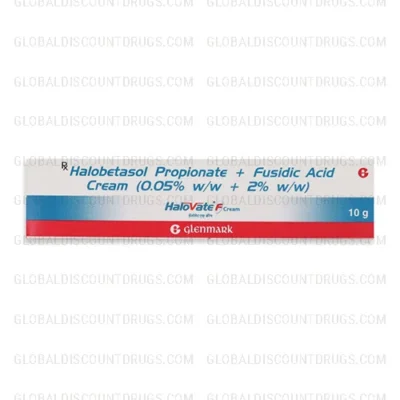

Halobetasol Propionate-Fusidic Acid
In StockHalobetasol Propionate-Fusidic Acid is a topical medication used to treat inflamed skin conditions that are also infected with bacteria. It combines the very high-potency corticosteroid halobetasol propionate to quickly and effectively reduce redness, swelling, and itching. This is paired with the antibiotic fusidic acid, which prevents the growth of bacteria on the skin. It offers a combined anti-inflammatory and anti-infective treatment for conditions like infected eczema or dermatitis.

What is Halobetasol Propionate-Fusidic Acid?
Halobetasol Propionate-Fusidic Acid is a topical combination medication containing two active ingredients:
- Halobetasol propionate, a high-potency topical corticosteroid that reduces inflammation, redness, and itching
- Fusidic acid, a topical antibiotic that treats bacterial skin infections, particularly those caused by Staphylococcus aureus and certain other susceptible bacteria
This combination belongs to the broader category of topical corticosteroid-antibiotic combination products, generally reserved for inflammatory skin conditions that are more severe or resistant to treatment and are complicated by, or at risk of, a secondary bacterial infection.
Common prescribed uses include:
- Moderate to severe inflammatory skin conditions with secondary bacterial infection, such as infected eczema, psoriasis plaques, or dermatitis
- Short-term treatment of localized, resistant inflammatory skin lesions where a bacterial component is present or suspected
Halobetasol Propionate-Fusidic Acid is typically available as:
- Topical cream
- Topical ointment (in some regions and product lines)
Because halobetasol propionate is a high-potency corticosteroid, this combination is generally intended for short, limited courses of treatment rather than long-term or widespread use. Not all formulations or strengths are available in every country. Patients should check with their pharmacist or licensed medical specialist to confirm which formulation has been prescribed to them.
What is the Recommended Dosage of Halobetasol Propionate-Fusidic Acid?
Dosage and duration of use vary depending on several factors, including:
- The specific skin condition being treated and its severity
- The location and extent of the affected skin area (high-potency corticosteroids require particular caution on the face, groin, or skin folds)
- Patient age (use in children requires particular caution and is generally more restricted given the high potency of halobetasol)
- Duration of treatment, since high-potency corticosteroid combinations are typically limited to short courses
- Whether the affected area involves thin or sensitive skin
Available formulations may include creams and ointments, depending on the region and product line.
Use must always be determined and confirmed by a licensed medical specialist, typically a dermatologist. This guide does not provide specific dosing or application instructions, as appropriate use — including how much to apply, how often, and for how long — depends on individual clinical factors that only a qualified healthcare provider can assess. Given the high potency of halobetasol, following the specialist’s exact instructions on duration and area of use is especially important.
How Halobetasol Propionate-Fusidic Acid Works
This combination addresses two contributors to certain skin conditions at the same time:
- Halobetasol propionate works by strongly reducing the activity of the immune and inflammatory response in the skin, which helps decrease redness, swelling, scaling, and itching. As a high-potency corticosteroid, its anti-inflammatory effect is more pronounced than lower-potency options.
- Fusidic acid works by interfering with bacterial protein production, which helps stop the growth of susceptible bacteria on the skin.
Because these two ingredients act through different mechanisms, the combination is designed to strongly reduce inflammation while addressing an associated bacterial infection at the same time, rather than requiring two separate individual products.
It is important to understand that this combination treats and manages the specific infection and inflammation present — it does not prevent future skin conditions or infections, and it does not address the underlying cause of chronic skin conditions such as psoriasis or eczema.
Is a Prescription Required to Buy Halobetasol Propionate-Fusidic Acid Online?
Halobetasol Propionate-Fusidic Acid combination products are prescription-only medications in virtually all countries, given the high potency of the corticosteroid component, the need for a proper diagnosis before use, and the risks associated with antibiotic use, including resistance concerns.
Patients should consult a licensed dermatologist (or another appropriate specialist, depending on the affected area) before starting this medication, so the specific skin condition can be properly diagnosed and confirmed to be appropriate for this high-potency combination treatment.
Important safety reminders when purchasing medication online:
- Only purchase this medication from licensed, verified pharmacies that require a valid prescription.
- Be cautious of websites offering the medication without any prescription verification.
- Avoid counterfeit products, which may contain incorrect ingredient concentrations or harmful substances.
- Never use veterinary or non-human formulations intended for animals.
Side Effects of Halobetasol Propionate-Fusidic Acid
Common Side Effects
These are generally mild and localized to the application site, and may include:
- Burning, stinging, or itching at the application site
- Dryness or irritation of the skin
- Mild redness
Serious Side Effects
Serious side effects are less common but can occur, particularly with prolonged or improper use of this high-potency combination. Seek medical attention if you experience:
- Signs of skin thinning, stretch marks, visible blood vessels, or fragile skin, which may occur more readily due to the high potency of halobetasol
- Worsening of the skin condition or signs of a new or spreading infection
- Signs of an allergic reaction, such as swelling, hives, or severe rash, particularly to either active ingredient
- Signs of systemic corticosteroid absorption, such as unusual weight gain, rounded facial appearance, mood changes, or hormonal effects — these are more likely with high-potency corticosteroids, especially if used over large areas or for longer than recommended
- Signs of a secondary infection not responding to treatment, which may indicate antibiotic resistance
This is not a complete list of possible side effects. Patients should report any unusual or persistent symptoms to their licensed dermatologist or medical specialist promptly.
Drug Interactions
Because this is a topical medication, systemic drug interactions are generally less common than with oral medications, but patients should still be aware of the following:
- Other topical products applied to the same area, including other corticosteroids or antibiotics, which may increase the risk of skin irritation or excessive corticosteroid effect
- Occlusive dressings or bandages placed over the treated area, which can significantly increase absorption of the corticosteroid component and related risks — this is particularly important with a high-potency corticosteroid like halobetasol
- Other topical antibiotics, since combining multiple antibiotic products on the same area is generally not recommended without specialist guidance
- Over-the-counter (OTC) skin products, including moisturizers or other topical treatments that may affect absorption or irritate the skin further
Patients should inform their licensed dermatologist or medical specialist about all topical and systemic medications, as well as supplements, being used, particularly other products applied to the skin.
Safety & Important Considerations
- High potency and duration limits: Halobetasol propionate is a high-potency corticosteroid. Treatment courses are generally limited to a short, specific duration as directed by a specialist, and total amounts used are often capped to reduce the risk of systemic absorption.
- Areas of use: This combination is generally not recommended for use on the face, groin, underarms, or other thin-skinned or sensitive areas unless specifically directed by a specialist, due to the high potency of the corticosteroid.
- Children: Children may absorb topical corticosteroids more readily than adults due to a higher skin surface-area-to-body-weight ratio. High-potency corticosteroids like halobetasol require particular caution and are generally more restricted in pediatric use.
- Pregnancy and breastfeeding: The safety of this combination during pregnancy and breastfeeding has not been fully established, and the high potency of the corticosteroid component warrants additional caution. Use should only occur under the close guidance of a licensed medical specialist.
- Broken or damaged skin: Applying this medication to broken, raw, or extensively damaged skin may increase systemic absorption of both components.
- Eye contact: This medication should not be applied near or in the eyes.
- Antibiotic stewardship: As with all topical antibiotics, this medication should be used only for confirmed or strongly suspected bacterial involvement and for the duration recommended by a specialist, to help reduce the risk of antibiotic resistance.
- Withdrawal effects: Stopping a high-potency corticosteroid abruptly after prolonged use may, in some cases, lead to a flare of the underlying skin condition; any changes to treatment should be guided by a specialist.
- Monitoring: Given the high potency of this combination, a specialist may want to reassess the skin condition periodically during treatment, particularly if use is needed for more than a short course.
Patients should always disclose their full medical history and any other skin treatments being used to their prescribing specialist before starting treatment.
Who This Medication Is For
Halobetasol Propionate-Fusidic Acid is generally intended for individuals who have been diagnosed by a dermatologist or other qualified specialist with:
- Moderate to severe inflammatory skin conditions, such as certain presentations of psoriasis or eczema, combined with a confirmed or strongly suspected bacterial component
- Localized, resistant skin lesions requiring a high-potency corticosteroid approach alongside antibacterial treatment
It is typically used in adults for short, defined treatment courses, with pediatric use requiring close specialist supervision given the high potency of the corticosteroid component.
Who Should Not Take Halobetasol Propionate-Fusidic Acid
This combination medication may not be appropriate for individuals who:
- Have a known allergy or hypersensitivity to halobetasol, fusidic acid, or any other ingredient in the formulation
- Have untreated skin infections that are not sensitive to the antibiotic component, including viral skin infections such as herpes, chickenpox, or shingles, or fungal infections without a fungal-specific treatment
- Have conditions such as rosacea, perioral dermatitis, or acne, where high-potency topical corticosteroids may significantly worsen the condition
- Have thin or fragile skin, or a history of skin atrophy from prior corticosteroid use, without careful specialist evaluation
- Would require long-term or widespread use, which is generally not appropriate for a high-potency corticosteroid combination without close specialist supervision
This is not an exhaustive list. A licensed dermatologist or medical specialist should evaluate the specific skin condition and patient history before prescribing this combination.
What to Do If You Miss a Dose
- If an application is missed, apply it as soon as remembered, unless it is close to the time of the next scheduled application.
- Do not apply a double amount to make up for a missed application.
- If there is uncertainty about how to proceed, contact a licensed dermatologist or medical specialist for guidance specific to the prescribed treatment schedule.
Related medications to Halobetasol Propionate-Fusidic Acid
Other options that may be considered, depending on the specific diagnosis, include:
- Lower-potency topical corticosteroid-antibiotic combinations, such as fluticasone-mupirocin or betamethasone valerate-based combinations, for milder inflammatory conditions
- Single-ingredient high-potency topical corticosteroids, for inflammation without a bacterial component
- Single-ingredient topical antibiotics, such as mupirocin, for isolated bacterial skin infections
- Combination corticosteroid-antibiotic-antifungal products, if a fungal component is also suspected
These medications work through different combinations of mechanisms and potencies. Switching between topical treatments should only be done in consultation with a licensed dermatologist or medical specialist, who can evaluate which option best fits the specific skin condition diagnosed.
Storage Instructions
- Store at room temperature, generally away from excessive heat.
- Protect the medication from moisture and direct light.
- Keep the tube or container tightly closed when not in use.
- Store out of reach and sight of children and pets to prevent accidental ingestion or misuse.
- Do not use medication that has passed its expiration date; dispose of expired or unused medication according to local guidelines or pharmacist recommendations.
Disclaimer:
This page is for educational purposes only and is not a substitute for professional medical advice, diagnosis, or treatment. Patients must consult a licensed dermatologist or other qualified medical specialist before starting, changing, or stopping Halobetasol Propionate-Fusidic Acid or any other treatment. Treatment decisions must be based on a full clinical evaluation by a qualified healthcare provider, including proper diagnosis of the underlying skin condition, taking into account the patient’s individual medical history, current medications, and health status — particularly given the high potency of the corticosteroid component.
Prescription Required (Rx) to Buy?
This medication is not available over the counter. A valid prescription from a licensed healthcare
professional is required. Always consult your doctor before use.