
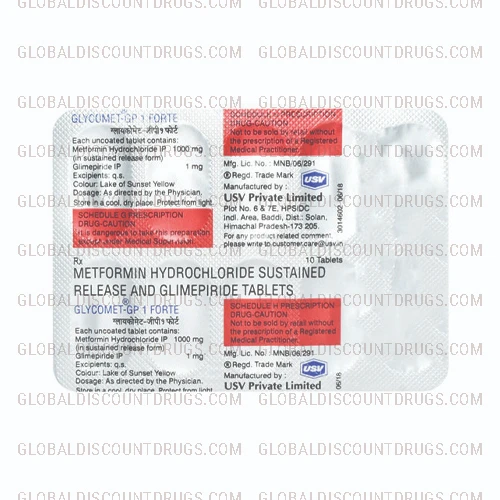
Glimepiride-Metformin 1mg-1000mg SR
In StockGlimepiride 1 mg–Metformin 1000 mg Sustained-Release Tablet combines a sulfonylurea with a biguanide to improve blood glucose control in type 2 diabetes. Take it with food and monitor for low blood sugar.
| Active Ingredient: | Glimepiride-Metformin |
|---|---|
| Indication: | Type 2 Diabetes |
| Strength: | 1mg-1000mg |
| Dosage Form: | Tablets |
| Manufacturer: | USV Ltd |

Glimepiride-Metformin 1mg-1000mg SR – Quick Overview
Glimepiride-Metformin 1mg-1000mg SR is a prescription combination medicine used to manage blood sugar levels in adults with type 2 diabetes. It works by helping the pancreas release more insulin while also reducing the amount of sugar the liver produces. This medication should be used only as prescribed, alongside diet and exercise, under medical supervision.
Medical Supervision & Regulatory Status
Glimepiride-Metformin SR tablets are available only by prescription in the United States and are regulated by the FDA as a combination oral antidiabetic agent. Medical supervision is required because blood sugar control must be monitored regularly, and metformin carries a boxed warning for a rare but serious condition called lactic acidosis.
Clinical Context
Type 2 diabetes is a chronic condition in which the body either doesn’t produce enough insulin or doesn’t use insulin effectively, leading to elevated blood sugar levels. Over time, uncontrolled blood sugar can damage the eyes, kidneys, nerves, and cardiovascular system.
Treatment is needed to bring blood sugar into a safe target range and reduce the risk of long-term diabetes complications. Many patients require more than one type of medication when diet, exercise, and a single drug are not enough to achieve adequate control.
Glimepiride-Metformin fits into diabetes therapy as a fixed-dose combination that pairs a sulfonylurea (glimepiride) with a biguanide (metformin), commonly used when metformin alone hasn’t sufficiently controlled blood sugar. This combination is known to control blood sugar to a greater extent than either component alone.
How Glimepiride-Metformin Works
This medication combines two drug classes: glimepiride, a sulfonylurea, and metformin, a biguanide, each working through a different mechanism to lower blood sugar.
Glimepiride works primarily by stimulating the pancreas to release more insulin, while metformin works by reducing the amount of glucose produced by the liver and improving the body’s sensitivity to insulin in muscle tissue. The sustained-release (SR) formulation of metformin allows for a more gradual release of the drug over time.
For patients, this dual mechanism translates into more comprehensive blood sugar control than either drug could achieve alone, helping reduce fasting and post-meal glucose levels when combined with appropriate diet and lifestyle changes.
What is Glimepiride-Metformin 1mg-1000mg SR?
- Drug Class: Sulfonylurea + Biguanide (combination antidiabetic)
- Active Ingredients: Glimepiride 1mg and Metformin Hydrochloride 1000mg (sustained-release)
- Mechanism: Glimepiride increases insulin release from the pancreas; metformin reduces liver glucose production and improves insulin sensitivity
- Form: Oral sustained-release (SR) tablet
- Dosing Frequency: Typically once or twice daily, as determined by your doctor
- Regulatory Status: Prescription only (Rx) in the United States
Uses / Indications
- Type 2 Diabetes Mellitus: Indicated as an adjunct to diet and exercise to improve blood sugar control in adults with type 2 diabetes who are not adequately controlled on metformin or a sulfonylurea alone, or as a starting therapy in appropriate patients
This medication is not indicated for type 1 diabetes or diabetic ketoacidosis.
How to Use / Dosage
Your doctor will determine your correct dose based on your blood sugar levels, kidney function, and response to treatment. This medication is generally taken with a meal to reduce stomach upset and help control after-meal blood sugar spikes; swallow the sustained-release tablet whole without crushing or chewing it.
If you miss a dose, skip it and take your next dose at the regular time — do not double up, as this can increase the risk of low blood sugar. Do not stop taking this medication suddenly without consulting your doctor, since discontinuing treatment can cause blood sugar to rise to unsafe levels.
Side Effects
Most patients tolerate this combination reasonably well, though gastrointestinal effects are common, especially when starting treatment. Common side effects include nausea, diarrhea, stomach upset, and mild low blood sugar (hypoglycemia) symptoms such as shakiness or sweating.
Serious effects are less common but can include significant hypoglycemia, liver problems, and lactic acidosis, a rare but life-threatening buildup of lactic acid in the blood associated with metformin use.
Emergency Warning Signs — Seek immediate medical attention if you experience:
- Unusual muscle pain, weakness, or difficulty breathing (possible signs of lactic acidosis)
- Severe low blood sugar symptoms, including confusion, seizures, or loss of consciousness
- Yellowing of the skin or eyes (possible liver problem)
- Signs of a severe allergic reaction, such as swelling of the face or throat, or difficulty breathing
- Unusual tiredness, stomach pain, or vomiting combined with rapid breathing
- Fever, chills, or unexplained bleeding or bruising
Warnings & Precautions
This medication should not be used by patients with a known hypersensitivity to glimepiride, metformin, or sulfa-based drugs, or by patients with severe kidney impairment, metabolic acidosis, or significant heart, liver, or lung problems that increase lactic acidosis risk. Patients undergoing procedures involving iodinated contrast dye may need to temporarily stop metformin due to kidney-related risk.
Regarding drug interactions, alcohol use should be limited, as it increases the risk of lactic acidosis and low blood sugar. Certain medications, including some diuretics, corticosteroids, and other drugs affecting blood sugar or kidney function, may require dose adjustments; always disclose your complete medication list to your doctor or pharmacist.
For pregnancy and breastfeeding, insulin is generally preferred for blood sugar control during pregnancy, so this medication should be discussed carefully with your doctor if you are pregnant, planning pregnancy, or breastfeeding. Special populations, including older adults and patients with reduced kidney function, may require lower doses and closer monitoring, as both age and kidney impairment increase the risk of hypoglycemia and lactic acidosis. Regular monitoring of blood sugar, kidney function, and periodic vitamin B12 levels is recommended throughout treatment, since long-term metformin use can lower B12 levels.
Who Should Not Use This Medication
- Individuals with a known allergy to glimepiride, metformin, or sulfa drugs
- Patients with severe kidney impairment or significant kidney disease
- Patients with metabolic acidosis, including diabetic ketoacidosis
- Patients with severe heart failure or conditions causing reduced tissue oxygenation
- Patients with significant liver disease
- Patients scheduled for procedures requiring iodinated contrast dye, without physician guidance on temporary discontinuation
Storage Instructions
Store Glimepiride-Metformin SR tablets at room temperature, away from excessive heat and moisture. Keep the container tightly closed and protect from direct light. Keep out of reach of children and pets, and do not use past the expiration date printed on the packaging.
Frequently Asked Questions
Is a prescription required for Glimepiride-Metformin SR?
Yes, this combination medication requires a valid prescription in the United States. A doctor must evaluate your diabetes control and kidney function before prescribing it.
How long does it take for Glimepiride-Metformin to work?
Blood sugar-lowering effects from glimepiride can begin within hours, while metformin’s full effect typically develops over one to two weeks of consistent use.
Is it safe to stop taking this medication suddenly?
No, stopping abruptly is not recommended without medical guidance. Discontinuing treatment can cause blood sugar to rise to unsafe levels and may require your doctor to adjust your diabetes management plan.
Can Glimepiride-Metformin interact with other medications?
Yes, it can interact with alcohol, certain diuretics, steroids, and other drugs affecting blood sugar or kidney function. Always share your complete medication list with your doctor or pharmacist.
What should I do if I miss a dose?
Skip the missed dose and take your next dose at the regular scheduled time. Do not take a double dose to make up for a missed one.
What is the cost of Glimepiride-Metformin SR without insurance?
Generic combination tablets are generally more affordable than comparable brand-name options. The cost without insurance depends on the seller, brand availability, and pack size, and may also vary by location and available discounts.
How can I order Glimepiride-Metformin online?
A valid prescription is required to order this medication. Typically, you upload your prescription or have your doctor send it directly to a licensed pharmacy for home delivery. Always use verified, licensed pharmacies to ensure product safety and authenticity.
Is Glimepiride-Metformin available over the counter?
No, it is not available over the counter in most countries, including the United States. Regulations may vary by region, but medical supervision is generally required for safe use.
References
- NCBI/PMC (NIH) – Real-World Evidence on Glimepiride and Metformin Fixed-Dose Combinations: https://www.ncbi.nlm.nih.gov/pmc/articles/PMC7594657/
- NCBI/PMC (NIH) – Bioequivalence and Pharmacology of Glimepiride/Metformin Combination Tablets: https://www.ncbi.nlm.nih.gov/pmc/articles/PMC4157012/
- MedlinePlus (NIH) – Metformin: https://medlineplus.gov/druginfo/meds/a696005.html
Note: MedlinePlus does not currently host a dedicated consumer monograph for the fixed-dose glimepiride-metformin combination itself, so references include NIH-hosted clinical literature alongside the MedlinePlus monograph for metformin.
Medical Disclaimer
This content is for informational purposes only and does not constitute medical advice, diagnosis, or treatment. Consult a qualified specialist or physician before using Glimepiride-Metformin 1mg-1000mg SR.
Prescription Required (Rx) to Buy?
This medication is not available over the counter. A valid prescription from a licensed healthcare
professional is required. Always consult your doctor before use.
| Quantity | 120, 180, 240, 60 |
|---|---|
| Indication | Type 2 Diabetes |
| Active Ingredient | Glimepiride-Metformin |
| Pharmaceutical Form | Tablets |
| Manufacturer | USV Ltd |
| Indian Brand | Glycomet-GP 1 Forte |
| US Brand Name | Glimepiride-Metformin SR |
| Generic Name | Glimepiride-Metformin |
| Dosage | 1mg-1000mg |
| Drug Type | Tablets |