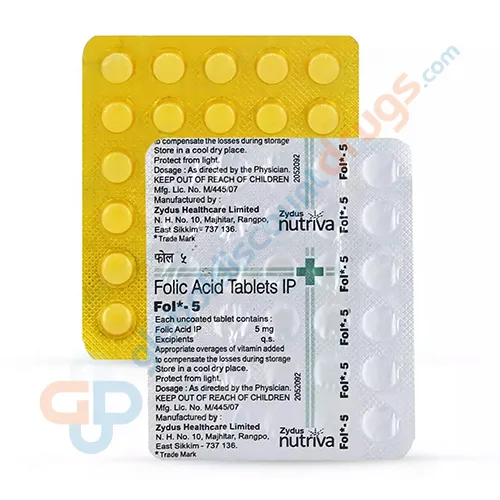
Folic Acid 5mg
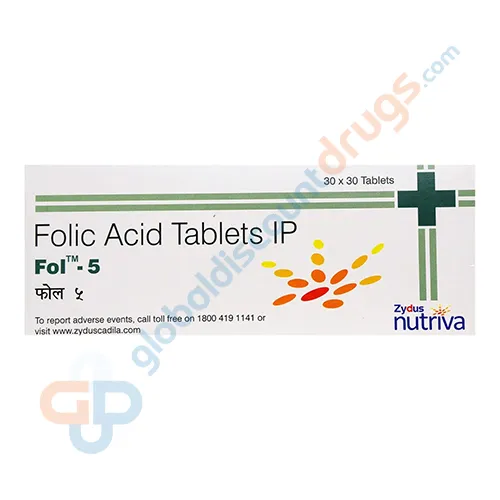
In StockFolic Acid 5 mg Tablet is a vitamin B9 supplement used to prevent or treat folate deficiency and selected forms of megaloblastic anemia. Use the higher strength only when clinically appropriate.
| Active Ingredient: | Folic Acid |
|---|---|
| Indication: | Folate Deficiency |
| Strength: | 5mg |
| Dosage Form: | Tablets |
| Manufacturer: | Zydus Cadila |

Folic Acid 5mg – Quick Overview
Folic acid 5mg is a prescription-strength tablet of vitamin B9 used to treat folate deficiency and folate-related (megaloblastic) anemia, and in some people to lower neural tube defect risk before and during early pregnancy. It works by giving the body folate needed to make healthy red blood cells and DNA. It does not replace vitamin B12. Take it only as prescribed.
Medical Supervision & Regulatory Status
Folic acid 5mg is a high-dose, prescription-only medicine, and it should be started and supervised by a licensed healthcare provider.
In the United States, FDA-labeled prescription folic acid tablets are 1 mg, while the 5mg tablet is a higher strength more common in other countries such as the UK and Ireland, so US availability may vary. Low-dose folic acid (400 to 800 mcg) is sold over the counter in vitamins and supplements. Supervision matters because high-dose folic acid can hide vitamin B12 deficiency and can interact with seizure medicines.
Clinical Context
Folic acid 5mg is used to treat or prevent significant folate deficiency, including folate-deficiency anemia, and sometimes to lower neural tube defect risk in higher-risk pregnancies.
Folate (vitamin B9) is needed to build DNA and to produce healthy red blood cells. When levels run low, because of poor diet, malabsorption, alcohol use, increased needs in pregnancy, kidney dialysis, or certain medicines, the body can make large, immature red blood cells (megaloblastic anemia). This may cause tiredness, weakness, pale skin, and shortness of breath.
Doses higher than the usual 400 to 800 mcg are reserved for specific situations. For women who have had a pregnancy affected by a neural tube defect, the CDC recommends 4 mg (4,000 mcg) daily starting at least one month before conception and continuing through the first three months of pregnancy, while UK guidance (NICE) recommends 5mg daily for women at high risk. Your doctor decides whether a higher dose is right for you.
How Folic Acid 5mg Works
Folic acid is converted to active folate, which helps cells make DNA and mature red blood cells, so it may help correct anemia and deficiency caused by low folate.
Folic acid is absorbed quickly from the small intestine, mainly the upper part. The liver converts it to tetrahydrofolic acid, a form that works as a helper (cofactor) in building the genetic material of new cells. When folate is low, cells in the bone marrow cannot divide normally, which leads to megaloblastic anemia. Replacing folate helps the bone marrow return to normal red blood cell production.
Folic acid corrects the folate shortage only. It does not treat vitamin B12 deficiency or pernicious anemia, and taking it alone in those conditions can hide the anemia while nerve damage continues.
What Is Folic Acid 5mg?
Folic acid 5mg is a prescription vitamin B9 tablet taken by mouth as directed by a healthcare provider to treat or prevent folate deficiency.
| Feature | Details |
|---|---|
| Drug Class | B-vitamin (folate); antianemic preparation |
| Active Ingredient | Folic acid (vitamin B9), 5mg per tablet |
| Mechanism | Converted to active folate, which helps cells make DNA and mature red blood cells. |
| Form | Oral tablet (in the US, FDA-labeled prescription tablets are 1 mg) |
| Dosing Frequency | As prescribed; commonly once daily |
| Regulatory Status | Prescription only at this strength; not a controlled substance |
Uses / Indications
Folic acid is used for megaloblastic anemia from folate deficiency, anemias of nutritional origin, and increased folate needs in pregnancy, infancy, and childhood, with higher doses for specific high-risk situations.
- Folate-deficiency (megaloblastic) anemia: Used to restore folate levels and support normal red blood cell production. The FDA label also lists nutritional anemias and anemias related to pregnancy, infancy, or childhood.
- Prevention of folate deficiency in higher-risk situations: In countries where the 5mg tablet is licensed, labeling also includes people with chronic hemolytic anemia, those on kidney dialysis, and those with drug-induced folate deficiency, as directed by a doctor.
- Neural tube defect prevention in higher-risk pregnancy: Used before conception and in early pregnancy for women with a previous affected pregnancy or other risk factors, at a dose and duration set by their doctor.
Folic acid is not a treatment for vitamin B12 deficiency or pernicious anemia.
How to Use / Dosage
Take folic acid 5mg exactly as your doctor prescribes, since the dose and length of treatment depend on the reason for use, and never change it on your own.
Timing: Take it by mouth once a day, or as directed, at about the same time each day. It can generally be taken with or without food. Swallow the tablet with water.
Dose and duration: The FDA label for folic acid describes a usual therapeutic dose of up to 1 mg daily and notes that resistant cases may need more. Doses such as 4 to 5mg are used for specific high-risk situations, such as neural tube defect prevention, and are set by your doctor. For pregnancy planning, treatment usually starts at least one month before conception and continues through the first 12 weeks, unless your doctor advises otherwise.
Missed dose: Take it when you remember unless it is almost time for the next dose. Do not take a double dose.
Do not stop suddenly without advice: Ask your doctor before stopping, because ending early may let anemia return.
Overdose: Call Poison Help at 1-800-222-1222 or seek emergency care right away.
Side Effects
Folic acid is relatively nontoxic and side effects are uncommon, but allergic reactions and stomach upset can occur, especially at high doses.
Common effects: Nausea, loss of appetite, bloating, gas, and a bitter or unpleasant taste have been reported, mostly with very high doses (15mg daily). At those doses, some people have also reported sleep changes, irritability, trouble concentrating, and low mood. Tell your doctor if any effect is bothersome or does not go away.
Serious effects: Rare allergic reactions can cause rash, itching, wheezing, or breathing difficulty. Folic acid can lower phenytoin levels and may increase seizures in some people with epilepsy who take seizure medicines. With long-term use, vitamin B12 levels may fall, and folic acid can hide pernicious anemia while nerve damage continues.
Emergency warning signs – get medical help right away if you have:
- Hives, widespread rash, or intense itching
- Swelling of the face, lips, tongue, or throat
- Wheezing, chest tightness, or trouble breathing
- A seizure, or seizures that become more frequent
- Numbness or tingling in the hands or feet, trouble walking, or new confusion or memory problems (possible vitamin B12 deficiency)
- Severe or lasting vomiting that prevents you from taking medicines or fluids
You can report side effects to the FDA MedWatch program at 1-800-FDA-1088.
Warnings & Precautions
Before taking folic acid 5mg, tell your doctor about vitamin B12 deficiency, pernicious anemia, epilepsy, methotrexate use, dialysis, pregnancy plans, and every medicine you take.
Contraindications: Do not take folic acid if you have had an allergic reaction or intolerance to it or to any tablet ingredient. It should not be used alone to treat pernicious anemia or other megaloblastic anemias in which vitamin B12 is low, and anemia should be evaluated before treatment starts. Some product labels also advise against its use in people with malignant disease unless folate-deficiency anemia is a major feature, so check with your care team if you have cancer.
Drug interactions: Folic acid can reduce the effect of phenytoin, and people with epilepsy who take phenytoin, phenobarbital, or primidone may see changes in seizure control, so your doctor may adjust seizure medicine doses or monitor you more closely.
and pyrimethamine block folate, and nitrofurantoin and sulfasalazine may also contribute to low folate, so do not start or stop folic acid alongside these medicines unless your doctor directs you. Heavy alcohol use can deplete folate. Antibiotics such as tetracycline can cause falsely low folate lab results.
Pregnancy and breastfeeding: Folate needs rise during pregnancy and lactation, and folic acid is widely used before and during pregnancy. The FDA label advises using therapeutic doses in pregnancy only when clearly needed, so a higher dose should be started and stopped on your doctor’s advice. Folic acid passes into breast milk, and the amounts normally present meet an infant’s needs.
Special populations: Older adults and people with poor absorption, alcohol use, or poor diet are more likely to have low B12 as well as low folate, so B12 testing is often advised. Children’s doses are set by a doctor based on age and weight. Doses above 1 mg daily do not add to the blood-forming effect for most people, and most of the excess leaves in the urine.
Monitoring: Your doctor may check blood counts, folate and vitamin B12 levels, and seizure control, and will review your treatment if anemia does not improve.
Who Should Not Use This Medication
Do not use folic acid 5mg, or speak with your doctor first, in these situations:
- You have had an allergic reaction or intolerance to folic acid or any ingredient in the tablet
- You have known or suspected vitamin B12 deficiency or pernicious anemia that is not being treated with vitamin B12
- You have anemia that has not been diagnosed or evaluated
- You have cancer, unless your oncology team has approved folic acid
- You take phenytoin or other seizure medicines and your doctor has not reviewed the combination
- The patient is a child, unless a doctor has prescribed the dose
Storage Instructions
Store folic acid tablets at room temperature, 68°F to 77°F (20°C to 25°C), in a tightly closed, light-resistant container, away from moisture and out of reach of children.
Do not store tablets in the bathroom. Keep them in the original child-resistant container. Do not share your medicine with others. Dispose of expired or unused tablets through a drug take-back program, or follow the FDA’s safe disposal guidance.
Frequently Asked Questions
What is the cost of folic acid 5mg without insurance?
The cost without insurance depends on the seller, brand availability, and pack size. Folic acid is generally affordable, especially in generic form. Prices may also vary by location and available discounts, so comparing licensed pharmacies and asking your pharmacist about generic options can help. Ask for the exact strength and pack size before comparing.
How can I order folic acid 5mg online?
You can order folic acid 5mg online only with a valid prescription from a licensed healthcare provider. Upload your prescription or ask your doctor to send it directly, then order from a licensed pharmacy and choose home delivery. Always verify the pharmacy is licensed, for example through state licensure or NABP accreditation, before ordering.
Is folic acid 5mg available over the counter?
No, folic acid 5mg is not available over the counter in most countries; only lower-dose folic acid, 400 to 800 mcg, is sold OTC. Regulations may vary by country, but medical supervision is expected for higher doses because they can hide vitamin B12 deficiency. Do not substitute several OTC tablets for a prescribed dose without asking your doctor.
Does folic acid 5mg require a prescription?
Yes, folic acid 5mg requires a valid prescription from a licensed healthcare provider. A medical evaluation finds the cause of low folate and checks for vitamin B12 deficiency, which high-dose folic acid can hide. Follow-up monitoring helps your doctor adjust the dose and watch for interactions with seizure medicines or other drugs.
How long does folic acid take to work?
Folic acid does not correct deficiency overnight; blood counts and symptoms often begin improving within several days to weeks, but full recovery can take longer. Your doctor will check blood tests to see whether folate levels and red blood cell counts are recovering. Treatment length depends on the cause, and for pregnancy planning it is started before conception.
Is it safe to stop taking folic acid 5mg suddenly?
Do not stop folic acid 5mg without asking your doctor, because the right stopping point depends on why you take it. Ending early may let anemia return, and pregnancy-related dosing is usually continued through the first 12 weeks. Your doctor can advise when it is safe to stop or reduce.
Can folic acid interact with other medicines?
Yes, folic acid can interact with seizure medicines such as phenytoin, so tell your doctor and pharmacist about everything you take. It may lower phenytoin levels and, in some people, raise seizure risk. Methotrexate, pyrimethamine, and sulfasalazine can affect folate, and high-dose folic acid can hide vitamin B12 deficiency. Never start or stop it alongside these medicines without guidance.
What should I do if I miss a dose of folic acid?
If you miss a dose, take it when you remember unless it is almost time for the next one, then skip it. Do not take a double dose to catch up. Return to your usual schedule and keep dosing consistent, since steady daily intake works best. If you have missed several days, ask your pharmacist or doctor how to restart.
References
- DailyMed (U.S. National Library of Medicine). Folic Acid tablet – FDA drug label. https://dailymed.nlm.nih.gov/dailymed/drugInfo.cfm?setid=d6c7ac9b-f44a-4f10-9d1d-efbebd37c313
- Centers for Disease Control and Prevention (MMWR). Supplement Use and Other Characteristics Among Pregnant Women with a Previous Pregnancy Affected by a Neural Tube Defect — United States, 1997–2009. https://www.cdc.gov/mmwr/preview/mmwrhtml/mm6401a3.htm
- NCBI Bookshelf (National Library of Medicine). Table comparing folic acid recommendations by guideline body, including CDC, AAP and NICE. https://www.ncbi.nlm.nih.gov/books/NBK410115/table/ch1.t2/
Medical Disclaimer:
This content is for informational purposes only and does not constitute medical advice, diagnosis, or treatment. Consult a qualified specialist or physician before using Folic Acid 5mg.
Prescription Required (Rx) to Buy?
This medication is not available over the counter. A valid prescription from a licensed healthcare
professional is required. Always consult your doctor before use.
| Quantity | 180, 270, 360, 90 |
|---|---|
| Indication | Folate Deficiency |
| Active Ingredient | Folic Acid |
| Pharmaceutical Form | Tablets |
| Manufacturer | Zydus Cadila |
| Indian Brand | Fol 5mg |
| US Brand Name | Folic Acid |
| Generic Name | Folic Acid |
| Dosage | 5mg |
| Drug Type | Tablets |