

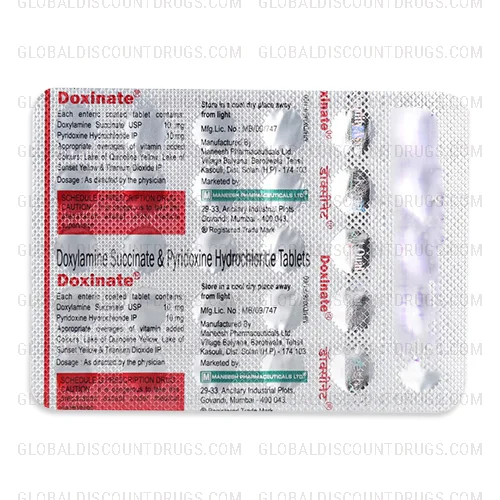
Doxylamine-Pyridoxine 10mg-10mg
In StockDoxylamine 10 mg–Pyridoxine 10 mg Tablet combines an antihistamine with vitamin B6 to manage nausea and vomiting during pregnancy when lifestyle measures are insufficient. Drowsiness may occur.
| Active Ingredient: | Doxylamine-Pyridoxine |
|---|---|
| Indication: | Nausea and Vomiting of Pregnancy |
| Strength: | 10mg-10mg |
| Dosage Form: | Tablets |
| Manufacturer: | Maneesh |

Quick Overview
Doxylamine-Pyridoxine 10mg-10mg is a prescription delayed-release tablet used to treat nausea and vomiting of pregnancy (morning sickness) in women who have not improved with diet and lifestyle changes. It combines an antihistamine (doxylamine) with vitamin B6 (pyridoxine). The exact way it eases nausea is not fully known. It requires a prescription and supervision by a healthcare professional throughout pregnancy.
Medical Supervision and Regulatory Status
This medicine is available in the United States by prescription only, and a prescriber needs to oversee it because it can cause drowsiness and interacts with alcohol and sedating drugs. The brand product, Diclegis, received FDA approval in 2013, and several generic 10 mg/10 mg delayed-release tablets are FDA-approved as AB-rated equivalents. It is not a controlled substance. Before and during treatment, the prescriber reviews your symptoms, your other medicines, and conditions such as asthma or glaucoma.
What Is Morning Sickness and Where Does This Medicine Fit?
Nausea and vomiting of pregnancy, often called morning sickness, usually begins in the first trimester and ranges from mild queasiness to symptoms that disrupt eating and daily life.
Persistent vomiting can lead to poor food and fluid intake, weight loss, and dehydration. Smaller, more frequent meals, rest, and avoiding personal triggers are usually tried first, and medicine is considered when those steps fall short.
Doxylamine with pyridoxine is labeled for women who do not respond to those conservative measures. US obstetric guidance (ACOG) lists this combination among first-line medication options. It has not been studied in hyperemesis gravidarum, the severe form of the condition, which needs prompt medical care.
How Doxylamine-Pyridoxine 10mg-10mg Works
Doxylamine is a sedating antihistamine and pyridoxine is a form of vitamin B6, but the label states that the exact way the pair relieves pregnancy nausea is unknown.
Doxylamine blocks histamine H1 receptors. Antihistamines of this type are thought to act on the brain pathways that handle nausea and balance, and the same action explains the drowsiness. The tablet is delayed-release, so absorption is slow, and a bedtime dose is meant to carry through the morning hours when nausea is often strongest.
Pyridoxine supplies vitamin B6, though its specific contribution to nausea relief has not been defined. In the main clinical trial, women taking the combination had a larger drop in nausea and vomiting scores than those on placebo after 15 days. Results differ from person to person, and the tablet does not help everyone.
What Is Doxylamine-Pyridoxine 10mg-10mg?
This product is an oral delayed-release tablet that pairs 10 mg of an antihistamine with 10 mg of vitamin B6 and is prescribed for nausea and vomiting during pregnancy.
- Drug Class: Antihistamine (ethanolamine derivative) combined with a vitamin B6 analog; antiemetic combination
- Active Ingredient: Doxylamine succinate 10 mg and pyridoxine hydrochloride 10 mg per tablet
- Mechanism: Doxylamine blocks H1 histamine receptors; pyridoxine is vitamin B6. The exact antinausea mechanism is unknown.
- Available Forms and Strengths: Delayed-release oral tablet, 10 mg/10 mg (a 20 mg/20 mg extended-release tablet is a separate product)
- Dosing Frequency: Bedtime dosing, with up to four tablets a day in divided doses if the prescriber increases it
- Regulatory Status: US prescription-only; not a controlled substance; brand and generic versions available
Approved Uses
The only FDA-approved use is treatment of nausea and vomiting of pregnancy in women who have not responded to conservative management such as dietary and lifestyle changes.
This means the medicine is meant for a pregnant woman whose symptoms continue after simpler steps. Its safety and benefit have not been studied in hyperemesis gravidarum, so severe, constant vomiting should be evaluated by a clinician without delay.
How to Use and Dosage
Your prescriber sets the dose, and the labeled schedule starts with two tablets at bedtime, swallowed whole on an empty stomach with a glass of water.
If two tablets control symptoms the next day, the prescriber may keep that dose. If nausea persists into the afternoon, the label allows a step up to three tablets (one in the morning, two at bedtime) and then to a maximum of four tablets a day (one in the morning, one in the mid-afternoon, two at bedtime). Do not crush, chew, or split the tablets, because that defeats the delayed-release coating.
If you miss a dose, skip it and take the next one at the usual time as prescribed. Do not double up to make up for it. Because the tablet is taken on a schedule, the prescriber reviews at each visit if you still need it as pregnancy progresses.
Stopping suddenly is not known to cause withdrawal, since the label describes no withdrawal syndrome. The practical risk is that nausea and vomiting may return, so tell your prescriber before you stop, especially if you are keeping food and fluids down because of the medicine.
Side Effects
Side effects vary from person to person, and many women have none or mild ones, with drowsiness being the effect reported most often in clinical trials.
This medicine does not carry a boxed warning.
Common effects: Somnolence (sleepiness) is the most frequent effect. Antihistamine-type effects such as dry mouth, headache, and constipation have also been reported. Drowsiness can linger into the morning after a bedtime dose, so check how you feel before driving.
Serious effects: Allergic reactions, a racing or pounding heartbeat, vision changes, trouble urinating, confusion, and seizures have been reported after approval or with overdose. Overdose can be delayed because of the coating, so symptoms may not appear right away, and children are especially at risk from accidental swallowing.
Emergency Warning Signs
- Swelling of the face, lips, tongue, or throat
- Trouble breathing or wheezing
- Hives or a widespread rash
- A seizure
- A fast, pounding heartbeat with fainting or chest pain
- Severe confusion, hallucinations, or being unable to wake normally
- Being unable to pass urine
Call 911 or go to the nearest emergency department for any of these signs. For a suspected overdose or a child who swallowed tablets, call Poison Control at 1-800-222-1222 right away.
Warnings and Precautions
The label lists two contraindications: an allergy to doxylamine, similar antihistamines, pyridoxine, or inactive ingredients, and current use of a monoamine oxidase inhibitor (MAOI) medicine. MAOIs such as phenelzine, tranylcypromine, or isocarboxazid can intensify and prolong the anticholinergic effects of doxylamine.
Alcohol and other central nervous system depressants add to the sleepiness. That includes sedating antihistamines such as diphenhydramine (found in many cold and sleep products), opioids, benzodiazepines, and sleep medicines. Combining them is not recommended. Doxylamine is also sold over the counter in sleep aids and some cold remedies, so taking those alongside this tablet doubles the dose without anyone intending it. Check with a pharmacist before using any cold, allergy, or sleep product. Do not drive or operate machinery until you know how the medicine affects you.
Because doxylamine has anticholinergic effects, caution applies in asthma, increased pressure inside the eye, narrow-angle glaucoma, stenosing peptic ulcer, pyloroduodenal obstruction, and urinary bladder-neck obstruction. Kidney and liver impairment have not been studied, so the prescriber decides whether use makes sense. There is no routine lab test for this medicine, and monitoring consists of symptom checks, drowsiness, and review of other medicines at prenatal visits. Doxylamine can cause false-positive urine drug screens for methadone, opiates, and PCP, so tell the testing staff you take it.
The medicine is labeled specifically for use in pregnancy, and published studies of first-trimester exposure have not shown a higher rate of birth defects. Doxylamine passes into breast milk, and antihistamines of this type have been linked to sleepiness or irritability in nursing infants, so a prescriber and pharmacist should review any plan to breastfeed during treatment. The tablet is intended for pregnant women, so use in older adults is not a labeled situation, and evidence in pregnant adolescents is limited, which the prescriber weighs case by case.
Who Should Not Use This Medication
The label’s contraindications mean the people listed below should not take this medicine, and a prescriber needs to review any alternative treatment for nausea during pregnancy.
- Anyone allergic to doxylamine succinate or pyridoxine hydrochloride
- Anyone allergic to other ethanolamine-derivative antihistamines (diphenhydramine is in this class)
- Anyone allergic to an inactive ingredient in the tablet
- Anyone taking a monoamine oxidase inhibitor (MAOI), including phenelzine, tranylcypromine, and isocarboxazid
Storage Instructions
Keep the tablets at room temperature, 68 to 77 degrees F (20 to 25 degrees C), with brief excursions to 59 to 86 degrees F allowed.
Leave the tablets in the original bottle with the cap tightly closed, away from bathroom humidity and direct light. Store the bottle out of sight and reach of children, because a child’s accidental swallowing of doxylamine can be serious. For disposal of unused or expired tablets, use an FDA-listed drug take-back location or a pharmacy kiosk. If none is available, FDA guidance is to mix the tablets with used coffee grounds or cat litter in a sealed bag before placing them in household trash.
Frequently Asked Questions
What is the cost of Doxylamine-Pyridoxine 10mg-10mg without insurance?
The cost without insurance depends on the seller, brand availability, and pack size. Location and discount programs can also change what a person pays. Generic versions are generally more affordable than the brand-name product, since several FDA-approved generics exist. A pharmacist can compare options, and a prescriber can confirm that a generic substitution is acceptable for you.
How can I order Doxylamine-Pyridoxine 10mg-10mg online?
A valid prescription is required. You can upload a copy of it or ask your prescriber to send it electronically, place the order with a licensed US pharmacy, and receive the tablets by home delivery. Before ordering, confirm the pharmacy holds a state license and offers a pharmacist you can reach by phone or chat with questions.
Is Doxylamine-Pyridoxine 10mg-10mg available over the counter?
No, it is not sold over the counter in the United States. Only prescription versions are FDA-approved for pregnancy nausea. Rules differ by country, so a product sold without a prescription elsewhere does not change the US status here. Because the tablet affects alertness and can interact with other drugs, medical supervision is part of safe use throughout pregnancy.
Does Doxylamine-Pyridoxine 10mg-10mg require a prescription?
Yes, a prescription is required in the United States. A prescriber first needs to confirm that your symptoms are pregnancy nausea that did not improve with simpler measures. Treatment then involves follow-up, since the dose is adjusted over the first days and reviewed as pregnancy progresses. Your prenatal clinician can also check for conflicts with the medicines you already take.
How long does Doxylamine-Pyridoxine 10mg-10mg take to work?
Response time varies by person. The label builds in a stepwise dose increase over the first several days, and the main clinical trial measured symptom improvement at 15 days. Because the tablet is delayed-release, bedtime dosing is meant to cover the next morning. Tell your prescriber if vomiting continues or you cannot keep fluids down.
Is it safe to stop taking Doxylamine-Pyridoxine 10mg-10mg suddenly?
The label does not describe a withdrawal syndrome, so stopping does not usually cause physical withdrawal. The main concern is that nausea and vomiting may return, which can affect hydration and nutrition. Let your prescriber know before stopping, because they can advise on whether to taper, pause, or switch approaches based on how your symptoms have changed.
Can Doxylamine-Pyridoxine 10mg-10mg interact with other medicines?
Yes. The most important interactions are with MAOIs such as phenelzine and tranylcypromine, which are contraindicated, and with alcohol, opioids, benzodiazepines, sleep medicines, and sedating antihistamines like diphenhydramine, which add to drowsiness. Over-the-counter sleep aids that contain doxylamine would duplicate the active ingredient. Ask a pharmacist to review every product you use.
What should I do if I miss a dose of Doxylamine-Pyridoxine 10mg-10mg?
Skip the missed dose and take your next tablet at the regular time. Do not take extra tablets to catch up, because the added sedating antihistamine can cause strong drowsiness and other effects. If you often forget the bedtime dose, set a phone reminder, and tell your prescriber if nausea is breaking through between doses.
References
- DailyMed (NIH): The current FDA-submitted prescribing information for doxylamine succinate and pyridoxine hydrochloride delayed-release tablets, covering dosing, warnings, and clinical studies.
- MedlinePlus (NIH): A plain-language drug information page for doxylamine and pyridoxine, covering how to use it, precautions, and side effects.
- FDA Drugs@FDA: The FDA entry for Diclegis (doxylamine succinate and pyridoxine hydrochloride) 10 mg/10 mg delayed-release tablets, including approval history, generics, and label links. https://www.accessdata.fda.gov/scripts/cder/daf/index.cfm?event=overview.process&ApplNo=021876
Medical Disclaimer:
This content is for informational purposes only and does not constitute medical advice, diagnosis, or treatment. Consult a qualified specialist or physician before using Doxylamine-Pyridoxine 10mg-10mg.
Prescription Required (Rx) to Buy?
This medication is not available over the counter. A valid prescription from a licensed healthcare
professional is required. Always consult your doctor before use.
| Quantity | 120, 30, 60, 90 |
|---|---|
| Indication | Nausea and Vomiting of Pregnancy |
| Active Ingredient | Doxylamine-Pyridoxine |
| Pharmaceutical Form | Tablets |
| Manufacturer | Maneesh |
| Indian Brand | Doxinate |
| US Brand Name | Doxylamine-Pyridoxine |
| Generic Name | Doxylamine-Pyridoxine |
| Dosage | 10mg-10mg |
| Drug Type | Tablets |