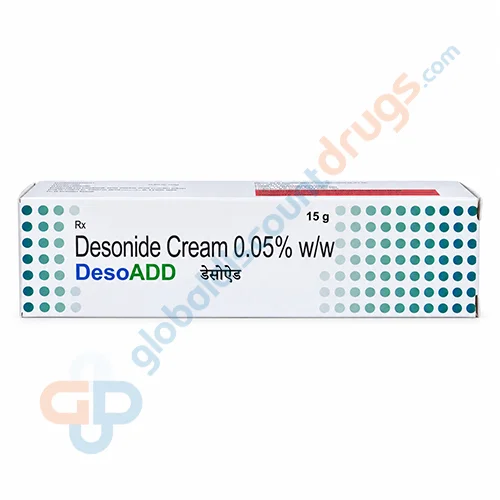
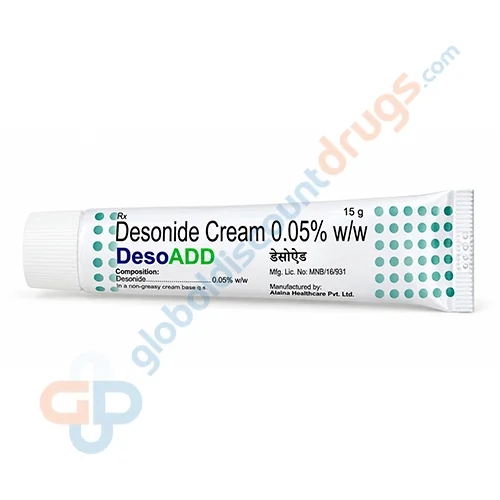
Desonide 0.05% Cream 15g
In StockDesonide 0.05% Cream (15g) is a mild topical corticosteroid used to relieve redness, itching and inflammation caused by eczema, atopic dermatitis and other skin allergies. Apply a thin layer to the affected area as directed by your doctor. Prescription required. Not for long-term use or on broken skin unless advised.
| Strength: | 0.05% 15gm |
|---|---|
| Dosage Form: | Tubes |
| Manufacturer: | Intas Pharma |

What is Desonide 0.05% Cream?
Desonide is a low-potency topical corticosteroid. Topical corticosteroids are anti-inflammatory medicines that are applied to the skin. Desonide belongs to the lowest-strength group of these medicines, which is why it is often chosen for sensitive skin and for use in children.
Approved use: The FDA has approved desonide cream to relieve the redness, swelling, and itching caused by corticosteroid-responsive skin conditions (dermatoses).
Common prescribed uses: Specialists commonly prescribe desonide for:
- Atopic dermatitis (eczema)
- Contact dermatitis
- Seborrheic dermatitis
- Other mild inflammatory and itchy skin conditions
Formulations and strengths: Desonide is sold as a 0.05% product in several forms, including cream, ointment, lotion, gel, and foam. The 15 g in this product name refers to the tube size. Cream tubes are also sold in other sizes, and brand names vary by country.
What is the Recommended Dosage of Desonide 0.05% Cream?
There is no single plan that fits everyone. A specialist chooses the directions based on:
- The skin condition being treated and how severe it is
- Age, since infants, children, and older adults absorb and react to topical steroids differently
- The area of the body being treated, as skin thickness varies from place to place
- The size of the affected area and the total amount of medicine needed
- Overall health, including any liver or kidney problems, if large amounts are used
Available dosage forms: Cream, ointment, lotion, gel, and foam (all 0.05%).
In general, desonide cream is applied as a thin layer to the affected skin only, and it is rubbed in gently. The number of applications per day and the length of treatment are decided by the specialist. Treatment is usually kept as short as possible, and the medicine is stopped once the skin condition is under control.
Do not cover the treated area with tight bandages or dressings unless your specialist tells you to. Do not use more cream, or use it for longer, than directed.
How Desonide 0.05% Cream Works
Desonide is a corticosteroid, which is a man-made medicine similar to hormones the body makes naturally. When it is applied to the skin, it:
- Calms the immune reaction that causes redness, swelling, and irritation
- Reduces itching
- Narrows tiny blood vessels in the skin, which helps reduce redness
Desonide helps manage the symptoms of inflammatory skin conditions. It does not cure the underlying cause, and symptoms may come back after treatment stops. A specialist may recommend moisturizers and skin care habits alongside the medicine.
Is a Prescription Required to Buy Desonide 0.05% Cream Online?
Yes. In the United States, desonide cream is a prescription-only medicine. It should be started and monitored by a licensed medical specialist, such as:
- A dermatologist (skin specialist)
- A pediatrician or pediatric dermatologist, for children
- Another licensed healthcare provider who can evaluate your skin condition
Important safety points:
- Only buy medicine from a licensed pharmacy that requires a valid prescription.
- Be careful with websites that sell steroid creams without a prescription. Products from these sources may be counterfeit, expired, contaminated, or labeled with the wrong strength.
- Never use skin products made for animals.
- Do not confuse desonide with over-the-counter hydrocortisone creams. They are different products with different strengths and directions.
- Check that the label shows the correct name, strength (0.05%), and expiration date.
Side Effects of Desonide 0.05% Cream
Many people use desonide without problems. Side effects are more likely with long-term use, use over large areas, or use on thin skin.
Common Side Effects
- Mild burning, stinging, or itching where the cream is applied
- Dryness or irritation of the skin
- Redness
Serious Side Effects
These are uncommon but need attention:
- Skin thinning (atrophy), easy bruising, or visible small blood vessels
- Stretch marks that do not go away
- Light or dark patches of skin color change
- Acne-like bumps or infected hair follicles (folliculitis)
- Allergic contact dermatitis, such as a rash that worsens or does not heal
- Skin infection that develops or worsens
- Effects on the whole body (systemic absorption), which can happen with prolonged use, large areas, or use in infants and young children. These may include suppression of the body’s natural steroid production (adrenal suppression), high blood sugar, and signs of Cushing’s syndrome such as weight gain, a rounded face, or slow growth in children.
- Blurred vision or eye problems if the cream gets into or near the eyes
- Flare-ups or rebound symptoms after stopping, especially following long-term use
Contact your specialist if your skin does not improve, gets worse, or you notice thinning, infection, or other new symptoms. Get medical help right away for signs of a severe allergic reaction, such as swelling of the face, lips, or throat, or trouble breathing.
Drug Interactions
When applied to small areas of the skin, desonide is not known to have many major drug interactions. Very little reaches the bloodstream. Still, tell your specialist about everything you use, including:
- Other steroid medicines, such as steroid creams, inhalers, nasal sprays, tablets, or injections
- Other skin products, such as retinoids, benzoyl peroxide, acne treatments, exfoliating products, and skin lighteners
- Prescription medicines for any condition, especially medicines that may raise steroid levels in the body (such as certain antifungal or HIV medicines), if large amounts of desonide are used
- Over-the-counter (OTC) products, including moisturizers, antifungal creams, and hydrocortisone
- Vitamins, supplements, and herbal products
Bring a complete, up-to-date list of all medicines and products to your appointments. Your pharmacist can also check for possible interactions.
Safety & Important Considerations
- Use as directed: Apply only to the skin. Keep it away from the eyes, mouth, and inside the nose.
- Face, skin folds, and groin: These areas absorb more medicine. Use them only if your specialist says to.
- Diaper area: Tight diapers or plastic pants can act like a bandage and increase absorption. Do not use desonide there unless a specialist directs you to.
- Liver or kidney disease: Only a small amount is absorbed when used on limited areas, but tell your specialist if you have liver or kidney problems, especially if large areas will be treated.
- Pregnancy: Tell your specialist if you are pregnant or planning to become pregnant. Topical steroids are generally used in the smallest amounts needed.
- Breastfeeding: Ask your specialist before use. Do not apply the cream to the breast or nipple area where a baby could swallow it.
- Children: Children absorb more medicine through the skin than adults, so they have a higher risk of side effects. Use only under the guidance of a pediatrician or dermatologist. Growth and development may be monitored with extended use.
- Older adults: Skin may be thinner and more fragile, which can raise the risk of skin changes.
- Monitoring: Your specialist may check your skin during treatment. If large areas or long-term treatment is needed, they may watch for signs of absorption into the body.
- FDA labeling warnings: Labeling for topical corticosteroids includes warnings about adrenal suppression, skin thinning, local reactions, and the risk of infection. These warnings are why treatment is kept short and uses the lowest effective amount.
- Wash your hands after applying the cream, unless the hands are the area being treated.
Who This Medication Is For
Desonide 0.05% cream is typically used by people who:
- Have mild to moderate inflammatory and itchy skin conditions that respond to corticosteroids, such as eczema or dermatitis
- Need a low-strength steroid, including people with sensitive skin or children, as directed by a specialist
- Have been evaluated by a healthcare provider who found a topical steroid to be appropriate
Who Should Not Take Desonide 0.05% Cream
Do not use desonide if you:
- Are allergic to desonide, other corticosteroids, or any ingredient in the cream
Use caution, and talk with your specialist first, if you have:
- A skin infection (bacterial, fungal, or viral, such as cold sores, shingles, or chickenpox) that is not being treated
- Rosacea, perioral dermatitis, or acne in the area to be treated
- Open wounds, ulcers, or broken skin
- A history of skin thinning or poor wound healing
- Diabetes, or another condition that may be affected by steroid absorption
What to Do If You Miss a Dose
- Apply the cream as soon as you remember.
- If it is almost time for your next scheduled application, skip the missed one and go back to your usual routine.
- Do not apply extra cream or double the amount to make up for a missed application.
- Contact your specialist if you are unsure what to do or if your skin gets worse after missing applications.
Related medications to Desonide 0.05% Cream
Other options may be discussed with a specialist, depending on the condition, age, and body area:
- Other topical corticosteroids: These range from low strength (such as hydrocortisone) to higher strengths (such as triamcinolone, betamethasone, or clobetasol). Stronger products are generally used for short periods and for thicker skin.
- Non-steroid prescription creams: Such as tacrolimus, pimecrolimus, crisaborole, or ruxolitinib cream, which may be used for certain types of dermatitis.
- Moisturizers and gentle skin care: Daily use of fragrance-free emollients is a key part of managing many skin conditions.
- Avoiding triggers: Such as harsh soaps, certain fabrics, or known allergens.
Never switch, stop, or combine treatments without consulting a licensed specialist.
Storage Instructions
- Store the tube at room temperature, about 68°F to 77°F (20°C to 25°C).
- Do not freeze, and keep away from heat and direct sunlight.
- Keep the cap tightly closed to protect the cream from air and moisture.
- Do not store in a humid place such as a bathroom.
- Keep all medicines out of the reach and sight of children and pets.
- Do not use the cream after the expiration date. Ask your pharmacist how to dispose of unused medicine safely.
Disclaimer:
This page is for educational purposes only. It is not a substitute for professional medical advice, diagnosis, or treatment. Patients must consult a licensed dermatologist or other relevant medical specialist before starting, changing, or stopping treatment. Treatment decisions must be based on a full clinical evaluation by a qualified specialist.
Prescription Required (Rx) to Buy?
This medication is not available over the counter. A valid prescription from a licensed healthcare
professional is required. Always consult your doctor before use.
| Quantity | 3, 9, 12, 6 |
|---|---|
| Manufacturer | Intas Pharma |
| Indian Brand | Desoadd Cream 15gm |
| US Brand Name | Desonide |
| Dosage | 0.05% 15gm |
| Drug Type | Tubes |