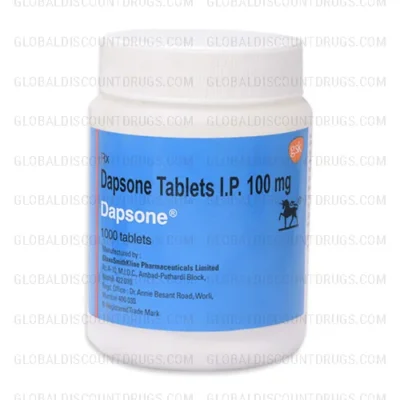

Dapsone 100mg
Out of StockDapsone 100 mg Tablet is a prescription sulfone medicine used for selected infections and inflammatory skin conditions, including leprosy and dermatitis herpetiformis. Blood counts and signs of hemolysis require monitoring.
| Active Ingredient: | Dapsone |
|---|---|
| Indication: | Leprosy |
| Strength: | 100mg |
| Dosage Form: | Tablets |
| Manufacturer: | Glaxo Smithkline |

Quick Overview
Dapsone 100mg is a prescription sulfone antibacterial tablet used to treat dermatitis herpetiformis, an intensely itchy blistering skin condition, and all forms of leprosy except proven dapsone resistance. It acts against leprosy bacteria, and how it controls dermatitis herpetiformis is not established. It requires a prescription and medical supervision, including regular blood tests, because it can affect blood cells.
Medical Supervision and Regulatory Status
Dapsone tablets are prescription-only in the United States, and a prescriber must supervise treatment because the drug can lower blood cell counts, cause hemolysis, and affect the liver and nerves. It is sold as generic 25 mg and 100 mg tablets and is not a controlled substance. Complete blood counts are done frequently during treatment, and liver function is checked at baseline and afterward when feasible.
What Are Dermatitis Herpetiformis and Leprosy, and Where Does Dapsone Fit?
Dermatitis herpetiformis is a chronic, very itchy rash of small blisters linked to gluten sensitivity, while leprosy (Hansen’s disease) is a long-term bacterial infection of the skin and nerves.
Without treatment, dermatitis herpetiformis tends to persist, with ongoing itching, burning, and new blisters. Untreated leprosy can lead to progressive nerve damage and lasting disability, which is why early and complete treatment matters.
The label describes dapsone as a primary treatment for dermatitis herpetiformis. In leprosy it is used as part of multidrug therapy, usually with rifampin and sometimes a third drug, and the label states that 100 mg daily should be maintained without interruption in those programs.
How Dapsone 100mg Works
Dapsone is a sulfone that is thought to block folate production in leprosy bacteria, but the label states that its action in dermatitis herpetiformis has not been established.
Dapsone is chemically related to sulfonamide antibiotics. Laboratory work cited in the label shows it can both slow and kill Mycobacterium leprae, the bacterium that causes leprosy. The tablet is absorbed rapidly and almost completely, reaches peak blood levels in about 4 to 8 hours, and needs at least eight days of daily dosing to reach a steady level, which is why consistent daily use matters.
In dermatitis herpetiformis, the link between how the drug works and symptom control is not known. Many people have less itching and fewer new blisters on treatment, but dapsone does not treat the gluten sensitivity behind the condition, and response differs from person to person.
What Is Dapsone 100mg?
Dapsone 100mg is an oral tablet containing 100 mg of the sulfone antibacterial dapsone, prescribed for dermatitis herpetiformis and leprosy, and sold as generic tablets in the United States.
- Drug Class: Sulfone antibacterial (antileprotic)
- Active Ingredient: Dapsone (4,4′-diaminodiphenylsulfone), 100 mg per tablet
- Mechanism: Thought to block folate production in leprosy bacteria; action in dermatitis herpetiformis not established.
- Available Forms and Strengths: Oral tablets, 25 mg and 100 mg
- Dosing Frequency: Once daily as prescribed, adjusted by the prescriber
- Regulatory Status: US prescription-only; not a controlled substance; generics available
Approved Uses
Dapsone tablets are FDA-approved for treating dermatitis herpetiformis and for all forms of leprosy, except cases of proven dapsone resistance where the bacteria no longer respond.
For dermatitis herpetiformis, the aim is control of itching and blistering using the lowest effective dose. For leprosy, the tablets are one part of a combination program, and a prescriber confirms that the infection is still sensitive to dapsone.
How to Use and Dosage
Your prescriber sets the dose: for dermatitis herpetiformis adults usually start at 50 mg daily and adjust, and for leprosy the labeled regimen is 100 mg daily with other drugs.
In dermatitis herpetiformis, the label says the dose is titrated individually, with higher amounts tried only if control is not reached within 50 to 300 mg daily, and then reduced to the lowest maintenance level as soon as possible. In leprosy, 100 mg daily is combined with rifampin 600 mg, with a third drug added in some forms, and children receive smaller doses. Take the tablet at the same time each day, and ask a pharmacist whether taking it with food helps if it upsets your stomach.
If you miss a dose, take it when you remember on the same day, and skip it if the next dose is near. Do not take two together.
Stopping suddenly is not advised. In leprosy, interruption can allow relapse and drug resistance, and in dermatitis herpetiformis symptoms can return. The exception is a serious reaction such as severe rash, jaundice, new muscle weakness, or blue skin, in which case you should seek prompt medical care.
Side Effects
Side effects vary from person to person, but dapsone can cause serious blood, liver, nerve, and skin reactions, which is why regular monitoring is part of treatment.
This medicine does not carry a boxed warning.
Common effects: Nausea, vomiting, abdominal pain, headache, and dizziness are reported, along with sensitivity to sunlight. Some breakdown of red blood cells (hemolysis) and a rise in methemoglobin, a form of hemoglobin that carries oxygen poorly, can occur even in people with normal enzyme levels, and both tend to increase with dose.
Serious effects: Agranulocytosis (a severe drop in infection-fighting white cells), aplastic anemia, and other blood disorders have caused deaths. Other serious effects include hepatitis with jaundice, motor peripheral neuropathy (muscle weakness), severe skin reactions such as toxic epidermal necrolysis, and a hypersensitivity syndrome with fever, rash, swollen lymph nodes, and liver injury.
Emergency Warning Signs
- Blue or gray lips, fingers, or skin, with shortness of breath or a racing heartbeat
- Fever with sore throat, chills, or mouth sores
- Widespread rash, blistering, or peeling skin
- Yellow skin or eyes, or dark urine
- Swelling of the face, lips, tongue, or throat, or trouble breathing
- Severe paleness, extreme fatigue, or unusual bruising or bleeding
- New muscle weakness in the hands, feet, or legs
Call 911 or go to the nearest emergency department for blue skin, trouble breathing, or widespread blistering. For the other signs, contact your prescriber the same day. For a suspected overdose, call Poison Control at 1-800-222-1222.
Warnings and Precautions
Dapsone is contraindicated in people with known hypersensitivity to dapsone or its derivatives, and its main hazards are blood cell damage, hemolysis, liver and nerve effects, and serious skin reactions.
Deaths have been reported from agranulocytosis and aplastic anemia, so complete blood counts are done frequently, and sore throat, fever, pallor, purpura, or jaundice must be reported at once. Treatment is stopped if white cells, platelets, or blood production fall significantly. People with G6PD deficiency or methemoglobin reductase deficiency are more prone to hemolysis, as are people with infection or diabetic ketosis, and the risk rises with other agents such as sulfonamides, nitrites, nitrofurantoin, naphthalene, and primaquine and related 8-aminoantimalarials. Methemoglobinemia is treated by a clinician, and methylene blue is the labeled treatment of choice.
Rifampin lowers dapsone levels about 7 to 10 fold, though in leprosy this has not required a dose change. Trimethoprim raises the levels of both drugs about 1.5 times. Folic acid antagonists such as pyrimethamine increase the chance of blood reactions, and weekly pyrimethamine with dapsone has led to agranulocytosis, so closer monitoring is needed. Dapsone can falsely lower HbA1c readings, so people with diabetes may need fructosamine or glucose monitoring instead. Liver function is checked at baseline and later when feasible, and treatment is paused if results are abnormal until the cause is found. If muscle weakness appears, dapsone is withdrawn. Rodent studies have shown tumors with dapsone, which the prescriber weighs against its benefit. The label gives no specific dose change for kidney impairment, so the prescriber decides.
Extensive but uncontrolled experience in pregnant women has not shown a higher risk of fetal abnormalities, and the label advises use in pregnancy only if clearly needed. Dapsone passes into breast milk in substantial amounts, and nursing infants can develop hemolytic reactions, so a prescriber and pharmacist should review any plan to breastfeed. Children receive smaller doses, and the label does not expect an effect on growth. The label gives no separate guidance for older adults, so the prescriber adjusts care to their other conditions and medicines.
Who Should Not Use This Medication
The only labeled contraindication is known hypersensitivity to dapsone or its derivatives, and several other groups need a prescriber’s careful review before and during treatment.
- Do not use: anyone with a known allergy to dapsone or related sulfone compounds
- Do not use for leprosy: cases of proven dapsone resistance, since the bacteria no longer respond
- Needs specialist review: people with G6PD deficiency or methemoglobin reductase deficiency
- Needs specialist review: people with liver disease, existing nerve weakness, or a history of serious blood disorders
- Needs specialist review: people taking trimethoprim, rifampin, or pyrimethamine
- Needs specialist review: nursing mothers, because of the risk of hemolysis in infants
Storage Instructions
Store dapsone tablets at room temperature, 68 to 77 degrees F (20 to 25 degrees C), in a tightly closed container away from light and moisture.
Keep the bottle out of sight and reach of children, because accidental swallowing can cause serious blood effects and needs emergency care. Do not store tablets in a bathroom. For unused or expired tablets, use an FDA-listed drug take-back location or pharmacy kiosk. If none is available, FDA guidance is to mix the tablets with used coffee grounds or cat litter in a sealed bag before placing them in household trash.
Frequently Asked Questions
What is the cost of Dapsone 100mg without insurance?
The cost without insurance depends on the seller, brand availability, and pack size. Location and discount programs can also change what a person pays. Dapsone is sold as generic tablets, and generics are generally more affordable than brand-name products. A pharmacist can compare quotes, and a prescriber can approve a generic substitution.
How can I order Dapsone 100mg online?
A valid prescription is required. Upload a copy or ask your prescriber to send it electronically, order from a licensed US pharmacy, and receive the tablets by home delivery. Because dapsone needs blood monitoring, confirm the pharmacy holds a state license and has a pharmacist you can contact by phone or chat before you place the order.
Is Dapsone 100mg available over the counter?
No, dapsone is not sold over the counter in the United States. Only a prescriber can authorize it, and rules differ by country, so a rule elsewhere does not apply here. Medical supervision is required because treatment relies on repeat blood counts and liver tests to catch serious reactions early.
Does Dapsone 100mg require a prescription?
Yes, dapsone tablets require a prescription in the United States. A clinician must confirm the diagnosis, may check for G6PD deficiency before treatment, and will review your other medicines. Follow-up includes frequent complete blood counts and, when feasible, liver function checks, so the prescriber stays involved throughout the full course of treatment.
How long does Dapsone 100mg take to work?
The time to improvement differs between conditions and between people. Dapsone needs at least eight days of daily dosing to reach a steady blood level. Leprosy treatment runs for years and is judged by clinical signs and skin tests, while the prescriber adjusts the dose for dermatitis herpetiformis according to itching and new blisters.
Is it safe to stop taking Dapsone 100mg suddenly?
No, do not stop dapsone suddenly on your own unless a serious reaction forces it, and call your prescriber right away if one does. In leprosy, interruption risks relapse and drug resistance, and the label calls for uninterrupted daily dosing. In dermatitis herpetiformis, symptoms may return, so the prescriber reduces the dose to the lowest effective amount.
Can Dapsone 100mg interact with other medicines?
Yes, the key interactions are with trimethoprim, which raises levels of both drugs about 1.5 times, rifampin, which lowers dapsone levels 7 to 10 fold, and folic acid antagonists such as pyrimethamine, which raise the risk of blood problems. Nitrofurantoin and primaquine can add to hemolysis. Ask a pharmacist to review every product you use.
What should I do if I miss a dose of Dapsone 100mg?
Take the missed tablet when you remember on the same day, but skip it if the next dose is near. Never take two doses together. Because the drug builds to a steady level over daily dosing, regular timing matters, so set a daily reminder, and tell your prescriber if doses are skipped often, especially during leprosy treatment.
References
- DailyMed (NIH): The FDA-submitted prescribing information for dapsone tablets USP 25 mg and 100 mg, covering indications, dosing, warnings, and monitoring. https://dailymed.nlm.nih.gov/dailymed/drugInfo.cfm?setid=d3fc4934-d48b-4a29-9022-0c82bbdad399
- MedlinePlus (NIH): A plain-language drug information page for dapsone, covering how to use it, precautions, and side effects.
- FDA Drugs@FDA: The FDA entry for dapsone tablets, including approval history and label links.
Medical Disclaimer:
This content is for informational purposes only and does not constitute medical advice, diagnosis, or treatment. Consult a qualified specialist or physician before using Dapsone 100mg.
Prescription Required (Rx) to Buy?
This medication is not available over the counter. A valid prescription from a licensed healthcare
professional is required. Always consult your doctor before use.
| Quantity | 1000, 2000, 3000, 4000 |
|---|---|
| Indication | Leprosy |
| Active Ingredient | Dapsone |
| Pharmaceutical Form | Tablets |
| Manufacturer | Glaxo Smithkline |
| Indian Brand | Dapsone |
| US Brand Name | Dapsone |
| Generic Name | Dapsone |
| Dosage | 100mg |
| Drug Type | Tablets |