
What Causes Tonsil Stones: Hidden Triggers Most People Ignore
-
Written By:
Kevin P
-
April 20, 2026
-
Medically Reviewed By
Dr. Nick I – General Practitioner & Medical Author
| Last Reviewed: April 20, 2026
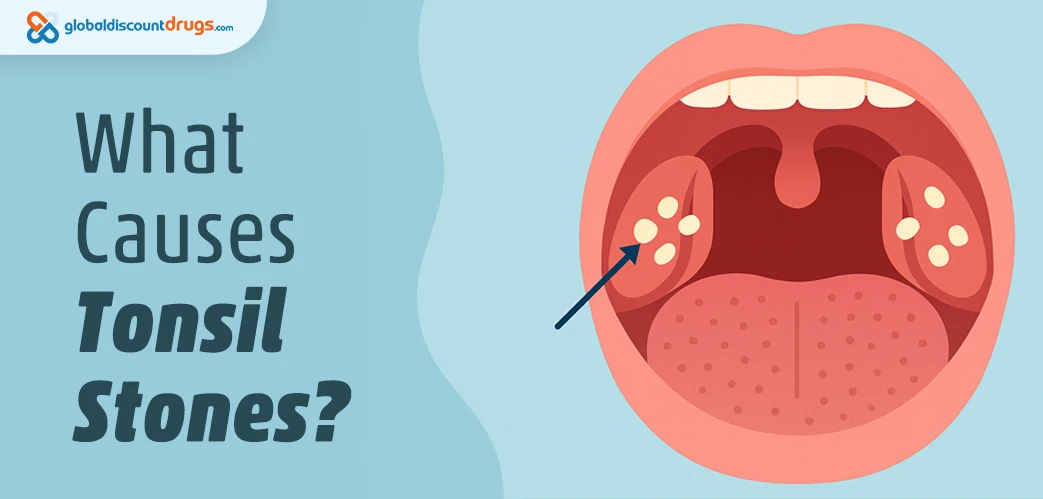
Have you ever looked in the mirror, opened your mouth wide, and noticed some tiny, white, or yellowish spots that are tucked away in the back of your throat? Or perhaps have you felt a nagging sensation that something is "stuck" in the throat, but no matter how much you swallow, such things will not go away.
If this might sound familiar, you might be dealing with conditions such as tonsil stones. Scientifically known as tonsillitis, some of these tiny growths are much more common than people might think about it. While they can be super annoying and sometimes it can lead to conditions like bad breath, they are usually harmless. However, a great level of understanding can lead to the first step toward getting rid of them and at the same time, it helps prevent them from coming back.
Understanding Your Tonsils: The "Gatekeepers"
For better understanding as to where the stones might come from, we first must look at the landscape of the throat. The tonsils are known to be the two small pads of tissue that are well located at the back of the throat. They shall notably act like an part of your immune system, which can help in trapping the germs which shall enter through your mouth or nose.
When one might further look closely at the tonsils, they are not smooth enough. They are full of nooks, crannies, and tunnels known as tonsil crypts. Some of these crypts are perfectly normal, but they can further act just like those little pockets which ends up collecting debris.
The Recipe for a Tonsil Stone
Tonsil stones do not just appear out of thin air. They are carefully formed when various materials get trapped in those tonsil crypts. Over a period of time, these materials shall clump together and harden (calcify).
The main "ingredients" of a tonsil stone include:
- Food Particles: Some of the tiny bits of what one shall eat can get lodged in the pockets.
- Dead Cells: However, just like your skin, the lining of the mouth and tonsils shed dead cells every day.
- Mucus: Post-nasal drip from the nose can simply drain down the throat and settle in the crypts.
- Bacteria: The mouth is known to be the home to hundreds of types of bacteria. When it shall all find a pocket of food and dead cells, it might thrive further.
When these materials sit in the warm, moist environment of the throat, they further can begin to bond together. As minerals including calcium attach to the clump, it shall become firm, turning into the "stone" one shall eventually see.
Why Do Some People Get Them More Than Others?
You might wonder why getting tonsil stones while the friend or partner might not happen. There are a further some of the physical and lifestyle factors that play a role:
Deep Tonsil Crypts
Some people are further simply born with tonsils that might have deeper or more complex tunnels. The deeper the pocket, the easier it is for those debris to get completely trapped and stay there.
Chronic Inflammation (Tonsillitis)
If you might have had frequent throat infections or long-term inflammation of the tonsils, the tissue can be scarred or enlarged. This can further create more "hiding spots" for stones to form.
Poor Oral Hygiene
Since bacteria and food are trusted to be the primary building blocks of tonsil stones, not brushing or flossing regularly which allows more "raw material" to build up in the mouth.
Post-Nasal Drip and Sinus Issues
If you might suffer from chronic allergies or sinus congestion, the extra mucus dripping down the back of the throat can further provide a constant supply of "glue" which can help the tonsil stones form.
How Do You Know if You Have Them?
Small tonsil stones often have no symptoms at all—you might only notice them if they pop out while you are coughing or brushing the teeth. However, some sort of larger stones can lead to the below:
- Persistent Bad Breath: This is the most common sign which might occur. As the stones are made of decaying debris and bacteria, they might further have a very strong, unpleasant odor.
- Sore Throat: further you might feel condition such as pain or discomfort in the area where the stone is lodged.
- Trouble Swallowing: it all depends on the size and location, which can feel like there is a lump in your throat.
- Ear Pain: Because the nerves in the throat and ears are connected, which is a stone in the tonsil, and it can at times lead to a "referred" ache in your ear.
Managing and Preventing Tonsil Stones
When you are prone to some of these white spots, the good news is that most of such cases can be well managed at home with simple habits.
The Power of the Saltwater Gargle
Gargling using the warm salt water is one of the most effective ways for dislodge stones and soothing throat. Salt helps in breaking down the mucus and can even help "flush" the pockets out.
Stay Hydrated
A dry mouth is a breeding ground for bacteria that is seen. Drinking plenty of water can help to produce good amount of saliva. This is just so naturally washed away with food particles and dead cells before they can settle in those tonsils.
Focus on Tongue Brushing
Bacteria shall further love to hide on the back of the tongue. Further on using a tongue scraper or the toothbrush to clean the very back of your tongue, further on lowering the number of bacteria available to form stones.
Safety Warning
It can further be tempting to try and "dig" a stone out with a cotton swab or the finger. However, tonsil tissue is just so delicate, and it shall further bleed easily. As per the experts, one should never use sharp objects like toothpicks to overcome stones, as this can lead to some severe serious infection or injury.
Tonsil stones are a sign that the tonsils are doing their job by trapping those debris but that the debris is having a hard time while clearing out by themselves. Further on improving the oral hygiene and staying hydrated, one can keep the throat clear and breath fresh.
Kevin P draws on 10+ years of health expertise to share actionable wellness tips. He focuses on making health achievable for everyone.
Written By:
Kevin P
April 20, 2026
Medically Reviewed By
Have you ever looked in the mirror, opened your mouth wide, and noticed some tiny, white, or yellowish spots that are tucked away in the back of your throat? Or perhaps have you felt a nagging sensation that something is "stuck" in the throat, but no matter how much you swallow, such things will not go away.
If this might sound familiar, you might be dealing with conditions such as tonsil stones. Scientifically known as tonsillitis, some of these tiny growths are much more common than people might think about it. While they can be super annoying and sometimes it can lead to conditions like bad breath, they are usually harmless. However, a great level of understanding can lead to the first step toward getting rid of them and at the same time, it helps prevent them from coming back.
Dr. Nick I – General Practitioner & Medical Author | Last Reviewed: April 20, 2026
Understanding Your Tonsils: The "Gatekeepers"
For better understanding as to where the stones might come from, we first must look at the landscape of the throat. The tonsils are known to be the two small pads of tissue that are well located at the back of the throat. They shall notably act like an part of your immune system, which can help in trapping the germs which shall enter through your mouth or nose. When one might further look closely at the tonsils, they are not smooth enough. They are full of nooks, crannies, and tunnels known as tonsil crypts. Some of these crypts are perfectly normal, but they can further act just like those little pockets which ends up collecting debris.The Recipe for a Tonsil Stone
Tonsil stones do not just appear out of thin air. They are carefully formed when various materials get trapped in those tonsil crypts. Over a period of time, these materials shall clump together and harden (calcify).The main "ingredients" of a tonsil stone include:
- Food Particles: Some of the tiny bits of what one shall eat can get lodged in the pockets.
- Dead Cells: However, just like your skin, the lining of the mouth and tonsils shed dead cells every day.
- Mucus: Post-nasal drip from the nose can simply drain down the throat and settle in the crypts.
- Bacteria: The mouth is known to be the home to hundreds of types of bacteria. When it shall all find a pocket of food and dead cells, it might thrive further.
Why Do Some People Get Them More Than Others?
You might wonder why getting tonsil stones while the friend or partner might not happen. There are a further some of the physical and lifestyle factors that play a role:Deep Tonsil Crypts
Some people are further simply born with tonsils that might have deeper or more complex tunnels. The deeper the pocket, the easier it is for those debris to get completely trapped and stay there.Chronic Inflammation (Tonsillitis)
If you might have had frequent throat infections or long-term inflammation of the tonsils, the tissue can be scarred or enlarged. This can further create more "hiding spots" for stones to form.Poor Oral Hygiene
Since bacteria and food are trusted to be the primary building blocks of tonsil stones, not brushing or flossing regularly which allows more "raw material" to build up in the mouth.Post-Nasal Drip and Sinus Issues
If you might suffer from chronic allergies or sinus congestion, the extra mucus dripping down the back of the throat can further provide a constant supply of "glue" which can help the tonsil stones form.How Do You Know if You Have Them?
Small tonsil stones often have no symptoms at all—you might only notice them if they pop out while you are coughing or brushing the teeth. However, some sort of larger stones can lead to the below:- Persistent Bad Breath: This is the most common sign which might occur. As the stones are made of decaying debris and bacteria, they might further have a very strong, unpleasant odor.
- Sore Throat: further you might feel condition such as pain or discomfort in the area where the stone is lodged.
- Trouble Swallowing: it all depends on the size and location, which can feel like there is a lump in your throat.
- Ear Pain: Because the nerves in the throat and ears are connected, which is a stone in the tonsil, and it can at times lead to a "referred" ache in your ear.
Managing and Preventing Tonsil Stones
When you are prone to some of these white spots, the good news is that most of such cases can be well managed at home with simple habits.The Power of the Saltwater Gargle
Gargling using the warm salt water is one of the most effective ways for dislodge stones and soothing throat. Salt helps in breaking down the mucus and can even help "flush" the pockets out.Stay Hydrated
A dry mouth is a breeding ground for bacteria that is seen. Drinking plenty of water can help to produce good amount of saliva. This is just so naturally washed away with food particles and dead cells before they can settle in those tonsils.Focus on Tongue Brushing
Bacteria shall further love to hide on the back of the tongue. Further on using a tongue scraper or the toothbrush to clean the very back of your tongue, further on lowering the number of bacteria available to form stones.Safety Warning
It can further be tempting to try and "dig" a stone out with a cotton swab or the finger. However, tonsil tissue is just so delicate, and it shall further bleed easily. As per the experts, one should never use sharp objects like toothpicks to overcome stones, as this can lead to some severe serious infection or injury. Tonsil stones are a sign that the tonsils are doing their job by trapping those debris but that the debris is having a hard time while clearing out by themselves. Further on improving the oral hygiene and staying hydrated, one can keep the throat clear and breath fresh.Kevin P draws on 10+ years of health expertise to share actionable wellness tips. He focuses on making health achievable for everyone.
Share