
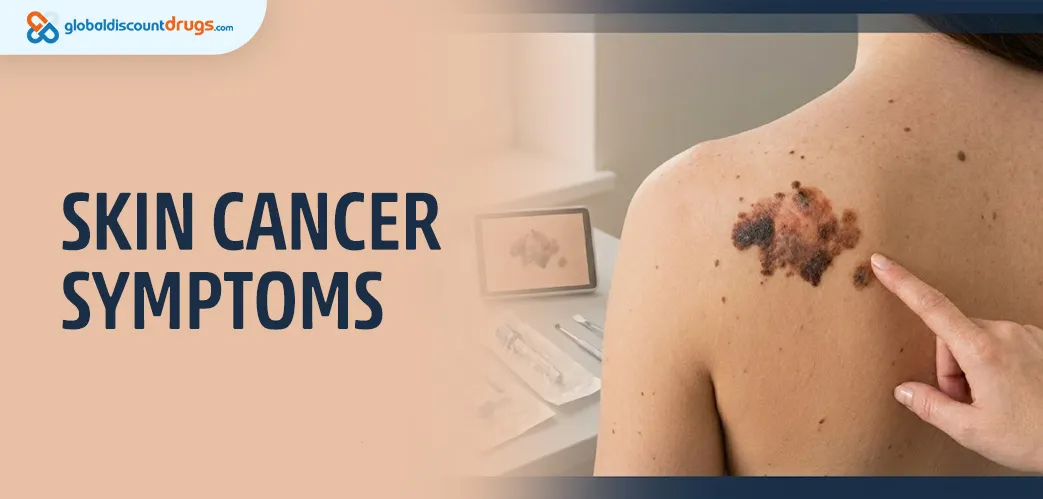
Skin Cancer Symptoms
-
Written By:
Kevin P
-
June 2, 2026
-
Medically Reviewed By
Dr. Jessica G – General Practitioner
| Last Updated On: June 2, 2026
The skin on the outer layer does a lot of heavy lifting. This can all help in protecting the elements, keeps us warm, and is the body's largest organ. As it is always exposed to the world, it is also vulnerable for damaging the sun's ultraviolet (UV) rays.
Skin cancer like condition is known to be most common type of cancer in the United States. As per the American Academy of Dermatology (AAD), about one in five Americans is known to develop skin cancer in the lifetime. The good news is that when skin cancer is caught early, it is highly treatable.
Learning about some of the symptoms of skin cancer can truly help in saving life.
The Three Main Types of Skin Cancer
Not all type of skin cancers looks the same as they eventually start in different types of skin cells. Below mentioned are the three most common forms are Basal Cell Carcinoma, Squamous Cell Carcinoma, and Melanoma.
-
Basal Cell Carcinoma (BCC)
This is believed to be the most common type of skin cancer. This condition usually grows slowly, and it does rarely spread to other parts of the body. However, when the issue is left untreated, it can grow deep into nearby tissues and bones.
- Where it grows: Areas that are well exposed to the sun, including the face, neck, and arms.
- What it looks like: This can be a smooth, pearly, or waxy bump. Sometimes it looks like a flat, fresh-coloured, or brown scar. This condition can also bleed easily, ooze, or crust over, looking like a sore that just does not heal by its own.
-
Squamous Cell Carcinoma (SCC)
This is the second most common type of condition people for Skin Cancer come across. Just like some basal cell carcinoma, it can be caused by long-term sun exposure. It can at times spread if it is not treated well.
- Where it grows: Face, ears, neck, hands, and arms.
- What it looks like: It appears as some firm, red bump. This can also look like a flat spot with a rough, scaly, or crusty surface. It may feel tender or itchy to the touch.
-
Melanoma
Melanoma condition is less common than the other two, but it is also known to be the most serious form of skin cancer. This occurs as it can spread quickly to other organs. This can often start in an existing mole or appears suddenly as a new dark spot.
How to Spot Melanoma: The ABCDE Rule
Dermatologists are known to guide and call ABCDE rule to help people identify the warning signs of melanoma medicine. While you notice a mole or spot that shows any of the mentioned features, it is time to get it checked by a professional doctor.
The ABCDE Guide for Spotting Melanoma.
- A is for Asymmetry: While drawing a line through the middle of the mole, the two halves might not match well in shape. Usually, these moles are round or symmetrical.
- B is for Border: The edges of the mole are irregular, jagged, scalloped, or blurry. Healthy moles can have smooth, well-defined borders.
- C is for Color: The colour is not about the uniform. It can have various shades of brown or black, or patches of pink, red, white, or blue.
- D is for Diameter: The spot is noticed to be larger than 6 millimeters across (about the size of a pencil eraser). However, some melanomas can be smaller when they first start.
- E is for Evolving: The mole is simply changing over time. This could mean it is growing larger, changing color, changing shape, or starting to itch, bleed, or crust over.
When to See a Medical Professional
You should schedule an appointment with the doctor or dermatologist as soon as possible if you notice:
- A mole or skin growth is about growing or changing shape and colour.
- A sore that bleeds, oozes, or crusts for more than four weeks without healing.
- A spot which constantly itches, hurts, or feels tender.
- A dark streak under a fingernail or toenail that was not caused by an injury.
Catching those skin cancer early is the single best way to ensure successful treatment. While you are also worried about that spot, do not wait.
Editorial Standards
The information on this page is intended for educational purposes only and should not replace professional medical consultation, diagnosis, or treatment. Read our Editorial Content Policy for more details.
Kevin P draws on 10+ years of health expertise to share actionable wellness tips. He focuses on making health achievable for everyone.
Written By:
Kevin P
June 2, 2026
Medically Reviewed By
The skin on the outer layer does a lot of heavy lifting. This can all help in protecting the elements, keeps us warm, and is the body's largest organ. As it is always exposed to the world, it is also vulnerable for damaging the sun's ultraviolet (UV) rays.
Skin cancer like condition is known to be most common type of cancer in the United States. As per the American Academy of Dermatology (AAD), about one in five Americans is known to develop skin cancer in the lifetime. The good news is that when skin cancer is caught early, it is highly treatable.
Learning about some of the symptoms of skin cancer can truly help in saving life.
Dr. Jessica G – General Practitioner | Last Updated On: June 2, 2026
The Three Main Types of Skin Cancer
Not all type of skin cancers looks the same as they eventually start in different types of skin cells. Below mentioned are the three most common forms are Basal Cell Carcinoma, Squamous Cell Carcinoma, and Melanoma.-
Basal Cell Carcinoma (BCC)
- Where it grows: Areas that are well exposed to the sun, including the face, neck, and arms.
- What it looks like: This can be a smooth, pearly, or waxy bump. Sometimes it looks like a flat, fresh-coloured, or brown scar. This condition can also bleed easily, ooze, or crust over, looking like a sore that just does not heal by its own.
-
Squamous Cell Carcinoma (SCC)
- Where it grows: Face, ears, neck, hands, and arms.
- What it looks like: It appears as some firm, red bump. This can also look like a flat spot with a rough, scaly, or crusty surface. It may feel tender or itchy to the touch.
-
Melanoma
How to Spot Melanoma: The ABCDE Rule
Dermatologists are known to guide and call ABCDE rule to help people identify the warning signs of melanoma medicine. While you notice a mole or spot that shows any of the mentioned features, it is time to get it checked by a professional doctor. The ABCDE Guide for Spotting Melanoma.- A is for Asymmetry: While drawing a line through the middle of the mole, the two halves might not match well in shape. Usually, these moles are round or symmetrical.
- B is for Border: The edges of the mole are irregular, jagged, scalloped, or blurry. Healthy moles can have smooth, well-defined borders.
- C is for Color: The colour is not about the uniform. It can have various shades of brown or black, or patches of pink, red, white, or blue.
- D is for Diameter: The spot is noticed to be larger than 6 millimeters across (about the size of a pencil eraser). However, some melanomas can be smaller when they first start.
- E is for Evolving: The mole is simply changing over time. This could mean it is growing larger, changing color, changing shape, or starting to itch, bleed, or crust over.
When to See a Medical Professional
You should schedule an appointment with the doctor or dermatologist as soon as possible if you notice:- A mole or skin growth is about growing or changing shape and colour.
- A sore that bleeds, oozes, or crusts for more than four weeks without healing.
- A spot which constantly itches, hurts, or feels tender.
- A dark streak under a fingernail or toenail that was not caused by an injury.
Editorial Standards
The information on this page is intended for educational purposes only and should not replace professional medical consultation, diagnosis, or treatment. Read our Editorial Content Policy for more details.
Kevin P draws on 10+ years of health expertise to share actionable wellness tips. He focuses on making health achievable for everyone.