
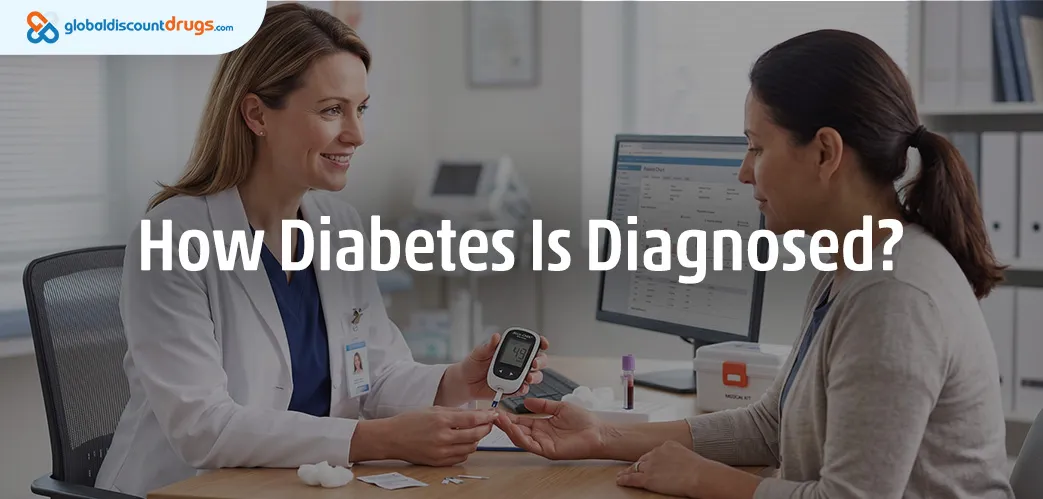
How Diabetes Is Diagnosed
-
Written By:
Kevin P
-
June 9, 2026
-
Medically Reviewed By
Dr. Jacqueline P – General Practitioner
| Last Updated On: June 10, 2026
How Diabetes Is Diagnosed: Blood Sugar Tests, A1C, and What Results Mean
Key Takeaways
- Healthcare professionals use several tests to diagnose diabetes.
- The A1C test measures average blood sugar levels over approximately two to three months.
- Blood glucose testing helps evaluate how the body regulates blood sugar.
- Early diagnosis may help support timely management and monitoring.
- Screening recommendations may vary depending on individual risk factors.
Quick Answer: How Is Diabetes Diagnosed?
Diabetes is commonly diagnosed using blood tests that measure blood sugar levels. Healthcare professionals may use the A1C test, fasting blood sugar test, oral glucose tolerance test, or random blood sugar test to evaluate glucose regulation and determine whether diabetes or prediabetes may be present.
Why Diabetes Testing Matters
Many people with diabetes may not notice symptoms immediately.
In some cases, blood sugar levels may remain elevated for months or years before symptoms become noticeable.
Testing helps healthcare professionals:
- Identify diabetes early
- Monitor blood sugar levels over time
- Evaluate treatment effectiveness
- Detect prediabetes
- Assess future health risks
Early identification may support timely discussions about management options and lifestyle changes.
Understanding Blood Sugar Levels
Glucose is a primary source of energy for the body's cells.
After eating, glucose enters the bloodstream. Insulin helps move glucose into cells where it can be used for energy.
When insulin production is reduced or insulin does not work effectively, glucose can build up in the bloodstream.
Diagnostic tests help measure these blood sugar levels and provide information about how the body processes glucose.
A1C Test
What Is the A1C Test?
The A1C test measures average blood sugar levels over approximately the previous two to three months.
Unlike a single blood sugar reading, the A1C test provides a broader picture of long-term glucose control.
Why Is the A1C Test Used?
Healthcare professionals commonly use the A1C test for:
- Diabetes diagnosis
- Prediabetes screening
- Monitoring diabetes management
Advantages of A1C Testing
The A1C test:
- Does not usually require fasting
- Reflects long-term blood sugar patterns
- Is widely used in clinical practice
Understanding A1C Results
Healthcare professionals interpret A1C results within the context of an individual's overall health and medical history.
Only a qualified healthcare professional can determine whether additional testing or evaluation may be needed.
Fasting Blood Sugar Test
What Is a Fasting Blood Sugar Test?
A fasting blood sugar test measures blood glucose levels after a period without eating.
Individuals are typically asked to avoid food and beverages other than water before testing.
Why Is It Used?
Healthcare professionals may use fasting blood sugar testing to:
- Screen for diabetes
- Screen for prediabetes
- Monitor blood sugar control
Benefits of Fasting Testing
The test is:
- Commonly available
- Relatively simple
- Frequently used as part of routine health evaluations
Oral Glucose Tolerance Test
What Is an Oral Glucose Tolerance Test?
An oral glucose tolerance test evaluates how the body processes glucose over a specific period of time.
The test involves:
- Measuring fasting blood sugar.
- Drinking a glucose-containing beverage.
- Measuring blood sugar levels at specific intervals.
When Is It Used?
Healthcare professionals may use this test when additional information about glucose processing is needed.
The test may also be used during pregnancy when evaluating gestational diabetes.
Random Blood Sugar Test
What Is a Random Blood Sugar Test?
A random blood sugar test measures blood glucose regardless of when a person last ate.
Why Is It Helpful?
Healthcare professionals may use random testing when:
- Symptoms are present
- Immediate evaluation is needed
- Additional blood sugar information is required
Prediabetes Testing
What Is Prediabetes?
Prediabetes occurs when blood sugar levels are higher than normal but do not meet the criteria for diabetes.
Many individuals with prediabetes have no noticeable symptoms.
Why Early Detection Matters
Identifying prediabetes may provide an opportunity to discuss:
- Lifestyle modifications
- Physical activity
- Nutrition
- Ongoing monitoring
with a healthcare professional.
Diabetes Screening
Who May Benefit From Screening?
Healthcare professionals may recommend screening for individuals with certain risk factors.
Examples may include:
- Family history of diabetes
- Excess body weight
- Physical inactivity
- High blood pressure
- History of gestational diabetes
- Increasing age
Screening recommendations vary between individuals.
Questions to Discuss With a Healthcare Professional
When discussing diabetes testing, individuals may wish to ask:
- Which test is most appropriate for me?
- How often should I be screened?
- What do my results mean?
- Do I need additional testing?
- How can I reduce my risk factors?
Common Myths About Diabetes Testing
Myth: Diabetes Always Causes Symptoms
Not necessarily.
Some individuals may have elevated blood sugar levels without noticeable symptoms.
Myth: One Test Always Provides the Full Picture
Healthcare professionals may use multiple tests to gain a better understanding of blood sugar regulation.
Myth: Testing Is Only Needed When Symptoms Occur
Screening may be recommended even when symptoms are not present.
Learn More About Diabetes
Continue exploring these resources:
- Complete Guide to Diabetes
- Diabetes Symptoms and Warning Signs
- What Causes Diabetes?
- Living With Diabetes
- Diabetes Medications
Frequently Asked Questions
What test is commonly used to diagnose diabetes?
Healthcare professionals commonly use A1C testing, fasting blood sugar testing, oral glucose tolerance testing, and random blood sugar testing.
Does the A1C test require fasting?
The A1C test generally does not require fasting.
Can diabetes be diagnosed without symptoms?
Yes. Some individuals are diagnosed during routine screening before symptoms develop.
What is prediabetes?
Prediabetes occurs when blood sugar levels are elevated but do not meet the criteria for diabetes.
Why might more than one test be used?
Additional testing may help healthcare professionals confirm findings and better understand blood sugar regulation.
How often should diabetes screening occur?
Screening schedules vary depending on individual health factors and should be discussed with a healthcare professional.
Our Editorial Process
This content is created using evidence-based medical sources and reviewed for accuracy before publication.
Medical Disclaimer
This content is intended for educational purposes only and should not replace professional medical advice, diagnosis, or treatment.
References
- Centers for Disease Control and Prevention (CDC)
- National Institute of Diabetes and Digestive and Kidney Diseases (NIDDK)
- American Diabetes Association (ADA)
- MedlinePlus
- National Institutes of Health (NIH)
Editorial Standards
Content published on Global Discount Drugs is reviewed by healthcare professionals and supported by credible medical sources. Read our Editorial Content Policy to learn more.
Kevin P draws on 10+ years of health expertise to share actionable wellness tips. He focuses on making health achievable for everyone.
Written By:
Kevin P
June 9, 2026
Medically Reviewed By
Dr. Jacqueline P – General Practitioner | Last Updated On: June 10, 2026
How Diabetes Is Diagnosed: Blood Sugar Tests, A1C, and What Results Mean
Key Takeaways
- Healthcare professionals use several tests to diagnose diabetes.
- The A1C test measures average blood sugar levels over approximately two to three months.
- Blood glucose testing helps evaluate how the body regulates blood sugar.
- Early diagnosis may help support timely management and monitoring.
- Screening recommendations may vary depending on individual risk factors.
Quick Answer: How Is Diabetes Diagnosed?
Diabetes is commonly diagnosed using blood tests that measure blood sugar levels. Healthcare professionals may use the A1C test, fasting blood sugar test, oral glucose tolerance test, or random blood sugar test to evaluate glucose regulation and determine whether diabetes or prediabetes may be present.Why Diabetes Testing Matters
Many people with diabetes may not notice symptoms immediately. In some cases, blood sugar levels may remain elevated for months or years before symptoms become noticeable. Testing helps healthcare professionals:- Identify diabetes early
- Monitor blood sugar levels over time
- Evaluate treatment effectiveness
- Detect prediabetes
- Assess future health risks
Understanding Blood Sugar Levels
Glucose is a primary source of energy for the body's cells. After eating, glucose enters the bloodstream. Insulin helps move glucose into cells where it can be used for energy. When insulin production is reduced or insulin does not work effectively, glucose can build up in the bloodstream. Diagnostic tests help measure these blood sugar levels and provide information about how the body processes glucose.A1C Test
What Is the A1C Test?
The A1C test measures average blood sugar levels over approximately the previous two to three months. Unlike a single blood sugar reading, the A1C test provides a broader picture of long-term glucose control.Why Is the A1C Test Used?
Healthcare professionals commonly use the A1C test for:- Diabetes diagnosis
- Prediabetes screening
- Monitoring diabetes management
Advantages of A1C Testing
The A1C test:- Does not usually require fasting
- Reflects long-term blood sugar patterns
- Is widely used in clinical practice
Understanding A1C Results
Healthcare professionals interpret A1C results within the context of an individual's overall health and medical history. Only a qualified healthcare professional can determine whether additional testing or evaluation may be needed.Fasting Blood Sugar Test
What Is a Fasting Blood Sugar Test?
A fasting blood sugar test measures blood glucose levels after a period without eating. Individuals are typically asked to avoid food and beverages other than water before testing.Why Is It Used?
Healthcare professionals may use fasting blood sugar testing to:- Screen for diabetes
- Screen for prediabetes
- Monitor blood sugar control
Benefits of Fasting Testing
The test is:- Commonly available
- Relatively simple
- Frequently used as part of routine health evaluations
Oral Glucose Tolerance Test
What Is an Oral Glucose Tolerance Test?
An oral glucose tolerance test evaluates how the body processes glucose over a specific period of time. The test involves:- Measuring fasting blood sugar.
- Drinking a glucose-containing beverage.
- Measuring blood sugar levels at specific intervals.
When Is It Used?
Healthcare professionals may use this test when additional information about glucose processing is needed. The test may also be used during pregnancy when evaluating gestational diabetes.Random Blood Sugar Test
What Is a Random Blood Sugar Test?
A random blood sugar test measures blood glucose regardless of when a person last ate.Why Is It Helpful?
Healthcare professionals may use random testing when:- Symptoms are present
- Immediate evaluation is needed
- Additional blood sugar information is required
Prediabetes Testing
What Is Prediabetes?
Prediabetes occurs when blood sugar levels are higher than normal but do not meet the criteria for diabetes. Many individuals with prediabetes have no noticeable symptoms.Why Early Detection Matters
Identifying prediabetes may provide an opportunity to discuss:- Lifestyle modifications
- Physical activity
- Nutrition
- Ongoing monitoring
Diabetes Screening
Who May Benefit From Screening?
Healthcare professionals may recommend screening for individuals with certain risk factors. Examples may include:- Family history of diabetes
- Excess body weight
- Physical inactivity
- High blood pressure
- History of gestational diabetes
- Increasing age
Questions to Discuss With a Healthcare Professional
When discussing diabetes testing, individuals may wish to ask:- Which test is most appropriate for me?
- How often should I be screened?
- What do my results mean?
- Do I need additional testing?
- How can I reduce my risk factors?
Common Myths About Diabetes Testing
Myth: Diabetes Always Causes Symptoms
Not necessarily. Some individuals may have elevated blood sugar levels without noticeable symptoms.Myth: One Test Always Provides the Full Picture
Healthcare professionals may use multiple tests to gain a better understanding of blood sugar regulation.Myth: Testing Is Only Needed When Symptoms Occur
Screening may be recommended even when symptoms are not present. Learn More About Diabetes Continue exploring these resources:- Complete Guide to Diabetes
- Diabetes Symptoms and Warning Signs
- What Causes Diabetes?
- Living With Diabetes
- Diabetes Medications
Frequently Asked Questions
What test is commonly used to diagnose diabetes?
Healthcare professionals commonly use A1C testing, fasting blood sugar testing, oral glucose tolerance testing, and random blood sugar testing.Does the A1C test require fasting?
The A1C test generally does not require fasting.Can diabetes be diagnosed without symptoms?
Yes. Some individuals are diagnosed during routine screening before symptoms develop.What is prediabetes?
Prediabetes occurs when blood sugar levels are elevated but do not meet the criteria for diabetes.Why might more than one test be used?
Additional testing may help healthcare professionals confirm findings and better understand blood sugar regulation.How often should diabetes screening occur?
Screening schedules vary depending on individual health factors and should be discussed with a healthcare professional. Our Editorial Process This content is created using evidence-based medical sources and reviewed for accuracy before publication. Medical Disclaimer This content is intended for educational purposes only and should not replace professional medical advice, diagnosis, or treatment. References- Centers for Disease Control and Prevention (CDC)
- National Institute of Diabetes and Digestive and Kidney Diseases (NIDDK)
- American Diabetes Association (ADA)
- MedlinePlus
- National Institutes of Health (NIH)
Editorial Standards
Content published on Global Discount Drugs is reviewed by healthcare professionals and supported by credible medical sources. Read our Editorial Content Policy to learn more.
Kevin P draws on 10+ years of health expertise to share actionable wellness tips. He focuses on making health achievable for everyone.