
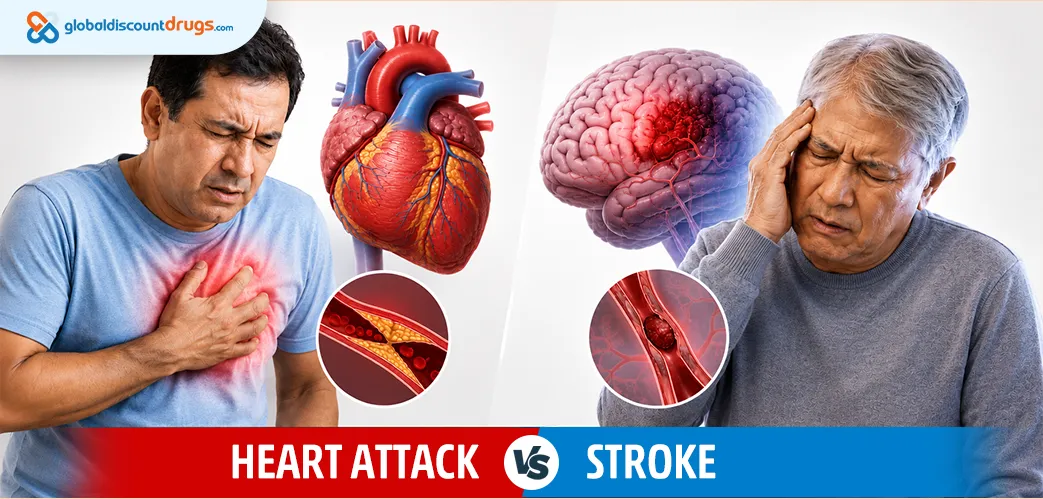
Heart Attack Vs Stroke
The issue of heart attacks and strokes are two of the most serious medical emergencies a person can face. While some of the people might confuse these two, they affect two completely different organs in the body.
Both these conditions can occur when some of the normal blood flow can get interrupted. Knowing which one is occurring and they can all help in acting quick and acting fast saves lives.
What Is the Main Difference?
Think of the circulatory system like the plumbing in the house:- A Heart Attack is a "heart plumbing problem." This issue can all happen when the blood vessel is supplying blood to the heart muscle. It can get blocked usually by a buildup of fat and cholesterol (plaque). Without getting any sort of oxygen, that might part of the heart muscle begins to suffer those damages.
- Stroke is a "brain plumbing problem." This issue is called a "brain attack," which can all occur when the blood supply helps to be a part of the brain is cut off. This can all be caused by a blood clot blocking brain artery. The blood vessel in the brain starts bursting. Without blood flow, brain cells can also start dying within minutes.
How to Spot a Heart Attack
A heart attack-like condition can mostly lead to some of the symptoms in the chest and upper body.Typical Warning Signs
- Chest discomfort: A feeling of tightness, heavy pressure, squeezing, or pain in the middle of the chest. This can last more than a few minutes or go away and come back.
- Upper body pain: Discomfort spreading to the left arm, shoulders, neck, jaw, or back.
- Shortness of breath: Issues in catching breath, with or without chest pain.
- Cold sweat, nausea, or lightheadedness.
How to Spot a Stroke: Remember B.E. F.A.S.T.
Stroke symptoms can all affect the brain and nervous system. It can all happen suddenly and often affect only one side of the body. Doctors can further recommend using the B.E. F.A.S.T. acronym to recognize a stroke quickly:- B – Balance: Sudden loss of balance, trouble walking, or dizziness.
- E – Eyes: Sudden vision changes or trouble seeing out of one or both eyes.
- F – Face: Does one side of the face droop or feel numb when smiling?
- A – Arm: Is one arm weak or numb? Does it drift downward when both arms are raised?
- S – Speech: Is speech slurred, garbled, or difficult to understand?
- T – Time: Call 911 immediately if you notice any of these signs.
A Critical Safety Rule: Avoid Giving Aspirin for Strokes
There are numerous people who might know that chewing an aspirin while getting a heart attack can help in thinning the blood and lowering clotting while waiting for the ambulance. However, do not give someone aspirin medicine if you suspect a stroke. When the stroke is caused by some sort of ruptured blood vessel (which is called a hemorrhagic stroke), taking aspirin medicine can further worsen the bleeding inside the brain. Only emergency medical personnel in a hospital setting can safely determine the type of stroke. This through the brain can scan before giving blood-thinning treatments.Shared Risk Factors and Prevention
While heart attacks and strokes like issues can affect various organs, they can share numerous same root causes. It can also take care of the blood vessels while protecting both the heart and the brain. Major risk factors include:- High blood pressure (hypertension)
- High cholesterol
- Diabetes
- Smoking or tobacco use
- Lack of physical activity
- Unhealthy diet high in saturated fats and sodium
References:
1. CDC — Heart attack definition, symptoms and emergency responseSupports the heart attack definition, chest discomfort, upper-body pain, shortness of breath, nausea, fatigue, women’s symptoms and calling 911.
https://www.cdc.gov/heart-disease/about/heart-attack.html
2. NHLBI — Heart attack causes and plaque buildup
Supports the explanation that coronary artery disease and plaque buildup are common underlying causes of heart attacks.
https://www.nhlbi.nih.gov/health/heart-attack/causes
3. CDC — Stroke symptoms and B.E. F.A.S.T.
Supports sudden balance problems, vision changes, face drooping, arm weakness, speech difficulty and the instruction to call 911 immediately.
https://www.cdc.gov/stroke/signs-symptoms/index.html
4. American Heart Association — Aspirin during a heart attack or stroke
Supports calling 911 before taking aspirin, following dispatcher or medical advice, and avoiding aspirin during a suspected stroke because it may worsen bleeding.
5. CDC — Stroke risk factors
Supports high blood pressure, high cholesterol, diabetes, smoking, obesity, physical inactivity and unhealthy diet as stroke risk factors.
https://www.cdc.gov/stroke/risk-factors/index.html
Editorial Standards
Content published on Global Discount Drugs is reviewed by healthcare professionals and supported by credible medical sources. Read our Editorial Content Policy to learn more.
