
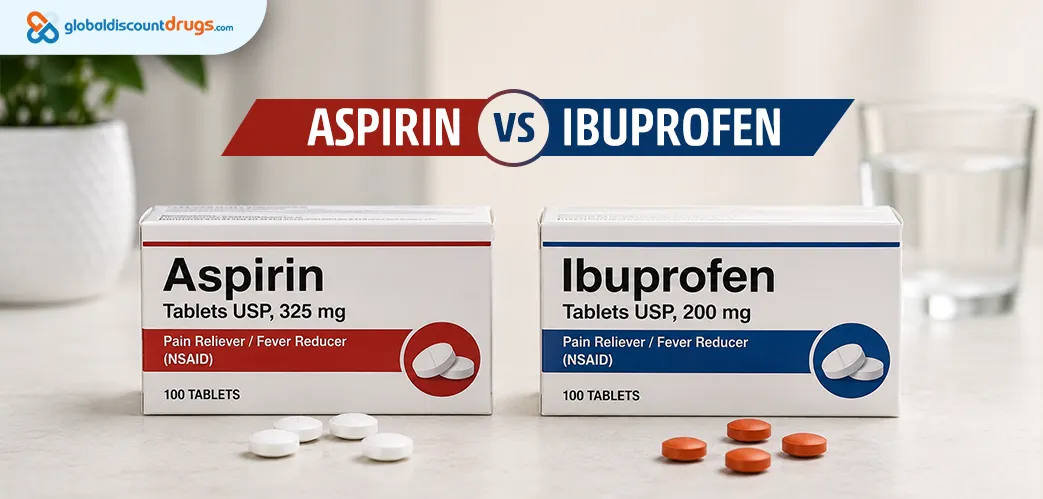
Aspirin vs Ibuprofen
When a condition like headache strikes or the joints feel sore after a long workout, you might reach the medicine cabinet. This is the usual first thing you usually do.
At a quick glance, they might all seem to do the exact same job. Both medicine is known to belong to a group of medications known as nonsteroidal anti-inflammatory drugs, or NSAIDs. They might both help in overcoming pain, lowering swelling, and lower fevers too. However, despite all the similarities they hold, aspirin and ibuprofen work differently in the body. Some of them serve unique medical purposes, and they are to carry some sort of distinct risks.
Knowing as to how these mentioned medications shall differ can all help in making some safe, informed choices for your health.
As of this blood-thinning effect, doctors can usually prescribe daily low-dose aspirin (81 mg) to people who have had a heart attack or stroke. These are those who are at a high risk for cardiovascular events. As per some of the guidelines, taking low-dose aspirin can lower the risk of blood clots while blocking blood flow to the heart or brain.
Unlike the medicine aspirin, pill ibuprofen does not permanently thin the blood. It also affected the blood platelets while some mild and temporary. Further, stopping once the medication wears off in your system.
What Is Aspirin?
The medicine Aspirin is known to be one of the oldest and most thoroughly researched solutions in modern medicine. In addition to this, treating everyday aches and pains, aspirin pills play a major role in heart care. While using the medicine aspirin, it stops the blood platelets from sticking together. The platelets are those tiny blood cells which can form clots to stop bleeding on getting a cut. Further on preventing some of these cells while clumping, aspirin medicine can act as a blood thinner.
$0.10
per pill
Common Uses for Aspirin
- Lowering the risk of recurrent heart attacks or stroke (which can be kept under medical supervision)
- Relieving mild-to-moderate headaches or toothaches
- Lowering fever in adults
- Lowering the joint stiffness and inflammation
What Is Ibuprofen?
Ibuprofen medicine is commonly sold under brand names including Advil or Motrin. This is as good as generic equivalents. This was also developed later than an aspirin. It is widely used for some of the acute, temporary pain, and inflammatory conditions. Ibuprofen medicine can all work by blocking enzymes in the body called COX-1 and COX-2. Such enzymes can produce chemicals known as prostaglandins. They are known to trigger pain, fever, and tissue inflammation when you are injured or actually sick. By turning down prostaglandin production, the medicine ibuprofen can calm inflammation and ease that pain quickly.
$0.12
per pill
Common Uses for Ibuprofen
- Easing some of the muscle aches, sprains, and sports injuries
- Relieving conditions like menstrual cramps
- Reducing arthritis joint pain and swelling
- Treating some tension headaches and tooth pain
- Managing high fevers in children and adults
Key Differences to Keep in Mind
While both medicines are known to treat pain, their primary strengths make them suitable for different situations.- For Muscle Pain and Swelling: the medicine Ibuprofen is usually preferred for acute soft tissue injuries. This can also include strains, sprains, or swollen joints. This can also provide targeted anti-inflammatory relief with fewer bleeding risks for short-term use.
- For Heart Protection: Aspirin stands alone here and on the other hand, Ibuprofen does not offer the same long-term cardiovascular benefits.
- Duration in the Body: Ibuprofen medicine effectiveness can typically last for approx. 4 to 6 hours per dose. Aspirin's anti-platelet effect can also last for various days. This is why surgeons can usually ask patients to stop taking aspirin before a planned operation.
Safety Guidelines and Important Warnings
Because both of these medicines are available over the counter, and it is quite well easy to assume that they are completely risk-free. However, misuse of these medicines can lead to some severe health complications mentioned below.-
Stomach Irritation and Bleeding
-
Never Give Aspirin to Children or Teens
-
Drug Interactions
-
Kidney and Heart Risks
References
- Aspirin antiplatelet effects https://pubmed.ncbi.nlm.nih.gov/9263351/
- Ibuprofen interaction with aspirin https://pubmed.ncbi.nlm.nih.gov/11752357/
- Aspirin and Reye’s syndrome https://pmc.ncbi.nlm.nih.gov/articles/PMC1120628/
- NSAIDs and gastrointestinal bleeding https://pubmed.ncbi.nlm.nih.gov/40915652/
- NSAIDs: cardiovascular and GI risks https://pubmed.ncbi.nlm.nih.gov/23726390/
Editorial Standards
Content published on Global Discount Drugs is reviewed by healthcare professionals and supported by credible medical sources. Read our Editorial Content Policy to learn more.
