
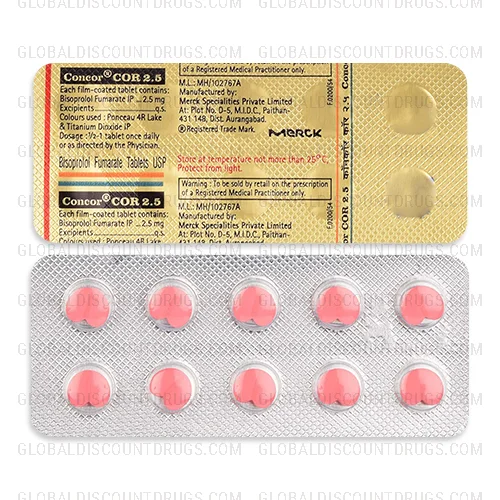
Bisoprolol 2.5mg
In StockBisoprolol 2.5 mg Tablet is a prescription beta-1 selective blocker used for hypertension, heart failure, and selected cardiovascular conditions. Take it consistently at the same time each day unless otherwise directed.
| Active Ingredient: | Bisoprolol |
|---|---|
| Indication: | Hypertension |
| Strength: | 2.5mg |
| Dosage Form: | Tablets |
| Manufacturer: | Merck Ltd |

Quick Overview
Bisoprolol is a prescription beta blocker used to treat high blood pressure (hypertension). It blocks beta-1 receptors in the heart, which slows the heart rate and eases the force of each beat, so blood pressure falls. Bisoprolol 2.5mg is a low-dose strength that requires a prescription and regular follow-up with a clinician.
Medical Supervision and Regulatory Status
Bisoprolol is a prescription-only medicine in the United States, FDA approved, and not a controlled substance, so it carries no federal schedule.
Supervision matters because the drug slows the heart and can hide the racing pulse that warns of low blood sugar. A prescriber tracks blood pressure, pulse, and signs of heart failure. Generic versions are available.
Clinical Context
Hypertension is a long-term condition in which blood pressure in the arteries stays above the target set for a person, often without any symptoms. Many people learn they have it only at a routine check-up.
Keeping blood pressure in range lowers the long-term chance of stroke, heart attack, heart failure, and kidney damage. Treatment is usually ongoing and often pairs medicine with changes to salt intake, activity, and weight.
Current US guidelines generally favor thiazide-type diuretics, ACE inhibitors, ARBs, and calcium channel blockers as first choices for most adults. Beta blockers such as bisoprolol are more often chosen when another heart condition is present, or added when other medicines have not been enough.
How Bisoprolol 2.5mg Works
Bisoprolol is a beta-1 selective blocker, meaning it mainly blocks adrenaline signals at receptors in the heart, which lowers heart rate and reduces the workload on the heart.
With a slower, gentler heartbeat, less blood is pushed into the arteries each minute, and readings tend to fall over time. The drug also lowers release of renin, a kidney hormone that raises blood pressure.
Heart selectivity is relative, not absolute. At low doses such as 2.5 mg the effect is concentrated on the heart, but it fades as the dose rises, and the lungs and blood vessels can be affected. The medicine lowers blood pressure but does not cure hypertension, and readings can climb again if it is stopped.
What Is Bisoprolol 2.5mg?
- Drug Class: Beta-1 selective adrenergic receptor blocker (beta blocker)
- Active Ingredient: Bisoprolol fumarate
- Mechanism: Blocks beta-1 receptors in the heart, lowering heart rate and cardiac output, and reduces renin release.
- Available Forms and Strengths: Oral tablets. 2.5 mg is a labeled starting dose, so confirm with the dispensing pharmacy which tablet strength is supplied.
- Dosing Frequency: Once daily
- Regulatory Status: US prescription-only (Rx), FDA approved, not a controlled substance, generics available
Approved Uses
The FDA has approved bisoprolol fumarate tablets for one use, the management of hypertension, to lower blood pressure in adults.
Lowering blood pressure reduces the risk of cardiovascular events, mainly strokes and heart attacks. The label notes that bisoprolol may be used alone or with other blood pressure medicines.
How to Use and Dosage
Your prescriber sets the dose of bisoprolol. The labeled usual starting dose for high blood pressure is 5 mg once daily, and 2.5 mg is used as a starting dose in some patients.
A 2.5 mg dose is typically chosen for people who need a gentler start, such as those with bronchospastic disease, kidney impairment, or liver disease. The prescriber may raise it gradually, up to the labeled maximum of 20 mg per day. Take it at the same time each day, commonly in the morning, with or without food. Do not change the dose on your own.
If you miss a dose, take it when you remember unless the next dose is close. In that case skip it and return to your normal schedule. Do not double up.
Do not stop bisoprolol suddenly. Abrupt withdrawal of beta blockers has caused worsened angina, heart attack, and dangerous heart rhythms, especially in people with coronary artery disease. Your prescriber will lower the dose gradually if treatment needs to end.
Side Effects
Most people who take bisoprolol have mild effects or none, and many fade as the body adjusts, though some effects need prompt medical attention.
Bisoprolol does not carry a boxed warning. The label does include a prominent warning about abrupt discontinuation, described above.
Common effects: Tiredness, dizziness, headache, a slow pulse, cold hands or feet, diarrhea, nausea, and a stuffy or runny nose are the effects most often reported. Dizziness is more likely when standing up quickly, particularly in the first weeks.
Serious effects: Bisoprolol can cause a very slow heartbeat or heart block, worsening heart failure, narrowing of the airways in people with asthma or COPD, and low blood pressure. It can also hide the racing pulse that warns of low blood sugar in people with diabetes. Serious allergic reactions are possible but uncommon.
Emergency Warning Signs
- Chest pain that is new, worsening, or more frequent
- Fainting, or a pulse that feels extremely slow or irregular
- Shortness of breath, sudden weight gain, or swelling of the ankles or legs
- Wheezing or tightness in the chest that makes breathing hard
- Swelling of the face, lips, tongue, or throat, or widespread hives
- Severe dizziness with confusion or heavy sweating, especially in someone with diabetes
- Sudden weakness, trouble speaking, or vision changes
Call 911 or go to the nearest emergency department for any of these. For milder effects that persist, contact your prescriber or pharmacist.
Warnings and Precautions
Bisoprolol is contraindicated in cardiogenic shock, overt heart failure, second or third degree AV block, and marked sinus bradycardia, and it interacts with several drug classes.
Verapamil and diltiazem can slow the heart excessively when combined with bisoprolol, and the combination needs close monitoring. Clonidine can cause rebound high blood pressure if it is stopped while a beta blocker is still being taken, so the prescriber should plan how clonidine is withdrawn. Disopyramide and amiodarone can add to effects on heart rhythm. Rifampin can shorten bisoprolol’s duration of action. Insulin and oral diabetes medicines may need adjustment, since bisoprolol can mask the pulse changes that warn of low blood sugar. Anti-inflammatory pain relievers such as ibuprofen can blunt the blood pressure effect. Alcohol may add to dizziness and low blood pressure. Tell your prescriber and pharmacist about all prescription, over-the-counter, and supplement products you use.
Bisoprolol should be used with caution in asthma or COPD, peripheral artery disease, and thyroid disease, because it can hide a fast pulse caused by an overactive thyroid. Anyone scheduled for surgery should tell the surgeon and anesthesiologist that they take a beta blocker. In people with a pheochromocytoma, a different medicine must be started first.
For pregnancy, bisoprolol should be used only if the expected benefit outweighs the possible risk to the baby. Beta blockers taken late in pregnancy have been linked to a slow heartbeat, low blood pressure, and low blood sugar in newborns. Whether bisoprolol passes into breast milk is not well established, so a breastfeeding parent should review the options with their prescriber.
In older adults, treatment usually begins at a low dose because greater sensitivity cannot be ruled out. Safety and effectiveness in children have not been established. Kidney impairment (creatinine clearance below 40 mL/min) and liver disease call for a lower starting dose, often 2.5 mg, and slower increases.
Expected monitoring includes blood pressure and pulse at each visit, checks for signs of heart failure such as swelling or breathlessness, and blood sugar monitoring in people with diabetes. Kidney and liver tests may be ordered when those organs are affected.
Who Should Not Use This Medication
Bisoprolol should not be used by people with any of the following conditions, because the prescribing information lists each one as a contraindication, meaning the risk outweighs the benefit.
- People with cardiogenic shock
- People with overt heart failure
- People with second or third degree AV block who do not have a pacemaker
- People with marked sinus bradycardia (a very slow resting heart rate)
Storage Instructions
Store bisoprolol tablets at controlled room temperature, 20°C to 25°C (68°F to 77°F), in the original container, away from moisture and direct light.
Avoid keeping the bottle in a bathroom, where steam can affect the tablets. Keep it closed and out of sight and reach of children and pets. For disposal, use a drug take-back program or a pharmacy kiosk if one is nearby. If none is available, FDA guidance allows mixing tablets with used coffee grounds or cat litter in a sealed bag before putting them in household trash. Remove personal details from the label first.
Frequently Asked Questions
What is the cost of Bisoprolol 2.5mg without insurance?
The cost without insurance depends on the seller, brand availability, and pack size. Location and available discounts can also change what you pay. Generic bisoprolol is generally more affordable than the brand-name product, so ask the pharmacist whether a generic fits your prescription. Comparing licensed pharmacies can show the actual amount before you order.
How can I order Bisoprolol 2.5mg online?
You can order online only with a valid prescription. Upload a copy to a licensed US pharmacy, or ask your prescriber to send it electronically, then choose home delivery at checkout. Before ordering, confirm the pharmacy holds a state license and has a pharmacist available to answer questions, since unlicensed websites may sell counterfeit or incorrect medicine.
Is Bisoprolol 2.5mg available over the counter?
No, bisoprolol is not sold over the counter in the United States. It is a prescription medicine because blood pressure and heart rate need medical evaluation and follow-up. Rules differ by country, and some places may sell it differently, but supervision by a qualified clinician is needed wherever it is used.
Does Bisoprolol 2.5mg require a prescription?
Yes, bisoprolol requires a prescription from a licensed US clinician. A prescriber checks your blood pressure, heart rate, heart rhythm, and other health conditions before starting it, because the medicine can slow the heart and mask some warning signs. Follow-up visits allow dose changes if blood pressure or pulse responds too much or too little.
How long does Bisoprolol 2.5mg take to work?
Blood pressure usually begins to improve within the first couple of weeks, though timing varies by person. The full effect can take longer to judge, so prescribers recheck readings over several visits. You may feel no difference at all, because high blood pressure often causes no symptoms, so keep taking the tablets as prescribed.
Is it safe to stop taking Bisoprolol 2.5mg suddenly?
No, stopping bisoprolol suddenly is not safe. Abrupt withdrawal of beta blockers has been linked to worse chest pain, heart attack, and dangerous heart rhythms, particularly in people with coronary artery disease. If you need to stop, your prescriber will usually lower the dose gradually while monitoring your pulse and symptoms.
Can Bisoprolol 2.5mg interact with other medicines?
Yes, several medicines interact with bisoprolol. Verapamil and diltiazem can excessively slow the heart rate, and clonidine can cause rebound high blood pressure if stopped while on a beta blocker. Rifampin may reduce bisoprolol levels, while insulin and diabetes tablets may need monitoring because low blood sugar symptoms can be masked. Tell the pharmacist about every product you use.
What should I do if I miss a dose of Bisoprolol 2.5mg?
Take the missed dose as soon as you remember, unless it is almost time for the next one. In that case, skip the missed tablet and continue your usual schedule. Never take two doses together to catch up, since that can slow the heart rate and drop blood pressure too far. Call the pharmacist if you are unsure.
References
- DailyMed (NIH): Current FDA-approved prescribing information for bisoprolol fumarate tablets, including dosing, contraindications, warnings, and interactions.
- MedlinePlus: Plain-language drug information page for bisoprolol covering use, precautions, side effects, and missed doses.
- FDA (Drugs@FDA): Approval history and labeling entry for bisoprolol fumarate tablets.
Medical Disclaimer:
This content is for informational purposes only and does not constitute medical advice, diagnosis, or treatment. Consult a qualified specialist or physician before using Bisoprolol 2.5mg.
Prescription Required (Rx) to Buy?
This medication is not available over the counter. A valid prescription from a licensed healthcare
professional is required. Always consult your doctor before use.
| Quantity | 100, 150, 200, 50 |
|---|---|
| Indication | Hypertension |
| Active Ingredient | Bisoprolol |
| Pharmaceutical Form | Tablets |
| Manufacturer | Merck Ltd |
| Indian Brand | Concor 2.5mg |
| US Brand Name | Bicor, Bisoprolol, Cardicor, Emcor |
| Generic Name | Bisoprolol |
| Dosage | 2.5mg |
| Drug Type | Tablets |