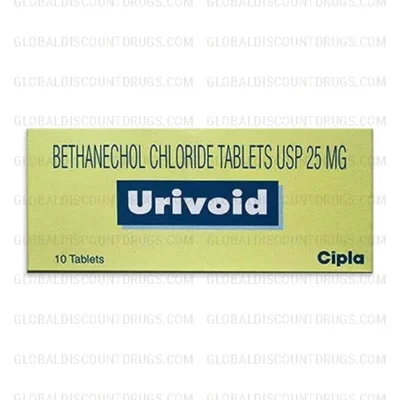
What is Bethanechol?
Bethanechol is a medication that belongs to a group of drugs called cholinergic agonists. These medicines act like a natural chemical in the body called acetylcholine, which helps control muscle activity.
It is commonly used to:
- Treat urinary retention (difficulty passing urine)
- Help empty the bladder after surgery or childbirth
- Manage certain bladder problems caused by nerve damage (neurogenic bladder)
Available formulations and strengths
- Oral tablets (most common form)
- Typically available in multiple strengths (such as low, medium, and higher-dose tablets)
Bethanechol is not used as a first-line treatment for all urinary conditions. Its use depends on the underlying cause and clinical evaluation.
What is the Recommended Dosage of Bethanechol?
The dosage of bethanechol varies depending on several factors:
Factors affecting dose
- The medical condition being treated
- Age of the patient
- Body weight (in some cases)
- Kidney or liver function
- Response to treatment
Dosage forms
Dosing is usually started at a low level and adjusted carefully by a healthcare provider. Because bethanechol directly affects the nervous system, dosing must be individualized.
Patients should:
- Follow instructions from a licensed medical specialist (often a urologist)
- Avoid changing the dose without medical advice
How Bethanechol Works
Bethanechol works by stimulating specific receptors in the body that control smooth muscle movement.
In simple terms:
- It activates bladder muscles
- This helps the bladder contract more effectively
- As a result, it improves the ability to pass urine
It manages symptoms related to bladder emptying but does not cure the underlying cause, such as nerve damage or obstruction.
Is a Prescription Required to Buy Bethanechol Online?
Bethanechol is a prescription-only medication.
Patients should:
- Consult a licensed medical specialist, typically a urologist or primary care physician
- Avoid self-diagnosis or self-medication
Safety considerations when purchasing
- Buy only from licensed pharmacies
- Avoid unverified online sellers
- Do not use veterinary or non-human formulations
Improper use may lead to serious side effects due to its effects on the nervous system.
Side Effects of Bethanechol
Like all medications, bethanechol can cause side effects.
Common side effects
These are usually mild and may improve over time:
- Nausea or stomach discomfort
- Increased sweating
- Flushing (warmth or redness of the skin)
- Increased saliva production
- Mild abdominal cramps
Serious side effects
These are less common but require immediate medical attention:
- Severe abdominal pain
- Difficulty breathing
- Very slow heart rate
- Low blood pressure (dizziness or fainting)
- Seizures
If any severe or unusual symptoms occur, seek medical care immediately.
Drug Interactions
Bethanechol may interact with other medications and substances.
Common interaction categories
- Other cholinergic drugs (may increase side effects)
- Anticholinergic medications (may reduce effectiveness)
- Blood pressure medications
- Drugs affecting heart rate
Other considerations
- Over-the-counter (OTC) medicines
- Herbal supplements
- Vitamins
Patients should provide a complete medication list to their healthcare provider to avoid harmful interactions.
Safety & Important Considerations
Medical conditions to disclose
- Asthma or breathing disorders
- Heart disease
- Low blood pressure
- Peptic ulcer disease
- Thyroid disorders
Pregnancy and breastfeeding
- Use only if clearly needed
- Discuss risks and benefits with a licensed medical specialist
Age-related considerations
- Older adults may be more sensitive to side effects
- Use in children requires specialist supervision
Monitoring
- Symptoms of bladder function
- Blood pressure and heart rate (if needed)
Bethanechol should be used carefully due to its systemic effects.
Who This Medication Is For
Bethanechol may be prescribed for:
- Adults with urinary retention after surgery or childbirth
- Patients with neurogenic bladder dysfunction
- Individuals who cannot fully empty the bladder due to muscle weakness
Its use is based on clinical diagnosis and evaluation by a healthcare provider.
Who Should Not Take Bethanechol
Bethanechol is not suitable for everyone.
Contraindications include:
- Mechanical blockage of the urinary tract
- Gastrointestinal obstruction
- Severe asthma
- Recent bladder or intestinal surgery (in certain cases)
- Known allergy to bethanechol
Use with caution in:
- Heart conditions
- Low blood pressure
- Thyroid disorders
A medical evaluation is necessary before starting treatment.
What to Do If You Miss a Dose
If a dose is missed:
- Take it as soon as you remember
- If it is close to the next dose, skip the missed dose
- Do not double the dose
If unsure, contact a licensed medical specialist for guidance.
Related medications to Bethanechol
Bethanechol alternatives depend on why it was prescribed. Bethanechol is mainly used for non-obstructive urinary retention, such as postoperative/postpartum urinary retention or neurogenic bladder atony. It should not be used when there is a mechanical blockage. DailyMed
| Bethanechol Alternative |
Examples |
When It May Be Used |
| Catheter drainage |
Intermittent catheter, temporary Foley catheter |
First-line for acute urinary retention or severe bladder overfilling |
| Alpha blockers |
Tamsulosin, Alfuzosin, Silodosin, Doxazosin, Terazosin |
If retention is related to enlarged prostate/bladder outlet resistance |
| 5-alpha reductase inhibitors |
Finasteride, Dutasteride |
If urinary retention is linked to enlarged prostate size |
| Combination BPH therapy |
Tamsulosin + Dutasteride, Doxazosin + Finasteride |
For prostate-related retention needing stronger long-term control |
| Antibiotics |
Based on culture/suspected infection |
If retention is caused or worsened by UTI or prostatitis |
| Medication adjustment |
Reduce/stop anticholinergics, opioids, decongestants, some antidepressants |
If another medicine is causing urinary retention |
| Procedures for blockage |
Urethral dilation, prostate procedures, cystoscopy-based treatment |
If there is stricture, stone, enlarged prostate, or another obstruction |
For urinary retention, treatment is based on the cause. NIDDK lists catheter drainage, alpha blockers, 5-alpha reductase inhibitors, antibiotics, medication review, and procedures as common treatment routes. NIDDK
Important: Bethanechol is not the same type of medicine as tamsulosin or finasteride. Bethanechol tries to stimulate bladder contraction, while alpha blockers relax the bladder neck/prostate area. A doctor should confirm whether the issue is weak bladder contraction or blocked urine flow before switching.
Storage Instructions
- Store at room temperature
- Keep away from moisture and direct light
- Do not store in bathrooms
- Keep out of reach of children and pets
Check packaging for specific storage instructions.
Disclaimer
This page is for educational purposes only. It is not a substitute for professional medical advice, diagnosis, or treatment. Patients must consult a licensed urologist or qualified medical specialist before starting, changing, or stopping treatment. Treatment decisions must be based on a full clinical evaluation by a qualified specialist.