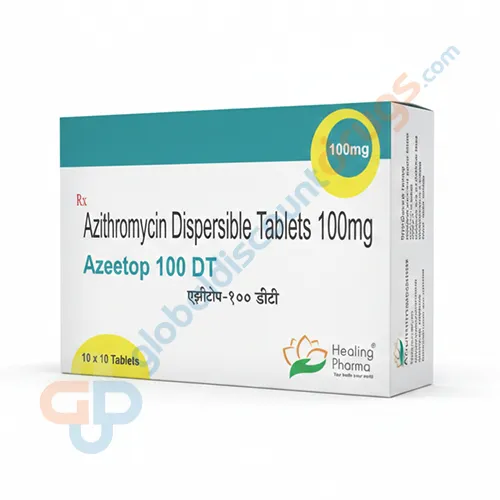
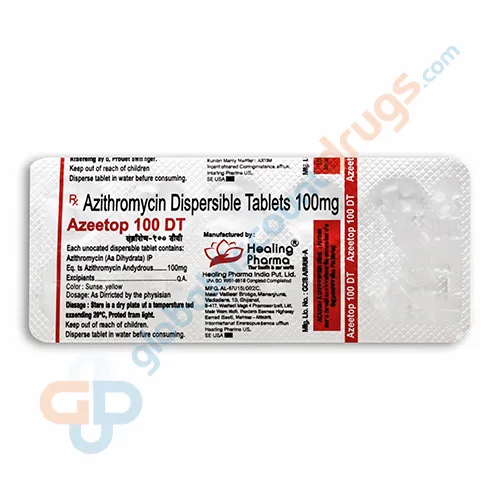
Azithromycin KIDTAB 100mg DT Tablets
In StockAzithromycin KIDTAB 100 mg Dispersible Tablet is a prescription macrolide antibiotic used in children for selected susceptible bacterial infections. Prepare and administer the dose exactly as prescribed.
| Active Ingredient: | Azithromycin |
|---|---|
| Indication: | Bacterial Infections |
| Strength: | 100mg DT |
| Dosage Form: | Tablets |
| Manufacturer: | Healing Pharma |

Azithromycin KIDTAB 100mg DT — Quick Overview
Azithromycin KIDTAB 100mg DT is a prescription antibiotic dispersible tablet formulated for children with certain bacterial infections. It belongs to the macrolide class of antibiotics and works by stopping susceptible bacteria from producing proteins they need to grow. Dosing is calculated by your child’s body weight and the infection being treated, and this medicine should only be given exactly as prescribed by your child’s doctor.
Medical Supervision & Regulatory Status
Azithromycin is a prescription-only medication in the United States and most other countries — it is not available over the counter. “DT” refers to a dispersible tablet, a form designed to be mixed with a small amount of water for children who have difficulty swallowing pills; regulatory scheduling for pediatric antibiotic products can vary somewhat by country, but in all cases a doctor’s prescription and evaluation are required before use. Because antibiotics only work against bacterial (not viral) infections, your child’s prescriber will confirm that a bacterial infection is present, or strongly suspected, before starting treatment.
Clinical Context
Children commonly develop bacterial infections of the ears, sinuses, throat, and lungs, and azithromycin is one of several antibiotics doctors may choose depending on the type of infection, local resistance patterns, and whether the child has a penicillin allergy. Azithromycin is FDA-approved for certain bacterial respiratory illnesses, including community-acquired pneumonia, acute sinus and ear infections, and throat and tonsil infections.
Prompt, correctly dosed antibiotic treatment helps resolve the infection and reduces the risk of complications, while completing the full prescribed course helps prevent the infection from returning or bacteria from developing resistance.
Azithromycin is often selected in pediatrics because of its convenient once-daily dosing and comparatively short treatment courses (commonly 3 to 5 days, depending on the infection), which can make it easier for children to complete a full course compared with antibiotics requiring multiple daily doses over a longer period.
How Azithromycin Works
Azithromycin is a macrolide (azalide) antibiotic.
It works by binding to part of the bacterial ribosome, the machinery bacteria use to build proteins, which stops susceptible bacteria from growing and reproducing. Because it concentrates well in infected tissues and clears slowly from the body, azithromycin can often be given for shorter courses than many other antibiotics while still remaining effective.
For a child, this generally means symptom improvement within a few days of starting treatment, though it’s important to complete the entire course your doctor prescribes, even if your child starts feeling better sooner.
What Is Azithromycin KIDTAB 100mg DT?
- Drug Class: Macrolide antibiotic
- Active Ingredient: Azithromycin (as azithromycin dihydrate), 100 mg per dispersible tablet
- Mechanism: Inhibits bacterial protein synthesis by binding the bacterial ribosome
- Form: Dispersible tablet — designed to be dissolved in water before giving to a child
- Dosing Frequency: Once daily, with the number of days and total daily dose calculated by body weight and indication, exactly as prescribed
- Regulatory Status: Prescription only
Uses / Indications
Ear Infections (Acute Otitis Media): Approved for children 6 months of age and older, dosed based on body weight.
Sinus Infections (Acute Bacterial Sinusitis): Approved for children 6 months of age and older.
Community-Acquired Pneumonia: Approved for pediatric patients 6 months of age and older, as part of an appropriate treatment plan.
Throat and Tonsil Infections (Pharyngitis/Tonsillitis): Approved for children age 2 years and above, typically used as an alternative when first-line antibiotics aren’t appropriate.
This is the set of FDA-recognized pediatric respiratory-infection uses — azithromycin should not be given for viral illnesses (like the common cold or flu) or for infections it isn’t prescribed for.
How to Use / Dosage
Your child’s doctor calculates the exact daily dose and number of days based on your child’s weight, age, and the specific infection — never estimate or adjust the dose yourself.
- Preparation: Dissolve the dispersible tablet in a small amount of water as directed, and have your child drink the entire mixture. Azithromycin can be taken with or without food.
- Timing: Give the dose at around the same time each day to help your child complete the full course.
- If Your Child Vomits: Whether the dose needs to be repeated depends on how soon after dosing the vomiting occurs — contact your child’s doctor for specific guidance rather than re-dosing on your own.
- Missed Dose: Give the missed dose as soon as you remember, unless it’s almost time for the next one — in that case, skip it and continue the regular schedule. Don’t give a double dose.
- Complete the Full Course: Finish all doses your child’s doctor prescribed, even if symptoms improve early. Stopping early can allow the infection to return and contributes to antibiotic resistance.
Side Effects
Most children tolerate azithromycin without serious problems, but side effects can occur.
Common side effects include diarrhea, nausea, abdominal pain, and vomiting.
Serious side effects are less common but require prompt medical attention. These include abnormal liver function, hepatitis, and cholestatic jaundice, as well as heart rhythm changes and serious allergic reactions.
Emergency Warning Signs — seek medical care immediately if your child develops:
- Hives, swelling of the face or throat, or difficulty breathing (signs of a severe allergic reaction)
- A severe skin reaction, such as blistering, peeling, or a widespread rash
- Yellowing of the skin or eyes, dark urine, or unusual tiredness (possible signs of liver problems)
- Fainting, a racing or irregular heartbeat, or dizziness (possible signs of a heart rhythm problem)
- Severe or persistent diarrhea, including diarrhea that contains blood, even after the medicine is finished
Warnings & Precautions
Azithromycin carries several important safety considerations parents and caregivers should be aware of. Serious allergic reactions, including anaphylaxis and severe skin reactions, have been reported and can be fatal in rare cases — treatment should be stopped immediately if any signs of an allergic reaction appear. Liver problems, including hepatitis and liver failure, have been reported, some of which have resulted in death, so caregivers should watch for feeding difficulty, irritability, or vomiting and contact the doctor if these occur. Azithromycin can affect the heart’s electrical rhythm (QT prolongation), which carries a risk of a serious, potentially fatal irregular heartbeat — this risk is higher in children with existing heart rhythm problems, electrolyte imbalances, or those taking other medicines that affect heart rhythm. Diarrhea associated with Clostridioides difficile, a serious intestinal infection, has been reported with nearly all antibiotics, including azithromycin, and can occur even after treatment ends. Regarding drug interactions, azithromycin can increase the blood-thinning effect of warfarin, and combining it with nelfinavir requires close monitoring for liver and hearing-related side effects. Tell your child’s doctor about all other medications, including over-the-counter products and supplements. Safety and effectiveness in children under 6 months of age have not been established, so use in very young infants requires specific physician guidance.
Who Should Not Use This Medication
- Known hypersensitivity to azithromycin, erythromycin, or any macrolide or ketolide antibiotic
- A history of cholestatic jaundice or liver problems linked to previous azithromycin use
- Children with known heart rhythm problems, unless specifically cleared and monitored by their doctor
- Infants under 6 months of age, except under direct specialist guidance
- Children with a known allergy to any inactive ingredient in this tablet
Storage Instructions
- Store at room temperature, away from excess heat and moisture
- Keep the tablets in their original packaging until ready to use
- Keep out of the reach of children — accidental double-dosing or ingestion by a sibling can be harmful
- Dispose of unused or expired medication through a pharmacy take-back program rather than household trash
Frequently Asked Questions
Does Azithromycin KIDTAB 100mg DT require a prescription?
Yes, this is a prescription-only antibiotic. A doctor needs to confirm your child has a bacterial infection appropriate for azithromycin and determine the correct weight-based dose before treatment begins.
Is Azithromycin available over the counter?
No, azithromycin is not available over the counter in the U.S. or most other countries. It requires a doctor’s evaluation and prescription due to its safety profile and the importance of using antibiotics appropriately.
How long does it take to work?
Many children begin to feel better within 2 to 3 days of starting treatment, though this varies by infection type. It’s important to complete the full prescribed course even after symptoms improve.
Is it safe to stop giving this medication suddenly?
No — stopping early, even if your child seems better, can allow the infection to return and may contribute to antibiotic resistance. Always complete the full course your doctor prescribed.
Can Azithromycin interact with other medications?
Yes — notable interactions include warfarin (blood thinners) and nelfinavir, among others. Share a complete list of your child’s medications and supplements with their doctor and pharmacist.
What if I miss a dose?
Give the missed dose as soon as you remember, unless it’s nearly time for the next one — in that case, skip it and continue the regular schedule. Don’t double up.
What is the cost of Azithromycin KIDTAB 100mg DT without insurance?
Generic azithromycin is generally an affordable antibiotic option. The cost without insurance depends on the seller, brand availability, and pack size, and may also vary by location and available discounts.
How can I order Azithromycin KIDTAB 100mg DT online?
A valid prescription from your child’s doctor is required. Typically, you upload the prescription or have the doctor send it electronically, place your order through a licensed pharmacy, and receive it via home delivery — always confirm you’re using a licensed, verified pharmacy.
Medical Disclaimer:
This content is for informational purposes only and does not constitute medical advice, diagnosis, or treatment. Consult a qualified specialist or physician before using Azithromycin KIDTAB 100mg DT Tablets.
References
- DailyMed (NIH/NLM) — Azithromycin Tablets — Official FDA Label: https://dailymed.nlm.nih.gov/dailymed/fda/fdaDrugXsl.cfm?setid=20ae108a-00c5-a984-e063-6394a90aaaae&type=display
- MedlinePlus (NIH) — Azithromycin: https://medlineplus.gov/druginfo/meds/a697037.html
- U.S. CDC — Antibiotic Use in Children: https://www.cdc.gov/antibiotic-use/children.html
Prescription Required (Rx) to Buy?
This medication is not available over the counter. A valid prescription from a licensed healthcare
professional is required. Always consult your doctor before use.
| Quantity | 120, 180, 240, 60 |
|---|---|
| Indication | Bacterial Infections |
| Active Ingredient | Azithromycin |
| Pharmaceutical Form | Tablets |
| Manufacturer | Healing Pharma |
| Indian Brand | Azeetop DT 100mg |
| US Brand Name | Azithromycin |
| Generic Name | Azithromycin |
| Dosage | 100mg DT |
| Drug Type | Tablets |