
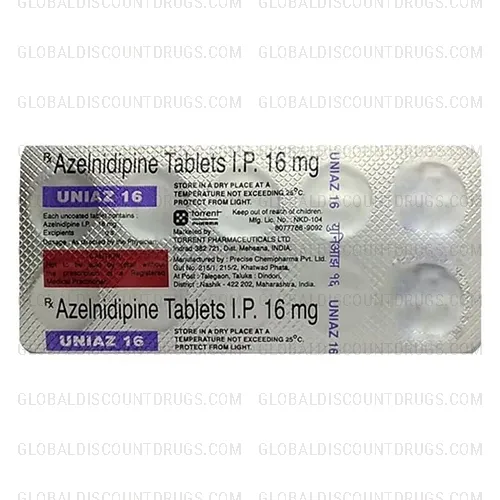
Azelnidipine 16mg
In StockAzelnidipine 16 mg Tablet is a prescription dihydropyridine calcium channel blocker used to lower high blood pressure by relaxing blood vessels. Continue treatment regularly and monitor blood pressure as advised.
| Active Ingredient: | Azelnidipine |
|---|---|
| Indication: | Hypertension |
| Strength: | 16mg |
| Dosage Form: | Tablets |
| Manufacturer: | Torrent Pharmaceuticals Ltd |

Azelnidipine 16mg: Quick Overview
Azelnidipine 16mg is a prescription calcium channel blocker used to treat high blood pressure (hypertension) in adults. It works by relaxing blood vessel walls, allowing the heart to pump blood with less resistance. This medication requires a valid prescription and should only be used under the guidance of a licensed physician.
What Is Azelnidipine 16mg?
| Detail | Information |
|---|---|
| Drug Class | Dihydropyridine Calcium Channel Blocker |
| Active Ingredient | Azelnidipine |
| Mechanism | Blocks L-type and T-type calcium channels in vascular smooth muscle |
| Available Form | Oral tablet |
| Dosing Frequency | Once daily |
| Regulatory Status | Prescription-only; approved by PMDA (Japan); not currently FDA-approved in the United States |
Regulatory Status and Medical Supervision
Azelnidipine is a prescription-only medication regulated as a Schedule H drug in many countries and approved by Japan’s Pharmaceuticals and Medical Devices Agency (PMDA). It is not currently approved by the U.S. Food and Drug Administration (FDA) for use in the United States. Patients in the U.S. should consult a physician before seeking or using this medication, as access without a valid prescription from a licensed provider carries significant safety and legal risks. Medical supervision is required because dose selection, monitoring, and drug interaction screening vary by individual health status.
Clinical Context
High blood pressure affects millions of adults worldwide and is a leading risk factor for heart attack, stroke, and kidney disease. In many patients, blood pressure does not produce noticeable symptoms, which makes consistent treatment particularly important. When lifestyle changes such as diet and exercise do not bring blood pressure to a safe range, physicians typically recommend antihypertensive medications.
Calcium channel blockers are among the most widely prescribed drug classes for hypertension. They are particularly useful in patients who cannot tolerate ACE inhibitors or beta-blockers, or in those who need combination therapy. Azelnidipine offers a longer duration of action and a gradual onset, which may reduce reflex tachycardia (a fast heart rate response) compared to some other agents in its class.
Azelnidipine 16mg is generally considered a maintenance therapy option, meaning it is taken long-term to keep blood pressure within a healthy range. A physician determines whether this drug fits a patient’s treatment plan based on overall cardiovascular risk, kidney function, and other medications in use.
How Azelnidipine 16mg Works
Azelnidipine belongs to the dihydropyridine subclass of calcium channel blockers. It works by blocking calcium ions from entering the smooth muscle cells that line blood vessel walls. When calcium entry is reduced, these muscle cells relax and the blood vessels widen. This process is called vasodilation. As blood vessels widen, the resistance the heart works against drops, and blood pressure falls.
What separates azelnidipine from some older calcium channel blockers is its ability to block both L-type and T-type calcium channels. T-channel blockade contributes to a slower, more sustained reduction in blood pressure without triggering a sharp increase in heart rate. This can be beneficial for patients who have experienced palpitations or reflex tachycardia with other calcium channel blockers.
Because azelnidipine has a long half-life, it maintains blood pressure control throughout a 24-hour period with once-daily dosing. This pharmacokinetic profile may support better adherence and more consistent blood pressure management.
Approved Uses and Indications
Hypertension (High Blood Pressure) Azelnidipine 16mg is used to treat essential hypertension in adult patients. It helps lower elevated systolic and diastolic blood pressure and reduces the risk of hypertension-related cardiovascular events when used as directed by a physician.
Azelnidipine is used as monotherapy in some patients and as part of combination antihypertensive therapy in others. Its use in pediatric populations, pregnancy, or conditions other than hypertension has not been established through adequate clinical evidence.
How to Use Azelnidipine 16mg: Dosage and Administration
Only a licensed physician can determine the correct dose of azelnidipine for each patient. The general adult dose is 8mg to 16mg taken once daily, typically in the morning with or after a meal.
Timing: Take azelnidipine at the same time each day to maintain steady blood levels. Taking it after a meal may improve absorption and reduce the likelihood of dizziness.
Missed Dose: If a dose is missed, take it as soon as remembered on the same day. Do not take two doses in one day to make up for a missed one.
Do Not Stop Suddenly: Do not stop taking azelnidipine without first speaking to a doctor. Stopping blood pressure medication abruptly can cause blood pressure to rise rapidly, increasing the risk of a cardiovascular event.
Dose Adjustments: Patients with liver impairment or those taking certain interacting drugs may require dose adjustments. A physician should review all current medications before prescribing azelnidipine.
Side Effects of Azelnidipine 16mg
Most patients tolerate azelnidipine well, and many side effects, if they occur, are mild and temporary. Awareness of potential adverse effects helps patients respond appropriately and communicate with their healthcare provider.
Common Side Effects The most frequently reported side effects include facial flushing, headache, dizziness, and peripheral edema (swelling in the ankles or feet). These effects are generally related to vasodilation and tend to be more noticeable during the first few weeks of treatment. Fatigue, nausea, and mild skin redness may also occur. Most of these effects do not require stopping the medication.
Serious Side Effects In less common cases, patients may experience a significant drop in blood pressure (hypotension), which can cause lightheadedness, especially after standing up quickly. Liver function abnormalities have been reported rarely and require monitoring if symptoms of liver problems arise. Irregular heartbeat has been observed infrequently and should be evaluated promptly.
Emergency Warning Signs: Seek Immediate Medical Attention
- Chest pain or pressure
- Sudden severe headache with vision changes
- Difficulty breathing or shortness of breath
- Swelling of the face, lips, or throat
- Loss of consciousness or severe fainting
- Signs of liver problems such as yellowing of the skin or eyes, dark urine, or severe abdominal pain
Warnings, Precautions and Drug Interactions
Contraindications Azelnidipine should not be used in patients with known hypersensitivity to azelnidipine or other dihydropyridine calcium channel blockers. It is contraindicated in patients with cardiogenic shock, advanced aortic stenosis, or unstable angina unless under close specialist supervision.
Drug Interactions Azelnidipine is metabolized primarily by the CYP3A4 liver enzyme. Medications that inhibit this enzyme, including azole antifungals such as itraconazole and ketoconazole, macrolide antibiotics such as clarithromycin, and grapefruit juice, can increase azelnidipine blood levels and raise the risk of side effects. Rifampicin and other CYP3A4 inducers can reduce its effectiveness. Concurrent use with other antihypertensive agents, diuretics, or nitrates may produce additive blood pressure lowering effects and should be monitored.
Pregnancy and Breastfeeding Azelnidipine has not been adequately studied in pregnant women. As a precaution, it should not be used during pregnancy unless a physician determines that the benefit outweighs the potential risk. It is not known whether azelnidipine passes into breast milk. Breastfeeding women should consult their doctor before using this medication.
Special Populations Elderly patients may be more sensitive to blood pressure lowering effects and are at higher risk of falls due to dizziness. Patients with hepatic impairment may have reduced drug clearance, requiring dose adjustment. No specific data are available for pediatric use.
Monitoring Blood pressure should be monitored regularly during treatment. Liver function tests may be appropriate in patients who develop symptoms suggestive of liver involvement. Patients should report new or worsening symptoms to their physician at every visit.
Who Should Not Use This Medication
- Patients with known allergy to azelnidipine or any dihydropyridine calcium channel blocker
- Patients with severe aortic stenosis
- Patients in cardiogenic shock
- Women who are pregnant or planning to become pregnant
- Patients with severe liver disease
- Children and adolescents under 18 years (insufficient safety data)
- Patients on medications that significantly interact with CYP3A4 metabolism without physician clearance
Storage Instructions
Store azelnidipine tablets at room temperature, between 59 degrees F and 77 degrees F (15 to 25 degrees C). Keep the medication in its original packaging, away from direct sunlight, heat, and moisture. Do not store in bathrooms or near kitchen sinks. Keep all medications out of the reach of children and pets. Do not use tablets past the expiration date printed on the packaging. Dispose of unused medication according to local drug disposal guidelines.
Frequently Asked Questions About Azelnidipine 16mg
What is Azelnidipine 16mg used for?
Azelnidipine 16mg is used to treat high blood pressure (hypertension) in adults. It relaxes blood vessels to reduce blood pressure and lower the risk of heart attack and stroke. A physician must evaluate whether this medication is appropriate based on a patient’s medical history and current health status.
Does Azelnidipine require a prescription?
Yes, azelnidipine requires a valid prescription in all countries where it is approved. A medical evaluation is necessary to confirm the correct diagnosis, rule out contraindications, and determine an appropriate dose. Self-medication with azelnidipine is not safe and is not recommended.
How long does Azelnidipine 16mg take to work?
Azelnidipine begins lowering blood pressure within a few hours of the first dose, but meaningful and sustained blood pressure control typically develops over one to two weeks of regular use. A physician will evaluate response through follow-up blood pressure measurements and may adjust the dose accordingly.
Is it safe to stop taking Azelnidipine suddenly?
No. Stopping azelnidipine suddenly without medical guidance can cause a rebound increase in blood pressure. Patients should not discontinue this medication on their own. Any decision to stop or change the dose should be made with a doctor, who may recommend tapering if appropriate.
What happens if I miss a dose?
If you miss a dose, take it as soon as you remember on the same day. If it is almost time for the next dose, skip the missed one and continue your regular schedule. Do not double up doses. Contact your doctor if you are frequently missing doses, as consistent blood pressure control is important.
What is the cost of Azelnidipine 16mg without insurance?
The cost without insurance depends on the seller, brand availability, and pack size. Prices may also vary based on your location, pharmacy type, and any available discount programs. Speaking with a licensed pharmacist or using a verified prescription savings program can help identify options.
How can I order Azelnidipine 16mg online?
A valid prescription from a licensed physician is required to order azelnidipine online. The process generally involves uploading your prescription or having your doctor send it directly to a licensed online pharmacy, placing your order, and receiving home delivery. Only use pharmacies that are verified and licensed in your region to ensure medication safety and authenticity.
Is Azelnidipine 16mg available over the counter?
Azelnidipine is not available over the counter in most countries. It is a prescription-only medication in Japan and other nations where it is approved. It is not FDA-approved for sale in the United States. Medical supervision is required for safe use due to potential cardiovascular and drug interaction risks.
References
- MedlinePlus, National Library of Medicine. “High Blood Pressure.” https://medlineplus.gov/highbloodpressure.html
- U.S. Food and Drug Administration. “High Blood Pressure: Understanding the Silent Killer.” https://www.fda.gov/consumers/consumer-updates/high-blood-pressure-understanding-silent-killer
- Tanaka M, Ishii K, et al. “Pharmacological Profile of Azelnidipine, a New Dihydropyridine Calcium Antagonist.” Journal of Cardiovascular Pharmacology, PubMed, National Library of Medicine. https://pubmed.ncbi.nlm.nih.gov/15292779/
Resources
- Calcium Channel Blockers and Heart Health: https://www.heart.org/en/health-topics/high-blood-pressure/changes-you-can-make-to-manage-high-blood-pressure/types-of-blood-pressure-medications
- Hypertension Treatment Guidelines (ACC/AHA): https://www.acc.org/latest-in-cardiology/ten-points-to-remember/2017/11/09/11/41/2017-guideline-for-high-blood-pressure-in-adults
Disclaimer:
This content is for informational purposes only and does not constitute medical advice, diagnosis, or treatment. Consult a qualified specialist or physician before using Azelnidipine 16mg. Read our full medical disclaimer for more details.
Prescription Required (Rx) to Buy?
This medication is not available over the counter. A valid prescription from a licensed healthcare
professional is required. Always consult your doctor before use.
| Quantity | 120, 30, 60, 90 |
|---|---|
| Indication | Hypertension |
| Active Ingredient | Azelnidipine |
| Pharmaceutical Form | Tablets |
| Manufacturer | Torrent Pharmaceuticals Ltd |
| Indian Brand | Uniaz 16mg |
| US Brand Name | Azelnidipine |
| Generic Name | Azelnidipine |
| Dosage | 16mg |
| Drug Type | Tablets |