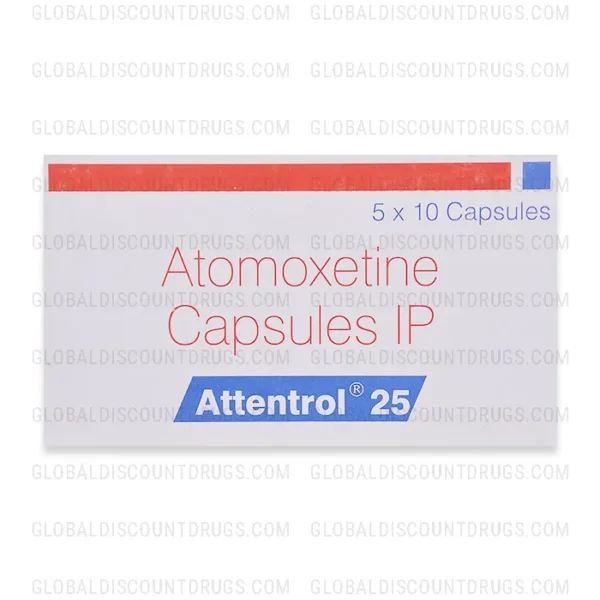
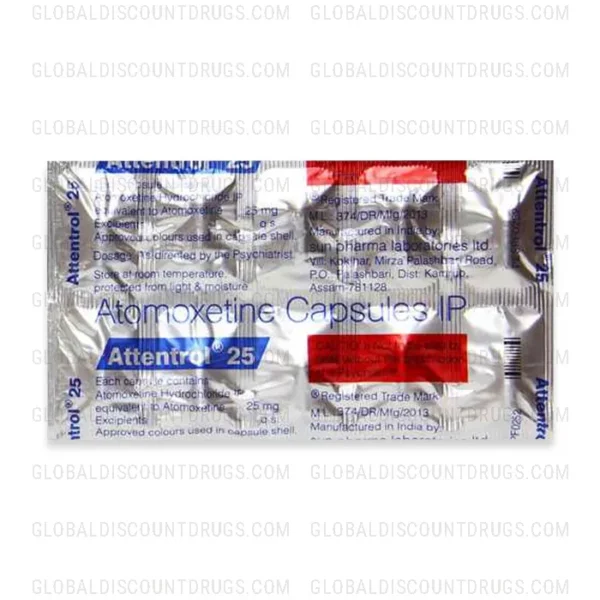
Atomoxetine 25mg
In StockAtomoxetine 25 mg Capsule contains a selective norepinephrine reuptake inhibitor (NRI) used to treat attention-deficit/hyperactivity disorder (ADHD). Therapeutic benefit may develop gradually with regular daily use.
| Active Ingredient: | Atomoxetine |
|---|---|
| Indication: | Attention Deficit Hyperactivity Disorder |
| Strength: | 25mg |
| Dosage Form: | Capsules |
| Manufacturer: | Sun Pharma |

Quick Overview: What Is Atomoxetine 25mg?
Atomoxetine 25mg is a prescription-only, non-stimulant medication approved to treat Attention Deficit Hyperactivity Disorder (ADHD) in children aged 6 and older, adolescents, and adults. It works by selectively blocking the reuptake of norepinephrine in the brain, helping to improve attention, focus, and impulse control. Unlike stimulant ADHD medications, atomoxetine is not a controlled substance. It must be used only under the supervision of a licensed healthcare provider.
Prescription Status and Regulatory Information
Atomoxetine 25mg is a Schedule H prescription drug in India and a prescription-only medication regulated by the FDA in the United States. It is not available over the counter in any country. Because ADHD diagnosis requires proper clinical evaluation and ongoing monitoring, medical supervision is required throughout treatment. The FDA approved atomoxetine under the brand name Strattera in 2002, making it the first non-stimulant ADHD treatment approved in the United States.
Understanding ADHD and Where Atomoxetine Fits
Attention Deficit Hyperactivity Disorder is a neurodevelopmental condition that affects the brain’s ability to regulate attention, behavior, and impulse control. It is one of the most commonly diagnosed conditions in children and continues into adulthood in a significant number of patients.
Managing ADHD typically involves a combination of behavioral therapy, lifestyle adjustments, and medication. Not every patient responds to stimulant medications, and some patients have conditions that make stimulants unsuitable. In these situations, a non-stimulant option becomes clinically important.
Atomoxetine fills that role. It is prescribed when stimulant therapy is not appropriate, has not worked well, or when a patient or caregiver prefers a non-controlled medication. It is considered a first-line non-stimulant option in most current ADHD treatment guidelines.
How Atomoxetine 25mg Works
Atomoxetine belongs to the drug class known as selective norepinephrine reuptake inhibitors (SNRIs). It is distinct from stimulant ADHD medications like methylphenidate or amphetamines and works through a different pathway in the brain.
By blocking the norepinephrine transporter (NET), atomoxetine increases the availability of norepinephrine in the synaptic space, particularly in the prefrontal cortex. This region of the brain is directly associated with attention, working memory, and impulse regulation. Higher norepinephrine activity in this area supports better cognitive control and reduces ADHD-related behaviors.
Because atomoxetine does not act on dopamine in the same way stimulants do, it carries no abuse potential and is not classified as a controlled substance by the DEA. This makes it a preferred option for patients with a history of substance use or those in households where medication diversion is a concern.
Drug Profile: Atomoxetine 25mg at a Glance
Drug Class: Selective Norepinephrine Reuptake Inhibitor (SNRI)
Active Ingredient: Atomoxetine Hydrochloride
Mechanism: Blocks norepinephrine reuptake in the prefrontal cortex, improving attention and behavioral control
Dosage Form: Oral capsule
Dosing Frequency: Once daily or twice daily, as prescribed
Regulatory Status (US): FDA-approved, prescription-only, not a DEA-controlled substance
Brand Reference: Strattera (original brand)
Approved Uses and Indications
ADHD in Children (ages 6 and above) Atomoxetine is approved to treat ADHD symptoms in children aged 6 and older. It is used to improve inattention, reduce hyperactivity, and help with impulse control in pediatric patients who meet the clinical criteria for ADHD.
ADHD in Adolescents Teenagers with ADHD may benefit from atomoxetine, particularly in cases where stimulant medications have not provided adequate symptom control or have caused unwanted side effects.
ADHD in Adults Atomoxetine is one of the few non-stimulant options formally approved for adult ADHD. Adults who need long-term ADHD management without the risks associated with stimulant use are often prescribed this medication.
All uses should be guided by a physician following proper ADHD diagnosis and evaluation.
Dosage and Administration
Atomoxetine 25mg is typically used as an intermediate dose in treatment. The prescribing doctor determines the correct dose based on body weight, age, and treatment response. General guidance is provided below for informational purposes only.
Starting Dose (Children and Adolescents under 70 kg): Usually 0.5 mg/kg per day, often starting lower before titrating up
Maintenance Dose: Up to approximately 1.2 mg/kg per day, not to exceed 1.4 mg/kg or 100 mg daily
Adult Dosing: Generally initiated at 40 mg per day, with possible increases after a minimum of 3 days
Timing: Atomoxetine can be taken in the morning as a single daily dose or split into morning and late afternoon doses. Taking it with food may reduce stomach upset.
Missed Dose: If a dose is missed, take it as soon as you remember. If it is close to the time of your next dose, skip the missed dose. Do not double up doses.
Do Not Stop Suddenly: Stopping atomoxetine without consulting your doctor is not recommended. Your provider may gradually reduce the dose if discontinuation is needed.
Side Effects
Most people who take atomoxetine tolerate it reasonably well, especially as the body adjusts over the first few weeks. Side effects are more common at the start of treatment and often improve with time.
Common side effects reported with atomoxetine include decreased appetite, mild nausea, stomach pain, dry mouth, dizziness, fatigue, and mood changes. In children, slower than expected growth in height or weight may also be observed and should be discussed with the treating physician. Sleep disturbances have also been reported in some patients.
Serious side effects are less common but require prompt medical attention. These include increased blood pressure or heart rate, liver problems (rare but documented), urinary retention, and signs of psychosis or mania in patients with no prior psychiatric history. Atomoxetine carries an FDA black box warning regarding an increased risk of suicidal thinking in children and adolescents during the early stages of treatment.
Seek Emergency Medical Attention If You Experience:
- Suicidal thoughts or talk of self-harm, especially in patients under 18
- Jaundice, dark urine, or unexplained abdominal pain (possible liver injury)
- Chest pain, irregular heartbeat, or shortness of breath
- Sudden fainting or severe dizziness
- Hallucinations, aggression, or unusual mood changes
- Difficulty urinating or inability to pass urine
- Signs of allergic reaction: hives, swelling of the face or throat, difficulty breathing
Warnings, Precautions, and Drug Interactions
Atomoxetine requires careful consideration before use in patients with certain health conditions. Patients with a history of heart disease, high blood pressure, or structural cardiac abnormalities should have a thorough cardiovascular evaluation before starting treatment, as the medication can raise blood pressure and heart rate.
The FDA has issued a black box warning for atomoxetine regarding suicidal ideation in pediatric and adolescent patients. Caregivers and family members should monitor closely for behavioral changes, worsening depression, anxiety, or any indication of self-harm during the first few months of treatment or after any dose change.
Patients with a known history of bipolar disorder, psychosis, or mania should use atomoxetine with significant caution. The medication may trigger or worsen manic episodes in these individuals.
Liver injury, though rare, has been reported. Patients with pre-existing liver disease should discuss this risk with their physician. Treatment should be stopped if jaundice or liver-related symptoms develop.
Regarding drug interactions, atomoxetine should not be used within 14 days of a monoamine oxidase inhibitor (MAOI), as this combination can cause a serious and potentially life-threatening reaction. Medications that inhibit the CYP2D6 enzyme, such as fluoxetine, paroxetine, and quinidine, can significantly raise atomoxetine blood levels and increase side effect risk. Albuterol and other sympathomimetic agents may increase cardiovascular effects when combined with atomoxetine.
Atomoxetine has not been established as safe during pregnancy. It is categorized as Pregnancy Category C, meaning animal studies have shown potential harm and adequate human studies are lacking. Women who are pregnant or breastfeeding should consult their doctor before use.
In elderly patients, dosage adjustments may be needed. Patients with moderate to severe liver impairment typically require dose reductions as advised by their physician.
Who Should Not Take Atomoxetine 25mg
- People with a known allergy to atomoxetine or any component of the capsule
- Patients currently taking or who have taken an MAOI within the past 14 days
- Individuals with narrow-angle glaucoma
- Patients with severe cardiovascular disease or uncontrolled hypertension
- Those with a current diagnosis of pheochromocytoma (a type of adrenal gland tumor)
- Patients with a history of serious liver injury related to atomoxetine use
- Children under the age of 6
Storage Instructions
Store atomoxetine capsules at room temperature, ideally between 59 degrees F and 77 degrees F (15 to 25 degrees C). Keep the medication away from direct sunlight, moisture, and heat. Do not store in a bathroom medicine cabinet. Keep all medications out of reach of children and pets. Dispose of unused or expired medication safely through an authorized drug take-back program.
Frequently Asked Questions
Does Atomoxetine 25mg require a prescription?
Yes, atomoxetine requires a valid prescription from a licensed healthcare provider in the United States and most other countries. A proper clinical evaluation is necessary to diagnose ADHD and determine whether atomoxetine is appropriate. Medical supervision is also required during ongoing treatment to monitor effectiveness and side effects.
How long does it take for atomoxetine to start working?
Atomoxetine does not produce immediate effects like stimulant medications. Most patients begin to notice gradual improvement in ADHD symptoms within 2 to 4 weeks of starting treatment. Full therapeutic benefit may take 6 to 8 weeks. It is important not to stop the medication early if results seem slow.
Is it safe to stop taking atomoxetine suddenly?
Stopping atomoxetine abruptly is generally not recommended without first consulting your doctor. While atomoxetine does not cause physical dependence like some other medications, stopping without guidance may lead to a return of ADHD symptoms. Your doctor can help create a safe discontinuation plan if needed.
Can atomoxetine be taken with other medications?
Atomoxetine interacts with several medications, including MAOIs, CYP2D6 inhibitors like fluoxetine and paroxetine, and certain heart medications. You should provide your doctor with a full list of all medications, supplements, and herbal products before starting atomoxetine. Never start or stop any medication without discussing it with your healthcare provider first.
What should I do if I miss a dose of atomoxetine?
If you miss a dose, take it as soon as you remember. If your next scheduled dose is close, skip the missed one and continue with your regular schedule. Do not take two doses to make up for a missed one. Contact your doctor if you are frequently missing doses, as this may affect treatment results.
What is the cost of atomoxetine without insurance?
The cost of atomoxetine without insurance depends on the seller, brand availability, and pack size, and may also vary by location and applicable discounts. Generic atomoxetine is generally more affordable than the brand-name version, Strattera. Pharmacy discount programs and manufacturer coupons may help reduce out-of-pocket costs significantly.
How can I order atomoxetine online?
Ordering atomoxetine online requires a valid prescription from a licensed physician. The process typically involves uploading your prescription to a verified online pharmacy or having your doctor send it directly. Once verified, the medication is dispensed and delivered to your address. Use only licensed, verified pharmacies to ensure you receive a legitimate, safe product.
Is atomoxetine available over the counter?
No, atomoxetine is not available over the counter in the United States or in most countries worldwide. It is a prescription-only medication that requires a physician’s evaluation and ongoing oversight. Regulations may vary slightly by region, but medical supervision is required regardless of where it is obtained.
Resources
- FDA Strattera Prescribing Information – Full prescribing information, black box warning details, and pharmacology data: https://www.accessdata.fda.gov/drugsatfda_docs/label/2011/021411s029lbl.pdf
- MedlinePlus: Atomoxetine – Patient-friendly drug information from the National Library of Medicine: https://medlineplus.gov/druginfo/meds/a603013.html
- DailyMed: Atomoxetine Capsules – NIH-maintained label and drug information database: https://dailymed.nlm.nih.gov/dailymed/search.cfm?labeltype=all&query=atomoxetine
Medical Disclaimer
This content is for informational purposes only and does not constitute medical advice, diagnosis, or treatment. Consult a qualified specialist or physician before using atomoxetine 25mg. For full safety information, refer to the Medical Disclaimer.
Prescription Required (Rx) to Buy?
This medication is not available over the counter. A valid prescription from a licensed healthcare
professional is required. Always consult your doctor before use.
| Quantity | 100, 200, 300, 400 |
|---|---|
| Indication | Attention Deficit Hyperactivity Disorder |
| Active Ingredient | Atomoxetine |
| Pharmaceutical Form | Capsules |
| Manufacturer | Sun Pharma |
| Indian Brand | Attentrol 25mg |
| US Brand Name | Atomoxetine, Strattera |
| Generic Name | Atomoxetine |
| Dosage | 25mg |
| Drug Type | Capsules |