
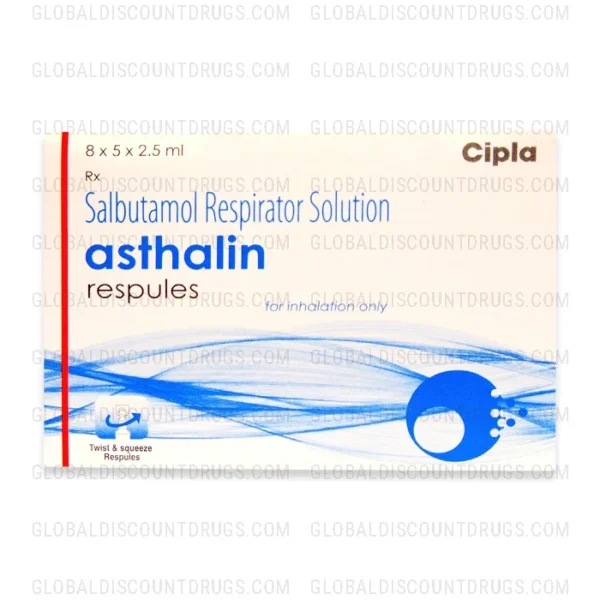
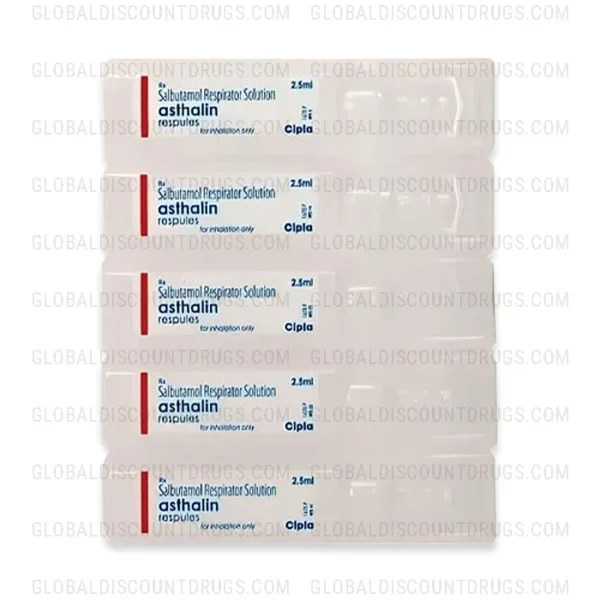
Albuterol/Salbutamol Respirator Solution 2.5mg-2.5ml
In StockAlbuterol (Salbutamol) 2.5 mg/2.5 mL Inhalation Solution provides nebulized short-acting bronchodilator therapy for rapid relief of bronchospasm. Seek medical advice if the need for rescue treatment increases.
| Active Ingredient: | Albuterol/Salbutamol |
|---|---|
| Indication: | Asthma |
| Strength: | 2.5mg-2.5ml |
| Dosage Form: | Inhalation Solution (for Nebulizer) |
| Manufacturer: | Cipla Limited |

Albuterol/Salbutamol Respirator Solution 2.5mg/2.5ml – Quick Overview
Albuterol (Salbutamol) Respirator Solution 2.5mg/2.5ml is a prescription bronchodilator used to treat and prevent bronchospasm in conditions like asthma and COPD. It works by relaxing the muscles around the airways, allowing easier breathing. This medication should only be used as directed by a licensed healthcare provider.
Medical Supervision & Regulatory Status
Albuterol Respirator Solution 2.5mg/2.5ml is a prescription-only medication in the United States, regulated under FDA guidelines. It is classified as a Schedule Rx drug, meaning it cannot be legally dispensed without a valid prescription from a licensed provider. Medical supervision is required because improper use can lead to serious cardiovascular and respiratory complications, particularly in patients with underlying heart conditions.
Clinical Context
Albuterol is primarily prescribed for the management of bronchospasm — an abnormal contraction of the smooth muscle in the bronchial walls that causes breathing difficulty. Conditions such as asthma, chronic obstructive pulmonary disease (COPD), exercise-induced bronchoconstriction, and bronchitis frequently cause this type of airway narrowing.
Without prompt bronchodilation, acute bronchospasm can escalate into a respiratory emergency. Effective treatment helps reduce wheezing, chest tightness, and shortness of breath, allowing patients to breathe more comfortably during both day-to-day activities and acute episodes.
In clinical practice, albuterol is considered a first-line, short-acting rescue bronchodilator. It is typically used for immediate symptom relief, while long-term controller medications are used alongside it for sustained management in moderate-to-severe asthma or COPD.
How Albuterol/Salbutamol Respirator Solution Works
Albuterol belongs to the class of drugs known as short-acting beta-2 adrenergic agonists (SABAs). It selectively binds to beta-2 receptors located in the smooth muscle of the bronchial airways, triggering a cascade of biochemical events that result in muscle relaxation and airway widening.
In simple terms, albuterol signals the airway muscles to loosen and open up, reducing resistance to airflow. This mechanism allows more oxygen to reach the lungs efficiently, relieving the sensation of tightness and breathlessness. The effect typically begins within 5 minutes of nebulization and lasts for approximately 4 to 6 hours.
For patients, this means fast-acting relief during wheezing episodes or sudden shortness of breath. It is especially valuable in emergency situations when rapid airway opening is needed to prevent respiratory distress from worsening.
What is Albuterol/Salbutamol Respirator Solution 2.5mg/2.5ml?
Drug Class: Short-Acting Beta-2 Adrenergic Agonist (SABA)
Active Ingredient: Albuterol Sulfate (equivalent to 2.5mg albuterol base per 2.5ml)
Mechanism: Stimulates beta-2 receptors in bronchial smooth muscle, causing relaxation and dilation of the airways to improve airflow.
Form: Inhalation Solution for use with a standard jet nebulizer
Dosing Frequency: Typically every 4 to 6 hours as needed, or as prescribed by a physician
Regulatory Status: FDA-approved prescription medication (Rx only)
Uses / Indications
Acute Bronchospasm Relief Albuterol is used to treat sudden episodes of bronchospasm in patients with asthma or reactive airway disease. It provides rapid opening of narrowed airways to ease breathing.
Chronic Obstructive Pulmonary Disease (COPD) Prescribed as a rescue medication in COPD patients experiencing acute breathing difficulty, albuterol helps reduce airway constriction and improves short-term lung function.
Exercise-Induced Bronchospasm When used prior to physical activity as directed by a physician, albuterol may help prevent exercise-triggered airway narrowing in susceptible individuals.
Bronchitis and Other Obstructive Airway Conditions In certain cases of reversible obstructive airway disease involving significant bronchospasm, albuterol inhalation solution may be used as part of a broader treatment plan determined by a healthcare provider.
How to Use / Dosage
Dosage and administration of albuterol respirator solution must always be determined by your prescribing physician based on your specific condition, age, and response to therapy. General guidance is provided here for informational purposes only.
Typical Adult Dose: One unit-dose vial (2.5mg/2.5ml) administered via nebulizer, inhaled over approximately 5 to 15 minutes. Frequency is usually every 4 to 6 hours as needed. Your doctor may adjust this based on your clinical response.
Timing: Use at the first sign of breathing difficulty. If used preventively before exercise, follow your doctor’s specific instructions regarding timing.
Missed Dose: If you miss a scheduled dose, take it as soon as you remember. If it is almost time for your next dose, skip the missed dose and continue your regular schedule. Do not double-dose to compensate.
Do Not Stop Suddenly: Do not discontinue or reduce your nebulizer treatments without consulting your physician. Stopping without guidance may cause worsening of your breathing condition, particularly in asthma or COPD management.
Side Effects
Most patients tolerate albuterol inhalation solution well when used as prescribed. Side effects are generally mild and tend to improve as your body adjusts to the medication. Reporting any persistent or bothersome symptoms to your doctor is always recommended.
Common Side Effects: The most frequently reported effects include tremor (shakiness), especially in the hands, rapid or pounding heartbeat (tachycardia), headache, throat irritation, dizziness, and nervousness. These effects are typically dose-related and often lessen with continued use or dosage adjustment.
Serious Side Effects: Less commonly, albuterol may cause paradoxical bronchospasm — an unexpected worsening of breathing immediately after use — which requires immediate discontinuation and medical evaluation. Significant increases in heart rate, chest pain, and irregular heart rhythms have been reported, particularly with overuse or in patients with cardiovascular conditions.
Emergency Warning Signs — Seek Immediate Medical Attention If You Experience:
- Sudden worsening of wheezing or difficulty breathing after using this medication
- Chest pain or pressure
- Irregular or very rapid heartbeat
- Severe dizziness or fainting
- Signs of low potassium: muscle cramps, weakness, or irregular heartbeat
- Allergic reaction: swelling of the face, lips, tongue, or throat; hives; difficulty breathing
Warnings & Precautions
Cardiovascular Caution: Albuterol should be used with caution in patients with a history of heart disease, high blood pressure, or cardiac arrhythmias. Beta-2 stimulation can increase heart rate and may exacerbate pre-existing cardiovascular conditions. Your doctor will weigh this risk before prescribing.
Drug Interactions: Concurrent use of albuterol with monoamine oxidase inhibitors (MAOIs) or tricyclic antidepressants may intensify cardiovascular side effects and is generally avoided. Beta-blockers, including both selective and non-selective types such as propranolol or metoprolol, can directly counteract albuterol’s bronchodilating effect and are typically contraindicated in asthma. Digoxin levels may be reduced in patients also taking albuterol; monitoring is recommended. Other sympathomimetic medications taken alongside albuterol may compound cardiovascular stimulation.
Pregnancy and Breastfeeding: Albuterol is classified as FDA Pregnancy Category C, meaning animal studies have shown adverse effects but adequate human studies are lacking. Use during pregnancy should only occur when the potential benefit clearly outweighs the risk, as determined by a physician. Albuterol may pass into breast milk; discuss with your doctor before breastfeeding while using this medication.
Hypokalemia (Low Potassium): High doses of albuterol, particularly in acute settings, can cause a temporary decrease in blood potassium levels. This is especially relevant in patients on diuretics or those with pre-existing electrolyte imbalances, who require close monitoring.
Diabetes: Albuterol may cause transient increases in blood glucose. Patients with diabetes should monitor blood sugar levels more closely during treatment initiation or dose changes.
Pediatric and Elderly Use: Use in children under 2 years of age should only occur under strict medical supervision. Elderly patients may be more susceptible to cardiovascular side effects and should begin at the lower end of the dosing range as prescribed.
Who Should Not Use This Medication
The following individuals should not use albuterol respirator solution without explicit physician approval and careful evaluation:
- Patients with a known hypersensitivity or allergy to albuterol, salbutamol, or any component of the formulation
- Individuals currently taking non-selective beta-blocker medications for heart conditions or other uses
- Patients with a history of severe or uncontrolled cardiac arrhythmias
- Those currently using MAO inhibitors or who have stopped them within the past 14 days
- Individuals with hypertrophic obstructive cardiomyopathy (HOCM)
- Patients with tachyarrhythmias (abnormally fast heart rhythms)
Storage Instructions
Temperature: Store albuterol respirator solution unit-dose vials at controlled room temperature, between 59°F and 77°F (15°C to 25°C). Protect from excessive heat.
Light and Moisture: Keep vials in the original foil pouch until ready for use. Protect from direct light and moisture, as exposure can degrade the active ingredient.
Child Safety: Keep all unit-dose vials out of the reach of children. The solution is for inhalation use only and is not safe for ingestion.
Discard Appropriately: Do not use vials that appear discolored or cloudy. Discard any unused portion of an opened vial immediately after a single nebulizer treatment.
Frequently Asked Questions
What is Albuterol Respirator Solution 2.5mg/2.5ml used for?
Albuterol respirator solution is used to treat and prevent bronchospasm caused by asthma, COPD, and other obstructive airway conditions. It works by relaxing the muscles of the airways to allow easier airflow. It is a fast-acting rescue medication, not a long-term controller, and should be used as directed by a physician for both acute episodes and scheduled maintenance when prescribed.
Does Albuterol Respirator Solution require a prescription?
Yes, albuterol respirator solution is a prescription-only (Rx) medication in the United States. A valid prescription from a licensed healthcare provider is required to purchase it. Prescription-based access ensures proper medical evaluation, correct dosing, monitoring for contraindications, and oversight of cardiovascular and respiratory risks associated with beta-2 agonist therapy.
How long does Albuterol take to work?
Albuterol typically begins to open the airways within 5 minutes of completing nebulizer treatment. The peak bronchodilating effect is usually reached within 30 to 60 minutes. The duration of action generally lasts 4 to 6 hours. If you do not notice significant relief within 20 minutes of a treatment, contact your physician or seek emergency care promptly.
Is it safe to stop Albuterol suddenly?
Albuterol is a rescue medication and does not require tapering in the way that steroids do. However, you should not stop using it without discussing your overall asthma or COPD management plan with your doctor. Discontinuing without a plan may leave you without adequate acute bronchospasm control, increasing your risk of a serious respiratory event or emergency visit.
Can Albuterol interact with other medications?
Yes, albuterol has clinically significant interactions with several drug classes. Beta-blockers can reduce or negate its effect. MAO inhibitors and tricyclic antidepressants may amplify cardiovascular side effects. Diuretics and corticosteroids used together with albuterol may worsen potassium loss. Always provide your doctor and pharmacist with a complete list of all medications, supplements, and herbal products you currently use.
What is the cost of Albuterol Respirator Solution without insurance?
The cost of albuterol respirator solution without insurance depends on the seller, brand availability, and pack size, and may also vary by location and available discounts. Generic albuterol inhalation solution is generally considered an affordable option compared to branded respiratory medications. Pharmacy discount programs and manufacturer coupons may further reduce out-of-pocket costs. Ask your pharmacist about available savings options.
How can I order Albuterol Respirator Solution online?
Ordering albuterol respirator solution online requires a valid prescription from a licensed U.S. healthcare provider. You can upload your prescription through a verified online pharmacy’s portal, or your doctor may send it electronically. Home delivery is available through licensed mail-order pharmacies. Always use an NABP-accredited or state-licensed online pharmacy to ensure safety, authenticity, and regulatory compliance.
Is Albuterol Respirator Solution available over the counter?
No, albuterol respirator solution is not available over the counter in most countries, including the United States. It is classified as a prescription-only medication requiring medical evaluation and supervision. Regulations may vary by country, but in the US, purchasing or dispensing albuterol inhalation solution without a valid prescription is not legally permitted. Medical oversight is required for safe and appropriate use.
References
- DailyMed – NIH: Albuterol Sulfate Inhalation Solution Prescribing Information https://dailymed.nlm.nih.gov/dailymed/search.cfm?labeltype=all&query=albuterol+inhalation+solution
- MedlinePlus – National Library of Medicine: Albuterol Inhalation https://medlineplus.gov/druginfo/meds/a695002.html
- FDA Drug Label Database: Albuterol Sulfate Inhalation Solution 0.083% https://www.accessdata.fda.gov/scripts/cder/daf/index.cfm?event=overview.process&ApplNo=202409
Resources
- Asthma Management Guidelines – NHLBI – https://www.nhlbi.nih.gov/health-topics/asthma
- COPD Treatment Overview – MedlinePlus – https://medlineplus.gov/copd.html
- Nebulizer Use & Care – American Lung Association – https://www.lung.org/lung-health-diseases/lung-procedures-and-tests/nebulizers
- Beta-Agonist Safety – FDA Drug Safety Communication – https://www.fda.gov/drugs/drug-safety-and-availability
Medical Disclaimer
This content is for informational purposes only and does not constitute medical advice, diagnosis, or treatment. Consult a qualified specialist or physician before using Albuterol/Salbutamol Respirator Solution 2.5mg/2.5ml. Read our medical disclaimer for more details
Prescription Required (Rx) to Buy?
This medication is not available over the counter. A valid prescription from a licensed healthcare
professional is required. Always consult your doctor before use.
| Quantity | 120, 160, 40, 80 |
|---|---|
| Indication | Asthma |
| Active Ingredient | Albuterol/Salbutamol |
| Pharmaceutical Form | Inhalation Solution (for Nebulizer) |
| Manufacturer | Cipla Limited |
| Indian Brand | Asthallin Repsules |
| US Brand Name | Albuterol/Salbutamol, Proventil, Ventolin |
| Generic Name | Albuterol/Salbutamol |
| Dosage | 2.5mg-2.5ml |
| Drug Type | Respules |