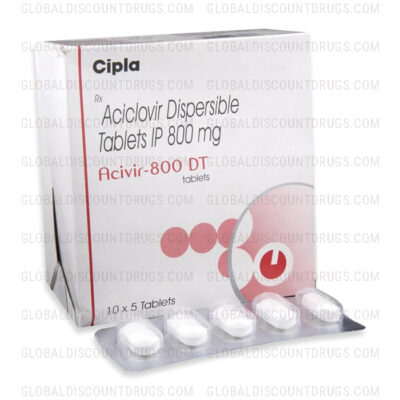

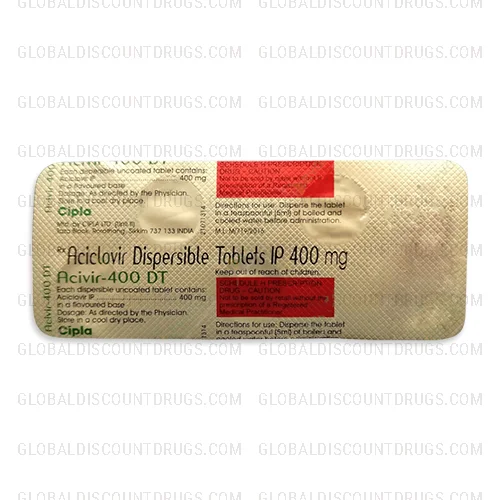
Acyclovir 400mg DT
In StockAcyclovir 400mg DT is a prescription antiviral dispersible tablet used for treatment and suppression of recurrent genital herpes and other herpesvirus infections. Maintain adequate hydration during treatment.
| Active Ingredient: | Acyclovir |
|---|---|
| Indication: | Herpes Simplex Infection |
| Strength: | 400mg |
| Dosage Form: | Tablets |
| Manufacturer: | Cipla Limited |

Acyclovir 400mg DT – Quick Overview
Acyclovir 400mg Dispersible Tablet is a prescription antiviral medication used to treat infections caused by herpes simplex virus (HSV), herpes zoster (shingles), and varicella (chickenpox). It works by blocking the virus from replicating in the body. This medication should only be used under the guidance of a licensed healthcare provider.
Medical Supervision & Regulatory Status
Acyclovir 400mg DT is a prescription-only medication in the United States, regulated under FDA guidelines. It is not available over the counter without a valid prescription from a licensed physician. Medical supervision is required because dosing must be individualized based on the type of infection, kidney function, immune status, and patient age. Self-medicating with antiviral agents can lead to inadequate treatment, resistance, or serious side effects.
Clinical Context
Herpes virus infections are among the most common viral conditions managed in outpatient and inpatient care across the United States. HSV-1 and HSV-2 affect tens of millions of Americans, causing recurrent oral and genital lesions that can significantly impact quality of life. Herpes zoster, caused by reactivation of the varicella-zoster virus, can lead to severe pain and complications such as postherpetic neuralgia if not treated promptly.
Antiviral therapy is essential in managing these infections, particularly in immunocompromised patients, neonates, and those experiencing frequent recurrences. Early initiation of antiviral treatment has been shown to reduce outbreak severity, duration, and the risk of viral transmission.
Acyclovir remains one of the most well-established and widely prescribed antiviral agents in the United States. The 400mg dispersible tablet formulation offers a patient-friendly option, particularly for individuals who have difficulty swallowing conventional tablets, as it can be dispersed in water before ingestion.
How Acyclovir 400mg DT Works
Acyclovir belongs to the class of nucleoside analogue antivirals. After entering virus-infected cells, it is converted into its active form — acyclovir triphosphate, through a series of phosphorylation steps initiated by a viral enzyme called thymidine kinase. This selectivity means acyclovir primarily acts within infected cells rather than healthy ones, which contributes to its favorable safety profile.
Once activated, acyclovir triphosphate inhibits viral DNA polymerase — the enzyme the herpes virus needs to copy its genetic material and replicate. By blocking this process, acyclovir halts the spread of the virus within the body. It does not eliminate the virus from nerve cells where it remains dormant but effectively controls active outbreaks.
For patients, this means acyclovir may help shorten the duration of painful sores, reduce the intensity of symptoms, and, when used as long-term suppressive therapy, decrease the frequency of recurrent episodes. It works best when started as early as possible after symptoms appear.
What is Acyclovir 400mg DT?
| Feature | Details |
|---|---|
| Drug Class | Nucleoside Analogue Antiviral |
| Active Ingredient | Acyclovir (Aciclovir) 400mg |
| Mechanism | Inhibits herpes viral DNA polymerase; blocks viral replication in infected cells |
| Dosage Form | Dispersible Tablet (DT) — can be dissolved in water |
| Dosing Frequency | Typically 2–5 times daily depending on indication (as prescribed) |
| Regulatory Status | FDA-approved prescription medication (United States) |
Uses / Indications
Acyclovir 400mg DT is approved in the United States for the following clinical indications:
Genital Herpes (HSV-2): Used for initial episodes, recurrent episodes, and long-term suppressive therapy in adults. It may help reduce the severity and duration of outbreaks and lower the risk of transmission when used as suppressive therapy.
Oral Herpes / Cold Sores (HSV-1): Used to manage recurrent cold sores and mucocutaneous herpes simplex infections, particularly in immunocompromised patients.
Herpes Zoster (Shingles): Used to treat acute shingles, helping to reduce the duration of the rash, pain, and the risk of postherpetic neuralgia when started within 72 hours of rash onset.
Varicella (Chickenpox): Used in immunocompromised patients and high-risk populations where treatment is clinically warranted, as determined by a physician.
Herpes Simplex Encephalitis and Neonatal Herpes: Typically managed with intravenous acyclovir in hospital settings under specialist care.
How to Use / Dosage
Your doctor will determine the appropriate dose of acyclovir based on your specific condition, kidney function, body weight (especially in children), and overall health. Do not adjust your dose without consulting your physician.
General guidance:
- The dispersible tablet may be dissolved in a small amount of water (typically a teaspoon or as directed) and consumed immediately after dispersing
- Take acyclovir at evenly spaced intervals throughout the day to maintain consistent drug levels
- Drink plenty of fluids while on acyclovir to help protect your kidneys
- Take it with or without food, though food may help reduce stomach upset
Missed Dose: If you miss a dose, take it as soon as you remember. However, if it is close to the time of your next scheduled dose, skip the missed dose and continue with your regular schedule. Do not double up doses to compensate.
Do Not Stop Suddenly: Complete the full course of treatment as prescribed, even if symptoms improve early. Stopping treatment prematurely may allow the virus to continue replicating and may reduce the effectiveness of the medication.
Side Effects
Most patients who take acyclovir 400mg at recommended doses tolerate it well. Side effects, when they occur, are generally mild and manageable. Let your doctor know if any side effects persist or become bothersome.
Common Side Effects: Nausea, vomiting, diarrhea, and headache are among the most frequently reported effects. Some patients may experience mild stomach discomfort or dizziness. These effects are usually temporary and tend to resolve on their own as the body adjusts to the medication.
Serious Side Effects: In rare cases, particularly at high doses or in patients with impaired kidney function, more serious adverse effects may occur. These include kidney dysfunction (nephrotoxicity), central nervous system effects such as confusion, agitation, tremors, or hallucinations. Patients with pre-existing kidney disease require careful monitoring and possible dose adjustment.
Seek Emergency Medical Attention if You Notice:
- Sudden confusion, disorientation, or unusual behavior
- Severe drowsiness or difficulty staying awake
- Tremors, seizures, or loss of coordination
- Signs of kidney problems: significantly reduced urination, swelling in the legs or feet, unusual fatigue
- Severe allergic reaction: rash, hives, swelling of the face, lips, or throat, difficulty breathing
- Hallucinations or psychosis-like symptoms
- Unusual bruising or bleeding
Warnings & Precautions
Renal Impairment: Acyclovir is primarily eliminated through the kidneys. Patients with reduced kidney function are at an increased risk of drug accumulation, which can lead to neurological toxicity and worsened kidney damage. Dose adjustments are mandatory in patients with chronic kidney disease. Adequate hydration during treatment is strongly recommended to reduce the risk of crystalluria and kidney injury.
Drug Interactions: Acyclovir may interact with several medications. Concurrent use with probenecid (a gout medication) may increase acyclovir plasma levels by reducing its renal excretion. Use with nephrotoxic drugs such as aminoglycoside antibiotics, cyclosporine, or NSAIDs may amplify the risk of kidney damage. Mycophenolate mofetil used in transplant patients may interact with acyclovir, requiring monitoring. Always inform your healthcare provider about all medications, supplements, and herbal products you are taking.
Pregnancy and Breastfeeding: Acyclovir is categorized under FDA pregnancy considerations. It has been used in pregnant patients to manage serious herpes infections, but the decision to use it must be made by a healthcare provider who weighs the benefits against potential risks. Acyclovir is known to pass into breast milk; breastfeeding mothers should consult their physician before use.
Elderly Patients: Older adults are more likely to have age-related kidney function decline, which may require dose adjustment. Neurological side effects may also be more pronounced in this population.
Immunocompromised Patients: Patients with HIV/AIDS, those receiving chemotherapy, or transplant recipients on immunosuppressive therapy may require higher doses or longer treatment courses and should be monitored closely by a specialist.
Resistance: Acyclovir-resistant herpes strains have been documented, particularly in immunocompromised populations. If your symptoms do not improve with treatment, contact your doctor for re-evaluation.
Who Should Not Use This Medication
- Individuals with a known hypersensitivity or allergy to acyclovir, valacyclovir, or any component of the formulation
- Patients who have not been evaluated for kidney function prior to initiation in high-risk settings
- Individuals self-medicating without a valid prescription or physician consultation
- Patients with severely impaired kidney function who have not received a dose adjustment recommendation from their physician
- Children and neonates, unless specifically prescribed and dosed by a pediatric specialist
Storage Instructions
- Store acyclovir 400mg DT at room temperature between 68°F and 77°F (20°C–25°C)
- Protect from excessive heat, moisture, and direct light — avoid storing in bathrooms or near sinks
- Keep tablets in their original packaging until use to maintain integrity of the dispersible formulation
- Keep out of reach of children and pets at all times
- Do not use tablets beyond the printed expiration date
- Dispose of unused or expired medication through an FDA-approved drug take-back program — do not flush unless package instructions specifically direct you to
Frequently Asked Questions
Does Acyclovir 400mg DT require a prescription in the United States?
Yes, acyclovir 400mg requires a valid prescription from a licensed US healthcare provider. A medical evaluation is necessary to confirm the diagnosis, assess kidney function, identify potential drug interactions, and determine the appropriate dose and duration of therapy for your specific condition.
How long does Acyclovir take to start working?
Acyclovir typically begins reducing symptoms within 2 to 3 days of starting treatment. It works most effectively when initiated at the first sign of an outbreak. For suppressive therapy, consistent daily use over several weeks is generally needed before a noticeable reduction in outbreak frequency is observed.
Is it safe to stop taking Acyclovir once symptoms improve?
No, you should not stop acyclovir before completing the full prescribed course. Stopping early may allow the virus to resume replication and can lead to recurrence. Always complete the treatment duration your doctor has prescribed, even if sores appear fully healed before the course ends.
Can Acyclovir interact with other medications I am taking?
Yes, acyclovir can interact with certain drugs, including probenecid, nephrotoxic medications, and immunosuppressants. These interactions may increase the risk of side effects or reduce treatment effectiveness. Always provide your doctor and pharmacist with a complete list of medications, supplements, and vitamins you are currently taking.
What should I do if I miss a dose of Acyclovir?
Take the missed dose as soon as you remember. If your next scheduled dose is approaching, skip the missed one and resume your regular dosing schedule. Never take two doses at once to make up for a missed dose, as this increases the risk of side effects without improving antiviral efficacy.
What is the cost of Acyclovir 400mg without insurance?
Generic acyclovir is generally considered one of the more affordable antiviral medications available in the US. The cost without insurance depends on the seller, brand availability, and pack size, and may also vary by location and applicable discounts or pharmacy savings programs. Check with your local or online pharmacy for current pricing.
How can I order Acyclovir 400mg online in the United States?
A valid prescription is required to order acyclovir online in the US. The typical process involves uploading your prescription to a licensed online pharmacy or having your doctor send it electronically, selecting your medication and quantity, and arranging home delivery. Always use a pharmacy verified by the National Association of Boards of Pharmacy (NABP) or one displaying the .pharmacy domain credential to ensure medication safety and authenticity.
Is Acyclovir 400mg available over the counter in the US?
No, Acyclovir 400mg tablets are not available over the counter in the United States. A physician’s prescription is required. While lower-strength topical acyclovir formulations (cream) may be available OTC for cold sores, the oral tablet form requires medical supervision due to systemic effects and the need for dose individualization.
Disclaimer:
This content is for informational purposes only and does not constitute medical advice, diagnosis, or treatment. Consult a qualified specialist or physician before using Acyclovir 400mg DT. Read our full medical declaimer for more details.
Resources
- Acyclovir – DailyMed (NIH National Library of Medicine)
- Acyclovir – MedlinePlus Drug Information
- Acyclovir – FDA Drug Label Information
- Herpes Simplex Virus – CDC
- Herpes Zoster (Shingles) – CDC
- Antiviral Drugs – NIH National Institute of Allergy and Infectious Diseases
- NABP Verified Pharmacy Checker
Prescription Required (Rx) to Buy?
This medication is not available over the counter. A valid prescription from a licensed healthcare
professional is required. Always consult your doctor before use.
| Quantity | 100, 150, 200, 50 |
|---|---|
| Indication | Herpes Simplex Infection |
| Active Ingredient | Acyclovir |
| Pharmaceutical Form | Tablets |
| Manufacturer | Cipla Limited |
| Indian Brand | Acivir 400mg DT |
| US Brand Name | Acyclovir DT |
| Generic Name | Acyclovir |
| Dosage | 400mg |
| Drug Type | Tablets |