
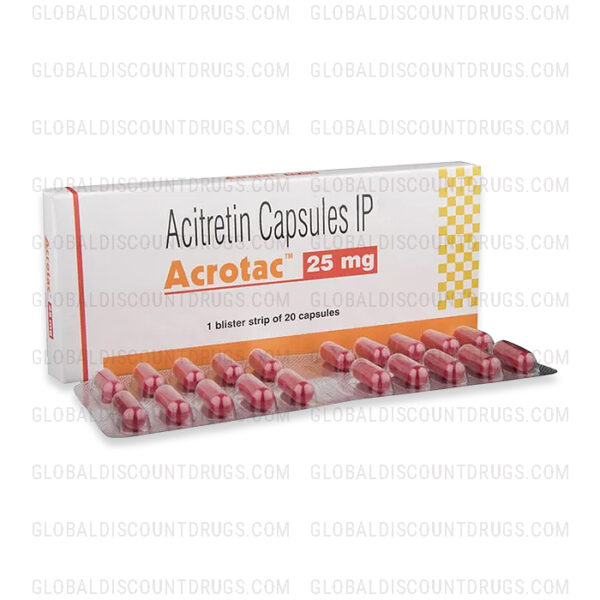
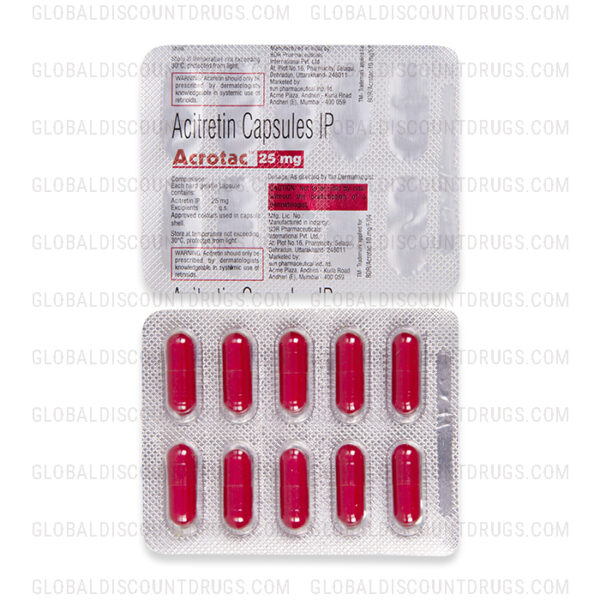
Acitretin 25mg
In StockAcitretin 25 mg Capsule is a prescription oral retinoid used to treat severe psoriasis in appropriate adults. Strict pregnancy-prevention requirements apply because acitretin can cause serious birth defects.
| Active Ingredient: | Acitretin |
|---|---|
| Indication: | Psoriasis |
| Strength: | 25mg |
| Dosage Form: | Tablets |
| Manufacturer: | Sun Pharma |

Acitretin 25mg – Quick Overview
Acitretin 25mg is a prescription oral retinoid medication primarily used to treat severe plaque psoriasis and other serious skin keratinization disorders. It works by regulating abnormal skin cell growth and differentiation through retinoic acid receptor activity. Due to its serious risk of birth defects, this medication requires strict medical supervision and must only be used under a physician’s direct guidance.
Medical Supervision & Regulatory Status
Acitretin 25mg is a prescription-only medicine and is not available over the counter. Regulatory bodies including the FDA (United States) and EMA (Europe) classify it as a teratogenic drug requiring controlled dispensing protocols. Due to its potential to cause severe birth defects, many countries mandate enrollment in a formal pregnancy prevention programme before prescribing. Medical supervision is essential throughout the entire course of treatment and for an extended period after discontinuation.
Clinical Context
Psoriasis is a chronic autoimmune skin condition characterised by rapid, abnormal skin cell turnover that leads to thick, scaly, and inflamed patches on the skin’s surface. Severe or generalised forms of psoriasis, including erythrodermic and pustular psoriasis, can significantly impair quality of life and may not respond adequately to topical treatments alone.
When first-line and second-line therapies such as topical corticosteroids, phototherapy, or standard systemic treatments prove insufficient, physicians may consider oral systemic agents. Acitretin occupies an important role in this treatment pathway, particularly for patients with severe, widespread, or treatment-resistant disease.
As a second- or third-line systemic therapy, acitretin is particularly valuable in patients who cannot use immunosuppressant drugs such as methotrexate or cyclosporine due to contraindications or tolerability concerns. It does not suppress the immune system, which makes it a preferred option in specific clinical contexts, including psoriasis associated with HIV.
How Acitretin 25mg Works
Acitretin belongs to the class of medications known as systemic retinoids, which are synthetic derivatives of vitamin A. These compounds exert their effects by binding to nuclear retinoic acid receptors (RARs) and retinoid X receptors (RXRs), which directly regulate gene expression involved in the growth, development, and differentiation of skin cells.
In conditions like psoriasis, skin cells (keratinocytes) proliferate at an abnormally accelerated rate, causing the characteristic thickening and scaling of the skin. Acitretin normalises this process by slowing down excessive keratinocyte proliferation and correcting the abnormal pattern of cell differentiation, helping the skin return toward a more normal cycle of growth and shedding.
For the patient, this translates into a gradual reduction in skin thickening, scaling, redness, and inflammation over the course of weeks to months. The medication works progressively, and full therapeutic benefit is typically observed after several weeks of consistent use as prescribed.
What is Acitretin 25mg?
| Feature | Details |
|---|---|
| Drug Class | Systemic Retinoid (Second-generation) |
| Active Ingredient | Acitretin |
| Mechanism | Binds to retinoic acid receptors; normalises keratinocyte differentiation and reduces epidermal hyperproliferation |
| Dosage Form | Hard Gelatin Capsule (oral) |
| Strength | 25mg per capsule |
| Dosing Frequency | Once daily, typically with the main meal |
| Regulatory Status | Prescription-only (Schedule H / FDA Rx / EMA controlled) |
Uses / Indications
Acitretin 25mg is approved for the following uses:
Severe Plaque Psoriasis The most common approved use, acitretin is used to treat severe, extensive, or disabling plaque psoriasis that has not responded to conventional treatments. It helps reduce the characteristic plaques, scaling, and skin inflammation associated with this condition.
Pustular Psoriasis Acitretin is used to manage both generalised pustular psoriasis (von Zumbusch type) and palmoplantar pustulosis, where sterile pustules form on the skin. It is considered a primary systemic option for this form of the disease.
Erythrodermic Psoriasis In erythrodermic psoriasis, where nearly the entire body surface becomes inflamed and red, acitretin may be prescribed as part of the medical management plan under close hospital or specialist supervision.
Other Disorders of Keratinisation Acitretin may be prescribed for certain inherited or acquired skin conditions involving abnormal keratinisation, such as lamellar ichthyosis, Darier’s disease, and pityriasis rubra pilaris, where the normal shedding of skin cells is severely disrupted.
How to Use Acitretin 25mg / Dosage
General dosing guidance: Your prescribing physician will determine the dose that is right for you. The following information is for educational purposes only.
Acitretin 25mg is typically taken once daily with a meal containing fat, as dietary fat significantly improves the absorption of this medication from the gastrointestinal tract. The capsule should be swallowed whole with a full glass of water.
Starting Dose: Most adults begin at 25mg to 30mg per day. Depending on therapeutic response and tolerability, the physician may adjust the dose over time, typically within the range of 25mg to 50mg daily.
Timing: Taking the capsule at the same time each day with the largest meal helps maintain consistent blood levels and may reduce gastrointestinal side effects.
Missed Dose: If a dose is missed, take it as soon as you remember on the same day. If it is already the next day, skip the missed dose entirely and resume your regular schedule. Do not double up doses to compensate for a missed one.
Do Not Stop Suddenly Without Medical Advice: Acitretin should not be discontinued abruptly without consulting your doctor. Stopping treatment prematurely may lead to a rebound of skin symptoms. Your physician will guide you on how to taper or stop the medication when the time is appropriate.
Duration of Treatment: Treatment duration varies based on the clinical response. Some patients may require long-term or repeated courses of therapy as determined by their dermatologist.
Side Effects
Most people taking acitretin experience some degree of side effects, particularly during the initial weeks of therapy. Many of these effects are dose-related and may improve with a dose adjustment. It is important to discuss any side effects with your doctor promptly.
Common Side Effects The most frequently reported side effects of acitretin are related to its drying and skin-modifying effects. These include cheilitis (dry, cracked lips), dry skin, dry eyes, dry nasal passages, peeling of the palms and soles, and increased skin fragility. Hair thinning or diffuse hair loss (reversible upon stopping treatment) is also commonly reported. Mild headache, joint and muscle pain, and temporary changes in nail texture may also occur.
Serious Side Effects Acitretin can affect liver function, and elevations in liver enzymes (hepatotoxicity) have been reported, particularly at higher doses. Increases in blood lipids, including triglycerides and cholesterol, are also frequently observed and require regular monitoring. Elevated intracranial pressure (pseudotumour cerebri) is a rare but serious adverse effect, particularly when acitretin is used with tetracycline antibiotics. Decreased night vision and other visual disturbances have also been reported.
Emergency Warning Signs – Seek Immediate Medical Attention If You Experience:
- Severe or persistent headache, nausea, or vomiting, especially with visual disturbances
- Signs of liver problems: yellowing of the skin or eyes (jaundice), dark-coloured urine, severe abdominal pain, persistent fatigue
- Severe chest pain or difficulty breathing
- Sudden significant vision changes or loss
- Severe skin reaction: blistering, peeling, or a rash spreading across the body
- Signs of elevated intracranial pressure: blurred vision with headache and ringing in the ears
Warnings & Precautions
Teratogenicity – Pregnancy Prevention Programme Acitretin is categorised as Pregnancy Category X (FDA) and is absolutely contraindicated during pregnancy. It causes severe, life-threatening birth defects including craniofacial, cardiovascular, and central nervous system malformations. All females of childbearing potential must use two reliable forms of contraception simultaneously, starting at least one month before treatment, throughout treatment, and for at least three years after stopping acitretin. This extended post-treatment requirement is because acitretin can convert to etretinate (a long-acting teratogen) in the presence of alcohol. Regular pregnancy tests are required before and during treatment.
Alcohol Interaction Consumption of alcohol during treatment and for two months after stopping acitretin is strictly contraindicated. Alcohol converts acitretin to etretinate, a metabolite with a much longer half-life that remains teratogenic for significantly longer periods, extending the pregnancy risk well beyond the standard post-treatment window.
Drug Interactions Acitretin should not be used concurrently with methotrexate due to a significantly increased risk of hepatotoxicity. Co-administration with tetracycline antibiotics (e.g., doxycycline, minocycline) can increase the risk of benign intracranial hypertension and must be avoided. Vitamin A supplements and other retinoid medications must not be taken alongside acitretin, as this can lead to vitamin A toxicity (hypervitaminosis A). Acitretin may also reduce the effectiveness of low-dose progestogen-only contraceptives (“mini-pill”), which should not be relied upon as the sole method of contraception.
Liver Function Baseline liver function tests are required before initiating therapy, and regular monitoring is necessary throughout treatment. Patients with pre-existing significant liver disease should generally not use acitretin.
Lipid Monitoring Acitretin commonly elevates serum triglycerides and, to a lesser extent, total cholesterol. Patients with pre-existing hyperlipidaemia, obesity, or diabetes require particularly careful monitoring. Dietary modification may be recommended.
Pregnancy and Breastfeeding Acitretin is absolutely contraindicated in pregnant women or those planning to become pregnant during or within three years of treatment. Breastfeeding is also contraindicated during treatment and for an appropriate period after discontinuation, as the drug may pass into breast milk.
Special Populations – Paediatric and Elderly Use Use in children and adolescents requires particular caution, as premature closure of growth plates (epiphyseal closure) has been reported. In elderly patients, close monitoring for side effects is warranted due to potentially altered drug metabolism.
Photosensitivity Acitretin may increase sensitivity to sunlight. Patients are advised to use adequate sun protection (sunscreen, protective clothing) and avoid prolonged sun exposure and ultraviolet light sources during therapy.
Who Should Not Use This Medication
The following individuals should not use Acitretin 25mg:
- Pregnant women or women planning to become pregnant
- Women who are breastfeeding
- Women of childbearing potential who are unable or unwilling to comply with mandatory contraception requirements and regular pregnancy monitoring
- Patients with severely impaired liver function or active liver disease
- Patients with severely impaired kidney function
- Patients with severely elevated blood lipid levels (severe hyperlipidaemia) unresponsive to treatment
- Patients currently taking methotrexate or tetracycline antibiotics
- Patients taking vitamin A supplements or other retinoid medications
- Patients with known hypersensitivity to acitretin, other retinoids, or any component of the capsule formulation
- Blood/plasma donors: patients must not donate blood during treatment and for three years after stopping acitretin due to the risk of the drug being transferred to a pregnant recipient
Storage Instructions
Temperature: Store Acitretin 25mg capsules at room temperature, between 15°C and 25°C (59°F and 77°F). Avoid exposure to excessive heat.
Moisture and Light: Store in the original tightly closed packaging, away from direct sunlight, moisture, and humidity. Do not store in bathrooms or near sinks where dampness is common.
Child Safety: Keep this medication out of the sight and reach of children at all times. The teratogenic risk of this medication makes accidental ingestion by children or adolescents, or by women of childbearing potential, a serious concern. Store securely.
Disposal: Do not dispose of unused or expired capsules in household waste or flush them down a drain. Follow your local pharmacy or healthcare facility’s guidelines for safe medication disposal.
Frequently Asked Questions (FAQs)
Does Acitretin 25mg require a prescription?
Yes, acitretin requires a valid prescription from a licensed physician. Because of its serious teratogenic potential and the need for regular liver, lipid, and pregnancy monitoring, medical evaluation and ongoing supervision are essential before and during treatment. Self-medication with acitretin is unsafe and not permitted in any country.
How long does Acitretin 25mg take to work?
Acitretin does not work immediately; noticeable improvement in skin symptoms generally begins after four to eight weeks of consistent treatment. Full therapeutic benefit may take three to six months to achieve. Your dermatologist will assess your response at regular follow-up visits and adjust the dose as needed.
Can I stop taking Acitretin 25mg suddenly?
No, you should not stop acitretin suddenly without consulting your doctor. Abrupt discontinuation can cause a rapid rebound of psoriasis symptoms, sometimes more severely than before. Your physician will advise you on the appropriate time and method to taper or discontinue the medication safely.
What medications interact with Acitretin 25mg?
Several important interactions must be avoided. Methotrexate significantly increases liver toxicity risk when combined with acitretin. Tetracycline antibiotics increase the risk of raised intracranial pressure. Vitamin A supplements and other retinoids can cause toxicity. Alcohol must be strictly avoided as it converts acitretin into a longer-acting teratogen. Always inform your doctor and pharmacist of all medicines and supplements you are taking.
What should I do if I miss a dose of Acitretin 25mg?
If you miss a dose, take it as soon as you remember on the same day with a meal. If you only remember the next day, skip the missed dose and continue with your usual schedule. Never take two doses together to make up for a missed one, as this increases the risk of side effects without improving therapeutic outcomes.
What is the cost of Acitretin 25mg without insurance?
The cost of acitretin without insurance depends on the seller, brand availability, and pack size, and may also vary by location and applicable discounts. Generic acitretin formulations are generally more affordable than branded versions. It is advisable to compare prices at licensed pharmacies and ask your pharmacist about any available discount programmes or generic alternatives.
How can I order Acitretin 25mg online?
A valid prescription from a licensed physician is required to order acitretin online. The usual process involves uploading your prescription or having your doctor send it directly to a verified online pharmacy, completing your order, and receiving delivery to your address. Always ensure you use a licensed, verified pharmacy to avoid counterfeit or substandard products. Purchasing prescription medicines without a valid prescription is illegal and unsafe.
Is Acitretin 25mg available over the counter?
No, acitretin is not available over the counter in most countries. Due to its teratogenic risks, potential for serious systemic side effects, and the requirement for regular medical monitoring, it is strictly a prescription-only medication in all major regulated markets. Regulations regarding its dispensing may vary by region, but medical supervision is universally required.
Resources & Further Reading
- Acitretin – DailyMed (U.S. National Library of Medicine)
- Acitretin – MedlinePlus Drug Information
- FDA Approved Drug Information – Soriatane (Acitretin)
- European Medicines Agency (EMA) – Retinoid Medicines
- American Academy of Dermatology – Psoriasis Treatment Guidelines
- National Psoriasis Foundation – Systemic Treatments
- NIH National Institute of Arthritis and Musculoskeletal and Skin Diseases – Psoriasis
- British Association of Dermatologists – Acitretin Patient Information Leaflet
- Retinoid Embryopathy Prevention Programme – MHRA
Disclaimer:
This content is for informational purposes only and does not constitute medical advice, diagnosis, or treatment. The information provided on this page about Acitretin 25mg is intended to support patient education and general awareness. It is not a substitute for professional medical consultation. Please read our full medical disclaimer before making any healthcare decisions. Consult a qualified specialist or physician before using Acitretin 25mg.
Prescription Required (Rx) to Buy?
This medication is not available over the counter. A valid prescription from a licensed healthcare
professional is required. Always consult your doctor before use.
| Quantity | 120, 160, 40, 80 |
|---|---|
| Indication | Psoriasis |
| Active Ingredient | Acitretin |
| Pharmaceutical Form | Tablets |
| Manufacturer | Sun Pharma |
| Indian Brand | Acrotac 25mg |
| US Brand Name | Acitretin |
| Generic Name | Acitretin |
| Dosage | 25mg |
| Drug Type | Tablets |