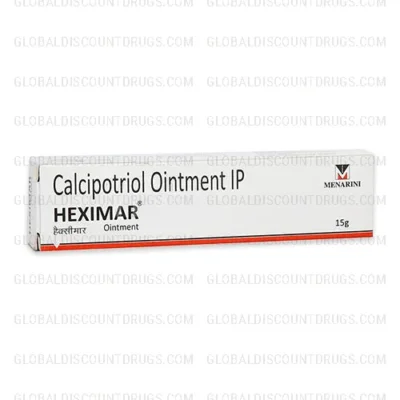


Calcipotriol/Calcipotriene Ointment 0.05%-15gm
In StockCalcipotriol Ointment is a prescription vitamin D analogue used to treat plaque psoriasis by helping regulate excessive skin cell production. Apply only to affected skin according to the prescribed treatment plan.
| Active Ingredient: | Calcipotriol/Calcipotriene |
|---|---|
| Indication: | Psoriasis |
| Strength: | 0.05% 15gm |
| Dosage Form: | Ointment |
| Manufacturer: | Menarini India Pvt Ltd |

What is Calcipotriene (Calcipotriol) Ointment?
Calcipotriene ointment is a prescription skin medicine. It contains calcipotriene (also spelled calcipotriol), a man-made form of vitamin D. It is applied to the skin and is not taken by mouth.
Drug class: Topical vitamin D3 analog (antipsoriatic agent).
Approved use: Treating mild to moderate plaque psoriasis in adults. Plaque psoriasis is a long-term skin condition that causes raised, red patches covered with silvery-white scales.
Common prescribed use: Managing stable plaque psoriasis on the body, scalp, and limbs, as directed by a dermatologist. In some countries, use in older children and teens may be approved with limits.
Formulations and strengths: Calcipotriene is sold as an ointment, and also as a cream, scalp solution, and foam, in several brands. It is also sold in combination with a corticosteroid (betamethasone) in some products. This guide covers the 0.005% (50 micrograms per gram) ointment in a 15 g tube.
A note on strength: The usual strength for calcipotriene ointment is 0.005% (50 mcg per gram). Always confirm the strength printed on your tube and prescription.
What is the Recommended Dosage of Calcipotriene Ointment?
The right dosing plan depends on:
- The condition being treated: Plaque psoriasis is the main use.
- Age: Safe use in children has not been established in many countries.
- Body area and how much skin is affected: Larger areas of skin mean more medicine is absorbed.
- Kidney and liver health: These organs may affect how the body handles calcium and vitamin D.
- Other treatments: Some people use calcipotriene with other psoriasis therapies.
Available dosage form: Ointment for use on the skin. This guide covers the 15 g tube.
Calcipotriene ointment is usually applied as a thin layer to affected skin once or twice a day, depending on your doctor’s directions and the product label. Because too much can raise calcium levels in the body, there is a maximum amount that should be used each week. Your dermatologist will tell you how much is safe for you.
Dosing must follow your licensed medical specialist’s instructions. Do not use more than directed, and do not use it for longer than prescribed.
General use tips:
- Apply a thin layer and rub it in gently.
- Wash your hands after use, unless the hands are the area being treated.
- Do not cover with tight bandages or dressings unless your doctor says to.
- Keep it away from your face, eyes, lips, and mouth.
How Calcipotriene Ointment Works
In psoriasis, skin cells grow too fast and build up on the surface. This causes thick, scaly patches. The immune system also plays a role in the swelling and redness.
Calcipotriene attaches to vitamin D receptors in skin cells. This helps slow the fast growth of skin cells and helps them mature more normally. It may also calm some immune activity in the skin.
The medicine helps manage the symptoms of psoriasis, such as scaling, thickness, and redness. It does not cure psoriasis, and symptoms may return after treatment stops. Improvement usually takes a few weeks of regular use.
Is a Prescription Required to Buy Calcipotriene Ointment Online?
Yes, in most countries. Calcipotriene ointment is a prescription-only medicine. A proper diagnosis is important, because other skin conditions can look like psoriasis.
Who to consult:
- A dermatologist (skin specialist) is the best choice for diagnosing and managing psoriasis.
- A primary care physician may start care and refer you if needed.
Buying safely:
- Buy only from licensed pharmacies and only with a valid prescription.
- Beware of counterfeit or tampered products sold by unverified online sellers.
- Check that the tube is sealed, the label is clear, and the batch number and expiry date are shown.
- Do not use a tube prescribed for someone else.
Side Effects of Calcipotriene Ointment
Most people use this medicine without serious problems. Side effects are mostly limited to the skin where it is applied.
Common Side Effects
- Burning, stinging, or itching of the skin
- Redness or skin irritation
- Dryness or peeling
- Rash
- Temporary worsening of psoriasis at first
These effects are often mild. Tell your doctor if they continue or bother you.
Serious Side Effects
These are uncommon, but they need prompt care:
- Signs of high calcium levels in the blood (hypercalcemia): nausea, vomiting, constipation, loss of appetite, increased thirst, frequent urination, weakness, confusion, or unusual tiredness
- Signs of allergic reaction: hives, swelling of the face, lips, or tongue, or trouble breathing
- Severe skin irritation or a rash that spreads or gets worse
- Facial skin problems after accidental use on the face
- Sudden worsening of psoriasis, such as widespread redness or pus-filled bumps
Seek immediate medical attention if you have signs of an allergic reaction or high calcium levels. Contact your healthcare provider if your skin gets much worse instead of better.
Drug Interactions
Calcipotriene is applied to the skin and only a small amount enters the body, but interactions can still occur. Tell your healthcare provider about:
- Calcium and vitamin D supplements: These can add to the risk of high calcium levels.
- Thiazide water pills (diuretics): These can raise blood calcium.
- Salicylic acid products: Salicylic acid can reduce how well calcipotriene works if used on the same area at the same time. Ask your doctor how to use them.
- Other skin treatments for psoriasis: This includes steroid creams, tar products, retinoid creams, and phototherapy. Your doctor may combine or time these treatments in a certain way.
- Medicines that affect calcium or kidney function: Share all medicines you take.
Over-the-counter medicines: Tell your provider about any OTC skin products, calcium-containing antacids, and vitamin products.
Supplements and herbal products: Share all supplements and herbal remedies you use.
Light exposure: Limit sunlight and tanning beds on treated skin unless your doctor has advised light therapy.
Give your licensed medical specialist a full list of your medicines, including prescription drugs, OTC products, vitamins, and herbal products.
Safety & Important Considerations
- Calcium levels: Using too much, using it on very large areas, or using it for too long can raise calcium in the blood and urine. Your doctor may order blood or urine calcium tests in some cases.
- Weekly maximum: Do not exceed the weekly amount your doctor gives you.
- Face and sensitive areas: Do not apply to the face, eyes, lips, or groin unless your doctor specifically directs it. Skin in these areas is more easily irritated.
- Eyes: Avoid contact. If it gets in your eyes, rinse with plenty of water.
- Sun exposure: Avoid too much sun and tanning beds on treated areas. Cover treated skin with clothing if exposed to sun. Use light therapy only under a doctor’s direction.
- Liver or kidney disease: People with serious kidney or liver problems may be at higher risk of calcium problems. Discuss use with your doctor.
- Pregnancy and breastfeeding: There is limited information on safe use. Talk to your doctor to weigh benefits and risks. If breastfeeding, do not apply the ointment to the breast area where the baby may come into contact.
- Children: Safety and effectiveness in children are not established in many countries. Use only under a doctor’s supervision.
- Older adults: No special changes are usually needed, but they may have more kidney or calcium problems.
- Monitoring: Your dermatologist will check how your skin is responding and may ask about symptoms of high calcium.
- Stop and call your doctor if you notice severe irritation or signs of high calcium.
Who This Medication Is For
Calcipotriene ointment is generally prescribed for:
- Adults with mild to moderate plaque psoriasis
- Patients whose dermatologist has confirmed psoriasis and chosen a topical (skin) treatment
- People who need a long-term skin treatment that is not a steroid
It is not meant for other skin rashes, fungal infections, or conditions that have not been diagnosed by a doctor.
Who Should Not Take Calcipotriene Ointment
Do not use this medicine, or speak to your doctor first, if:
- You are allergic to calcipotriene or any ingredient in the ointment
- You have high blood calcium (hypercalcemia) or a known problem with calcium or vitamin D metabolism
- You have signs of vitamin D toxicity
- You have severe kidney or liver disease, unless your doctor approves
- You have certain types of psoriasis, such as widespread pustular or erythrodermic psoriasis, where use is not advised
- The skin area is broken, infected, or badly inflamed, unless your doctor says it is safe
- You plan to apply it to your face or eyes
Always read the leaflet for the full list of warnings.
What to Do If You Miss a Dose
- Apply the missed dose as soon as you remember.
- If it is almost time for your next application, skip the missed one and go back to your regular schedule.
- Do not apply extra ointment to make up for a missed dose.
- If you are unsure what to do, contact your licensed medical specialist or pharmacist.
Related medications to Calcipotriene Ointment
Other treatments for plaque psoriasis include:
- Other vitamin D analogs: Calcitriol ointment or tacalcitol, in countries where available
- Calcipotriene combined with a corticosteroid (betamethasone): Available as ointment, gel, or foam in some places
- Topical corticosteroids: Steroid creams or ointments of different strengths
- Topical retinoids: Such as tazarotene
- Coal tar and anthralin products
- Phototherapy (light therapy)
- Oral or injectable treatments for more severe disease: Prescribed by a specialist
These options differ in how they work, their risks, and who they suit. Switching treatments or stopping early should only be done after speaking with a licensed medical specialist.
Storage Instructions
- Store at room temperature, usually between 15°C and 25°C, unless your label says otherwise.
- Do not freeze.
- Keep the tube tightly closed and away from direct heat, sunlight, and moisture.
- Do not use after the expiry date. Follow the label for how long to keep a tube after opening.
- Keep out of the reach and sight of children.
- Wash your hands after use so that the medicine does not spread to the eyes, face, or other people.
Disclaimer
- This page is for educational purposes only.
- It is not a substitute for professional medical advice, diagnosis, or treatment.
- Patients must consult a licensed dermatologist before starting, changing, or stopping treatment.
- Treatment decisions must be based on a full clinical evaluation by a qualified specialist.
Prescription Required (Rx) to Buy?
This medication is not available over the counter. A valid prescription from a licensed healthcare
professional is required. Always consult your doctor before use.
| Quantity | 12, 3, 6, 9 |
|---|---|
| Indication | Psoriasis |
| Active Ingredient | Calcipotriol/Calcipotriene |
| Pharmaceutical Form | Ointment |
| Manufacturer | Menarini India Pvt Ltd |
| Indian Brand | Heximar Ointment 15gm |
| US Brand Name | Calcipotriol (Calcipotriene) Ointment |
| Generic Name | Calcipotriol/Calcipotriene |
| Dosage | 0.05% 15gm |
| Drug Type | Tubes |