
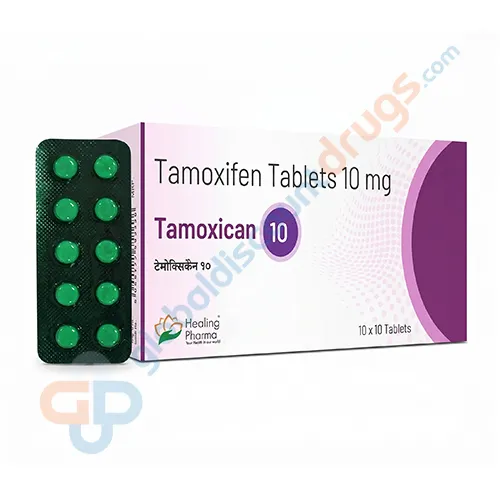

Tamoxifen
In StockTamoxifen is a Selective Estrogen Receptor Modulator (SERM) used as a foundational endocrine therapy for both the treatment and prevention of hormone receptor-positive breast cancer. It works by blocking estrogen receptors in breast tissue, thereby preventing estrogen from stimulating cancer cell growth. This API is crucial for reducing recurrence risk in both pre- and post-menopausal women. Tamoxifen is a standard component of long-term breast cancer survival.

What is Tamoxifen?
Tamoxifen is a prescription medication that belongs to a class of drugs called selective estrogen receptor modulators (SERMs). It works by blocking the effects of estrogen on certain tissues, particularly breast tissue, which can help slow or stop the growth of hormone-sensitive breast cancer cells.
Tamoxifen is commonly prescribed for:
- Treatment of hormone receptor-positive breast cancer in women and, in certain cases, men
- Reducing the risk of breast cancer recurrence after primary treatment (such as surgery, radiation, or chemotherapy)
- Reducing the risk of developing breast cancer in certain individuals considered to be at high risk
- Reducing the risk of breast cancer in women undergoing treatment with certain other medications, in specific clinical situations, as determined by a specialist
Available formulations: Tamoxifen is available as an oral tablet in various strengths. It is not available as an injectable, topical, or liquid product in standard practice, though liquid oral formulations exist in some regions.
What is the Recommended Dosage of Tamoxifen?
Dosage of tamoxifen depends on several individual factors, including:
- The specific reason for treatment (active cancer treatment, recurrence prevention, or risk reduction)
- The patient’s overall health and menopausal status
- Liver function, since tamoxifen is processed by the liver
- Other medications being taken, since certain drugs can affect how tamoxifen works
- Response to treatment and any side effects experienced
Because dosing depends on the specific clinical indication and individual patient factors, this page does not provide specific dosing numbers. Only a licensed oncologist, breast specialist, or other qualified healthcare provider can determine the correct dose and duration of therapy for a given patient. Tamoxifen is often taken for an extended period, sometimes several years, and the exact duration should be determined by the treating specialist.
How Tamoxifen Works
Tamoxifen works by attaching to estrogen receptors on certain cells, particularly in breast tissue, and blocking estrogen from attaching to these receptors. Since many breast cancers rely on estrogen to grow, blocking this effect can help slow or stop the growth of hormone receptor-positive breast cancer cells.
Interestingly, tamoxifen can act differently in other tissues in the body — for example, it may have estrogen-like effects on the uterus and bones, which is part of why regular monitoring is recommended during treatment.
Tamoxifen manages hormone-sensitive breast cancer and reduces recurrence or new cancer risk in appropriate patients; it is used as part of a broader, individualized treatment plan determined by the treating oncology specialist.
Is a Prescription Required to Buy Tamoxifen Online?
Yes. Tamoxifen is a prescription-only medication and cannot be legally purchased without a valid prescription from a licensed healthcare provider.
Because tamoxifen is used to treat or reduce the risk of a serious condition and requires ongoing monitoring, it should only be prescribed and managed by a licensed oncologist, breast specialist, or other qualified healthcare provider familiar with the patient’s full medical history.
Patients should be cautious of:
- Websites offering tamoxifen without a prescription
- Unusually low prices, which may indicate counterfeit or substandard products
- Products marketed for bodybuilding, non-medical, or veterinary use, as tamoxifen is sometimes misused outside of its approved medical purpose
- Sellers that are not licensed pharmacies
Tamoxifen should only be obtained from a licensed pharmacy, using a valid prescription, to ensure the product is safe, authentic, and correctly dosed.
Side Effects of Tamoxifen
Common Side Effects
These are generally manageable and should still be discussed with a healthcare provider:
- Hot flashes
- Vaginal discharge or dryness
- Irregular menstrual periods
- Mild nausea
- Fatigue
- Mood changes
Serious Side Effects
Some side effects are less common but require prompt medical attention:
- Signs of a blood clot (leg swelling, pain, redness, warmth in one leg; sudden shortness of breath; chest pain)
- Signs of a stroke (sudden weakness, numbness, difficulty speaking, vision changes)
- Signs of uterine changes (unusual vaginal bleeding or discharge, pelvic pain), since tamoxifen can increase the risk of certain uterine conditions, including uterine cancer in rare cases
- Vision changes, including blurred vision or other eye symptoms
- Signs of liver problems (yellowing of the skin or eyes, dark urine, severe fatigue)
- Signs of a severe allergic reaction (swelling of the face, lips, or throat; difficulty breathing; severe rash)
Patients or caregivers should seek immediate medical attention if any of these serious symptoms occur. This list is not exhaustive, and any new or worsening symptoms should be reported to the prescribing specialist promptly.
Drug Interactions
Tamoxifen can interact with a range of other medications and substances, including:
- Certain antidepressants (particularly some selective serotonin reuptake inhibitors), which may reduce the effectiveness of tamoxifen by affecting how it is processed by the liver
- Blood thinners (anticoagulants), where interactions may increase bleeding risk
- Certain hormonal medications, including some forms of hormone therapy, which may counteract tamoxifen’s effects
- Over-the-counter medications, including some pain relievers
- Herbal products and dietary supplements, including some that affect liver enzymes or have hormone-like activity
Patients should provide their licensed medical specialist and pharmacist with a complete and current list of all prescription medications, over-the-counter drugs, vitamins, and herbal supplements before starting tamoxifen and throughout treatment.
Safety & Important Considerations
- Blood clot risk: Tamoxifen increases the risk of blood clots, including deep vein thrombosis, pulmonary embolism, and stroke. This risk should be discussed with the treating specialist, particularly for patients with other risk factors.
- Uterine effects: Tamoxifen can increase the risk of changes to the lining of the uterus, including, in rare cases, uterine cancer. Regular gynecological monitoring is often recommended, and any unusual vaginal bleeding should be reported promptly.
- Liver function: Periodic liver function testing may be recommended during treatment.
- Eye effects: Rarely, tamoxifen has been associated with eye changes; any new vision symptoms should be reported to the treating specialist.
- Pregnancy and breastfeeding: Tamoxifen can cause harm to a developing fetus and is not recommended during pregnancy. Effective non-hormonal contraception is typically recommended during treatment and for a period afterward. Breastfeeding is generally not recommended during treatment.
- Bone health: In premenopausal women, tamoxifen may have some effect on bone density; this is generally monitored as part of routine care.
- Monitoring requirements: Regular follow-up visits, gynecological exams, and periodic blood tests are typically part of ongoing tamoxifen treatment.
- FDA safety information: Tamoxifen carries labeling regarding risks of blood clots, stroke, and uterine cancer. Patients should review the FDA-approved prescribing information with their specialist.
This medication should be used only for its approved indications, as determined by the prescribing specialist.
Who This Medication Is For
Tamoxifen is typically prescribed for individuals with hormone receptor-positive breast cancer, those at high risk of developing breast cancer, or those seeking to reduce the risk of cancer recurrence after primary treatment. It is used in both premenopausal and postmenopausal women, and in select cases, men, based on diagnosis and evaluation by a treating specialist.
Who Should Not Take Tamoxifen
Tamoxifen may not be appropriate for individuals who:
- Have a known hypersensitivity or allergic reaction to tamoxifen or its components
- Have a history of blood clots (such as deep vein thrombosis or pulmonary embolism), unless specifically evaluated and directed by a specialist
- Are currently taking certain blood-thinning medications (such as warfarin) that have significant interactions with tamoxifen, unless carefully managed by a specialist
- Are pregnant, due to the risk of harm to a developing fetus
This is not a complete list of contraindications. A licensed specialist must review a patient’s full medical history before prescribing tamoxifen.
What to Do If You Miss a Dose
If a dose of tamoxifen is missed, patients should generally take it as soon as they remember, unless it is close to the time of the next scheduled dose, in which case the missed dose is typically skipped.
Patients should never take two doses at once to make up for a missed dose. If there is any uncertainty about what to do after a missed dose, patients or caregivers should contact the prescribing specialist or pharmacist for guidance specific to their treatment plan.
Related medications to Tamoxifen
Alternatives to Tamoxifen depend on why it is being used: breast cancer treatment, breast cancer risk reduction, or an off-label hormonal use. It is not safe to treat all alternatives as equal substitutes.
| Use Case | Possible Alternatives | Notes |
|---|---|---|
| Early-stage hormone receptor-positive breast cancer — postmenopausal | Anastrozole, Letrozole, Exemestane | These aromatase inhibitors are common alternatives to tamoxifen in postmenopausal women. NCI lists tamoxifen, aromatase inhibitors, and ovarian suppression as hormone therapy options for breast cancer. (Cancer.gov) |
| Early-stage hormone receptor-positive breast cancer — premenopausal | Ovarian suppression + Anastrozole / Letrozole / Exemestane | Aromatase inhibitors generally need ovarian suppression in premenopausal women. Common ovarian suppression medicines include goserelin and leuprolide. (American Cancer Society) |
| Advanced or metastatic ER-positive breast cancer | Fulvestrant, Elacestrant, Vepdegestrant, Aromatase inhibitors | Fulvestrant and aromatase inhibitors are endocrine therapy options. Elacestrant is used for selected ER-positive, HER2-negative, ESR1-mutated advanced/metastatic breast cancer after endocrine therapy; vepdegestrant was FDA-approved on May 1, 2026 for a similar ESR1-mutated advanced/metastatic setting after endocrine therapy. (Cancer.gov) |
| Breast cancer risk reduction in high-risk women | Raloxifene, Anastrozole, Exemestane | USPSTF lists tamoxifen, raloxifene, and aromatase inhibitors as risk-reducing medicines for women at increased breast cancer risk. Raloxifene is mainly for postmenopausal women. (USPSTF) |
| Tamoxifen intolerance | Aromatase inhibitor, Fulvestrant, Raloxifene, or ovarian suppression-based therapy | Choice depends on menopausal status, cancer stage, clot risk, bone density, uterine history, and prior treatment. |
| Male breast cancer | Aromatase inhibitor + GnRH/LHRH therapy in selected cases | Tamoxifen is commonly preferred in men, but an aromatase inhibitor with ovarian/testicular hormone suppression may be considered when tamoxifen cannot be used. (Breast Cancer Now) |
Aromatase inhibitors:
- Anastrozole
- Letrozole
- Exemestane
SERMs / estrogen receptor blockers:
- Raloxifene
- Toremifene
SERDs / estrogen receptor degraders:
- Fulvestrant
- Elacestrant
- Vepdegestrant
Ovarian suppression options:
- Goserelin
- Leuprolide
- Triptorelin
Important Safety Note
Do not switch from tamoxifen to another hormone therapy without an oncologist’s advice. The right alternative depends on ER/PR status, HER2 status, menopause status, cancer stage, ESR1 mutation status, blood clot risk, bone density, liver function, pregnancy plans, and current medicines.
Storage Instructions
- Store at room temperature, generally between 68°F and 77°F (20°C to 25°C), unless otherwise directed on the label.
- Keep the medication in its original container, protected from excess moisture and light.
- Do not store in a bathroom or other areas with high humidity.
- Keep out of reach of children and pets at all times, ideally in a locked or secured location.
- Do not use tamoxifen past its expiration date, and dispose of unused medication according to pharmacist or local guidelines rather than discarding it in household trash.
Disclaimer:
This page is for educational purposes only. It is not a substitute for professional medical advice, diagnosis, or treatment. Patients must consult a licensed oncologist, breast specialist, or other relevant medical specialist before starting, changing, or stopping treatment with tamoxifen. Treatment decisions must be based on a full clinical evaluation by a qualified specialist.
Prescription Required (Rx) to Buy?
This medication is not available over the counter. A valid prescription from a licensed healthcare
professional is required. Always consult your doctor before use.