
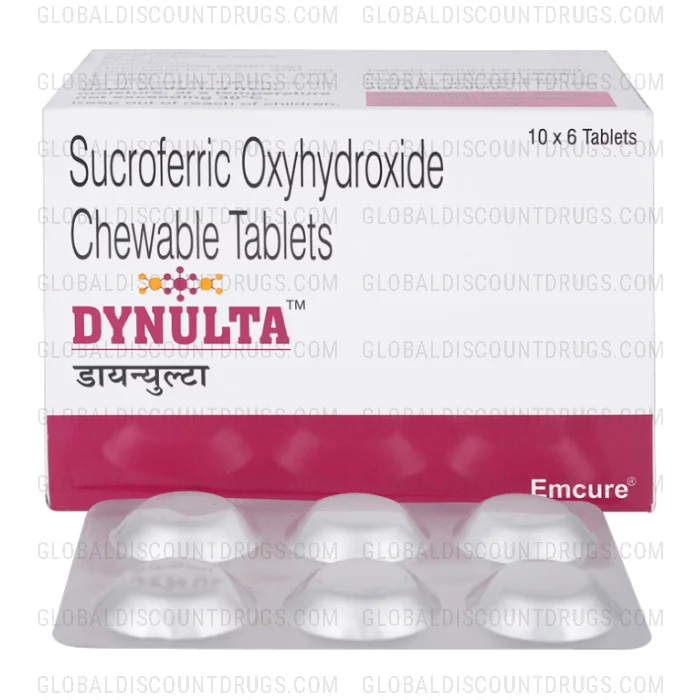
Sucroferric Oxyhydroxide 2500mg
In StockSucroferric Oxyhydroxide 2500 mg Chewable Tablet binds dietary phosphate to help control elevated phosphorus levels in adults receiving dialysis. It should be taken with meals as part of phosphate management.
| Active Ingredient: | Sucroferric oxyhydroxide |
|---|---|
| Indication: | Hyperphosphatemia |
| Strength: | 2500mg |
| Dosage Form: | Tablets |
| Manufacturer: | Emcure |

Sucroferric Oxyhydroxide 2500mg Quick Overview
Sucroferric oxyhydroxide 2500mg (Velphoro) is a prescription chewable tablet used to control high phosphorus levels in the blood of adults and children 9 and older with chronic kidney disease on dialysis. It works by binding dietary phosphate in the gut so it passes out in the stool instead of being absorbed. This medication requires a doctor’s prescription and regular monitoring.
Medical Supervision & Regulatory Status
Sucroferric oxyhydroxide is available only by prescription in the United States and is fully FDA-approved — since 2013 for adults, and since 2024 for pediatric patients 9 years and older — for use in chronic kidney disease patients on dialysis. Because it affects mineral and iron balance, treatment requires regular blood testing to monitor phosphorus and iron levels.
Clinical Context
Patients with chronic kidney disease who are on dialysis often struggle to remove excess phosphorus from their blood, a condition called hyperphosphatemia. Over time, high phosphorus levels can pull calcium from the bones and contribute to hardening of blood vessels and other tissues.
Because dialysis alone doesn’t remove enough phosphorus, and many phosphorus-rich foods are hard to avoid completely, doctors often add a phosphate binder to a patient’s care plan to help keep blood phosphorus within a target range and reduce long-term complications.
Sucroferric oxyhydroxide is one of several available phosphate binders and is typically taken alongside dietary phosphate restriction and the dialysis schedule your care team has set for you, as part of an overall CKD-on-dialysis management plan.
How Sucroferric Oxyhydroxide Works
Sucroferric oxyhydroxide belongs to a group of medications called phosphate binders. Unlike some older phosphate binders, it doesn’t contain calcium or aluminum — its active component is an iron-based compound.
When taken with meals, the iron(III)-oxyhydroxide in sucroferric oxyhydroxide binds to phosphate from food in the digestive tract, forming a complex that isn’t absorbed into the bloodstream. This bound phosphate is then eliminated from the body in the stool rather than being taken up into the blood.
By reducing how much dietary phosphate reaches the bloodstream, this medication may help keep phosphorus levels closer to a healthy range, supporting bone and cardiovascular health over the course of dialysis treatment.
What is Sucroferric Oxyhydroxide 2500mg?
| Attribute | Detail |
|---|---|
| Drug Class | Phosphate binder; non-calcium, iron-based |
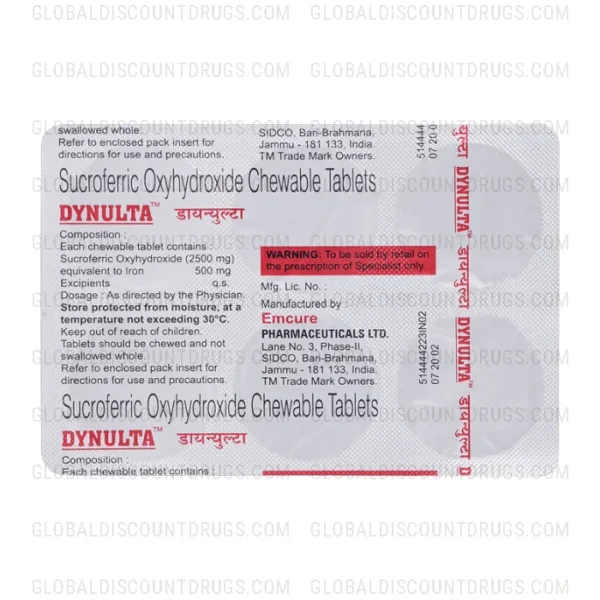
| Active Ingredient | Sucroferric oxyhydroxide 2,500 mg per chewable tablet, equivalent to 500 mg elemental iron |
| Mechanism | Binds dietary phosphate in the gastrointestinal tract, forming an insoluble complex that is excreted in the stool |
| Form | Chewable tablet; must be chewed or crushed and should not be swallowed whole |
| Dosing Frequency | Typically taken with each meal, up to three times daily, as prescribed |
| Regulatory Status | Prescription only (Rx); FDA-approved |
Uses / Indications
Control of serum phosphorus levels (hyperphosphatemia) – Approved to help manage elevated blood phosphorus in adults and pediatric patients 9 years and older with chronic kidney disease who are on hemodialysis or peritoneal dialysis.
This medication is not indicated for CKD patients who aren’t on dialysis and is not approved for children under 9.
How to Use / Dosage
Sucroferric oxyhydroxide tablets must be chewed or crushed — never swallowed whole — and taken with meals to bind phosphate from food effectively. Your doctor will determine your exact starting dose and adjust it over time based on your blood phosphorus levels.
Timing: Take with each meal (up to three times daily). If your daily dose can’t be split evenly, take the larger portion with your biggest meal.
Missed dose: If you miss a dose, simply take it with your next meal — do not double up.
Do not stop suddenly: Don’t stop or change your dose without talking to your doctor, since phosphorus levels can rise again if treatment is interrupted.
Side Effects
Most people tolerate sucroferric oxyhydroxide reasonably well, though digestive side effects are common, especially when starting treatment.
The most frequently reported side effects are diarrhea, discolored (typically darker) stools, and nausea. These are related to the medication’s iron content and often ease with continued use.
Less commonly, this medication can affect iron levels in the body or cause a skin rash. Because the iron in this medication isn’t well absorbed, buildup is uncommon in most patients, but your doctor may monitor your iron status periodically, especially if you have a history of iron overload conditions.
Emergency Warning Signs:
- Signs of an allergic reaction: hives, difficulty breathing, swelling of the face, lips, tongue, or throat
- New or worsening skin rash
- Severe or persistent diarrhea
- Signs of iron overload, such as unusual fatigue or joint pain
- Severe stomach pain
Warnings & Precautions
There are no specific contraindications to sucroferric oxyhydroxide, but it hasn’t been studied in patients with peritonitis during peritoneal dialysis, significant stomach or liver disorders, recent major gastrointestinal surgery, or conditions involving iron accumulation such as hemochromatosis. Your doctor will weigh the risks and benefits carefully in these situations and may monitor you more closely.
Because sucroferric oxyhydroxide can bind to other oral medications in the gut and reduce their absorption, certain drugs — including doxycycline and levothyroxine — should be taken well apart from your dose, generally at least one hour before or several hours after, as your doctor or pharmacist directs. Levothyroxine in particular should not be taken at the same time as this medication. Always review your full medication list with your doctor before starting treatment.
Sucroferric oxyhydroxide isn’t absorbed into the bloodstream in meaningful amounts, so it isn’t expected to expose a developing fetus or breastfed infant to the drug. Still, tell your doctor if you’re pregnant, breastfeeding, or planning either, so they can confirm this medication is appropriate for you.
This medication hasn’t been specifically studied in patients with a history of iron accumulation disorders, so extra monitoring may be needed in these cases. Tell your doctor about any history of stomach, liver, or intestinal conditions before starting.
Regular blood tests to check phosphorus and iron levels are an important part of treatment, and any new rash or unusual digestive symptoms should be reported to your care team.
Who Should Not Use This Medication
- Anyone with a known allergy to sucroferric oxyhydroxide or any of its ingredients
- Patients not on dialysis (this medication is approved specifically for dialysis patients)
- Children under 9 years old
- Anyone with active peritonitis during peritoneal dialysis, without close medical supervision
- Anyone with a history of hemochromatosis or other iron overload conditions, without close medical supervision
Storage Instructions
Store sucroferric oxyhydroxide tablets at room temperature (about 77°F / 25°C), and keep the container tightly closed to protect the tablets from moisture. Keep out of sight and reach of children and pets, and dispose of unused medication through a pharmacy take-back program instead of flushing it down the toilet.
Frequently Asked Questions
Does Sucroferric Oxyhydroxide require a prescription?
Yes, this medication is available by prescription only in the United States. A doctor must confirm you have chronic kidney disease and are on dialysis, and will determine the right starting dose based on your blood phosphorus levels.
Is Sucroferric Oxyhydroxide available over the counter?
No, it’s not available over the counter in most countries, including the U.S. Regulations may vary by region, but medical supervision and regular lab monitoring are required to use this medication safely.
How long does it take to start working?
It begins binding dietary phosphate with your very first properly timed dose, but meaningful changes in blood phosphorus levels are typically checked after about a week of consistent use, since your doctor will adjust the dose based on lab results.
Is it safe to stop once my phosphorus levels improve?
No, you shouldn’t stop or change your dose without talking to your doctor first. Phosphorus levels can rise again if treatment is stopped, since the medication only works while you’re actively taking it with meals.
Does it interact with other medications?
Yes — it can reduce the absorption of certain oral medications, including doxycycline and levothyroxine, if taken too close together. Tell your doctor and pharmacist about everything you take so they can advise on proper timing.
What should I do if I miss a dose?
Simply take your next dose with your next meal as usual. Don’t double up or take an extra dose to make up for the one you missed.
What is the cost without insurance?
The cost without insurance depends on the seller, brand availability, and pack size, and may also vary by location and available pharmacy or manufacturer discounts. Ask your pharmacist about current pricing and assistance programs.
How can I order it online?
A valid prescription is required. Typically, you or your doctor send the prescription to a licensed pharmacy, which verifies it before dispensing and arranging delivery. Always use verified, licensed pharmacies for safety.
References
DailyMed (NIH) – VELPHORO (sucroferric oxyhydroxide) Chewable Tablets, Official FDA Label: https://dailymed.nlm.nih.gov/dailymed/drugInfo.cfm?setid=237da26c-f38c-4faa-93ad-735e71c9d0c1
U.S. FDA – Velphoro (Sucroferric Oxyhydroxide) Prescribing Information: https://www.accessdata.fda.gov/drugsatfda_docs/label/2017/205109s005lbl.pdf
Mayo Clinic – Sucroferric Oxyhydroxide (Oral Route) Description and Dosage: https://www.mayoclinic.org/drugs-supplements/sucroferric-oxyhydroxide-oral-route/description/drg-20088503
Medical Disclaimer:
This content is for informational purposes only and does not constitute medical advice, diagnosis, or treatment. Consult a qualified specialist or physician before using Sucroferric Oxyhydroxide 2500mg.
Prescription Required (Rx) to Buy?
This medication is not available over the counter. A valid prescription from a licensed healthcare
professional is required. Always consult your doctor before use.
| Quantity | 12, 24, 36, 48 |
|---|---|
| Indication | Hyperphosphatemia |
| Active Ingredient | Sucroferric oxyhydroxide |
| Pharmaceutical Form | Tablets |
| Manufacturer | Emcure |
| Indian Brand | Dynulta Chewable 2500mg |
| US Brand Name | Velphoro |
| Generic Name | Sucroferric oxyhydroxide |
| Dosage | 2500mg |
| Drug Type | Tablets |
