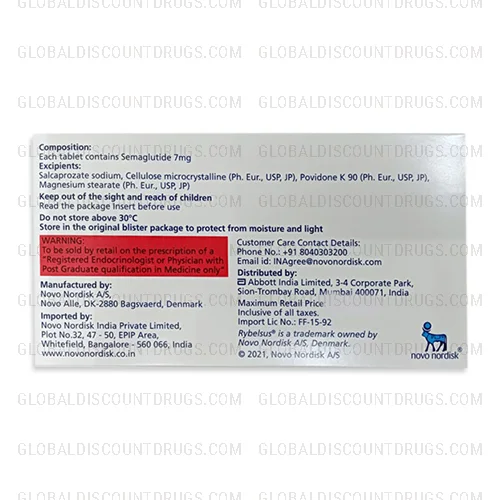
Semaglutide 14mg
In StockSemaglutide 14 mg Tablet is a prescription GLP-1 receptor agonist used with diet and exercise to improve blood glucose control in adults with type 2 diabetes. Follow the product-specific administration instructions carefully.
| Active Ingredient: | Semaglutide |
|---|---|
| Indication: | Type 2 Diabetes |
| Strength: | 14mg |
| Dosage Form: | Tablets |
| Manufacturer: | Novo Nordisk India Pvt Ltd |

Semaglutide 14mg – Quick Overview
Semaglutide 14mg is the highest-strength oral tablet (Rybelsus®) used along with diet and exercise to improve blood sugar control in adults with type 2 diabetes. It works by mimicking a natural gut hormone that regulates insulin and appetite. Semaglutide 14mg is prescription-only and carries a boxed warning regarding thyroid tumor risk seen in animal studies.
Medical Supervision & Regulatory Status
Semaglutide 14mg is FDA-approved and available only by prescription in the United States. It carries an FDA boxed warning regarding thyroid C-cell tumors observed in rodent studies, so medical supervision is required to assess personal and family thyroid cancer history before starting and to monitor for symptoms during treatment.
Clinical Context
Type 2 diabetes develops when the body becomes resistant to insulin or the pancreas doesn’t produce enough of it, leading to persistently high blood sugar. Over time, this can damage the eyes, kidneys, nerves, and cardiovascular system if left inadequately managed.
Improving both insulin secretion and appetite-related blood sugar spikes is a key treatment strategy, alongside diet and exercise, because it helps bring blood sugar closer to target levels and can reduce long-term complication risk.
Semaglutide 14mg fits into therapy as a GLP-1 receptor agonist, typically used when diet, exercise, and other oral medications like metformin haven’t achieved adequate glycemic control, often after a dose-escalation process starting at lower strengths.
How Semaglutide 14mg Works
Semaglutide belongs to the GLP-1 receptor agonist class and works by mimicking the naturally occurring hormone glucagon-like peptide-1 (GLP-1).
In simple terms, it stimulates the pancreas to release insulin when blood sugar is high, reduces the liver’s release of excess sugar, and slows stomach emptying, all of which help smooth out blood sugar spikes after meals.
By combining these effects, semaglutide 14mg helps lower blood sugar levels and supports more stable glycemic control as part of an overall type 2 diabetes management plan.
What is Semaglutide 14mg?
- Drug Class: GLP-1 receptor agonist (incretin mimetic)
- Active Ingredient: Semaglutide 14mg
- Mechanism: Mimics GLP-1 hormone to stimulate insulin release, reduce glucagon secretion, and slow gastric emptying
- Form: Oral tablet
- Dosing Frequency: Once daily, on an empty stomach
- Regulatory Status: FDA-approved, prescription-only (Rx)
Uses / Indications
- Type 2 diabetes mellitus, glycemic control: Used as an adjunct to diet and exercise to lower blood sugar.
- Cardiovascular risk reduction: Used in adults with type 2 diabetes and established cardiovascular disease to reduce the risk of major adverse cardiovascular events such as heart attack, stroke, or death.
Semaglutide 14mg is not indicated for type 1 diabetes and has not been studied in patients with a history of pancreatitis.
How to Use / Dosage
Semaglutide 14mg is generally reached through a gradual dose-escalation process: treatment typically starts at a lower strength for the first 30 days to build tolerance, then increases in steps as directed by a physician, with 14mg being the maximum labeled once-daily dose. It should be taken on an empty stomach first thing in the morning with no more than 4 ounces of plain water, and no food, drink, or other oral medications should be taken for at least 30 minutes afterward. If a dose is missed, skip it and take the next dose at the regular scheduled time — do not double up. Do not stop this medication without consulting your doctor, as this can affect blood sugar control.
Side Effects
Most people tolerate semaglutide 14mg reasonably well, though side effects can occur and should be discussed with a doctor. Common effects may include nausea, vomiting, diarrhea, abdominal pain, and decreased appetite, particularly during dose changes. Serious effects, though less common, may include pancreatitis, gallbladder problems, kidney injury or worsening kidney function, diabetic retinopathy complications, and, rarely, thyroid tumors.
Emergency Warning Signs — Seek immediate medical care if you experience:
- A lump or swelling in the neck, hoarseness, or difficulty swallowing
- Severe, persistent abdominal pain (possibly radiating to the back)
- Signs of a severe allergic reaction (swelling of the face, lips, tongue, or throat; difficulty breathing)
- Significant decrease in urination
- Vision changes
- Signs of low blood sugar (shakiness, confusion, rapid heartbeat) if used with insulin or sulfonylureas
- Persistent vomiting or inability to keep fluids down
Warnings & Precautions
Semaglutide 14mg carries an FDA boxed warning: in rodent studies it caused thyroid C-cell tumors, and it is contraindicated in patients with a personal or family history of medullary thyroid carcinoma or Multiple Endocrine Neoplasia syndrome type 2. It is also contraindicated in patients with a prior serious hypersensitivity reaction to semaglutide. Significant drug interactions include insulin and insulin secretagogues such as sulfonylureas, which may require dose reduction due to increased hypoglycemia risk, and other oral medications, since semaglutide delays gastric emptying and can affect the absorption of drugs with a narrow therapeutic index. Use during pregnancy is generally not recommended, and it should be discontinued at least 2 months before a planned pregnancy; breastfeeding should be discussed with a physician. Special populations, including patients with a history of diabetic retinopathy or pancreatitis, require closer monitoring. Regular monitoring of blood sugar, kidney function, and symptoms of pancreatitis or gallbladder disease is generally recommended during therapy.
Who Should Not Use This Medication
- People with a personal or family history of medullary thyroid carcinoma (MTC)
- Individuals with Multiple Endocrine Neoplasia syndrome type 2 (MEN 2)
- Anyone with a prior serious hypersensitivity reaction to semaglutide
- Patients with type 1 diabetes or diabetic ketoacidosis
- People with a history of pancreatitis (use with caution and physician guidance)
- Women who are pregnant or planning pregnancy without physician guidance
Storage Instructions
Store Semaglutide 14mg tablets at room temperature, away from excess heat and moisture, in the original container. Keep the container tightly closed and protect from light. Keep out of reach of children and pets, and dispose of unused or expired medication appropriately rather than in household trash.
Frequently Asked Questions
What is the cost of Semaglutide 14mg without insurance?
The cost without insurance depends on the seller, brand availability, and pack size, and may also vary by location and available discounts. Manufacturer savings programs may also affect out-of-pocket cost.
How can I order Semaglutide 14mg online?
A valid prescription is required to order this medication. Typically, you upload a prescription or have your doctor send it directly, then order from a licensed pharmacy for home delivery. Always verify the pharmacy is properly licensed before ordering.
Is Semaglutide 14mg available over the counter?
No, it is not available over the counter in the United States or most other countries. Regulations may vary by region, but medical supervision is required due to its boxed warning and dosing requirements.
Does Semaglutide 14mg require a prescription?
Yes, a prescription is required. This ensures proper evaluation of thyroid cancer risk and other health factors before starting, along with ongoing monitoring for safety.
How long does it take to work?
Semaglutide 14mg begins affecting blood sugar within the first few weeks, though the full glycemic benefit is typically seen after the complete dose-escalation process, which can take several months.
Can I stop taking this medication suddenly?
Stopping should only be done under medical guidance, as this can affect your blood sugar control. Your doctor may need to adjust your overall diabetes treatment plan if you stop.
Does this medication interact with other drugs?
Yes, it can interact with insulin, sulfonylureas, and other oral medications due to its effect on gastric emptying. Always tell your doctor about all medications and supplements you take before starting therapy.
Resources
- MedlinePlus – Semaglutide (Oral Route): https://medlineplus.gov/druginfo/meds/a618008.html
- FDA – RYBELSUS (semaglutide) Prescribing Information: https://www.accessdata.fda.gov/drugsatfda_docs/label/2024/213051s020s021lbl.pdf
- DailyMed (NIH) – Semaglutide Tablet Label: https://dailymed.nlm.nih.gov
References
- FDA – RYBELSUS (semaglutide) tablets Full Prescribing Information, including Boxed Warning: https://www.accessdata.fda.gov/drugsatfda_docs/label/2024/213051s020s021lbl.pdf
- MedlinePlus – Semaglutide (Oral Route): https://medlineplus.gov/druginfo/meds/a618008.html
- NIH DailyMed – Semaglutide Tablet Labeling: https://dailymed.nlm.nih.gov
Medical Disclaimer:
This content is for informational purposes only and does not constitute medical advice, diagnosis, or treatment. Consult a qualified specialist or physician before using Semaglutide.
Prescription Required (Rx) to Buy?
This medication is not available over the counter. A valid prescription from a licensed healthcare
professional is required. Always consult your doctor before use.
| Quantity | 10, 20, 30, 40 |
|---|---|
| Indication | Type 2 Diabetes |
| Active Ingredient | Semaglutide |
| Pharmaceutical Form | Tablets |
| Manufacturer | Novo Nordisk India Pvt Ltd |
| Indian Brand | Rybelsus 14mg |
| US Brand Name | Rybelsus | Semaglutide |
| Generic Name | Semaglutide |
| Dosage | 14mg |
| Drug Type | Tablets |