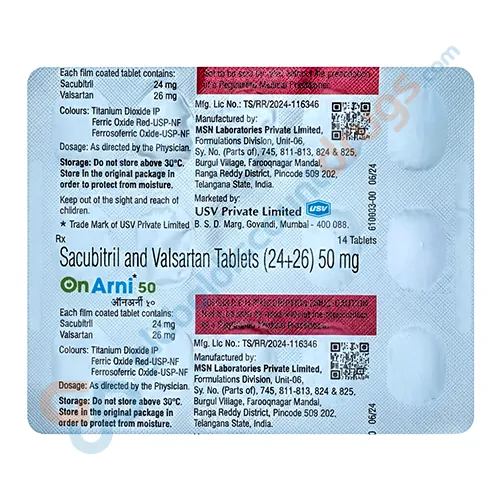
Sacubitril-Valsartan 24mg-26mg
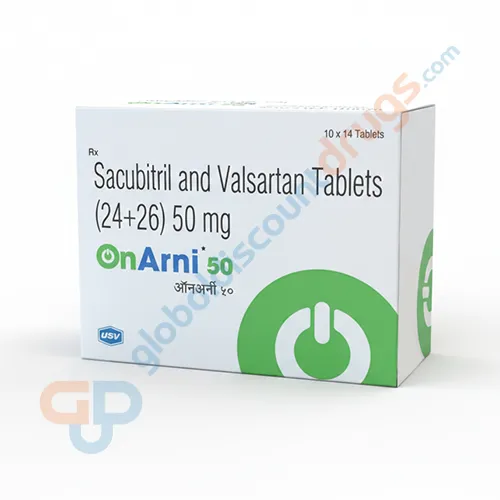
In StockSacubitril 24 mg–Valsartan 26 mg Tablet is a prescription angiotensin receptor-neprilysin inhibitor (ARNI) used to treat chronic heart failure. Blood pressure, kidney function, and potassium levels should be monitored during treatment.
| Active Ingredient: | Sacubitril-Valsartan |
|---|---|
| Indication: | Chronic Heart Failure |
| Strength: | 24mg-26mg |
| Dosage Form: | Tablets |
| Manufacturer: | USV Ltd |

Managing Chronic Heart Failure with Sacubitril-Valsartan 24mg-26mg
FDA-approved | Prescription only | Angiotensin Receptor-Neprilysin Inhibitor (ARNI)
Heart failure doesn’t have to mean losing ground. Sacubitril-Valsartan 24mg-26mg — the starting-dose strength of the ARNI therapy sold under the brand name Entresto — is FDA-approved to cut the risk of cardiovascular death and heart-failure hospitalization in adults with chronic heart failure. Sacubitril-Valsartan 24mg-26mg works by protecting the heart’s own protective hormones while blocking a hormone that drives up blood pressure, and it’s also approved for children 1 year and older with symptomatic heart failure. Because switching onto Sacubitril-Valsartan 24mg-26mg requires stopping any current ACE inhibitor first, it should only be started and adjusted under a cardiologist’s supervision.
Why Doctors Start Patients on This Exact Strength
Not every heart failure patient begins therapy at the same dose. Sacubitril-Valsartan 24mg-26mg is specifically the entry-level strength prescribed when a patient:
- Has never taken an ACE inhibitor or ARB before
- Was previously on a low-dose ACE inhibitor or ARB
- Has moderate liver impairment
- Has reduced kidney function (eGFR under 30 mL/min)
From this starting point, physicians typically double the dose every two to four weeks — moving toward 49mg/51mg and eventually the target maintenance dose of 97mg/103mg — based on how well blood pressure, kidney function, and potassium levels hold up along the way.
The Science Behind the Two Ingredients
Sacubitril-Valsartan 24mg-26mg pairs two active ingredients with opposite but complementary jobs:
Sacubitril (24 mg) blocks an enzyme called neprilysin. Normally, neprilysin breaks down natriuretic peptides — hormones your heart releases to relax blood vessels and help the kidneys clear excess sodium and fluid. By inhibiting neprilysin, sacubitril lets these protective hormones stay active longer.
Valsartan (26 mg) is an angiotensin receptor blocker. It stops angiotensin II, a hormone that tightens blood vessels and raises blood pressure, from binding to its receptor — easing the workload on an already struggling heart.
Used separately, either mechanism helps. Used together in Sacubitril-Valsartan 24mg-26mg, clinical trials showed a greater reduction in cardiovascular death and hospitalization than ACE inhibitor therapy alone — which is why this combination has become a cornerstone of modern heart failure treatment.
Who This Medicine Is For
Sacubitril-Valsartan 24mg-26mg is indicated for:
| Population | Indication |
|---|---|
| Adults with chronic heart failure | Reduces risk of cardiovascular death and hospitalization; benefits most pronounced with reduced ejection fraction |
| Children 1 year and older | Treats symptomatic heart failure with reduced left ventricular systolic function, dosed by body weight |
Taking Sacubitril-Valsartan 24mg-26mg Correctly
Timing: Twice daily, roughly 12 hours apart, with or without food.
Switching from an ACE inhibitor: A mandatory 36-hour washout period must pass between your last ACE inhibitor dose and your first dose of Sacubitril-Valsartan 24mg-26mg. Skipping this step significantly raises the risk of angioedema, a serious swelling reaction.
Missed dose: Take it as soon as you remember — but never double up to compensate for a missed dose.
Stopping: Never discontinue Sacubitril-Valsartan 24mg-26mg on your own. Heart failure symptoms can worsen quickly without medical guidance on how to transition off.
What Side Effects Look Like
Because Sacubitril-Valsartan 24mg-26mg affects blood pressure and kidney chemistry directly, most side effects trace back to those two systems.
Commonly reported: dizziness or lightheadedness (especially when standing), low blood pressure, cough, elevated potassium levels, and mild changes in kidney function markers on bloodwork.
Less common but more serious: angioedema, a marked decline in kidney function, and dangerously elevated potassium (hyperkalemia).
Call 911 or go to the ER if you notice:
- Swelling of the face, lips, tongue, or throat, or trouble breathing/swallowing
- Fainting or severe dizziness that doesn’t resolve when lying down
- Muscle weakness, tingling, or an irregular heartbeat (possible high potassium)
- A sharp drop in how much you’re urinating
- Chest pain or sudden worsening of breathlessness
- Yellowing of the skin or eyes
Boxed Warning: Not for Use in Pregnancy
The FDA requires a boxed warning on Sacubitril-Valsartan 24mg-26mg for fetal toxicity. Taken during pregnancy, it can cause serious injury or death to the developing fetus. Anyone who could become pregnant should discuss reliable contraception with their doctor before starting this medication, and should stop it immediately and contact their doctor if pregnancy occurs or is suspected.
Interactions and Conditions That Change the Picture
Sacubitril-Valsartan 24mg-26mg must never be combined with an ACE inhibitor — this pairing significantly raises angioedema risk and is strictly avoided, including during the 36-hour transition window. It’s also contraindicated with aliskiren in patients who have diabetes, and in anyone with a prior history of angioedema linked to ACE inhibitor or ARB use.
Beyond these absolute restrictions, use caution or expect closer monitoring if you’re also taking:
- Potassium-sparing diuretics or potassium supplements — combined use raises hyperkalemia risk
- NSAIDs — increase the risk of reduced kidney function, especially in older adults or anyone already low on fluids
- Lithium — blood lithium levels can climb to toxic ranges when combined with this medication
Severe liver impairment is a contraindication to this medication altogether. Regular bloodwork — kidney function, potassium, and blood pressure checks — is standard throughout treatment, particularly while your dose is being adjusted upward.
Who Shouldn’t Take This Medication
- Anyone with a prior angioedema reaction to an ACE inhibitor or ARB
- Patients currently on, or within 36 hours of stopping, an ACE inhibitor
- People with diabetes who are also taking aliskiren
- Anyone pregnant or planning pregnancy
- Patients with severe hepatic impairment
- Anyone with a known allergy to sacubitril, valsartan, or the tablet’s inactive ingredients
Storing Sacubitril-Valsartan 24mg-26mg Safely
Keep tablets at room temperature in their original container, shielded from heat, humidity, and direct light. Store well out of the sight and reach of children. When a course is finished or expired, use an FDA drug take-back location rather than the trash or sink.
Real Questions Patients Ask
Why did my doctor start me on the 24mg-26mg strength instead of a higher dose?
This is the standard starting point for people new to ACE inhibitor/ARB-class therapy, those coming off a low-dose ACE inhibitor or ARB, or those with reduced kidney or liver function. It’s not a “weaker” version of the drug — it’s a titration strategy designed to build tolerance safely.
Is Sacubitril-Valsartan 24mg-26mg available without a prescription?
No. It’s prescription-only in the U.S., and a cardiologist or physician needs to manage both the ACE inhibitor washout and the dose titration schedule.
How soon will I feel a difference?
Some patients report easier breathing or less fatigue within a few weeks, but the medication’s real value — reduced long-term risk of hospitalization and death — builds over months as your dose is titrated to target.
Can I just stop taking it if I feel fine?
No. Stopping abruptly can allow heart failure to progress. Any decision to pause or discontinue treatment needs to go through your prescribing doctor.
What happens if I forget a dose?
Take it as soon as you remember. If it’s nearly time for your next scheduled dose, skip the missed one entirely — don’t double up.
Does Sacubitril-Valsartan 24mg-26mg interact with common medications?
Yes — most notably ACE inhibitors (never combined), NSAIDs, potassium supplements or potassium-sparing diuretics, and lithium. Bring a full list of everything you take, including supplements, to every appointment.
What does Sacubitril-Valsartan 24mg-26mg cost without insurance?
Pricing depends on the seller, brand versus generic availability, and pack size, and can vary by location and pharmacy discount programs. Generic versions are generally less expensive than brand-name Entresto.
Learn More From These Sources
- Novartis / DailyMed – ENTRESTO (sacubitril/valsartan) Full Prescribing Information: https://www.novartis.com/us-en/sites/novartis_us/files/entresto.pdf
- Pharmacy Times – Clinical Overview: Sacubitril/Valsartan (Entresto) for Chronic Heart Failure: https://www.pharmacytimes.com/view/clinical-overview-sacubitril-valsartan-entresto-for-chronic-heart-failure
Medical Disclaimer:
This content is for informational purposes only and does not constitute medical advice, diagnosis, or treatment. Consult a qualified specialist or physician before using Sacubitril-Valsartan 24mg-26mg.
Prescription Required (Rx) to Buy?
This medication is not available over the counter. A valid prescription from a licensed healthcare
professional is required. Always consult your doctor before use.
| Quantity | 112, 28, 56, 84 |
|---|---|
| Indication | Chronic Heart Failure |
| Active Ingredient | Sacubitril-Valsartan |
| Pharmaceutical Form | Tablets |
| Manufacturer | USV Ltd |
| Indian Brand | Onarni 50mg |
| US Brand Name | Entresto |
| Generic Name | Entresto |
| Dosage | 24mg-26mg |
| Drug Type | Tablets |