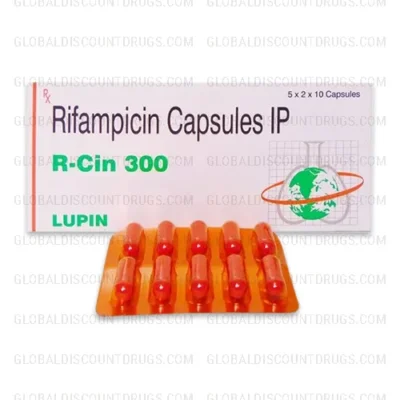

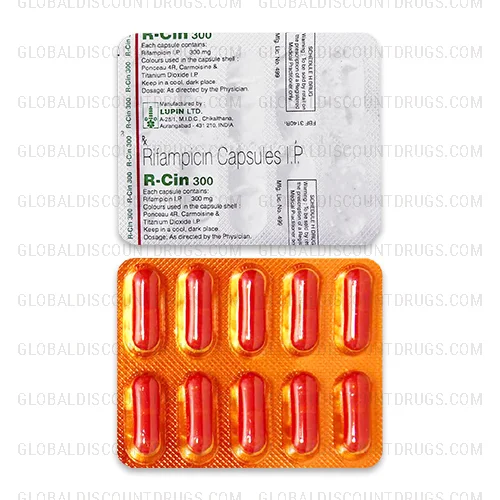
Rifampin-Rifampicin 300mg
In StockRifampin (Rifampicin) 300 mg Capsule contains a rifamycin antibiotic used to treat tuberculosis and selected bacterial infections as part of combination therapy. The medicine may discolor urine, tears, and other body fluids to an orange-red color.
| Active Ingredient: | Rifampin/Rifampicin |
|---|---|
| Indication: | Tuberculosis |
| Strength: | 300mg |
| Dosage Form: | Capsules |
| Manufacturer: | Lupin Ltd |

Rifampin-Rifampicin 300mg – Quick Overview
Rifampin (rifampicin) 300mg is a prescription antibiotic used to treat tuberculosis and certain bacterial infections, often combined with other TB medications. It works by blocking bacterial RNA synthesis, stopping bacteria from multiplying. This medication requires medical supervision throughout treatment, as prescribed by a physician.
Medical Supervision & Regulatory Status
Rifampin is available only by prescription in the United States and is FDA-approved for treating tuberculosis and as prophylaxis for meningococcal carriers in specific situations. Because it can cause liver dysfunction and interacts with numerous other medications, treatment requires physician oversight, baseline testing, and periodic monitoring for the duration of therapy.
Clinical Context
Tuberculosis (TB) is a bacterial infection primarily affecting the lungs, caused by Mycobacterium tuberculosis. Untreated or inadequately treated TB can progress, cause lasting lung damage, and spread to others, making complete and consistent antibiotic therapy essential.
Rifampin is not used alone for active TB treatment; it is one component of combination therapy because using it as a single agent significantly increases the risk of the bacteria becoming resistant. Rifampin should not be used indiscriminately, and diagnostic laboratory procedures, including serotyping and susceptibility testing, should be performed for establishment of the carrier state and the correct treatment.
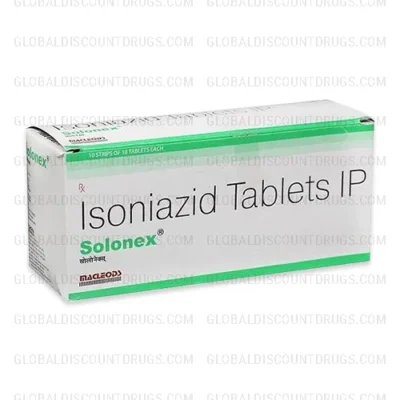
Within standard TB treatment protocols, rifampin is considered a cornerstone first-line agent, typically combined with isoniazid, pyrazinamide, and ethambutol during the initial phase of therapy, then often continued in a maintenance phase.
How Rifampin-Rifampicin 300mg Works
Rifampin belongs to a class of antibiotics called rifamycins. It works by binding to and inhibiting bacterial DNA-dependent RNA polymerase, which blocks the transcription process bacteria need to produce proteins and multiply.
By halting this essential step in bacterial replication, rifampin is bactericidal against actively dividing organisms like Mycobacterium tuberculosis, as well as certain other susceptible bacteria including some staphylococcal strains.
For patients, this mechanism translates into effective bacterial clearance when rifampin is used correctly as part of combination therapy, helping reduce infectiousness and prevent disease progression when the full treatment course is completed.
What is Rifampin?
- Drug Class: Rifamycin antibiotic
- Active Ingredient: Rifampin (Rifampicin)
- Mechanism: Inhibits bacterial RNA polymerase, blocking RNA synthesis and bacterial replication.
- Form: Oral capsule/tablet, 300mg
- Dosing Frequency: Typically once daily, or as directed for specific regimens
- Regulatory Status: Prescription-only, FDA-approved
Uses / Indications
- Tuberculosis (active disease): Used in combination with other anti-TB drugs to treat pulmonary and certain extrapulmonary TB.
- Meningococcal carrier state: Used short-term to eliminate Neisseria meningitidis from the nasopharynx in asymptomatic carriers to reduce transmission risk. It is not to be used for the treatment of meningococcal disease itself.
How to Use / Dosage
Your doctor will determine your exact dose and regimen based on your weight, the condition being treated, and other medications you take. Rifampin is usually taken on an empty stomach, at the same time each day, often as part of a multi-drug regimen. If you miss a dose, take it as soon as you remember unless it’s close to your next dose—do not double up. Do not stop taking rifampin early or skip doses, even if you feel better, as incomplete treatment can lead to drug-resistant infection.
Side Effects of Rifampin-Rifampicin 300mg
Most people tolerate rifampin well when taken as prescribed, though side effects are possible and should be reported to your doctor. Common effects include reddish-orange discoloration of urine, sweat, and tears, nausea, upset stomach, and loss of appetite. More serious effects can include liver problems, flu-like reactions, and blood disorders, which require prompt medical evaluation.
Emergency Warning Signs — Seek immediate medical help if you experience:
- Yellowing of the skin or eyes (jaundice)
- Severe or persistent nausea, vomiting, or abdominal pain
- Unusual fatigue or weakness
- Easy bruising or unusual bleeding
- Fever, chills, or flu-like symptoms during treatment
- Signs of allergic reaction (rash, swelling, difficulty breathing)
Warnings & Precautions
Rifampin is contraindicated in patients with a known hypersensitivity to rifampin or other rifamycins, and in those taking certain antiviral medications, including atazanavir, darunavir, fosamprenavir, saquinavir, tipranavir, cabotegravir, fostemsavir, and lenacapavir, due to the potential of rifampin to substantially decrease plasma concentrations of these antiviral drugs. It is also contraindicated with praziquantel and ritonavir-boosted saquinavir due to toxicity risk. Rifampin induces certain cytochrome P-450 enzymes, which can accelerate elimination of many co-administered drugs, sometimes requiring dosage adjustments for medications such as oral contraceptives, warfarin, and certain HIV medications. Rifampin has been shown to produce liver dysfunction, and fatalities associated with jaundice have occurred in patients with liver disease and in patients taking rifampin with other hepatotoxic agents. Patients with diabetes should be monitored closely, as diabetes management may become more difficult during treatment. Use during pregnancy or breastfeeding should only occur under close physician guidance after weighing risks and benefits.
Who Should Not Use This Medication
- Patients with known hypersensitivity to rifampin or other rifamycins
- Patients taking ritonavir-boosted saquinavir
- Patients taking atazanavir, darunavir, fosamprenavir, saquinavir, tipranavir, cabotegravir, fostemsavir, or lenacapavir
- Patients taking praziquantel
- Patients with significant active liver disease, unless closely monitored by a physician
Storage Instructions
Store rifampin capsules/tablets at room temperature, protected from excessive heat and moisture. Keep the container tightly closed and away from direct light. Store out of reach of children and pets, and do not use expired medication.
Frequently Asked Questions
Does rifampin require a prescription?
Yes, rifampin requires a prescription in the United States. It must be prescribed and monitored by a physician due to its potential for liver effects and significant drug interactions.
Is rifampin available over the counter?
No, rifampin is not available over the counter in most countries. Regulations may vary by region, but medical supervision is generally required for safe use.
How long does rifampin take to work?
Rifampin begins working against bacteria quickly, but full treatment courses for tuberculosis typically last several months as part of combination therapy. Your doctor will determine the appropriate duration for your condition.
Can I stop taking rifampin suddenly?
No, you should not stop rifampin early, even if symptoms improve. Incomplete treatment increases the risk of drug-resistant bacteria and treatment failure; always follow your doctor’s full course instructions.
What happens if I miss a dose?
Take the missed dose as soon as you remember, unless it’s almost time for your next dose. Do not double the dose, and try to stay consistent with your regimen.
Does rifampin interact with other medications?
Yes, rifampin has extensive drug interactions, including with certain antivirals, oral contraceptives, and blood thinners. Always share your complete medication list with your doctor before starting treatment.
What is the cost of rifampin without insurance?
The cost without insurance depends on the seller, brand availability, and pack size, and may also vary by location and available discounts. Generic rifampin is generally more affordable than brand-name versions.
How can I order rifampin online?
A valid prescription is required to order rifampin, whether by uploading it yourself or having your doctor send it to a licensed pharmacy for home delivery. Always use verified, licensed pharmacies to ensure product safety and authenticity.
References
- DailyMed (NIH) – Rifampin Capsule Label: https://dailymed.nlm.nih.gov/dailymed/drugInfo.cfm?setid=78c4d20c-9d9b-4f26-bc11-ff193c6c53ca
- FDA – Rifadin (Rifampin) Approval Letter/Label: https://www.accessdata.fda.gov/drugsatfda_docs/appletter/2010/050420s073,050627s012ltr.pdf
- MedlinePlus – Rifampin: https://medlineplus.gov/druginfo/meds/a682403.html
Medical Disclaimer:
This content is for informational purposes only and does not constitute medical advice, diagnosis, or treatment. Consult a qualified specialist or physician before using Rifampin-Rifampicin.
Prescription Required (Rx) to Buy?
This medication is not available over the counter. A valid prescription from a licensed healthcare
professional is required. Always consult your doctor before use.
| Quantity | 100, 200, 300, 400 |
|---|---|
| Indication | Tuberculosis |
| Active Ingredient | Rifampin/Rifampicin |
| Pharmaceutical Form | Capsules |
| Manufacturer | Lupin Ltd |
| Indian Brand | R CIN 300MG |
| US Brand Name | Rifadin, Rifampin/Rifampicin, Rimactane |
| Generic Name | Rifampin/Rifampicin |
| Dosage | 300mg |
| Drug Type | Capsules |