
Rebamipide 100mg is a prescription mucosal-protective tablet used in several countries for gastric ulcers and gastritis-related stomach lining damage. It supports the stomach’s natural defenses rather than reducing acid. Take it exactly as prescribed, usually three times daily. Not FDA-approved in the US. Use only under a licensed clinician’s guidance. Seek urgent care for black stools or vomiting blood.

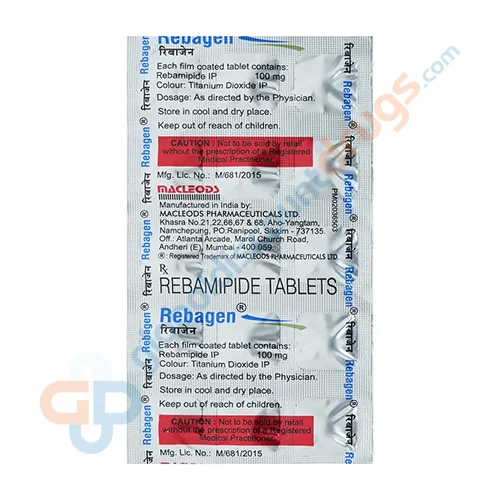
Rebamipide 100mg
In Stock| Active Ingredient: | Rebamipide |
|---|---|
| Strength: | 100mg |
| Dosage Form: | Tablets |
| Manufacturer: | Macleods Pharmaceuticals |
Last Updated on 29/09/2026

$2.93 -
$3.58
per pill
Rebamipide 100mg – Quick Overview
Rebamipide 100mg is a prescription mucosal-protective tablet used in several countries to treat gastric ulcers and gastric mucosal lesions in acute or worsening chronic gastritis. It works by increasing protective prostaglandins and mucus and reducing inflammation, without blocking stomach acid. It is not FDA-approved in the US, so it should be used only under a licensed clinician’s guidance.
Medical Supervision & Regulatory Status
Rebamipide 100mg is a prescription medicine in most countries where it is sold, including Japan, South Korea, China, and India, and it is not FDA-approved for use in the US. Where legally available, a licensed prescriber should confirm the diagnosis first. Stomach pain can signal serious problems, such as bleeding ulcers or infection, that need proper evaluation rather than self-treatment.
Clinical Context
Gastric ulcers and gastritis involve damage or inflammation of the stomach lining, which can cause upper abdominal pain, burning, bloating, nausea, and, in more serious cases, bleeding.
Treatment is needed because untreated ulcers can bleed, recur, or cause complications. Common triggers include Helicobacter pylori infection and long-term use of NSAIDs such as aspirin or ibuprofen.
Rebamipide is a mucosal protectant. It is typically used to help the stomach lining heal and defend itself, and it is often prescribed alongside other treatments such as acid-lowering medicines or H. pylori therapy, as directed by a doctor.
How Rebamipide Works
Rebamipide protects the stomach lining by strengthening its natural defenses and supporting repair, rather than by reducing stomach acid.
It belongs to a group of medicines known as mucosal protective (gastroprotective) agents. Studies describe several actions: increasing protective prostaglandins in the stomach lining, boosting mucus production, scavenging harmful free radicals, and dampening inflammation driven by immune cells.
For patients, these effects may support healing of ulcers and inflamed areas of the stomach lining. Exact mechanisms are still being studied, and results vary between individuals.
What Is Rebamipide 100mg?
Rebamipide 100mg is an oral tablet used to protect and heal the stomach lining. Key facts:
- Drug class: Mucosal protective (gastroprotective) agent; quinolinone derivative
- Active ingredient: Rebamipide 100 mg per tablet
- Mechanism: Increases protective prostaglandins and mucus, scavenges free radicals, and reduces inflammation
- Form: Oral tablet
- Dosing frequency: Commonly three times daily in adults, as directed
- Regulatory status: Prescription medicine in most countries where sold; not FDA-approved in the US
Uses / Indications
Where it is approved, rebamipide 100mg is used for gastric ulcers and for gastric mucosal lesions in acute gastritis and acute worsening of chronic gastritis. Uses vary by country, so your prescriber’s local labeling applies.
- Gastric ulcer: Used to support healing of stomach ulcers.
- Gastric mucosal lesions in gastritis: Used for erosion, bleeding, redness, and swelling of the stomach lining in acute gastritis and acute flare-ups of chronic gastritis.
How to Use / Dosage
Take rebamipide exactly as your doctor directs, because your doctor determines the dose and treatment length for your condition.
Timing: In adults, the usual dose is one 100 mg tablet three times daily, generally in the morning, evening, and at bedtime. It can be taken with or without food. Swallow the tablet with water.
Missed dose: Take it when you remember, unless it is almost time for the next dose. Do not double up.
Do not stop suddenly without advice: Ending treatment early may let symptoms return before the lining has healed. Tell your prescriber if you plan to stop.
Side Effects
Rebamipide is generally well tolerated, and side effects reported in most labeling are usually mild and uncommon.
Common effects: Constipation, bloating, diarrhea, nausea, taste changes, and mild skin reactions such as rash or itching.
Serious effects: Rare reports include liver enzyme elevation or jaundice, changes in blood counts (such as low white blood cells or platelets), and severe allergic reactions. Stop the medicine and contact your doctor promptly if these occur.
Emergency warning signs (seek medical help promptly):
- Black, tarry, or bloody stools
- Vomiting blood or material resembling coffee grounds
- Severe or worsening abdominal pain
- Swelling of the face, lips, tongue, or throat
- Difficulty breathing or widespread hives
- Yellowing of the skin or eyes
- Unexplained fever, bruising, or bleeding
Warnings & Precautions
Rebamipide is generally well tolerated, but it should be used carefully because stomach symptoms can hide serious conditions and safety data are limited in some groups.
Contraindications and sensitivity: Do not use it if you are allergic to rebamipide or any ingredient in the tablet. Stop it and seek help if you develop rash, breathing difficulty, or swelling.
Drug interactions: No widely established significant drug interactions are described, but tell your clinician about all medicines. It is often taken with acid-lowering drugs or H. pylori antibiotic regimens under medical direction. NSAIDs such as aspirin, ibuprofen, and naproxen can injure the stomach lining, so ask your prescriber before using them.
Pregnancy and breastfeeding: Safety in pregnancy has not been firmly established. Use only if your doctor decides the benefit outweighs the potential risk. Discuss breastfeeding with your doctor before use.
Special populations and monitoring: Safety and effectiveness in children have not been established. Older adults may need closer monitoring. People with liver disease, or those who develop jaundice or unusual tiredness, should be assessed. Your prescriber may check liver tests and blood counts if you are on long-term treatment.
Persistent symptoms: Unintended weight loss, trouble swallowing, persistent vomiting, or symptoms that do not improve should be evaluated promptly.
Who Should Not Use This Medication
Discuss with your prescriber before use, and avoid the product if any of these apply:
- Known allergy to rebamipide or any ingredient in the tablet
- Signs of stomach bleeding, such as black stools or vomiting blood (seek urgent care instead)
- Undiagnosed, persistent, or severe abdominal pain
- Children, unless a doctor specifically directs use
- Pregnancy or breastfeeding, unless your doctor decides the benefit outweighs the risk
- Serious liver problems, unless your prescriber advises otherwise
Storage Instructions
Store rebamipide tablets at room temperature, generally below 86°F (30°C), unless the package label says otherwise. Keep them in the original container or blister pack, tightly closed, and protect them from moisture, heat, and direct light. Keep out of reach of children and pets, and do not use after the expiration date.
Frequently Asked Questions
What is the cost of Rebamipide 100mg without insurance?
The cost without insurance depends on the seller, brand availability, and pack size, and may also vary by location and discounts. Rebamipide is generally affordable in countries where generics are sold. In the US, it is not FDA-approved, so price and availability are limited. Ask your prescriber or licensed pharmacist about approved alternatives.
How can I order Rebamipide 100mg online?
In the US, rebamipide is not FDA-approved, so licensed US pharmacies do not routinely dispense it. Where it is legally sold, a valid prescription is required, and you order from a licensed pharmacy. Never buy it from unverified websites. Ask your prescriber about FDA-approved options for ulcer or gastritis treatment.
Is Rebamipide 100mg available over the counter?
No, rebamipide is not available over the counter in the US, because it is not FDA-approved there. In most countries where it is sold, it is a prescription medicine. Regulations vary by region, and medical supervision is needed to confirm the diagnosis, rule out serious causes of stomach pain, and choose appropriate treatment.
Does Rebamipide 100mg require a prescription?
Yes, rebamipide is prescription-only in most countries where it is sold. A clinician evaluates your symptoms, checks for ulcer complications or H. pylori infection, and reviews your medicines and pregnancy status. Monitoring helps confirm healing, detect side effects such as liver enzyme changes, and decide whether additional treatment, such as acid suppression, is needed.
How long does Rebamipide 100mg take to work?
Some people notice less stomach discomfort within days to a couple of weeks, but ulcer or gastritis healing usually takes several weeks. Response varies by condition and any other prescribed treatment. Keep taking it as prescribed, and contact your doctor if symptoms persist or worsen, and seek urgent care for black stools or vomiting blood.
Is it safe to stop taking Rebamipide 100mg suddenly?
Stopping rebamipide suddenly is not known to cause withdrawal effects, but stop only as your prescriber advises. Ending treatment too early may allow ulcer or gastritis symptoms to return before the lining heals. If you develop a rash, jaundice, or breathing difficulty, stop taking it and seek medical help promptly.
Does Rebamipide 100mg interact with other medicines?
No clinically significant drug interactions are widely reported for rebamipide, but tell your clinician about every medicine you take. It is often prescribed alongside acid-lowering drugs or H. pylori therapy, and NSAIDs such as aspirin or ibuprofen can injure the stomach lining. Never combine or change medicines without professional advice.
What should I do if I miss a dose of Rebamipide 100mg?
Take the missed dose as soon as you remember, unless it is almost time for the next one. Then skip it and continue your regular schedule. Do not double the dose. Because rebamipide is usually taken three times daily, keeping doses evenly spaced helps, and your pharmacist can help you build a simple routine.
References
- Arakawa T, et al. Rebamipide: overview of its mechanisms of action and efficacy in mucosal protection and ulcer healing. Digestive Diseases and Sciences, 1998 (PubMed):
https://pubmed.ncbi.nlm.nih.gov/9753220/ - Andreev DN. Mechanisms of action of rebamipide: systematic review (peer-reviewed journal article):
https://journal-vniispk.ru/2075-1753/article/view/95282 - Vinmec International Hospital. Uses of Rebamipide 100mg:
https://vinmec.com/eng/article/uses-of-rebamipide-100mg-en
Disclaimer:
This content is for informational purposes only and does not constitute medical advice, diagnosis, or treatment. Consult a qualified specialist or physician before using Rebamipide 100mg.
Prescription Required (Rx) to Buy?
This medication is not available over the counter. A valid prescription from a licensed healthcare
professional is required. Always consult your doctor before use.
| Quantity | 120, 30, 60, 90 |
|---|---|
| Manufacturer | Macleods Pharmaceuticals |
| Indian Brand | Rebagen 100mg |
| Generic Name | Rebamipide |
| Dosage | 100mg |
| Drug Type | Tablets |

$0.81
per pill

$0.68 -
$0.83
per pill

$1.10 -
$1.34
per pill
$1.00 -
$1.22
per pill
