
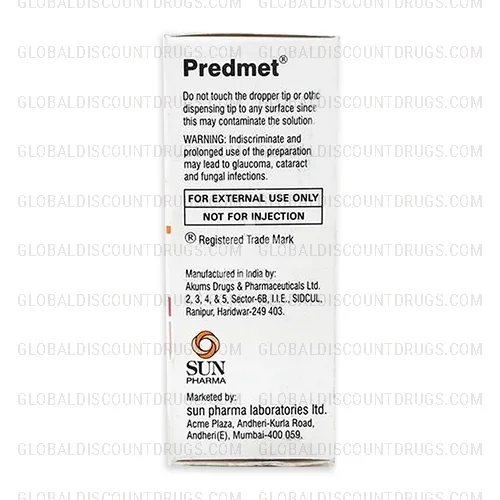
Prednisone/Prednisolone 1% Ophth Susp 10ml
In StockPrednisolone 1% Ophthalmic Suspension helps reduce inflammation affecting the eye following surgery, injury, or inflammatory eye disorders. Shake well before each application and attend recommended follow-up eye examinations.
| Active Ingredient: | Prednisone/Prednisolone |
|---|---|
| Indication: | Eye Inflammation |
| Strength: | 0.1%-10ml |
| Dosage Form: | Suspension |
| Manufacturer: | Sun Pharma |

Prednisolone Acetate 1% Ophthalmic Suspension – Quick Overview
Prednisolone acetate ophthalmic suspension 1% is a prescription corticosteroid eye drop indicated for the treatment of steroid-responsive inflammation of the palpebral and bulbar conjunctiva, cornea, and anterior segment of the globe. It works by reducing inflammation in the eye. Available in a 10ml bottle, for use strictly under ophthalmologist supervision.
Medical Supervision & Regulatory Status
Prednisolone acetate ophthalmic suspension 1% is a prescription-only (Rx) medication in the United States, regulated by the FDA as a topical corticosteroid. Because corticosteroid eye drops carry risks such as elevated eye pressure and delayed wound healing, the initial prescription and any renewal beyond 20 milliliters should be made by a physician only after examination of the patient with the aid of magnification, such as slit lamp biomicroscopy.
Clinical Context
Inflammation of the eye’s surface and anterior structures can result from allergies, injury, surgery, or certain infections, causing redness, swelling, discomfort, and light sensitivity. If untreated, ongoing inflammation can affect vision and comfort, and in some cases contribute to scarring of ocular tissue.
Topical corticosteroids are a standard therapy for managing steroid-responsive eye inflammation, helping to reduce swelling and irritation so the eye can heal more comfortably. Because steroids can also mask or worsen certain infections, they are only appropriate when the underlying cause has been properly diagnosed.
Prednisolone acetate ophthalmic suspension fits into eye care as a targeted anti-inflammatory option for conditions specifically identified by an eye care provider as steroid-responsive, used for a defined, physician-directed course.
How Prednisolone Acetate Works
Prednisolone acetate belongs to the corticosteroid (glucocorticoid) drug class. Corticosteroids inhibit the inflammatory response to a variety of inciting agents, working by suppressing the body’s inflammatory cascade at the tissue level.
Specifically, it inhibits edema, fibrin deposition, capillary dilation, and the migration of inflammatory cells associated with the acute inflammatory response, along with capillary proliferation, collagen deposition, and scar formation.
By calming this inflammatory response in the eye, the medication may help reduce redness, swelling, and discomfort associated with steroid-responsive ocular conditions, supporting the eye’s return to a more comfortable, less inflamed state.
What is Prednisolone Acetate 1% Ophthalmic Suspension?
| Attribute | Detail |
|---|---|
| Drug Class | Ophthalmic corticosteroid / anti-inflammatory |
| Active Ingredient | Prednisolone acetate 1% |
| Mechanism | Suppresses ocular inflammation by reducing edema, capillary dilation, inflammatory cell migration, and related immune responses |
| Form | Sterile ophthalmic suspension, 10 mL bottle |
| Dosing Frequency | Used as directed by a physician, commonly several times daily with gradual dose reduction when appropriate |
| Regulatory Status | FDA-approved; prescription only (Rx) |
Uses / Indications
Prednisolone acetate 1% ophthalmic suspension is FDA-approved for:
Steroid-responsive inflammation — treatment of steroid-responsive inflammation of the palpebral and bulbar conjunctiva, cornea, and anterior segment of the globe
Allergic and inflammatory eye conditions — including allergic conjunctivitis, acne rosacea, superficial punctate keratitis, iritis, and cyclitis, when the benefit of steroid use is judged to outweigh the risk
Post-injury inflammation — corneal injury from chemical, radiation, or thermal burns, or penetration of foreign bodies, when the inherent hazard of steroid use is accepted to obtain a diminution in edema and inflammation
How to Use / Dosage
Dosage and frequency are determined entirely by the prescribing physician based on the severity and type of inflammation. Shake well before each use. Typically, one to two drops are instilled into the affected eye(s) as directed, often multiple times per day initially and then tapered as inflammation improves.
Missed dose: If a dose is missed, administer it as soon as remembered; if it is nearly time for the next dose, skip the missed one — do not double up.
Do not stop suddenly: Do not discontinue treatment or reduce frequency without consulting your ophthalmologist. If signs and symptoms fail to improve after 2 days, the patient should be re-evaluated, and stopping therapy abruptly may allow inflammation to rebound.
Side Effects
Most patients tolerate short courses of this medication as prescribed, though side effects should be monitored by an eye care provider.
Common side effects may include temporary blurred vision, mild eye stinging or burning upon instillation, and eye discomfort. These are usually mild and often improve as the eye adjusts.
Serious side effects are less common but important to monitor for. Prolonged use of corticosteroids may result in glaucoma with damage to the optic nerve, defects in visual acuity and fields of vision, and posterior subcapsular cataract formation. Fungal infections of the cornea are particularly prone to develop coincidentally with long-term local corticosteroid use, and secondary bacterial or viral eye infections can also occur.
Emergency Warning Signs — seek medical attention if you experience:
- Sudden vision loss, blurring, or significant changes in eyesight
- Severe eye pain, redness, or swelling that worsens
- New or worsening light sensitivity
- Signs of eye infection (discharge, crusting, increasing redness)
- Halos around lights or eye pressure sensation
- No improvement in symptoms after 2 days of use
- Signs of an allergic reaction (facial swelling, difficulty breathing, hives)
Warnings & Precautions
Prednisolone acetate ophthalmic suspension 1% is contraindicated in acute untreated purulent ocular infections, in most viral diseases of the cornea and conjunctiva including epithelial herpes simplex keratitis (dendritic keratitis), vaccinia, and varicella, and also in mycobacterial infection of the eye and fungal diseases of ocular structures. It is also contraindicated in individuals with known or suspected hypersensitivity to any ingredient in the formulation or to other corticosteroids.
This product contains sodium bisulfite, a sulfite that may cause allergic-type reactions, including anaphylactic symptoms and life-threatening or less severe asthmatic episodes in certain susceptible individuals, particularly those with asthma; patients with known sulfite sensitivity should discuss alternatives with their physician. The product also contains benzalkonium chloride, which may be absorbed by soft contact lenses — lenses should be removed before application and may be reinserted 15 minutes after administration.
Regarding pregnancy and breastfeeding, there are no adequate and well-controlled studies in pregnant women, and the product should be used during pregnancy only if the potential benefit justifies the potential risk to the fetus. Because systemically administered corticosteroids appear in human milk and could affect a nursing infant, a decision should be made whether to discontinue nursing or discontinue the medication, in consultation with a physician. Special populations, including patients using long-term therapy, require ongoing monitoring of intraocular pressure and periodic eye examinations by an ophthalmologist.
Who Should Not Use This Medication
Individuals with acute, untreated purulent (pus-producing) ocular infections
Patients with viral eye infections including herpes simplex keratitis, vaccinia, or varicella
Individuals with fungal or mycobacterial eye infections
Anyone with known or suspected hypersensitivity to prednisolone acetate, sulfites, or other corticosteroids
Patients who have not had their eye condition properly diagnosed by an eye care provider
Storage Instructions
Store at 15°C–30°C (59°–86°F) in an upright position
Protect from freezing
Shake well before each use; keep bottle tightly closed when not in use
Discard any unused portion after the treatment course as directed, and do not use beyond the labeled expiration date
Store out of sight and reach of children
Frequently Asked Questions
What is the cost of Prednisolone Acetate Ophthalmic Suspension without insurance?
Cost varies by pharmacy and formulation. The cost without insurance depends on the seller, brand availability, and pack size, and may also vary by location and available discounts.
How can I order Prednisolone Acetate Ophthalmic Suspension online?
A valid prescription is required to order this medication. Typically, you or your doctor send the prescription to a licensed pharmacy, which fills the order for home delivery. Always use a verified, state-licensed pharmacy to ensure safety and authenticity.
Is Prednisolone Acetate Ophthalmic Suspension available over the counter?
No, this medication is not available over the counter in the United States. It requires a prescription and eye examination by a physician due to risks like elevated eye pressure with prolonged use.
Does Prednisolone Acetate Ophthalmic Suspension require a prescription?
Yes, a prescription is required. Regular follow-up with an eye care provider is important to monitor for side effects such as increased eye pressure during treatment.
How long does it take for Prednisolone Acetate to work?
Some patients notice reduced redness and discomfort within a few days, though improvement timing depends on the condition treated. If symptoms fail to improve after 2 days, follow-up evaluation is recommended.
Is it safe to stop using Prednisolone Acetate suddenly?
Treatment should not be stopped abruptly without your doctor’s guidance. Discontinuing early may allow inflammation to return, and your physician may recommend a gradual taper.
Can Prednisolone Acetate interact with contact lenses or other medications?
Yes — this product contains benzalkonium chloride, which soft contact lenses can absorb. Remove lenses before applying and wait about 15 minutes before reinserting them; discuss other eye medications with your doctor to avoid interactions.
What should I do if I miss a dose?
Apply the missed dose as soon as you remember, unless it’s nearly time for your next scheduled dose — in that case, skip it and continue your regular schedule. Do not use a double dose.
Resources
DailyMed – Official FDA Drug Label (National Library of Medicine): https://dailymed.nlm.nih.gov/dailymed/drugInfo.cfm?setid=1474d1df-70b6-4b1e-86d1-3349aa6d42fb
FDA Prescribing Information (Prednisolone Acetate Ophthalmic Suspension): https://www.accessdata.fda.gov/drugsatfda_docs/label/2018/017100s045lbl.pdf
FDA Drugs@FDA (Current Labeling Portal): https://www.fda.gov/drugsatfda
Medical Disclaimer:
This content is for informational purposes only and does not constitute medical advice, diagnosis, or treatment. Consult a qualified specialist or physician before using Prednisolone Acetate Ophthalmic Suspension.
Prescription Required (Rx) to Buy?
This medication is not available over the counter. A valid prescription from a licensed healthcare
professional is required. Always consult your doctor before use.
| Quantity | 2, 4, 6, 8 |
|---|---|
| Indication | Eye Inflammation |
| Active Ingredient | Prednisone/Prednisolone |
| Pharmaceutical Form | Suspension |
| Manufacturer | Sun Pharma |
| Indian Brand | Predmet Eye Drops |
| US Brand Name | Deltacortril, Hydeltrasol, Panafcortelone, Pred Forte, Pred Mild, Predmix, Prednisone/Prednisolone, Predsol, Predsolone, Solone, Sterapred |
| Generic Name | Prednisone/Prednisolone |
| Dosage | 0.1%-10ml |
| Drug Type | Bottles |