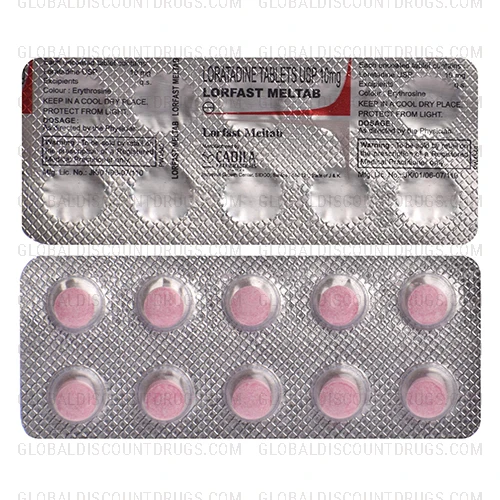
Loratadine 10mg
In StockLoratadine 10 mg Tablet is a long-acting second-generation antihistamine that helps relieve sneezing, runny nose, itching, and hives associated with allergic conditions. Take the medicine according to the recommended dosing schedule.
| Active Ingredient: | Loratadine |
|---|---|
| Indication: | Allergic Rhinitis |
| Strength: | 10mg |
| Dosage Form: | Tablets |
| Manufacturer: | Cadila Pharmaceuticals Ltd |

Loratadine 10mg Quick Overview
Loratadine 10mg is an over-the-counter antihistamine used to relieve symptoms of seasonal and year-round allergies, such as sneezing, runny nose, itchy eyes, and hives. It works by blocking histamine, a substance the body releases during an allergic reaction. This medication is available without a prescription and is generally taken once daily, though anyone with ongoing symptoms or other health conditions should check with a doctor or pharmacist before regular use.
Medical Supervision & Regulatory Status
Loratadine is an FDA-approved medication and is available over the counter in the United States for the temporary relief of allergy symptoms. While it doesn’t require a prescription, individuals with kidney or liver impairment, those taking multiple other medications, or those with symptoms that don’t improve should consult a healthcare provider before continued use.
Clinical Context
Allergic reactions occur when the immune system responds to substances like pollen, dust, pet dander, or certain foods as if they were harmful, triggering the release of histamine and other chemicals. This response causes the familiar symptoms of sneezing, congestion, itching, and watery eyes.
Antihistamines are a primary tool for managing these symptoms because they directly interrupt the chemical pathway responsible for the allergic response, rather than simply masking discomfort. Non-drowsy, second-generation antihistamines like loratadine are commonly preferred for daytime symptom control.
Loratadine fits into allergy management as a first-line option for mild to moderate seasonal or chronic allergy symptoms, and is also used for chronic hives when recommended by a provider.
How Loratadine Works
Loratadine belongs to a class of medications known as second-generation (non-sedating) antihistamines. It works by selectively blocking histamine H1 receptors throughout the body, preventing histamine from binding and triggering allergic symptoms.
Because loratadine is designed to have limited entry into the brain compared to older antihistamines, it typically causes less drowsiness while still effectively controlling symptoms like itching, sneezing, and nasal congestion caused by allergic reactions.
This targeted action allows loratadine to reduce the day-to-day impact of allergies, helping people manage symptoms without the significant sedation associated with older antihistamine medications.
What Is Loratadine?
- Drug Class: Second-generation antihistamine
- Active Ingredient: Loratadine
- Mechanism: Blocks histamine H1 receptors to reduce allergic symptoms
- Form: Oral tablet, 10mg
- Dosing Frequency: Once daily
- Regulatory Status: FDA-approved, available over the counter
Uses / Indications
- Seasonal allergic rhinitis: Relieves sneezing, runny nose, and itchy or watery eyes caused by seasonal allergens like pollen.
- Year-round (perennial) allergic rhinitis: Manages ongoing allergy symptoms triggered by indoor allergens such as dust mites or pet dander.
- Chronic idiopathic urticaria (hives): Helps reduce itching and the number of hives associated with chronic hives of unknown cause.
How to Use / Dosage
Take one tablet by mouth once daily, with or without food, or as directed on the label. Your doctor may recommend a different dose if you have kidney or liver impairment. If you miss a dose, take it as soon as you remember; if it’s almost time for your next dose, skip the missed one rather than doubling up. This medication is generally used as needed or during allergy season, so there’s typically no concern with stopping it once symptoms resolve — but check with your doctor if you’ve been using it long-term for a chronic condition like hives.
Side Effects
Loratadine is generally well tolerated, with most people experiencing few or no side effects.
Common effects may include headache, dry mouth, fatigue, and mild drowsiness in some individuals despite its non-sedating classification.
Serious effects are rare but can include allergic reactions to the medication itself or, very rarely, effects on heart rhythm, particularly at higher-than-recommended doses.
Emergency Warning Signs — seek medical attention if you notice:
- Difficulty breathing or swelling of the face, lips, tongue, or throat
- Severe dizziness or fainting
- Rapid or irregular heartbeat
- Severe skin rash or hives that worsen despite treatment
- Signs of a severe allergic reaction after taking the medication
- Seizures (rare, particularly with overdose)
Warnings & Precautions
Loratadine should not be used by individuals with a known hypersensitivity to loratadine or desloratadine. People with significant liver or kidney impairment may need a reduced dose or less frequent dosing, since these organs affect how the drug is processed and cleared from the body.
Combining loratadine with other sedating medications, including certain antidepressants and anti-anxiety medications, may increase drowsiness in some individuals even though loratadine itself is considered non-sedating. Alcohol may also add to drowsiness in sensitive individuals. There is limited evidence of significant interaction with common CYP3A4-affecting medications, but anyone taking multiple prescription medications should review their full list with a pharmacist before starting regular use.
Pregnant or breastfeeding individuals should consult their doctor before regular use, as with any medication taken during these periods. Use in young children should follow age-specific dosing guidance on the label, since not all formulations are approved for the youngest age groups. If allergy symptoms don’t improve after several days of use, or if new symptoms develop, medical evaluation is recommended rather than continued self-treatment.
Who Should Not Use This Medication
- Anyone with a known allergy to loratadine or desloratadine
- Children under the age specified on product labeling (varies by formulation)
- Individuals with significant, unmanaged liver or kidney disease, without medical guidance on dosing
- Anyone with symptoms suggesting a condition other than allergies (e.g., infection, breathing difficulty unrelated to allergies)
Storage Instructions
Store at room temperature, away from excess heat and moisture. Keep the container tightly closed. Keep out of reach of children, as accidental ingestion of multiple tablets can cause side effects like drowsiness or a rapid heartbeat.
Frequently Asked Questions
What is the cost of Loratadine 10mg without insurance?
The cost without insurance depends on the seller, brand availability, and pack size, and may also vary by location and available discounts. As a widely available generic, loratadine is generally one of the more affordable allergy options.
How can I order Loratadine 10mg online?
Since loratadine is available over the counter, no prescription is required to order it. You can purchase it directly from a licensed pharmacy or retailer offering home delivery. Choose a verified seller to ensure product quality and proper handling.
Is Loratadine 10mg available over the counter?
Yes, loratadine is available over the counter in the United States for allergy symptom relief. Anyone with ongoing or severe symptoms should still check with a doctor to confirm it’s the right fit.
Does Loratadine 10mg require a prescription?
No, a prescription is not required for standard use. However, individuals with kidney or liver conditions, or those managing chronic hives, may benefit from medical guidance on dosing.
How long does it take to work?
Loratadine typically begins working within 1 to 3 hours, with peak effects often felt within 8 to 12 hours. Consistent daily use during allergy season tends to provide the most reliable symptom control.
Is it safe to stop taking it suddenly?
Yes, loratadine can be stopped at any time without withdrawal effects. Many people use it only as needed during allergy flare-ups rather than continuously.
What happens if I miss a dose?
Take the missed dose as soon as you remember, unless it’s almost time for your next one — in that case, skip it and continue as normal. Don’t take a double dose to make up for a missed one.
References
- MedlinePlus – Loratadine: https://medlineplus.gov/druginfo/meds/a697038.html
- FDA – Loratadine OTC Drug Facts Label Information: https://www.fda.gov/drugs
- DailyMed (NIH) – Loratadine Tablet Labeling: https://dailymed.nlm.nih.gov/dailymed/
Disclaimer
This content is for informational purposes only and does not constitute medical advice, diagnosis, or treatment. Consult a qualified specialist or physician before using Loratadine 10mg.
| Quantity | 100, 200, 300, 400 |
|---|---|
| Indication | Allergic Rhinitis |
| Active Ingredient | Loratadine |
| Pharmaceutical Form | Tablets |
| Manufacturer | Cadila Pharmaceuticals Ltd |
| Indian Brand | Lorfast Meltab 10mg |
| US Brand Name | Alledine, Allereze, Claritin, Lorapaed, Lorastyne, Loratadine |
| Generic Name | Loratadine |
| Dosage | 10mg |
| Drug Type | Tablets |