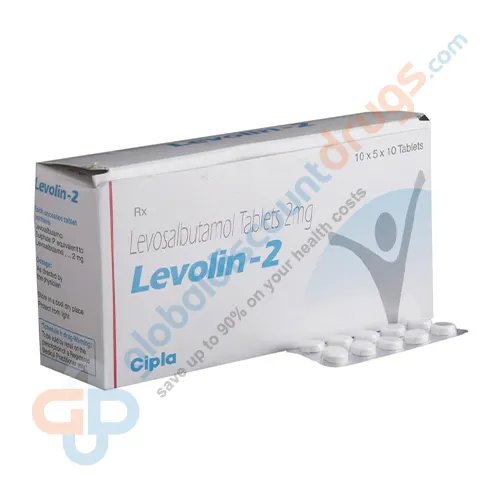
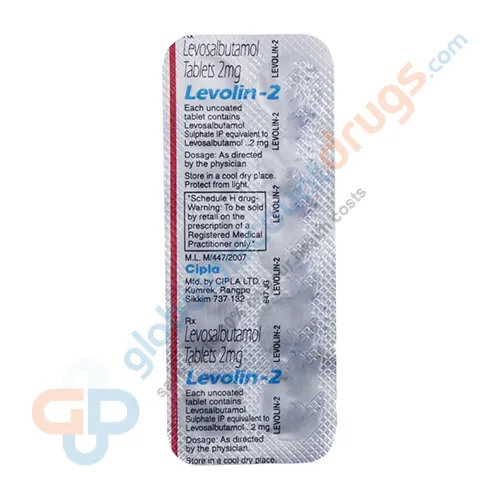
Levalbuterol/Levosalbutamol 2mg
In StockLevalbuterol 2 mg Tablet relaxes airway muscles to improve breathing in patients with reversible bronchospasm. Report persistent wheezing or worsening respiratory symptoms promptly during treatment.
| Active Ingredient: | Levosalbutamol |
|---|---|
| Indication: | Asthma |
| Strength: | 2mg |
| Dosage Form: | Tablets |
| Manufacturer: | Cipla Limited |

Levosalbutamol (Levalbuterol) 2mg Tablet Quick Overview
Levosalbutamol (levalbuterol) 2mg is a prescription bronchodilator tablet used to relieve and prevent bronchospasm — airway narrowing — in conditions like asthma and chronic obstructive pulmonary disease (COPD). It works by relaxing the smooth muscles lining the airways, making breathing easier. This tablet form is commonly prescribed in markets like India, while in the US, FDA-approved levalbuterol products are primarily inhaled (nebulizer solution or inhaler) rather than oral tablets; use should always follow your doctor’s specific instructions.
Medical Supervision & Regulatory Status
Levosalbutamol requires a prescription for use in treating asthma and COPD. In the US, the FDA-approved levalbuterol products (brand name Xopenex) are approved only in inhaled forms — nebulizer solution and metered-dose inhaler — for oral inhalation. Oral tablet formulations of levosalbutamol are more commonly available and prescribed in other countries, such as India. Medical supervision is required to determine the correct form, dose, and monitoring given cardiovascular and metabolic effects associated with this drug class.
Clinical Context
Levosalbutamol is prescribed to treat bronchospasm in asthma and chronic obstructive pulmonary disease, helping relieve wheezing, shortness of breath, coughing, and chest tightness. These conditions involve narrowing of the airways that can significantly limit a person’s ability to breathe comfortably, particularly during flare-ups or exacerbations.
Treatment is typically considered for people diagnosed with reversible obstructive airway disease who experience recurrent bronchospasm episodes, or as part of an ongoing asthma/COPD management plan directed by a physician or pulmonologist.
Levosalbutamol fits into respiratory therapy as a bronchodilator used for symptom relief, and depending on the formulation and clinical situation, may be combined with anti-inflammatory medications like inhaled corticosteroids for more complete asthma control.
How Levosalbutamol Works
Levosalbutamol is the pharmacologically active R-enantiomer of salbutamol, and it works by stimulating beta-2 adrenergic receptors located in the smooth muscle of the airways. Activation of these receptors triggers a cascade — turning on adenylate cyclase, raising cyclic AMP, and ultimately relaxing smooth muscle throughout the airways, from the trachea down to the smallest bronchioles.
Because levosalbutamol contains only the active enantiomer responsible for bronchodilator effects — unlike salbutamol, which is a mixture that also includes an enantiomer linked to bronchospastic and pro-inflammatory effects — it is generally associated with a favorable side-effect profile in some patients.
For patients, this translates into relief of airway constriction and easier breathing, typically noticeable within minutes for inhaled forms, helping manage acute symptoms as well as supporting longer-term disease control when used as prescribed.
What is Levosalbutamol 2mg?
| Attribute | Details |
|---|---|
| Drug Class | Short-acting beta₂-adrenergic agonist (SABA) bronchodilator |
| Active Ingredient | Levosalbutamol, also known as levalbuterol, 2 mg |
| Mechanism of Action | Stimulates beta₂-adrenergic receptors in airway smooth muscle, relaxing the airways and improving airflow |
| Dosage Form | Oral tablet |
| Typical Dosing Frequency | Taken as directed by a physician, typically in divided doses during the day |
| Regulatory Status | Prescription-only medicine (Rx); approval and availability of the oral tablet vary by country |
Uses / Indications
Asthma: Relieves and helps prevent bronchospasm associated with asthma
Chronic Obstructive Pulmonary Disease (COPD): Used to manage bronchospasm associated with COPD
Acute bronchospasm: Used for episodes of acute airway constriction as directed by a doctor
How to Use / Dosage
Levosalbutamol dosing depends on the formulation, age, and severity of the condition, and must be determined by your prescribing doctor. For reference, inhaled formulations are typically dosed at 1.25mg to 2.5mg three to four times daily as needed in adults, and around 1.25mg three to four times daily in children aged 6–12. Oral tablet dosing should strictly follow your physician’s prescription, since it differs from inhaled dosing.
Effects of this medicine are generally observed within 5–10 minutes of administration and last for an average of 3–6 hours, which is relevant for timing doses appropriately. If a dose is missed, take it as soon as remembered unless close to the next scheduled dose — do not double up. The need to use bronchodilators more frequently than usual should prompt an evaluation of whether additional anti-inflammatory medication, such as corticosteroids, is needed to control underlying asthma — do not simply increase levosalbutamol use on your own without consulting your doctor.
Side Effects
Most patients tolerate levosalbutamol reasonably well when used at the prescribed dose. Common effects can include tremor, nervousness, headache, dry mouth, nausea, dizziness, and difficulty sleeping.
Serious effects are less common but can occur, particularly with overuse or in people with underlying heart conditions, since beta-2 agonists can affect heart rate and blood pressure. Taking too much levosalbutamol can cause serious symptoms including rapid or irregular heartbeat, high blood pressure, trembling, nervousness, headache, dry mouth, nausea, dizziness, and difficulty sleeping, and in severe cases, low potassium levels in the blood — these require prompt medical attention.
Emergency Warning Signs — seek medical attention if you experience:
- Chest pain or a rapid, irregular heartbeat
- Severe tremor or nervousness
- Sudden worsening of breathing after using this medication (paradoxical bronchospasm)
- Signs of low potassium (muscle weakness, cramping, irregular heartbeat)
- Signs of an allergic reaction (rash, swelling, difficulty breathing)
- Seizures
Warnings & Precautions
Levosalbutamol is contraindicated in people with hypersensitivity to levosalbutamol or other beta-agonists, severe cardiovascular disorders, hyperthyroidism, or a history of seizures, and should be used with caution in patients with cardiovascular disease. Patients should be monitored for paradoxical bronchospasm — a worsening of breathing difficulty immediately after use — which requires stopping the medication and seeking medical care.
Certain medications should generally be avoided in combination with levosalbutamol, including specific antihypertensives (such as atenolol, labetalol, and metoprolol), certain antidepressants (such as amitriptyline and phenelzine), antiarrhythmics like digoxin, other adrenergic agonists like epinephrine, diuretics like furosemide, and other bronchodilators like metaproterenol, as these may alter the drug’s safety and effectiveness. This medication should be used with caution in people with diabetes and in those with hypokalemia (low potassium), and safety and effectiveness in patients younger than 12 years have not been firmly established for all formulations. This medicine is not recommended for use in pregnant women unless absolutely necessary, and the risks and benefits should be discussed with a doctor before use. Regular monitoring of heart rate, blood pressure, and in some patients blood glucose and potassium levels, is recommended during treatment, particularly with higher or more frequent doses.
Who Should Not Use This Medication
Anyone with known hypersensitivity to levosalbutamol, salbutamol, or other beta-agonists
People with severe, uncontrolled cardiovascular disease, without doctor clearance
Individuals with hyperthyroidism, without medical supervision
People with a history of seizure disorders, without doctor guidance
Use alongside beta-blockers, MAO inhibitors, or certain antidepressants without medical review
Storage Instructions
Store at room temperature, away from excess heat, moisture, and direct sunlight. Keep the tablets in their original packaging until use. Keep out of reach of children and pets.
Frequently Asked Questions
Is a prescription needed for Levosalbutamol 2mg?
Yes, this is a prescription-only bronchodilator and requires a doctor’s evaluation for asthma or COPD before use.
How long does it take to work?
Effects can typically be observed within 5 to 10 minutes of administration and last an average of 3 to 6 hours, though this can vary with the specific formulation prescribed.
Is it safe to stop using it early?
This should be discussed with your doctor rather than stopped on your own, since underlying asthma or COPD symptoms may worsen without an appropriate bronchodilator or a doctor-approved alternative plan.
Can it interact with other medicines?
Yes, certain blood pressure medications, antidepressants, other bronchodilators, and diuretics can interact with levosalbutamol and affect its safety or effectiveness. Always tell your doctor about all medications you’re taking.
What if I miss a dose?
Take the missed dose as soon as you remember, unless it’s close to your next scheduled dose — in that case, skip it and resume your regular schedule without doubling up.
What is the cost without insurance?
The cost without insurance depends on the seller, brand availability, and pack size, and may also vary by location and available discounts. Generic levosalbutamol tablets are typically more affordable than inhaled brand-name versions.
Is Levosalbutamol available over the counter?
No, it is not available over the counter in most countries and requires a prescription and medical evaluation for asthma or COPD, given the need for cardiovascular monitoring and correct dosing.
References
RxList – Levalbuterol: Side Effects, Uses, Dosage, Interactions, Warnings: https://www.rxlist.com/levalbuterol/generic-drug.htm
Medanta Hospital – Levosalbutamol: Uses, Side Effects, Precautions, and Dosage: https://www.medanta.org/medicine-detail/levosalbutamol-uses-side-effects-precautions-and-dosage
Medical Disclaimer:
This content is for informational purposes only and does not constitute medical advice, diagnosis, or treatment. Consult a qualified specialist or physician before using Levosalbutamol 2mg.
Prescription Required (Rx) to Buy?
This medication is not available over the counter. A valid prescription from a licensed healthcare
professional is required. Always consult your doctor before use.
| Quantity | 100, 200, 300, 400 |
|---|---|
| Indication | Asthma |
| Active Ingredient | Levosalbutamol |
| Pharmaceutical Form | Tablets |
| Manufacturer | Cipla Limited |
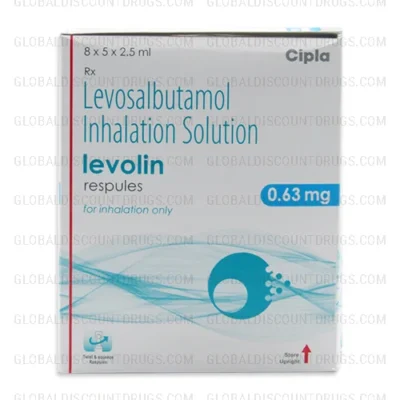
| Indian Brand | Levolin 2mg |
| US Brand Name | Levosalbutamol |
| Generic Name | Levosalbutamol |
| Dosage | 2mg |
| Drug Type | Tablets |
What is Levosalbutamol 2mg used for?
Levosalbutamol 2mg is used to treat asthma, COPD, bronchospasms, and exercise-induced breathing difficulties.
How does Levosalbutamol 2mg work?
It acts as a bronchodilator, relaxing the airway muscles and improving airflow for easier breathing.
How long does it take for Levosalbutamol 2mg to work?
Levosalbutamol starts working within 5–10 minutes, with effects lasting 4–6 hours.
Is Levosalbutamol 2mg safe for long-term use?
Yes, but long-term use should be monitored to prevent overuse-related complications.
Can I drink coffee while taking Levosalbutamol 2mg?
Limit caffeine intake, as it may increase nervousness or tremors.