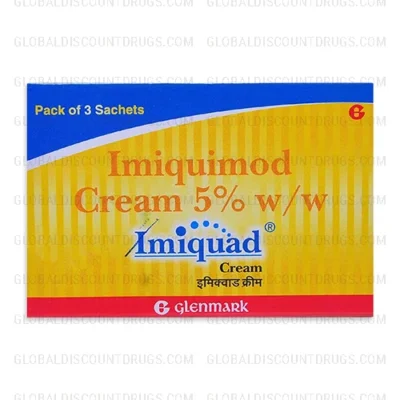
Imiquimod
In StockImiquimod is a topical immune response modifier used to treat external genital/perianal warts, actinic keratoses, and superficial basal cell carcinoma. When applied to the skin, it stimulates the immune system to produce interferon and other chemicals that attack the diseased cells and viruses. It does not work directly as an antiviral, but rather by harnessing the body’s own defense mechanisms.

What is Imiquimod?
Imiquimod is a topical medication that belongs to the immune response modifier class. Rather than directly killing abnormal cells or pathogens, it works by stimulating the body’s own immune system to respond to the treated area.
Common approved and prescribed uses include:
- Treatment of external genital and perianal warts (condyloma acuminata)
- Treatment of actinic keratosis (precancerous, sun-damage-related skin lesions), typically on the face or scalp
- Treatment of certain superficial basal cell carcinomas, in specific clinical situations as determined by a dermatologist
Available formulation:
Strength and packaging (such as single-use packets) may vary by manufacturer. Patients should confirm the specific product and concentration with their pharmacist or dermatologist.
What is the Recommended Dosage of Imiquimod?
Dosage, frequency, and treatment duration vary significantly depending on the condition being treated and are determined by a licensed dermatologist based on factors such as:
- The specific condition (genital warts vs. actinic keratosis vs. basal cell carcinoma)
- The size and location of the treatment area
- Skin sensitivity and tolerance to treatment
- Response to therapy over the treatment course
General principles:
- Application schedules differ substantially by condition — for example, some regimens involve application a few times per week, while others involve different cycles of on- and off-treatment periods.
- Treatment courses are typically defined for a set number of weeks, followed by an assessment of response by the treating specialist.
- This guide does not provide individualized dosing instructions. Always follow the specific application schedule and duration provided by your dermatologist, as regimens vary considerably between conditions.
How Imiquimod Works
Imiquimod works by stimulating local immune activity in the treated area. It activates specific immune receptors in the skin, prompting the release of natural immune signaling molecules (such as interferon and other cytokines). This immune activation helps the body recognize and respond to abnormal cells, including those associated with wart-causing viruses, sun-damaged precancerous cells, or certain skin cancer cells.
This medication does not directly destroy tissue itself; rather, it triggers the immune system to do so, which is why some visible skin reaction (redness, irritation) at the treatment site is an expected part of how the medication works. Imiquimod treats the specific lesions addressed during therapy; it does not prevent new lesions from forming in the future.
Is a Prescription Required to Buy Imiquimod Online?
Yes. Imiquimod is available by prescription only and requires diagnosis and supervision by a licensed medical specialist, such as:
- A dermatologist (for actinic keratosis, basal cell carcinoma, or general skin lesions)
- A gynecologist, urologist, or other appropriate specialist (for genital or perianal warts)
Important safety notes:
- Never purchase this medication from unverified or unlicensed online sources, as counterfeit products may be ineffective or unsafe.
- Only obtain this medication from a licensed pharmacy with a valid prescription.
- Imiquimod should only be used for a condition that has been properly diagnosed by a specialist; it is not appropriate for self-treatment of undiagnosed skin lesions.
Side Effects of Imiquimod
Common Side Effects
- Redness, swelling, or irritation at the application site (an expected part of the immune response)
- Itching or burning sensation
- Flaking, scabbing, or peeling of the treated skin
- Flu-like symptoms, such as fatigue, headache, or muscle aches, particularly with larger treatment areas
Serious Side Effects
Seek immediate medical attention or contact your dermatologist if any of the following occur:
- Signs of a severe allergic reaction (difficulty breathing, swelling of the face or throat, widespread hives)
- Severe local skin reactions, including deep ulceration, significant swelling, or blistering beyond what has been discussed with your specialist
- Signs of a widespread skin reaction affecting areas beyond the treated site
- Signs of a serious skin condition such as erythema multiforme (a distinctive target-shaped rash), which has been rarely reported
- Significant, persistent flu-like symptoms or fever
This is not a complete list. Because some degree of local skin reaction is expected with imiquimod, patients should discuss with their dermatologist in advance what level of reaction is normal versus concerning, and report any symptoms that seem excessive or unexpected.
Drug Interactions
Before starting imiquimod, patients should inform their licensed medical specialist about all medications and products they are using, including:
- Other topical treatments applied to the same or nearby skin areas
- Immunosuppressive medications, which may reduce the effectiveness of imiquimod since it relies on immune system activation
- Over-the-counter (OTC) skin care products
- Herbal supplements, particularly any with immune-modulating effects
Always provide a complete and updated medication list to your treating specialist to help ensure appropriate treatment planning.
Safety & Important Considerations
- Expected skin reactions: Because imiquimod works by provoking a local immune response, some redness, irritation, and skin breakdown at the treatment site is expected and often indicates the medication is working. Your dermatologist will advise on the expected pattern and when a reaction may be excessive.
- Sun sensitivity: Treated skin may be more sensitive to sunlight during and after treatment; sun protection is generally recommended.
- Immunocompromised patients: Because imiquimod depends on immune system activity, patients with weakened immune systems (due to illness or medication) should discuss potential reduced effectiveness with their specialist.
- Pregnancy and breastfeeding: Use during pregnancy or breastfeeding should only occur under the direct guidance of a treating specialist, who will weigh potential benefits and risks.
- Children: Safety and appropriate use in children should be determined by a pediatric specialist, as approved uses and dosing may differ from adult regimens.
- Application area: Should be applied only to the specific lesion(s) identified by the dermatologist, avoiding healthy surrounding skin when possible, and avoiding the eyes, lips, nostrils, and mucous membranes unless specifically directed.
- Sexual contact (for genital wart treatment): Imiquimod cream used for genital warts may weaken condoms and diaphragms; patients should discuss appropriate precautions with their specialist. The medication does not treat or prevent the spread of the underlying viral infection associated with warts.
- Rest periods: Some treatment regimens include planned rest periods to allow the skin to recover between applications; do not alter the prescribed schedule without consulting your specialist.
This section is not exhaustive. A full evaluation and ongoing follow-up with a licensed dermatologist is important throughout treatment.
Who This Medication Is For
Imiquimod is typically prescribed for individuals who:
- Have been diagnosed with external genital or perianal warts by an appropriate specialist
- Have actinic keratosis lesions, typically on sun-exposed areas such as the face or scalp, as identified by a dermatologist
- Have certain superficial basal cell carcinomas that a dermatologist has determined are appropriate for this treatment approach rather than surgical removal
Use should always be based on an individualized diagnosis and evaluation by a licensed specialist rather than self-diagnosis of a skin lesion.
Who Should Not Take Imiquimod
This medication may not be appropriate for individuals who:
- Have a known hypersensitivity to imiquimod or any component of the formulation
- Have an undiagnosed skin lesion that has not been properly evaluated by a specialist
- Have significant immune system impairment, without specific specialist guidance regarding likely reduced effectiveness
- Are unable to tolerate the expected local skin reactions associated with treatment, without close specialist supervision
A licensed dermatologist or relevant specialist must confirm suitability based on a complete medical history and proper diagnosis before treatment begins.
What to Do If You Miss a Dose
- Apply the missed dose as soon as you remember, following the specific schedule provided by your specialist.
- If it is close to the time of your next scheduled application, skip the missed dose and resume the regular schedule rather than applying twice.
- Do not apply extra product to make up for a missed application.
- Do not extend the overall treatment course to compensate for missed applications without checking with your specialist first, as treatment regimens are often structured around specific cycles.
- If you are uncertain about how to proceed, contact your treating specialist for guidance specific to your treatment plan.
Related medications to Imiquimod
Other treatment options that may be considered by a treating specialist, depending on the specific condition, include:
- Cryotherapy (freezing treatment)
- Topical fluorouracil (5-FU)
- Photodynamic therapy
- Surgical excision or other procedural treatments
- Podophyllum (for genital warts, in some cases)
These alternatives have different properties, benefits, and risks depending on the condition being treated. Any change in treatment should only be made in consultation with a licensed specialist, based on the specific diagnosis and patient factors.
Storage Instructions
- Store at room temperature, generally between 68°F and 77°F (20°C to 25°C), unless otherwise directed on the product label.
- Protect from excessive heat and direct light.
- Keep single-use packets sealed until ready for use; discard any opened, unused portion as directed on the label, since packets are typically intended for single use.
- Store out of reach of children and pets.
- Do not use the product beyond its labeled expiration date.
- Follow any specific storage instructions provided by your pharmacist, as packaging may vary.
Disclaimer:
This page is for educational purposes only. It is not a substitute for professional medical advice, diagnosis, or treatment. Patients and caregivers must consult a licensed dermatologist or other relevant medical specialist before starting, changing, or stopping treatment with imiquimod. Treatment decisions must be based on a full clinical evaluation and proper diagnosis by a qualified specialist, taking into account the patient’s complete medical history and current condition.
Prescription Required (Rx) to Buy?
This medication is not available over the counter. A valid prescription from a licensed healthcare
professional is required. Always consult your doctor before use.