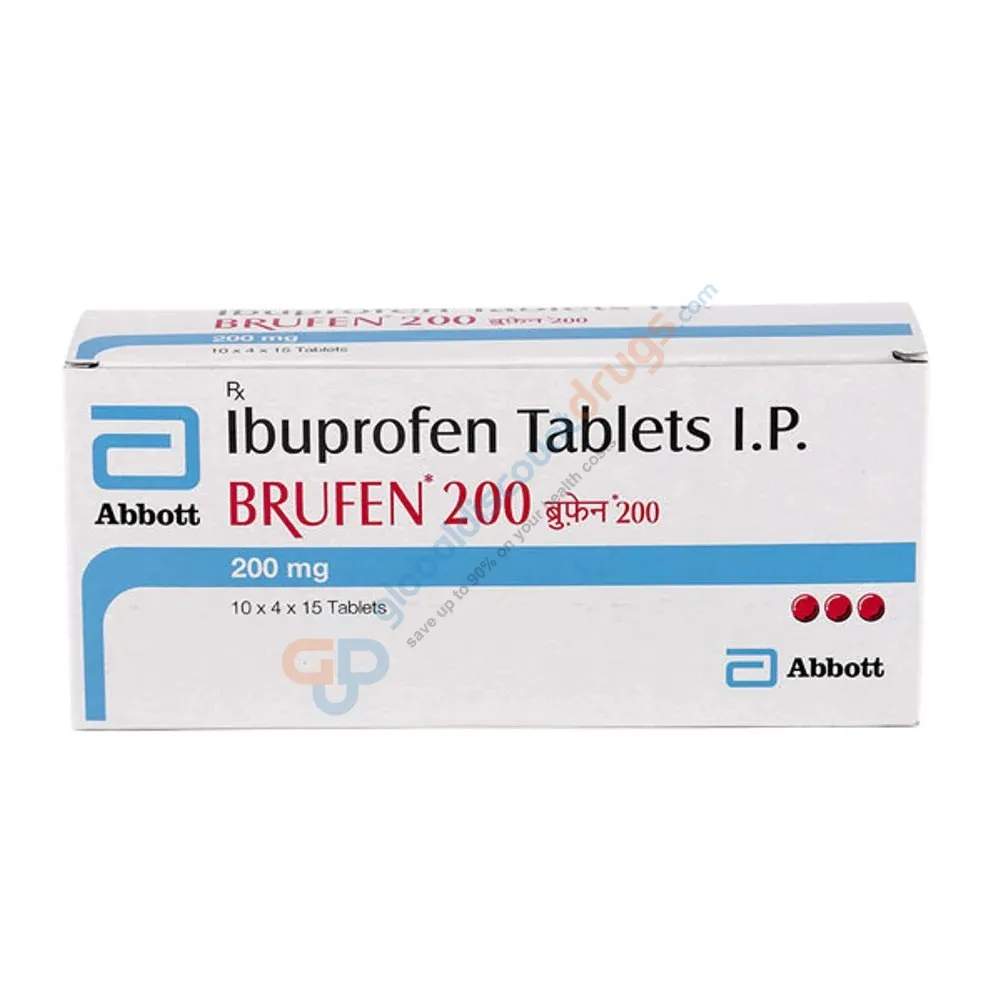

Ibuprofen 200mg
In StockIbuprofen 200 mg Tablet reduces pain, inflammation, and fever by blocking prostaglandin production. Use the lowest effective dose for the shortest duration appropriate for symptom relief.
| Active Ingredient: | Ibuprofen |
|---|---|
| Indication: | Pain and Inflammation |
| Strength: | 200mg |
| Dosage Form: | Tablets |
| Manufacturer: | Abbott |

Ibuprofen 200mg – Quick Overview
Ibuprofen 200mg is an over-the-counter pain reliever and fever reducer used for headaches, muscle aches, minor arthritis pain, and the common cold. It works by blocking chemicals in the body that cause pain, swelling, and fever. Ibuprofen is available without a prescription but should be used at the lowest effective dose and for the shortest time needed.
Medical Supervision & Regulatory Status
Ibuprofen 200mg is available in the United States as an over-the-counter medicine, regulated by the FDA under its Drug Facts labeling requirements. Prescription-strength ibuprofen, at higher doses, is also FDA approved for additional conditions and requires a doctor’s supervision. Even though the 200mg strength doesn’t require a prescription, reading and following the label carefully is important, since ibuprofen carries real risks when misused.
Clinical Context
Minor aches, headaches, and fevers are common and often resolve with short-term treatment. Ibuprofen provides temporary relief so people can manage daily discomfort while the underlying cause, such as a cold or muscle strain, resolves on its own.
Ibuprofen 200mg is used to temporarily relieve minor aches and pains from headaches, muscular aches, minor arthritis pain, toothaches, backaches, the common cold, and menstrual cramps, and it also temporarily reduces fever. For most people, occasional use for these everyday complaints is considered appropriate.
Because ibuprofen belongs to a class of medicines called NSAIDs, it carries some of the same risks as other drugs in this class, which is why over-the-counter use is meant for short-term, minor symptoms rather than ongoing pain management.
How Ibuprofen Works
Ibuprofen belongs to a class of medicines called nonsteroidal anti-inflammatory drugs, or NSAIDs. It works by blocking enzymes in the body that produce prostaglandins, chemicals responsible for triggering pain, inflammation, and fever.
By reducing prostaglandin production, ibuprofen eases pain signals and lowers inflammation at the site of injury or irritation, while also acting on the body’s temperature-regulating center to reduce fever.
This combined action makes ibuprofen effective for a wide range of everyday aches and minor inflammatory conditions, providing relief that typically lasts several hours per dose.
What is Ibuprofen 200mg?
- Drug Class: Nonsteroidal anti-inflammatory drug (NSAID)
- Active Ingredient: Ibuprofen, 200mg
- Mechanism: Blocks prostaglandin production to reduce pain, inflammation, and fever
- Form: Oral tablet
- Dosing Frequency: Every 4 to 6 hours while symptoms persist
- Regulatory Status: Over-the-counter in the United States
Uses / Indications
- Minor Aches and Pains: Relieves headache, muscular aches, backache, and toothache
- Minor Arthritis Pain: Temporarily eases minor pain associated with arthritis
- Fever Reduction: Temporarily reduces fever
- Menstrual Cramps: Relieves discomfort associated with menstrual cramps
- Common Cold Symptoms: Eases minor aches associated with the common cold
How to Use / Dosage
Adults and children 12 years and older can take one tablet every 4 to 6 hours while symptoms persist; if pain or fever doesn’t respond to one tablet, two tablets may be used. Do not exceed 1,200mg in a 24-hour period unless directed by a doctor. Take ibuprofen with a full glass of water, and consider taking it with food if it causes stomach upset. If pain gets worse or lasts more than 10 days, or if fever gets worse or lasts more than 3 days, stop use and talk to a doctor. Always use the smallest effective dose for the shortest time needed to manage symptoms.
Side Effects
Most people tolerate ibuprofen well when used as directed for short periods. Common effects include mild stomach upset, heartburn, or nausea, especially when taken without food. Some people experience mild dizziness or headache.
Serious effects are less common but require prompt medical attention, particularly with higher doses or longer use. These include stomach bleeding and cardiovascular events.
Emergency Warning Signs — seek medical help right away if you notice:
- Vomiting blood or material resembling coffee grounds
- Bloody or black, tarry stools
- Chest pain, trouble breathing, or leg swelling
- Slurred speech or weakness on one side of the body
- Hives, facial swelling, or difficulty breathing suggesting a severe allergic reaction
- Persistent stomach pain that doesn’t improve
- Signs of shock, including skin reddening or fainting
Warnings & Precautions
NSAIDs like ibuprofen increase the risk of heart attack, heart failure, and stroke, and this risk is higher when used more often or for longer than directed on the label. People with high blood pressure, heart disease, liver cirrhosis, kidney disease, asthma, or a prior stroke should ask a doctor before using ibuprofen. Ibuprofen may cause a severe allergic reaction, particularly in people allergic to aspirin, with symptoms that can include hives, facial swelling, wheezing, or shock. Taking ibuprofen alongside aspirin prescribed for heart attack or stroke prevention may reduce aspirin’s protective benefit, so this combination should be discussed with a doctor. Ibuprofen should not be used at 20 weeks or later in pregnancy unless a doctor specifically advises it, since it may cause complications in the unborn child or during delivery. People taking any other product containing an NSAID, including aspirin or naproxen, should avoid combining it with ibuprofen unless directed by a doctor.
Who Should Not Use This Medication
- Anyone with a known allergy to ibuprofen, aspirin, or other pain relievers
- Patients taking other NSAID-containing products, without doctor guidance
- Individuals in the last 20 weeks of pregnancy, without specific doctor direction
- Patients with a history of stomach bleeding or ulcers, without doctor approval
- Children under 12 years old, unless using an age-appropriate formulation as directed
Storage Instructions
Store ibuprofen tablets at room temperature, away from excess heat and moisture. Keep the container tightly closed between uses. Store it out of reach of children and pets, in a location they cannot access, since accidental ingestion can be dangerous.
Frequently Asked Questions
What is the cost of Ibuprofen 200mg without insurance?
Ibuprofen is generally affordable, especially in its generic, over-the-counter form. The cost depends on the seller, brand availability, and pack size, and may also vary by location and available discounts.
How can I order Ibuprofen 200mg online?
Since ibuprofen 200mg is available over the counter, no prescription is needed to order it online. It can be purchased directly from a licensed pharmacy or retailer and shipped to your home. Always use verified, reputable sellers for safety.
Is Ibuprofen 200mg available over the counter?
Yes, ibuprofen 200mg is available over the counter in the United States without a prescription. Higher, prescription-strength doses are available separately under a doctor’s supervision.
Does Ibuprofen 200mg require a prescription?
No, the 200mg strength does not require a prescription. However, it’s still important to follow label directions closely, since ibuprofen carries real risks with overuse.
How long does it take for Ibuprofen to work?
Ibuprofen typically begins relieving pain or fever within 30 to 60 minutes, with effects lasting around 4 to 6 hours per dose.
Is it safe to stop taking Ibuprofen once symptoms improve?
Yes, ibuprofen is meant for short-term, as-needed use, so it’s fine to stop once your symptoms resolve. If pain or fever persists beyond 10 days or 3 days respectively, stop use and consult a doctor.
What happens if I miss a dose of Ibuprofen?
Since ibuprofen is typically taken as needed rather than on a fixed schedule, simply take your next dose when symptoms require it, without doubling up.
References
- FDA – Ibuprofen Drug Facts Label
- DailyMed – Ibuprofen 200mg Tablet, Full Drug Facts Label (NIH)
- GoodRx – Ibuprofen Dosage Guide
Medical Disclaimer:
This content is for informational purposes only and does not constitute medical advice, diagnosis, or treatment. Consult a qualified specialist or physician before using Ibuprofen.
| Quantity | 180, 270, 360, 90 |
|---|---|
| Indication | Pain and Inflammation |
| Active Ingredient | Ibuprofen |
| Pharmaceutical Form | Tablets |
| Manufacturer | Abbott |
| Indian Brand | Brufen 200mg |
| US Brand Name | Advil, Brufen, Cuprofen, Ibuprofen, Iprofen, Motrin, Nurofen, Panafen, Rafen, Tri-Profen |
| Generic Name | Ibuprofen |
| Dosage | 200mg |
| Drug Type | Tablets |