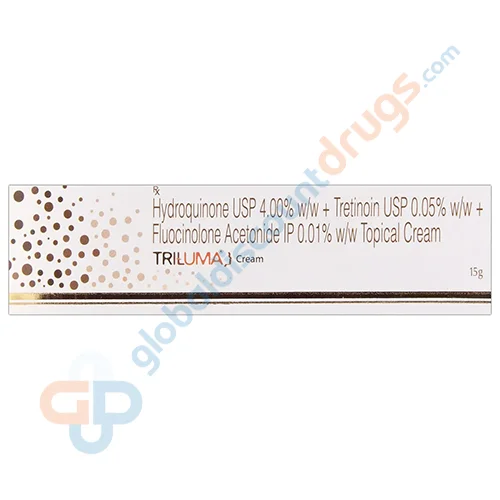
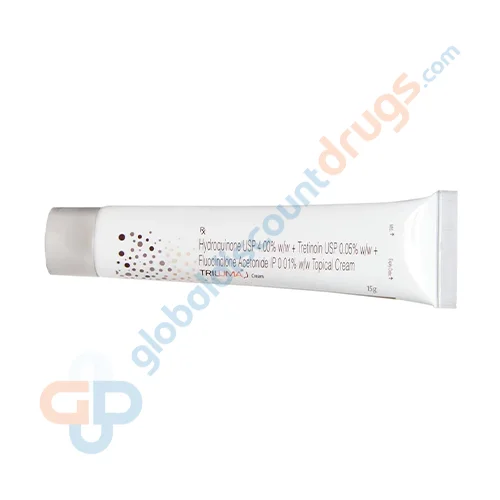
Hydroquinone-Tretinoin-Fluocinolone acetonide 4-0.05-0.01%-15gm
In StockHydroquinone–Tretinoin–Fluocinolone Acetonide Cream is prescribed for short-term management of moderate to severe melasma. Consistent sun protection helps reduce the chance of recurring pigmentation during treatment.
| Active Ingredient: | Hydroquinone-Tretinoin-Fluocinolone Acetonide |
|---|---|
| Indication: | Melasma |
| Strength: | 4-0.05-0.01%-15gm |
| Dosage Form: | Cream |
| Manufacturer: | Galderma India |

Quick Overview
Hydroquinone-Tretinoin-Fluocinolone Acetonide Cream is a prescription triple-combination topical medication used to treat moderate to severe melasma and facial hyperpigmentation in adults. It works by reducing melanin production, accelerating skin cell turnover, and controlling inflammation simultaneously. This medicine is available only with a valid doctor’s prescription and must be used under medical supervision.
Medical Supervision & Regulatory Status
Hydroquinone-Tretinoin-Fluocinolone Acetonide Cream is a Schedule H prescription-only medication in India and is classified as an FDA-approved prescription drug (brand: Tri-Luma) in the United States. Because it contains a corticosteroid, a retinoid, and a depigmenting agent in a single formulation, its use requires careful clinical evaluation. Self-medication with this combination is strongly discouraged, as misuse can lead to serious skin and systemic adverse effects.
Clinical Context
Melasma is a common, chronic skin condition characterized by brown or grey-brown patches, primarily on the face. It disproportionately affects women, particularly those with darker skin tones, and is worsened by sun exposure, hormonal changes, and certain medications. Despite being non-life-threatening, melasma significantly impacts quality of life and self-confidence, making effective treatment a clinical priority.
Hyperpigmentation conditions like melasma are notoriously difficult to treat with single-agent therapies. Monotherapy with hydroquinone alone often yields partial results, and many patients experience recurrence. A triple-combination approach addresses the condition through three simultaneous pathways — pigment suppression, cellular renewal, and anti-inflammatory action — offering clinically superior outcomes.
This formulation is positioned as a short-term, physician-supervised treatment for patients with moderate to severe melasma who have not responded adequately to individual agents. It is not intended for long-term continuous use and must always be paired with rigorous sun protection for meaningful and lasting results.
How Hydroquinone-Tretinoin-Fluocinolone Acetonide Cream Works
This cream combines three active ingredients, each targeting a distinct mechanism in the hyperpigmentation pathway. Hydroquinone 4% inhibits the enzyme tyrosinase, which is essential for melanin (skin pigment) synthesis. By suppressing this enzyme, hydroquinone reduces the overproduction of pigment in affected skin cells (melanocytes), gradually lightening darkened areas.
Tretinoin 0.05% is a vitamin A derivative (retinoid) that increases the rate of skin cell turnover. It encourages faster shedding of pigmented surface skin cells, enhances penetration of hydroquinone into the deeper skin layers, and helps normalize melanin distribution. Fluocinolone Acetonide 0.01% is a mild topical corticosteroid that reduces local skin inflammation and irritation often triggered by the other two active agents, improving tolerability and adherence to treatment.
Together, these three components create a synergistic effect: the corticosteroid makes the skin receptive, the retinoid optimizes delivery and turnover, and hydroquinone directly suppresses pigment — delivering clinically meaningful results that no single agent can reliably achieve alone.
What is Hydroquinone-Tretinoin-Fluocinolone Acetonide Cream?
Drug Class: Depigmenting agent + Retinoid + Topical Corticosteroid (Triple Combination)
Active Ingredients:
- Hydroquinone 4% — Tyrosinase inhibitor / skin-lightening agent
- Tretinoin 0.05% — Retinoid / cell turnover accelerator
- Fluocinolone Acetonide 0.01% — Mild topical corticosteroid
Mechanism: Suppresses melanin production, accelerates pigmented cell shedding, and reduces topical inflammation to improve skin tone in melasma.
Dosage Form: Topical cream
Pack Size: 15 grams
Dosing Frequency: Once daily at night (as directed by a physician)
Regulatory Status: Prescription-only (Schedule H in India; FDA-approved in the USA)
Uses / Indications
Melasma (Primary Indication) This cream is clinically approved and most widely used for the short-term treatment of moderate to severe melasma on the face. Melasma presents as symmetrical brown or grayish patches, particularly on the cheeks, forehead, upper lip, and chin.
Post-Inflammatory Hyperpigmentation (Off-label / Physician-directed) Some dermatologists prescribe this combination for hyperpigmentation resulting from acne, eczema, or minor skin trauma. This use is guided by physician judgment and is not part of the primary FDA-approved indication.
Facial Hyperpigmentation in Darker Skin Tones Individuals with Fitzpatrick skin types IV–VI who experience significant pigmentation unevenness may be prescribed this formulation under careful supervision, as they are at higher risk for post-inflammatory hyperpigmentation and require monitoring.
How to Use / Dosage
Your doctor will determine the appropriate dose and duration of use based on your skin type, severity of pigmentation, and overall health. General guidance includes the following:
Application: Apply a thin layer of cream to the affected facial areas once daily, approximately 30 minutes before bedtime. Gently cleanse and dry the skin before application. Avoid contact with eyes, inner corners of the nose, mouth, and broken or irritated skin.
Sun Protection is Mandatory: Use a broad-spectrum sunscreen of SPF 30 or higher every morning without exception. Sun exposure can worsen melasma and reduce the effectiveness of treatment. Protective clothing and hats are also recommended.
Missed Dose: If you miss an application, skip it and resume the next night as scheduled. Do not apply a double dose to make up for the missed one.
Do Not Stop Suddenly Without Medical Advice: While this cream is typically used for a limited course (up to 8 weeks as per FDA labeling), do not alter your treatment schedule or discontinue without consulting your dermatologist, as abrupt changes can affect outcomes or cause rebound effects.
Treatment Duration: This cream is not intended for long-term or indefinite use. Most treatment courses are 8 weeks or less. Prolonged use increases the risk of corticosteroid-related skin changes.
Side Effects
Most patients tolerate this cream reasonably well when used as prescribed under physician guidance. Mild skin reactions are common during initial weeks and often resolve as the skin adjusts to the formulation.
Common Side Effects: Erythema (skin redness), burning or stinging sensation at the application site, dryness and flaking, itching, and skin peeling are frequently reported, especially during the first 2–4 weeks of use. These effects are generally mild and reflect the skin’s adjustment to tretinoin. Temporary worsening of pigmentation may occasionally occur in the early phase of treatment.
Serious Side Effects: Prolonged or improper use — particularly beyond recommended duration — may result in skin atrophy (thinning), striae (stretch marks), telangiectasia (visible blood vessels), or perioral dermatitis. Hydroquinone, when used for extended periods, has been associated with ochronosis, a paradoxical darkening of the skin, particularly in darker-skinned individuals. Systemic absorption of fluocinolone, though unlikely with short-term use, may theoretically cause adrenal suppression with prolonged misuse.
Seek Emergency Medical Attention if You Experience:
- Severe allergic reaction (hives, facial swelling, difficulty breathing)
- Unusual skin blistering or peeling beyond normal dryness
- Signs of skin infection (pus, increasing warmth, severe swelling)
- Sudden worsening of skin discoloration or darkening
- Eye irritation or visual changes after accidental contact
- Symptoms of systemic steroid absorption (unexplained weight gain, fatigue, swelling)
Warnings & Precautions
Contraindications: This cream is contraindicated in individuals with known hypersensitivity to hydroquinone, tretinoin, fluocinolone acetonide, or any component of the formulation. It should not be applied to skin affected by viral infections (such as herpes simplex), fungal infections, rosacea, perioral dermatitis, or acne vulgaris, as the corticosteroid component may worsen these conditions.
Drug Interactions: Avoid using other topical retinoids, benzoyl peroxide, salicylic acid, or abrasive scrubs concurrently, as these may cause excessive skin irritation when combined with tretinoin. Medicated or heavily fragranced cosmetics on the treated area should also be avoided. Inform your dermatologist of all topical and systemic medications you are currently using.
Pregnancy and Breastfeeding: Tretinoin is classified as FDA Pregnancy Category C, and hydroquinone has insufficient safety data in human pregnancy. This combination cream should not be used during pregnancy unless the potential benefit clearly outweighs risk, as determined by a physician. Breastfeeding women should avoid applying the cream near the chest or nipple area; use during lactation should only proceed under explicit medical guidance.
Special Populations: Patients with a history of atopic dermatitis, eczema, or highly sensitive skin should use this product with extra caution and under close monitoring. The cream is not recommended for children or adolescents under 18 years of age, as safety and efficacy have not been established in pediatric populations.
Sun Sensitivity: Tretinoin significantly increases the skin’s sensitivity to UV radiation. Failure to use adequate sun protection during treatment will not only reduce efficacy but may also cause sunburn and worsen pigmentation.
Monitoring: Patients should follow up with their dermatologist every 4 weeks during treatment. If no improvement is observed after 8 weeks, the treatment should be reassessed. Any signs of skin atrophy, perioral dermatitis, or ochronosis must prompt immediate review.
Who Should Not Use This Medication
- Individuals with known allergy to hydroquinone, tretinoin, or any corticosteroid
- Pregnant women or those planning to conceive
- Breastfeeding mothers (without explicit medical approval)
- Children and adolescents under 18 years
- Patients with active skin infections (bacterial, fungal, or viral) on the treatment area
- Those with rosacea, perioral dermatitis, or steroid-sensitive dermatoses
- Patients currently undergoing other retinoid therapy (oral or topical)
- Individuals who cannot comply with mandatory daily sun protection
Storage Instructions
Temperature: Store at room temperature between 15°C and 25°C (59°F–77°F). Do not freeze.
Light and Moisture: Keep the tube tightly closed and away from direct sunlight and excess moisture. Do not store in bathrooms where humidity is high.
Child Safety: Store in a secure location out of reach of children and pets. Accidental ingestion or eye contact requires immediate medical attention.
Disposal: Do not dispose of the cream in household waste or flush it down the drain. Follow local pharmaceutical disposal guidelines or consult your pharmacist.
Frequently Asked Questions
Do I need a prescription to buy Hydroquinone-Tretinoin-Fluocinolone Acetonide Cream?
Yes, this cream requires a valid prescription. It is classified as Schedule H in India and is an FDA-approved prescription drug in the USA. It contains a corticosteroid and a retinoid, both of which require physician oversight to prevent misuse and serious skin complications. Never purchase or use this cream without a dermatologist’s evaluation and written prescription.
How long does it take for this cream to show results?
Most patients begin to notice visible improvement in skin tone and pigmentation within 4 to 8 weeks of consistent nightly use. Optimal results typically require the full prescribed treatment course. Sun protection must be used daily throughout treatment, as UV exposure can slow or reverse progress. Individual results vary depending on skin type and melasma severity.
Can I stop using this cream suddenly?
It is not recommended to stop abruptly without consulting your dermatologist. While this is a topical product with a defined short-term course (typically up to 8 weeks), sudden discontinuation without guidance may affect treatment outcomes. Your doctor will advise you on how to taper or conclude treatment safely, and may recommend a maintenance strategy to prevent pigmentation recurrence.
What medications or products should I avoid while using this cream?
Avoid combining this cream with other topical retinoids, benzoyl peroxide, alpha-hydroxy acids, or abrasive exfoliants, as these can cause excessive irritation. Heavily fragranced or medicated cosmetics on treated areas should also be avoided. Always inform your dermatologist about any other skincare products or systemic medications you are using to prevent interaction-related adverse effects.
What should I do if I miss an application?
Simply skip the missed application and resume your regular schedule the next evening. Do not apply extra cream to compensate for the missed dose. Consistency in use is important, but doubling up increases the risk of irritation and side effects. If you frequently forget applications, discuss reminder strategies or schedule adjustments with your dermatologist.
What is the cost of Hydroquinone-Tretinoin-Fluocinolone acetonide without insurance?
This combination cream is generally affordable, especially in generic forms. The cost without insurance depends on the seller, brand availability, and pack size, and may also vary by location and discounts.
How can I order Hydroquinone-Tretinoin-Fluocinolone acetonide online?
A valid prescription is required. You can upload your prescription or have your doctor send it directly to a licensed pharmacy, which then ships the medication to your home. Always use verified pharmacies for safety.
Is Hydroquinone-Tretinoin-Fluocinolone acetonide available over the counter?
No, it is not available over the counter in most countries. Regulations may vary by region, but this medication typically requires medical supervision due to its active ingredients.
References
The following authoritative sources were used in preparing this content. Patients and caregivers are encouraged to review these resources for additional information:
U.S. National Institutes of Health – DailyMed (Official FDA Label) Full prescribing information for Tri-Luma Cream (Hydroquinone 4%, Tretinoin 0.05%, Fluocinolone Acetonide 0.01%) https://dailymed.nlm.nih.gov/dailymed/search.cfm?query=triluma
MedlinePlus – Hydroquinone Topical Patient-friendly drug information on hydroquinone, uses, and precautions https://medlineplus.gov/druginfo/meds/a601177.html
MedlinePlus – Tretinoin Topical Clinical overview of tretinoin topical, mechanism, and safety profile 🔗 https://medlineplus.gov/druginfo/meds/a682437.html
U.S. Food & Drug Administration (FDA) – Tri-Luma Approval Original FDA approval documentation and summary of clinical evidence https://www.accessdata.fda.gov/scripts/cder/daf/index.cfm?event=overview.process&ApplNo=021112
American Academy of Dermatology (AAD) – Melasma: Diagnosis and Treatment Clinical guidance from dermatologists on treating melasma, including combination therapy https://www.aad.org/public/diseases/color-problems/melasma
NIH National Library of Medicine – Melasma Clinical Review Peer-reviewed literature on the pathophysiology and treatment of melasma 🔗 https://www.ncbi.nlm.nih.gov/books/NBK459271/
Indian Pharmacopoeia Commission – Schedule H Drug Classification Regulatory framework for prescription-only drugs in India 🔗 https://www.ipc.gov.in
European Medicines Agency (EMA) – Topical Corticosteroid Safety Guidance on safety considerations for topical corticosteroid-containing products https://www.ema.europa.eu/en/medicines/human
Medical Disclaimer:
This content is for informational purposes only and does not constitute medical advice, diagnosis, or treatment. Consult a qualified specialist or physician before using Hydroquinone-Tretinoin-Fluocinolone Acetonide Cream.
Prescription Required (Rx) to Buy?
This medication is not available over the counter. A valid prescription from a licensed healthcare
professional is required. Always consult your doctor before use.
| Quantity | 2, 4, 6, 8 |
|---|---|
| Indication | Melasma |
| Active Ingredient | Hydroquinone-Tretinoin-Fluocinolone Acetonide |
| Pharmaceutical Form | Cream |
| Manufacturer | Galderma India |
| Indian Brand | Triluma Cream 15gm |
| US Brand Name | Hydroquinone-Tretinoin-Fluocinolone acetonide |
| Generic Name | Hydroquinone-Tretinoin-Fluocinolone acetonide |
| Dosage | 4-0.05-0.01%-15gm |
| Drug Type | Tubes |